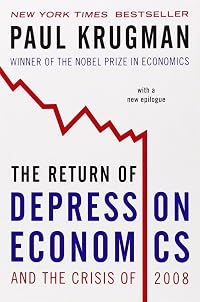
The Return of Depression Economics and the Crisis of 2008
by Paul Krugman
On This Page
Description
Business. History. Nonfiction. HTML:What better guide could we have to the 2008 financial crisis and its resolution than our newest Nobel Laureate in Economics, the prolific columnist and author Paul Krugman? In his prescient 1999 classic, The Return of Depression Economics, Krugman surveyed the economic crises that had swept across Asia and Latin America and pointed out that they were a warning for all of us: like diseases that have become resistant to antibiotics, the economic maladies show more that caused the Great Depression were making a comeback. But now depression economics has come to America. When the great housing bubble of the mid-2000s burst, the U.S. financial system proved as vulnerable as those of developing countries caught up in earlier crises and a replay of the 1930s seems all too possible.In this new, greatly updated edition of The Return of Depression Economics, Krugman shows how the failure of regulation to keep pace with an increasingly out-of-control financial system set the United States and the world up for the greatest financial crisis since the 1930s. He also lays out the steps that must be taken to contain the crisis and turn around a world economy sliding into a deep recession. Brilliantly crafted in Krugman’s trademark style lucid, lively, and supremely informed this new edition of The Return of Depression Economics will become an instant cornerstone of the debate over how to respond to the crisis. show less
Tags
Recommendations
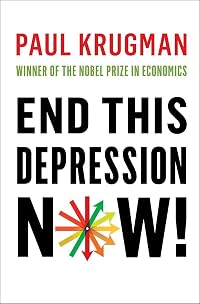

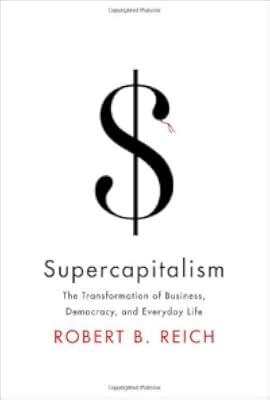
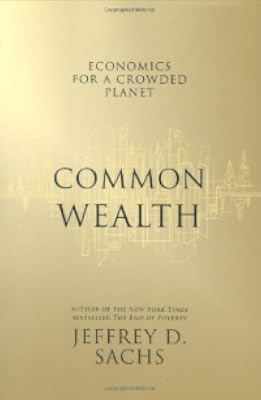
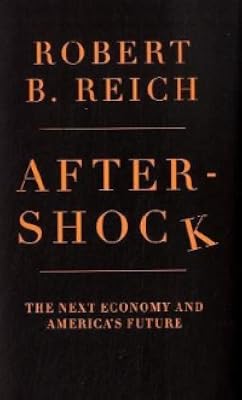
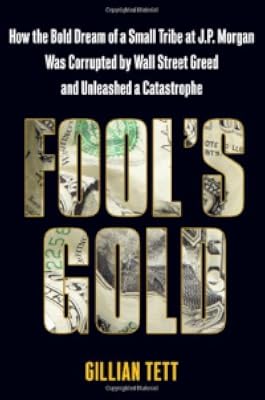


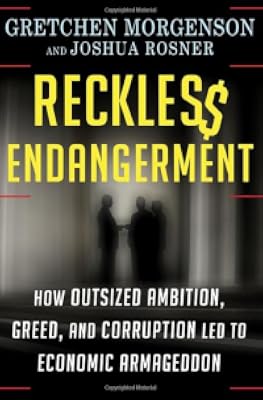
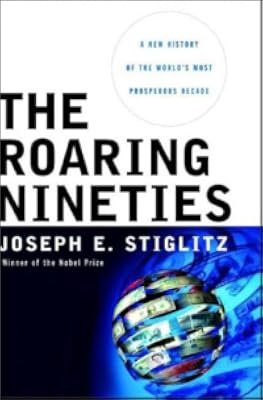
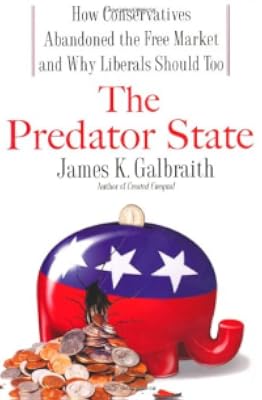

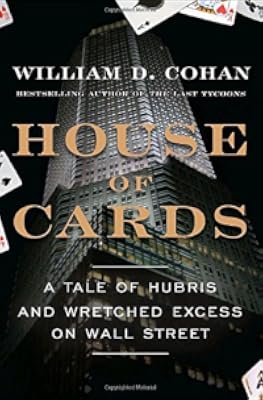
Member Recommendations
Member Reviews
This is a solid 3 stars. I guess I was expecting more, which is a mistake on my part given it's a relatively brief book on economics at 200 pages. Krugman does a good job of making some potentially complex ideas easier to understand, but he doesn't really bring much new to the table. I'm your average guy and I know that hedge funds are operating well outside reasonable bounds and have the power to destroy economies. He mentions LTCM as a good example of the destructive power of hedge funds, for example, and that's hardly news. You do get a good, succinct, history of depressions in countries round the world. This books is a companion to Lords of Finance because each deals with how countries devalue or inflate their currencies to maintain show more stability. show less
Its depressing reading about depression ... economics. It all seems so avoidable and a bunch of pointless suffering from the worse elements of unstable human nature actualized by the global web of fractional banking... Not that better monetary schemes have been shown to be workable and Krugman does try to liven things up with wit. This is another book that erodes the Greenspan edifice; Alan presided over decades of healthy economic growth he did nothing to engender to then guide short-sighted policy into two asset bubble: Dot Com boom and housing boom...
A lazy book for lazy readers. Never has a title promised greater relevance to the current economic discussion and delivered so little. Just as Krugman's prior book "A conscience of a liberal" did not cover what its title promised, "The Return of Depression Economics" isn't actually about depression economics.
Instead, it is a chronological recap of most (but not all) the financial crises of the last twenty years with a ten-page plea for a fiscal stimulus bolted-on (ch. 10). Chapter 2 presents Mexico and Argentina, ch. 3 Japan, ch. 4 Thailand and Malaysia, ch. 6 LTCM, ch. 7-9 USA (internet and housing bubbles). Chapter 5 sums up the key theme of the book about failed regulation and perverse advice. A casual reader of the financial press show more (Economist, Financial Times, Wall Street Journal, etc.) will learn little.
Even as a survey, the book fails as Krugman does not offer citations, a bibliography or even a further reading section. Null, nada. I cannot understand why Krugman does not at least point interested readers to more detailed accounts apart from the fact that not sourcing your own text is unacademic and impolite, as it cuts off connections and restricts checking.
The hodgepot of crises does not help either. Krugman never develops a framework to separate the different elements of macroeconomic mismanagement, crony capitalism, (de)regulation policies and recovery policies. The book's implicit lessons are that good regulation is essential and all activities which act like banks need to be covered by regulation. Krugman's baby sitting cooperative only shows the necessity of good monetary policy. He never develops a model for the (sensible) fiscal stimulus he advocates in the bolted-on chapter and conclusion. A closer look about Japan's flawed public works investments might have offered helpful guidance to the current discussion.
Krugman should stick to articles and essays. show less
Instead, it is a chronological recap of most (but not all) the financial crises of the last twenty years with a ten-page plea for a fiscal stimulus bolted-on (ch. 10). Chapter 2 presents Mexico and Argentina, ch. 3 Japan, ch. 4 Thailand and Malaysia, ch. 6 LTCM, ch. 7-9 USA (internet and housing bubbles). Chapter 5 sums up the key theme of the book about failed regulation and perverse advice. A casual reader of the financial press show more (Economist, Financial Times, Wall Street Journal, etc.) will learn little.
Even as a survey, the book fails as Krugman does not offer citations, a bibliography or even a further reading section. Null, nada. I cannot understand why Krugman does not at least point interested readers to more detailed accounts apart from the fact that not sourcing your own text is unacademic and impolite, as it cuts off connections and restricts checking.
The hodgepot of crises does not help either. Krugman never develops a framework to separate the different elements of macroeconomic mismanagement, crony capitalism, (de)regulation policies and recovery policies. The book's implicit lessons are that good regulation is essential and all activities which act like banks need to be covered by regulation. Krugman's baby sitting cooperative only shows the necessity of good monetary policy. He never develops a model for the (sensible) fiscal stimulus he advocates in the bolted-on chapter and conclusion. A closer look about Japan's flawed public works investments might have offered helpful guidance to the current discussion.
Krugman should stick to articles and essays. show less
This book is brilliantly accessible. He first chastises economists for not expaining things clearly. Then, he uses the simple example of a babysitting coop to explain the business cycle. Without using the term Demurage, he cites the Keynesian and Gesellian idea of forced spending into the economy which increases circulation and ends the deflation cycle. But he expains it without using any of these terms. Brilliant. Too bad phd students are not allowed to do this in a thesis (Yes I saw one such thesis, but I think it was sociology, not economics, nor economic social policy, which was my area.)
I recall reading this in 2006 for my thesis, and wondering how my office-mate, an economics phd student, could know almost nothing about the show more history of economics. Now I know, sadly, that most economists seem to ignore history. Or brush it aside. Other authors mention a roughly 19 year boom-bust world economic cycle, but the cycle is there, and is not stable.
Yet the warnings of Keynes and even Greenspan were ignored. The Asian crises had all the hallmarks of the Great Depression, and international reaction follows, it seems, the errors of the Depression. He warns
"As in the Victorian era, capitalism is secure not only
because of its successes-which, as we will see in a moment, have
been very real-but because nobody has a plausible alternative.
This situation will not last forever. Surely there will be other
ideologies, other dreams; and they will emerge sooner rather than
later if the current economic crisis persists and deepens."
Some of those dreams will be utopian, and viable if we will it, but other ideologies may not be so utopian. Let's not "learn all the wrong lessons" again.
Shira of The MEOW CC Blog,
MEOW Date: 9 September, 12014 H.E. (Holocene/Human Era) show less
I recall reading this in 2006 for my thesis, and wondering how my office-mate, an economics phd student, could know almost nothing about the show more history of economics. Now I know, sadly, that most economists seem to ignore history. Or brush it aside. Other authors mention a roughly 19 year boom-bust world economic cycle, but the cycle is there, and is not stable.
Yet the warnings of Keynes and even Greenspan were ignored. The Asian crises had all the hallmarks of the Great Depression, and international reaction follows, it seems, the errors of the Depression. He warns
"As in the Victorian era, capitalism is secure not only
because of its successes-which, as we will see in a moment, have
been very real-but because nobody has a plausible alternative.
This situation will not last forever. Surely there will be other
ideologies, other dreams; and they will emerge sooner rather than
later if the current economic crisis persists and deepens."
Some of those dreams will be utopian, and viable if we will it, but other ideologies may not be so utopian. Let's not "learn all the wrong lessons" again.
Shira of The MEOW CC Blog,
MEOW Date: 9 September, 12014 H.E. (Holocene/Human Era) show less
This book is brilliantly accessible. He first chastises economists for not expaining things clearly. Then, he uses the simple example of a babysitting coop to explain the business cycle. Without using the term Demurage, he cites the Keynesian and Gesellian idea of forced spending into the economy which increases circulation and ends the deflation cycle. But he expains it without using any of these terms. Brilliant. Too bad phd students are not allowed to do this in a thesis (Yes I saw one such thesis, but I think it was sociology, not economics, nor economic social policy, which was my area.)
I recall reading this in 2006 for my thesis, and wondering how my office-mate, an economics phd student, could know almost nothing about the show more history of economics. Now I know, sadly, that most economists seem to ignore history. Or brush it aside. Other authors mention a roughly 19 year boom-bust world economic cycle, but the cycle is there, and is not stable.
Yet the warnings of Keynes and even Greenspan were ignored. The Asian crises had all the hallmarks of the Great Depression, and international reaction follows, it seems, the errors of the Depression. He warns
"As in the Victorian era, capitalism is secure not only
because of its successes-which, as we will see in a moment, have
been very real-but because nobody has a plausible alternative.
This situation will not last forever. Surely there will be other
ideologies, other dreams; and they will emerge sooner rather than
later if the current economic crisis persists and deepens."
Some of those dreams will be utopian, and viable if we will it, but other ideologies may not be so utopian. Let's not "learn all the wrong lessons" again.
Shira of The MEOW CC Blog,
MEOW Date: 9 September, 12014 H.E. (Holocene/Human Era) show less
I recall reading this in 2006 for my thesis, and wondering how my office-mate, an economics phd student, could know almost nothing about the show more history of economics. Now I know, sadly, that most economists seem to ignore history. Or brush it aside. Other authors mention a roughly 19 year boom-bust world economic cycle, but the cycle is there, and is not stable.
Yet the warnings of Keynes and even Greenspan were ignored. The Asian crises had all the hallmarks of the Great Depression, and international reaction follows, it seems, the errors of the Depression. He warns
"As in the Victorian era, capitalism is secure not only
because of its successes-which, as we will see in a moment, have
been very real-but because nobody has a plausible alternative.
This situation will not last forever. Surely there will be other
ideologies, other dreams; and they will emerge sooner rather than
later if the current economic crisis persists and deepens."
Some of those dreams will be utopian, and viable if we will it, but other ideologies may not be so utopian. Let's not "learn all the wrong lessons" again.
Shira of The MEOW CC Blog,
MEOW Date: 9 September, 12014 H.E. (Holocene/Human Era) show less
Krugman presents a pretty fast read on the international economic crises of the 1980s and 1990s and then relates those to the financial crisis of 2008. The original edition was published in 1997 and this edition is updated with a few new perspectives on those earlier crises.
By "Depression Economics," Krugman means Keynesian responses to sharp declines in aggregate demand-- increasing the money supply (lowering interest rates) and/or fiscal stimulus. He shows how successful or not those policies were in the crisis countries, and how most of the time IMF recommendations to hard-hit countries were the exact opposite-- arguably exacerbating the crises.
The subject matter was very similar to Joseph Stiglitz's Globalization and Its show more Discontents, which I think is essential reading, and I'm not sure Krugman does a decent enough job explaining the situations to the lay reader unless they have already read Stiglitz.
That said, I would have loved to have used this book in my International Economics/Finance course, which is really just international macroeconomics. Krugman outlines the trilemma well, but it's difficult to ascertain which of the options a country can take and not end up in disaster. It seems that all roads lead to disaster in this book--but dealing with the disaster after the fact is what matters to Krugman. The Mundell-Fleming optimal currency area criteria are outlined and skepticism about the euro very well explained.
Krugman's baby-sitting co-op reappears in this work, just as it was introduced in his Peddling Prosperity book:
A group of people (in this case about 150 young couples with congressional connections) agrees to baby-sit for one another, obviating the need for cash payments to adolescents. It's a mutually beneficial arrangement: A couple that already has children around may find that watching another couple's kids for an evening is not that much of an additional burden, certainly compared with the benefit of receiving the same service some other evening. But there must be a system for making sure each couple does its fair share.
The Capitol Hill co-op adopted one fairly natural solution. It issued scrip--pieces of paper equivalent to one hour of baby-sitting time. Baby sitters would receive the appropriate number of coupons directly from the baby sittees. This made the system self-enforcing: Over time, each couple would automatically do as much baby-sitting as it received in return. As long as the people were reliable--and these young professionals certainly were--what could go wrong?
Well, it turned out that there was a small technical problem. Think about the coupon holdings of a typical couple. During periods when it had few occasions to go out, a couple would probably try to build up a reserve--then run that reserve down when the occasions arose. There would be an averaging out of these demands. One couple would be going out when another was staying at home. But since many couples would be holding reserves of coupons at any given time, the co-op needed to have a fairly large amount of scrip in circulation.
Now what happened in the Sweeneys' co-op was that, for complicated reasons involving the collection and use of dues (paid in scrip), the number of coupons in circulation became quite low. As a result, most couples were anxious to add to their reserves by baby-sitting, reluctant to run them down by going out. But one couple's decision to go out was another's chance to baby-sit; so it became difficult to earn coupons. Knowing this, couples became even more reluctant to use their reserves except on special occasions, reducing baby-sitting opportunities still further.
In short, the co-op had fallen into a recession.
Since most of the co-op's members were lawyers, it was difficult to convince them the problem was monetary. They tried to legislate recovery--passing a rule requiring each couple to go out at least twice a month. But eventually the economists prevailed. More coupons were issued, couples became more willing to go out, opportunities to baby-sit multiplied, and everyone was happy. Eventually, of course, the co-op issued too much scrip, leading to different problems ...
The problem is that Krugman quickly shifts from thinking about solving this problem in terms of excess cash balances into thinking about a solution in terms of interest rates. When interest rates hit zero, and people still don't go out on the town, then you're in the Keynesian "liquidity trap" that Krugman loves to say the U.S. and Japan are in.
But I think Krugman outlines the Japan crisis better than he does on his blog, clearly showing that monetary policy isn't ineffective at the zero bound so long as the central bank creates inflationary expectations-- something that Japan's central bank hasn't done in 20 years (they raise rates when there is even a hint of inflation, making deflation often more of a reality).
Krugman's explanation of the U.S. financial crisis is from a 2008 point of view, but covers most of what we now know to be a problem. His point is that the U.S. learned nothing about the real estate bubbles it saw in other countries' run-up to financial doom.
I give this book 3.5 stars out of 5. It was written for a lay person, but I think his oversimplifications might be a little much to ask a layperson to comprehend. I could use it for a class and make sure I elucidated and graphed more clearly Krugman's arguments.
Worth noting that someone who previously held my current position wrote a critique of the 1997 edition of Krugman's book for the Von Mises Institute. When asked about my opinion of the Austrian perspective, I always refer people to Bryan Caplan's well-informed article "Why I Am Not an Austrian Economist," which clearly elucidates the weaknesses and inconsistencies (and incoherence) of Austrian business cycle theory. show less
By "Depression Economics," Krugman means Keynesian responses to sharp declines in aggregate demand-- increasing the money supply (lowering interest rates) and/or fiscal stimulus. He shows how successful or not those policies were in the crisis countries, and how most of the time IMF recommendations to hard-hit countries were the exact opposite-- arguably exacerbating the crises.
The subject matter was very similar to Joseph Stiglitz's Globalization and Its show more Discontents, which I think is essential reading, and I'm not sure Krugman does a decent enough job explaining the situations to the lay reader unless they have already read Stiglitz.
That said, I would have loved to have used this book in my International Economics/Finance course, which is really just international macroeconomics. Krugman outlines the trilemma well, but it's difficult to ascertain which of the options a country can take and not end up in disaster. It seems that all roads lead to disaster in this book--but dealing with the disaster after the fact is what matters to Krugman. The Mundell-Fleming optimal currency area criteria are outlined and skepticism about the euro very well explained.
Krugman's baby-sitting co-op reappears in this work, just as it was introduced in his Peddling Prosperity book:
A group of people (in this case about 150 young couples with congressional connections) agrees to baby-sit for one another, obviating the need for cash payments to adolescents. It's a mutually beneficial arrangement: A couple that already has children around may find that watching another couple's kids for an evening is not that much of an additional burden, certainly compared with the benefit of receiving the same service some other evening. But there must be a system for making sure each couple does its fair share.
The Capitol Hill co-op adopted one fairly natural solution. It issued scrip--pieces of paper equivalent to one hour of baby-sitting time. Baby sitters would receive the appropriate number of coupons directly from the baby sittees. This made the system self-enforcing: Over time, each couple would automatically do as much baby-sitting as it received in return. As long as the people were reliable--and these young professionals certainly were--what could go wrong?
Well, it turned out that there was a small technical problem. Think about the coupon holdings of a typical couple. During periods when it had few occasions to go out, a couple would probably try to build up a reserve--then run that reserve down when the occasions arose. There would be an averaging out of these demands. One couple would be going out when another was staying at home. But since many couples would be holding reserves of coupons at any given time, the co-op needed to have a fairly large amount of scrip in circulation.
Now what happened in the Sweeneys' co-op was that, for complicated reasons involving the collection and use of dues (paid in scrip), the number of coupons in circulation became quite low. As a result, most couples were anxious to add to their reserves by baby-sitting, reluctant to run them down by going out. But one couple's decision to go out was another's chance to baby-sit; so it became difficult to earn coupons. Knowing this, couples became even more reluctant to use their reserves except on special occasions, reducing baby-sitting opportunities still further.
In short, the co-op had fallen into a recession.
Since most of the co-op's members were lawyers, it was difficult to convince them the problem was monetary. They tried to legislate recovery--passing a rule requiring each couple to go out at least twice a month. But eventually the economists prevailed. More coupons were issued, couples became more willing to go out, opportunities to baby-sit multiplied, and everyone was happy. Eventually, of course, the co-op issued too much scrip, leading to different problems ...
The problem is that Krugman quickly shifts from thinking about solving this problem in terms of excess cash balances into thinking about a solution in terms of interest rates. When interest rates hit zero, and people still don't go out on the town, then you're in the Keynesian "liquidity trap" that Krugman loves to say the U.S. and Japan are in.
But I think Krugman outlines the Japan crisis better than he does on his blog, clearly showing that monetary policy isn't ineffective at the zero bound so long as the central bank creates inflationary expectations-- something that Japan's central bank hasn't done in 20 years (they raise rates when there is even a hint of inflation, making deflation often more of a reality).
Krugman's explanation of the U.S. financial crisis is from a 2008 point of view, but covers most of what we now know to be a problem. His point is that the U.S. learned nothing about the real estate bubbles it saw in other countries' run-up to financial doom.
I give this book 3.5 stars out of 5. It was written for a lay person, but I think his oversimplifications might be a little much to ask a layperson to comprehend. I could use it for a class and make sure I elucidated and graphed more clearly Krugman's arguments.
Worth noting that someone who previously held my current position wrote a critique of the 1997 edition of Krugman's book for the Von Mises Institute. When asked about my opinion of the Austrian perspective, I always refer people to Bryan Caplan's well-informed article "Why I Am Not an Austrian Economist," which clearly elucidates the weaknesses and inconsistencies (and incoherence) of Austrian business cycle theory. show less
I have a degree in political science, but the economics classes I had to take were always the hardest part for me. I wish books like this had been used more in those classes! Krugman does a brilliant job of setting his ideas out in a very understandable manner. This book is, shockingly, a quick and interesting read - not nearly as dry as many of my economics texts.
My only complaint is that there isn't more on the 2008 crisis, as I assumed there would be from the title. Other than that, a very interesting and informative book.
My only complaint is that there isn't more on the 2008 crisis, as I assumed there would be from the title. Other than that, a very interesting and informative book.
Members
- Recently Added By
Lists

Economics for the layperson
33 works; 9 members

My List
302 works; 1 member
Author Information

59+ Works 7,440 Members
Paul Krugman was born on February 28, 1953. He received a B.S. in economics from Yale University in 1974 and a Ph.D from MIT in 1977. From 1982 to 1983, he worked at the Reagan White House as a member of the Council of Economic Advisers. He taught at numerous universities including Yale University, MIT, UC Berkeley, the London School of Economics, show more and Stanford University before becoming a professor of economics and international affairs at Princeton University in 2000. He has written over 200 scholarly papers and 20 books including Peddling Prosperity; International Economics: Theory and Policy; The Great Unraveling; and The Conscience of a Liberal. Since 2000, he has written a twice-weekly column for The New York Times. He received the 1991 John Bates Clark Medal and the 2008 Nobel Memorial Prize in Economic Sciences. His title End This Depression Now! made The New York Times Best Seller List for 2012. (Bowker Author Biography) show less
Awards and Honors
Distinctions
Notable Lists
Work Relationships
Is an expanded version of
Common Knowledge
- Canonical title
- The Return of Depression Economics and the Crisis of 2008
- Original publication date
- 2008
- Disambiguation notice
- This is a substantially revised and updated version of "The Return of Depression Economics". Do not combine the two.
Classifications
Statistics
- Members
- 1,056
- Popularity
- 24,490
- Reviews
- 25
- Rating
- (3.69)
- Languages
- 12 — Chinese, Dutch, English, Finnish, French, Greek, Icelandic, Italian, Portuguese, Russian, Spanish, Swedish
- Media
- Paper, Audiobook, Ebook
- ISBNs
- 30
- UPCs
- 1
- ASINs
- 7