On This Page
Description
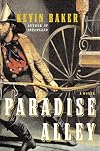
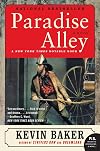
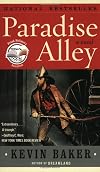
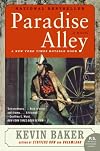
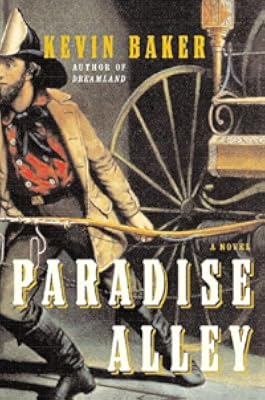
They came by boat from a starving land--and by the Underground Railroad from Southern chains--seeking refuge in a crowded, filthy corner of hell at the bottom of a great metropolis. But in the terrible July of 1863, the poor and desperate of Paradise Alley would face a new catastrophe--as flames from the war that was tearing America in two reached out to set their city on fire.Tags
Recommendations








Member Recommendations
PghDragonMan If you like historical novels of early New York, this on's for you.
Member Reviews
How did Kevin Baker manage to weave all that research on the Civil War, the famine in Ireland, slavery, the draft riots in the Five Points in Mew York City and seven voices into such a powerful and urgent tale of love, loss, what it means to be free vs. enslaved, redemption and revenge? The language is poetry really. "The city is a picked skull, but the maggots are still in the streets." I'm so sorry I finished it, because I'm afraid I'll never find a book I love as much. This is, I think, a masterpiece, and should rank with Grapes of Wrath. I hope this review helps to keep it alive with readers.
Kevin Baker and I have many common interests in the history of New York City and their potential for dramatization as evidenced by his previous novel Dreamland. In this novel Baker takes the things I love to learn about – Irish emigration during the famine, free blacks in the the City, tenement life, Tammany Hall politics, firefighting and gangs, and the Draft Riots – and spins it into a very personal story of seven iconic New Yorkers
Ruth Dove – survived the famine and emigrated to New York only by tagging along with Johnny Dolan. She endures his abuse until seeing Billy Dove in Seneca Village (now Central Park) and falling in love. She plots to have Johnny shanghaied and then marries Billy. They raise several children in their show more tenement off Paradise Alley. She has to hold her family together during the riots and Billy’s absence and dies tragically of injuries incurred trying to protect her son Milton from Johnny.
Billy Dove – learned the art of shipbuilding as a slave and escaped on board a ship while on errand for his master. Having gained his freedom, he sadly is unable to practice his craft in New York where the shipyards hire white only. Instead he reluctantly works at the Colored Orphans Asylum. On the day of the riot he is trapped at the orphanage while trying to pick up his wages and is forced by duty to help the orphans to safety while all the time plotting to return to his family. Suffering unbelievable injuries from the mobs he works his way downtown arriving too late to save Ruth. Later he joins New York’s black regiment and vanishes at Cold Harbor.
Dangerous Johnny Dolan - An evil character that Baker tries hard – and sometimes succeeds – to make look sympathetic. His big secret is that he let his brother die in the famine to save his own life turning into a monster in the process. He also has an obsession with a cabinet of curiosities stolen from a gypsy in Ireland that I can’t quite make sense of literally or symbolically. His return to New York bent on revenge sets off the course of events in the novel and somehow he gets involved in the mob spearheading some of their greatest atrocities. Ruth forces him to make the tragic realization of his crimes and he wanders off only to get himself shanghaied again in a bar.
Deirdre Dolan O’Kane – The symbol of pride in this novel, she aspires to raise herself and her family to the level of American Protestants. She blames Ruth for Johnny’s degradation and though she helps the conspiracy to get rid of Johnny she shuts out Ruth and her family. She also forces Tom to join the Union Army. Her realization of what her pride hath wrought is a turning point of the novel and she’s the main hero of rescuing the families from the attack of the riotous mobs.
Tom O’Kane – He likes the company of men so he says and participates in all matter of fraternal organizations for Irish New Yorkers including the Black Joke fire company. The appeal of Deirdre’s aspirations convinces him to give up his street life and try on respectability. At times a seeming puppet for Deirdre, he is also a kind and gentle character who helps Ruth’s family with housing and money and spends time drinking with Billy. He comes to hate his wife and their reconciliation over the course of the war is an important subplot to the novel. He gives a good soldier’s eye view of the war and the reasons they fight – not for country, not for ideology, but for each other.
Maddy Boyle – The wild child, a girl prostitute who becomes the object of Herbert Willis Robinson’s obsessions. She is put up in a fine house with clothing and fine possessions by Robinson, but deliberately acts the brazen prostitute when she realizes that Robinson will never love her. She never develops much as a character herself but plays an important part in the perceptions of the other characters.
Herbert Willis Robinson – a hack journalist for Greeley’s Tribune, he is the only character to tell his story in first person. Robinson presents most of the narrative of the riot (and cleverly seeing a young Theodore Roosevelt at Lincoln’s funeral procession) seeing pretty much all of the other characters in the course of the novel while only interacting with Maddy. He has a conscience but tragically fails to follow it and ends up an unredeemed character.
Overall this was an enjoyable novel, albeit heavy on melodrama and could use some judicious editing to trim down repetition of belabored points. Also, there are times when the progress of the main narrative would be better served by not being interrupted by yet another flashback. The climax is unsatisfying and relies too much on unlikely coincidence to bring all the characters together at the same time. Still I liked the book and look forward to reading Strivers Row. show less
Ruth Dove – survived the famine and emigrated to New York only by tagging along with Johnny Dolan. She endures his abuse until seeing Billy Dove in Seneca Village (now Central Park) and falling in love. She plots to have Johnny shanghaied and then marries Billy. They raise several children in their show more tenement off Paradise Alley. She has to hold her family together during the riots and Billy’s absence and dies tragically of injuries incurred trying to protect her son Milton from Johnny.
Billy Dove – learned the art of shipbuilding as a slave and escaped on board a ship while on errand for his master. Having gained his freedom, he sadly is unable to practice his craft in New York where the shipyards hire white only. Instead he reluctantly works at the Colored Orphans Asylum. On the day of the riot he is trapped at the orphanage while trying to pick up his wages and is forced by duty to help the orphans to safety while all the time plotting to return to his family. Suffering unbelievable injuries from the mobs he works his way downtown arriving too late to save Ruth. Later he joins New York’s black regiment and vanishes at Cold Harbor.
Dangerous Johnny Dolan - An evil character that Baker tries hard – and sometimes succeeds – to make look sympathetic. His big secret is that he let his brother die in the famine to save his own life turning into a monster in the process. He also has an obsession with a cabinet of curiosities stolen from a gypsy in Ireland that I can’t quite make sense of literally or symbolically. His return to New York bent on revenge sets off the course of events in the novel and somehow he gets involved in the mob spearheading some of their greatest atrocities. Ruth forces him to make the tragic realization of his crimes and he wanders off only to get himself shanghaied again in a bar.
Deirdre Dolan O’Kane – The symbol of pride in this novel, she aspires to raise herself and her family to the level of American Protestants. She blames Ruth for Johnny’s degradation and though she helps the conspiracy to get rid of Johnny she shuts out Ruth and her family. She also forces Tom to join the Union Army. Her realization of what her pride hath wrought is a turning point of the novel and she’s the main hero of rescuing the families from the attack of the riotous mobs.
Tom O’Kane – He likes the company of men so he says and participates in all matter of fraternal organizations for Irish New Yorkers including the Black Joke fire company. The appeal of Deirdre’s aspirations convinces him to give up his street life and try on respectability. At times a seeming puppet for Deirdre, he is also a kind and gentle character who helps Ruth’s family with housing and money and spends time drinking with Billy. He comes to hate his wife and their reconciliation over the course of the war is an important subplot to the novel. He gives a good soldier’s eye view of the war and the reasons they fight – not for country, not for ideology, but for each other.
Maddy Boyle – The wild child, a girl prostitute who becomes the object of Herbert Willis Robinson’s obsessions. She is put up in a fine house with clothing and fine possessions by Robinson, but deliberately acts the brazen prostitute when she realizes that Robinson will never love her. She never develops much as a character herself but plays an important part in the perceptions of the other characters.
Herbert Willis Robinson – a hack journalist for Greeley’s Tribune, he is the only character to tell his story in first person. Robinson presents most of the narrative of the riot (and cleverly seeing a young Theodore Roosevelt at Lincoln’s funeral procession) seeing pretty much all of the other characters in the course of the novel while only interacting with Maddy. He has a conscience but tragically fails to follow it and ends up an unredeemed character.
Overall this was an enjoyable novel, albeit heavy on melodrama and could use some judicious editing to trim down repetition of belabored points. Also, there are times when the progress of the main narrative would be better served by not being interrupted by yet another flashback. The climax is unsatisfying and relies too much on unlikely coincidence to bring all the characters together at the same time. Still I liked the book and look forward to reading Strivers Row. show less
'Paradise Alley' is a fascinating glimpse into American History and the evolution of New York City. Mr. Baker has a way with description that goes above and beyond most writers of historical novels; 'Paradise Alley' paints a picture of American life in New York City and the politics therein, the trenches of the battlefields of the Civil War, the origins of the FDNY and the desperate landscape of the terrible potato famine 1846-1848 in Ireland. The telling of the tale of the Draft Riots is daunting indeed; Kevin Baker brings that time vibrantly and hauntingly alive by showing us the events through the eyes of people that very well could have lived through it.
The details of life in NYC during this time are amazing - one can almost smell the air (thankfully, we can't). After seeing "Gangs of New York" I was impressed with how the details from the book and the details in movie held true. Baker has done a marvelous job of creating characters who are from different backgrounds and putting them into circumstances beyond their control. The short chapters told from the different view points is particularly effective. Anyone who loves NYC should read this book.
Paradise Alley is a particularly disturbing chapter in American history not unlike civil unrest around the world and genocides in Africa. Kevin Baker's tale takes place near the end of the Civil War. I was unaware and uneducated on this sordid tale of our own history. Another chink in my particularly ignorant personal ethnocentrism thanks to the watered down social studies curriculum in the public schools. From another reviewer, "It was one of the ugliest moments in American history and chances are very good you never heard of it, no matter how well you paid attention in high school history class." I enjoyed this story of early times in Manhattan although the story could have been about any city from that time as unrecognizable as New show more York City was to me in this novel. The filth and depravity were as real thought "Angela's Ashes" by Frank McCourt was depressing. This story of man's inhumanity to man was both shocking and eye-opening. I could sense Johnny Dolan coming around the corner and feel the slime in the streets and the foul scents in the air from Baker's writing which almost brought them to life. And as our current returning President, Ron Eaton, often reminds us, some times fiction has more fact than non-fiction! show less
Chronologically, this book predates Baker's previous book about early New York City, "Dreamland". This time the action takes place in Civil War era New York City and leads up to one of the greatest urban riots, the New Your Draft Riot. Baker highlights the early Irish immigrant population of the City, the influx of African Americans, some freed people and others escaped slaves and the interactions of these two groups.
Baker once again shows us the ugly underside of this often romanticized City and probes the history of prejudice and race relations in America. Fascinating in its own right as a story, it also leave you wondering just how far we've come in accepting one another.
Baker once again shows us the ugly underside of this often romanticized City and probes the history of prejudice and race relations in America. Fascinating in its own right as a story, it also leave you wondering just how far we've come in accepting one another.
Baker provides a richly detailed and harrowing account of the New York City draft riots of 1863, told through the fictional lives of Irish immigrants, an escaped slave and a jaded journalist. With his customary attention to historical accuracy and his ear for dialect, this novel creates a world that is both fascinating and horrifying- and true to one of the most dramatic and searing episodes in American history.
Members
- Recently Added By
Lists

Recommend the 20 best books you've read in the last five years
2,168 works; 601 members
Talk Discussions
Past Discussions
romance novel in Name that Book (November 2018)
Author Information

16+ Works 2,278 Members
Kevin Baker was born in August 1958, in Englewood, New Jersey and grew up in Rockport, Massachusetts. He graduated from Columbia University in New York City in 1980. He began his writing career directly after graduation. His first novel, Sometimes You See It Coming, based loosely on the life of Ty Cobb, was published in hardcover in 1993 and in show more paperback by HarperPaperbacks in the spring of 2003. Dreamland, part of Bakers New York City of Fire trilogy, was published by HarperCollins in 1999, and in paperback the following year. Paradise Alley was published by HarperCollins in 2002. Kevin was the chief historical researcher on Harold Evans' best-selling history, The American Century, published in 1999. He currently writes the monthly "In the News" column for American Heritage magazine, and has also been published in The New York Times, The Washington Post, The Chicago Tribune, The Los Angeles Times, The Frankfurter Rundschau, Harpers magazine, Talk, and The Industry Standard. (Bowker Author Biography) show less
Awards and Honors
Distinctions
Notable Lists
Series

Common Knowledge
- Canonical title
- Paradise Alley
- Original publication date
- 2002
- People/Characters
- Dangerous Johnny Dolan; Billy Dove; Ruth Dove; Maddy Boyle; Horace Greeley; Herbert Willis Henderson (show all 9); Finn McCool; Deirdre O'Kane; Tom O'Kane
- Important places
- New York, New York, USA
- Important events
- Irish Potato Famine (1845 | 1852); American Civil War (1861 | 1865); New York City Draft Riots (1863-07-13 | 1863-07-16)
- First words
- He is coming.
- Last words
- (Click to show. Warning: May contain spoilers.)His Deidre. His wife.
- Blurbers
- Peter Quinn; Darin Strauss; Peter Nichols; Paulette Jiles
Classifications
Statistics
- Members
- 636
- Popularity
- 45,598
- Reviews
- 10
- Rating
- (4.03)
- Languages
- English, German
- Media
- Paper, Audiobook, Ebook
- ISBNs
- 14
- ASINs
- 5