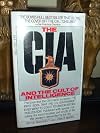
The CIA and the Cult of Intelligence
by Victor Marchetti, John D. Marks
On This Page
Description
"The first book the U.S. Government ever went to court to censor before publication. Published with lengthy blank spaces indicating the exact location and length of the 168 deletions demanded by the CIA"--Jacket.Tags
Recommendations





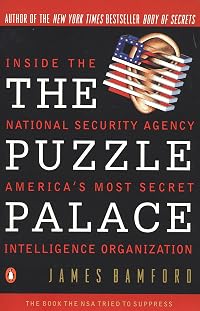


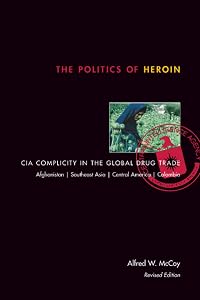

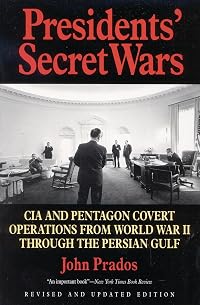
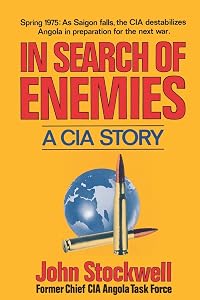













Member Recommendations
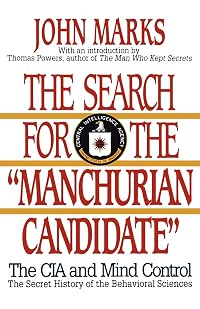
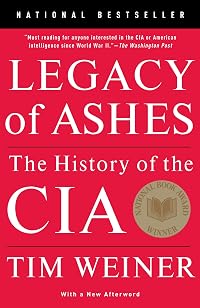
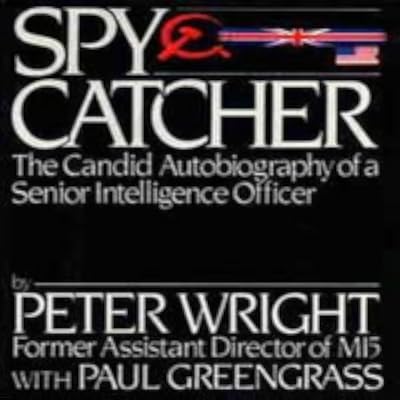
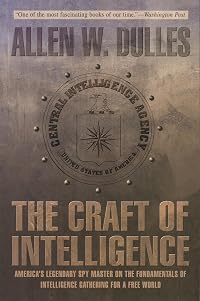
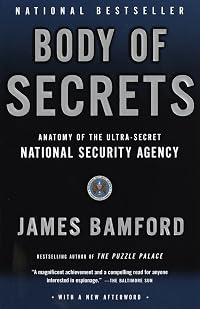
LamontCranston Stockwell mentions it favourably in the introduction.
Member Reviews
I read the original 1975 paperback edition "Published with spaces and indicating the exact location and length of the 168 deletions demanded by the CIA." (Later editions were able to return some of the expurgated passages.) The authors argue that the CIA has a “profound determinative effect on the formulation and carrying out of American foreign policy." And that is the problem they seek to expose. Marchetti, a former special assistant to the Deputy Director of the Central Intelligence Agency and a prominent paleoconservative critic of the United States Intelligence Community and the Israel lobby in the United States, is sort of a whistleblower here. The authors detail how the CIA works (in a level of granularity that veers between show more fascinating if dated and overly microscopic) and how its original purpose (i.e. collecting and analyzing information about foreign governments, corporations, and persons in order to advise public policymakers) has, according to the author, been subverted by its obsession with clandestine operations. It is the first book the federal government of the United States ever went to court to censor before its publication. The CIA demanded the authors remove 399 passages but they resisted and only 168 passages were censored. The publisher, Alfred A. Knopf, chose to publish the book with blanks for censored passages and with boldface type for passages that were challenged but later uncensored. Some of the sections are so rife with deletions, it is onerous to read. However, this is rare and mostly seeing the bold-faced sections about Camp Peary, Air America, etc. are interesting.
Some historical details I find fascinating here, such as details on one of the purported Watergate triggers ITT (Hal Hendrix, control of Cuban phone system, South America, etc.) and how Oleg Penkovsky so wanted to serve the CIA, but went to the Birtish by default when the CIA was not convinced. This casts a light on The Penkovsky Papers as its development and publishing with other CIA-rleated books is explored and suggests it is a bit of a pastiche.
Other things I found fascinating are some operational details like the psywar operation that
and that
and also how unions secretly funneled money from the Central Intelligence Agency to anti-Communist unionists overseas, often without concern for any other value. Victor Reuther confirmed that he was himself the dispenser of $50,000 in C.I.A. funds to French and Italian unions not long after VE Day.
Written and published post-Watergate, post-Pentagon Papers and after embarassing CIA exposes in Ramparts etc. it feels like a bit of a feeding frenzy on an evil CIA being revealed after its war in Laos and having been found penetrating American campuses especially through penetration and manipulation of the National Student Association.
During those turbulent years, students in 1971, stormed and occupied a Harvard building. Certain documents went missing in that raid. One was a remarkable report of a 1968 meeting by CIA staffer William R. Harris, about whom little is known. Thought now easy to find, these minutes of the “The third meeting of the Discussion Group on Intelligence and Foreign Policy,” known as the “Bissell Meeting” makes up the afterwrod here. Interestingly, Bissell then predicted the rise of electronic surveillance over human operatives. show less
Some historical details I find fascinating here, such as details on one of the purported Watergate triggers ITT (Hal Hendrix, control of Cuban phone system, South America, etc.) and how Oleg Penkovsky so wanted to serve the CIA, but went to the Birtish by default when the CIA was not convinced. This casts a light on The Penkovsky Papers as its development and publishing with other CIA-rleated books is explored and suggests it is a bit of a pastiche.
Other things I found fascinating are some operational details like the psywar operation that
played on the superstitious dread in the Philippine countryside of the asuang, a mythical vampire. A psywar squad entered an area, and planted rumors that an asuang lived on where the Communists were based. Two nights later, after giving the rumors time to circulate among Huk sympathizers, the psywar squad laid an ambush for the rebels. When a Huk patrol passed, the ambushers snatched the last man, punctured his neck vampire-fashion with two holes, hung his body until the blood drained out, and put the corpse back on the trail. As superstitious as any other Filipinos, the insurgents fled from the region.
and that
that for several years the agency subsidized the New York communist paper, The Daily Worker. In fairness to the Worker's staff, it must be noted that they were unaware of the CIA's assistance, which came in the form of several thousand secretly purchased prepaid subscriptions. The CIA apparently hoped to demonstrate by this means to the American public that the threat of communism in this country was indeed real.
and also how unions secretly funneled money from the Central Intelligence Agency to anti-Communist unionists overseas, often without concern for any other value. Victor Reuther confirmed that he was himself the dispenser of $50,000 in C.I.A. funds to French and Italian unions not long after VE Day.
Written and published post-Watergate, post-Pentagon Papers and after embarassing CIA exposes in Ramparts etc. it feels like a bit of a feeding frenzy on an evil CIA being revealed after its war in Laos and having been found penetrating American campuses especially through penetration and manipulation of the National Student Association.
During those turbulent years, students in 1971, stormed and occupied a Harvard building. Certain documents went missing in that raid. One was a remarkable report of a 1968 meeting by CIA staffer William R. Harris, about whom little is known. Thought now easy to find, these minutes of the “The third meeting of the Discussion Group on Intelligence and Foreign Policy,” known as the “Bissell Meeting” makes up the afterwrod here. Interestingly, Bissell then predicted the rise of electronic surveillance over human operatives. show less
Ratings
Members
- Recently Added By
Author Information

2+ Works 429 Members
Victor Leo Marchetti Jr. was born in Hazleton, Pennsylvania on December 23, 1929. He studied at the Sorbonne before joining the Army in 1952, where he served in an intelligence unit in Germany. When he returned, he graduated from Penn State University. He worked for the Central Intelligence Agency from 1955 until resigning in 1969. During his 14 show more years with the agency, he was as a Soviet-military specialist and executive assistant to the deputy director. He resigned because of what he saw as the agency's unchecked excesses and its increasing involvement in attempted assassinations, coups, and cover-ups. He and John D. Marks wrote a nonfiction book, The C.I.A. and the Cult of Intelligence, which was published in 1974 after being censored by the C. I. A. He went on to become a consultant, speaker, and freelance writer. He died from complications of dementia on October 19, 2018 at the age of 88. (Bowker Author Biography) show less

2+ Works 668 Members
Awards and Honors
Distinctions
Common Knowledge
- Original publication date
- 1974
Classifications
- Genres
- Nonfiction, General Nonfiction, History, Politics and Government
- DDC/MDS
- 327.1 — Society, government, & culture Political science International Relations: Spies Foreign policy and specific topics in international relations
- LCC
- JK468 .I6 .M37 — Political Science Political institutions and public administration (United States) Political institutions and public administration United States Government. Public administration
Statistics
- Members
- 415
- Popularity
- 74,984
- Reviews
- 2
- Rating
- (3.45)
- Languages
- 7 — Chinese, Dutch, English, French, German, Slovenian, Spanish
- Media
- Paper
- ISBNs
- 12
- ASINs
- 14