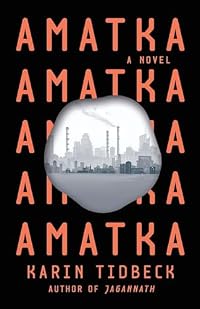
Amatka
by Karin Tidbeck
On This Page
Description
"A surreal and shockingly original debut novel set in a dystopian world shaped by language--literally. Vanja, a government worker, leaves her home city of Essre for the austere, wintry colony of Amatka on a research assignment. It takes some adjusting: people act differently in Amatka, and citizens are monitored for signs of subversion. Intending to stay just a short while, Vanja finds herself falling in love with her housemate, Nina, and decides to stick around. But when she stumbles on show more evidence of a growing threat to the colony and a cover-up by its administration, she begins an investigation that puts her at tremendous risk. In Karin Tidbeck's dystopic imagining, language has the power to shape reality. Unless objects, buildings, and the surrounding landscape are repeatedly named, and named properly, everything will fall apart. Trapped in the repressive colony, Vanja dreams of using language to break free, but her individualism may well threaten the very fabric of reality. Amatka is a beguiling and wholly original novel about freedom, love, and artistic creation by an idiosyncratic new voice"-- show lessTags
Recommendations
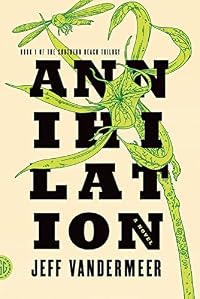
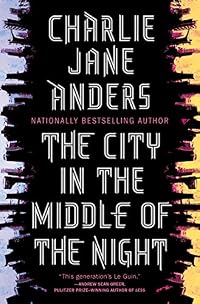
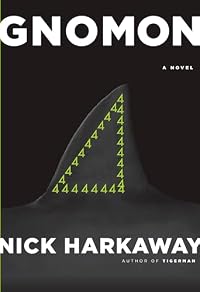
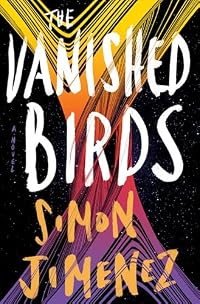


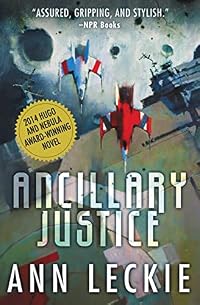
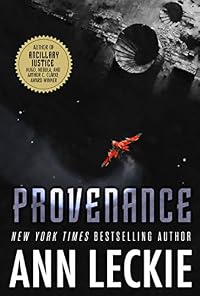
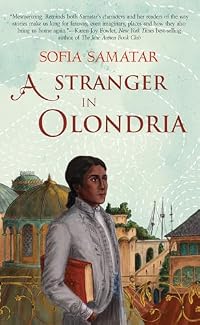
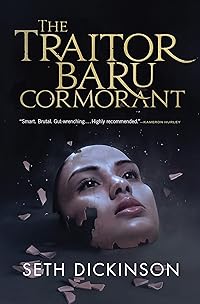


Member Recommendations
Member Reviews
Amatka is a dystopia with a whole lot in common with its famous forebears. We’ve got a micromanagerial socialist state à la Zamyatin or Orwell, rationing food and dismantling the nuclear family with a collective rearing system. We have characters whose names include numbers (never explained, so presumably just another depersonalizing device), familiar from many a science fiction yarn. Speaking of food, the numbingly bland, mushroom-based diet of Amatka’s inhabitants, combined with their ritual of “recycling” the deceased, puts the reader more than a little in mind of Soylent Green. We also touch on the preservational theme of A Canticle for Leibowitz or Mockingbird, the valorisation of old texts and prelapsarian knowledge. The show more aesthetic as a whole is overwhelmingly bleak, functional and joyless, and peculiarly Scandi — like an IKEA catalogue in monochrome. This is an observation, not a criticism — the world built here by Tidbeck ain’t no Disneyland, but it is quite convincing and an interesting place to stumble around for a few hours.
The big innovation is that (almost) everything in this world is manufactured out of a kind of grey goo, and will revert to sludge unless continually “marked”, verbally and in writing, with its name. Even book titles must directly reference the content of the book, so we get hilarious poetry collections called “About Plant House #3” and — the one that creased me up — “About Trains”. On one level we can read this as an assertion of the primacy and potency of language, or rather of nomenclature, but by the end I thought it meant the opposite of this — that objects and the material world are actually just as arbitrary as the world of sound and sign. It’s an ersatz world of mushroom porridge, mushroom coffee, where anything can substitute for anything else.
The story follows Vanya on a trip to Amatka, one of four “colonies” on an inimical alter-earth, to do market research (the first private enterprises having recently been permitted). There she falls in an anaemic kind of love with her host, Nina, and also finds herself drawn into a mystery which threatens to unpick the fabric of her tenuously-maintained reality. I found it quite slow going, but the denouement makes up for the preceding drabness with some satisfyingly apocalyptic events, albeit the opposite of conclusive, only serving to confuse matters even more. A strange book, very much in the Vandermeer (who seems to have sponsored the project) mould with its uncanniness, intriguing premise and total refusal to commit itself. show less
The big innovation is that (almost) everything in this world is manufactured out of a kind of grey goo, and will revert to sludge unless continually “marked”, verbally and in writing, with its name. Even book titles must directly reference the content of the book, so we get hilarious poetry collections called “About Plant House #3” and — the one that creased me up — “About Trains”. On one level we can read this as an assertion of the primacy and potency of language, or rather of nomenclature, but by the end I thought it meant the opposite of this — that objects and the material world are actually just as arbitrary as the world of sound and sign. It’s an ersatz world of mushroom porridge, mushroom coffee, where anything can substitute for anything else.
The story follows Vanya on a trip to Amatka, one of four “colonies” on an inimical alter-earth, to do market research (the first private enterprises having recently been permitted). There she falls in an anaemic kind of love with her host, Nina, and also finds herself drawn into a mystery which threatens to unpick the fabric of her tenuously-maintained reality. I found it quite slow going, but the denouement makes up for the preceding drabness with some satisfyingly apocalyptic events, albeit the opposite of conclusive, only serving to confuse matters even more. A strange book, very much in the Vandermeer (who seems to have sponsored the project) mould with its uncanniness, intriguing premise and total refusal to commit itself. show less
Amatka was a really fun read, albeit a weird one.
The setting that Karin Tidbeck established is not far removed from what you would find in Orwell's 1984, an oppressive dystopia where people just do what they are told, no questions asked. Information is scarce, and curiosity is shunned. But while in Orwell's work, the oppression comes in a way to control, in Amatka comes out of necessity. The world is clearly an alien one, where (almost) everything is created by the power of speaking and marking its name on it. It's the only way for the Colony to survive, and so this oppression is validated by the necessity to maintain things as they are: unchanged, tangible, concrete.
Amatka delves into the power of language, how words create meaning show more for our objects, but also constrain us from thinking outside of the obvious. Is a pencil a pencil because you said so? Or is it a piece of wood, a stick, a weapon, a key? Is a drawing of a pencil a pencil? If not, then why do we perceive it as one? Why do you think of a pencil when I write about it, and not something else?
Tidbeck takes these concepts to the limit in the book to the point of absurdity, creating an enticing narrative that makes you curious about the mysteries of this world and how it works. I think it's an amazing job of world-building that they can construct in a bit more than 200 pages.
Amatka is also about change, and how it can be scary, but also needed. To give up on the known for the unknown is always a test of faith, will, and strength. The path of change is always preferable to the path of inaction, and I love how they put change as not something beautiful and happy, but as strange, painful, and even gruesome. It might not be better, but that's the objective. The objective is to be different from what it is.
I don't think it's a book that everyone will appreciate. The ending is bittersweet and leaves you with more questions than when you started. While reading it, I kind of prepared myself for an open ending, as I felt that most of my questions about the world and what it is would be left unanswered, and I was right about that. Some people might find this unfulfilling and get disappointed with the book. Although I would prefer some closure, I did like it and felt it was sufficient.
Overall, it is a read that will stay with me for a while, and made me think profoundly about how we can change our reality with the power of language. show less
The setting that Karin Tidbeck established is not far removed from what you would find in Orwell's 1984, an oppressive dystopia where people just do what they are told, no questions asked. Information is scarce, and curiosity is shunned. But while in Orwell's work, the oppression comes in a way to control, in Amatka comes out of necessity. The world is clearly an alien one, where (almost) everything is created by the power of speaking and marking its name on it. It's the only way for the Colony to survive, and so this oppression is validated by the necessity to maintain things as they are: unchanged, tangible, concrete.
Amatka delves into the power of language, how words create meaning show more for our objects, but also constrain us from thinking outside of the obvious. Is a pencil a pencil because you said so? Or is it a piece of wood, a stick, a weapon, a key? Is a drawing of a pencil a pencil? If not, then why do we perceive it as one? Why do you think of a pencil when I write about it, and not something else?
Tidbeck takes these concepts to the limit in the book to the point of absurdity, creating an enticing narrative that makes you curious about the mysteries of this world and how it works. I think it's an amazing job of world-building that they can construct in a bit more than 200 pages.
Amatka is also about change, and how it can be scary, but also needed. To give up on the known for the unknown is always a test of faith, will, and strength. The path of change is always preferable to the path of inaction, and I love how they put change as not something beautiful and happy, but as strange, painful, and even gruesome. It might not be better, but that's the objective. The objective is to be different from what it is.
I don't think it's a book that everyone will appreciate. The ending is bittersweet and leaves you with more questions than when you started. While reading it, I kind of prepared myself for an open ending, as I felt that most of my questions about the world and what it is would be left unanswered, and I was right about that. Some people might find this unfulfilling and get disappointed with the book. Although I would prefer some closure, I did like it and felt it was sufficient.
Overall, it is a read that will stay with me for a while, and made me think profoundly about how we can change our reality with the power of language. show less
Rating: 4* of five
The Publisher Says: Vanja, a government worker, leaves her home city of Essre for the austere, wintry colony of Amatka on a research assignment. It takes some adjusting: people act differently in Amatka, and citizens are monitored for signs of subversion.
Intending to stay just a short while, Vanja finds herself falling in love with her housemate, Nina, and decides to stick around. But when she stumbles on evidence of a growing threat to the colony and a cover-up by its administration, she begins an investigation that puts her at tremendous risk.
In Karin Tidbeck's dystopic imagining, language has the power to shape reality. Unless objects, buildings, and the surrounding landscape are repeatedly named, and named show more properly, everything will fall apart. Trapped in the repressive colony, Vanja dreams of using language to break free, but her individualism may well threaten the very fabric of reality. Amatka is a beguiling and wholly original novel about freedom, love, and artistic creation by an idiosyncratic new voice.
THIS PURCHASE WAS INSPIRED BY THE WICKED, WICKED SF BOOK-BLOGGER, RACHEL CORDASCO. GO FOLLOW HER...WHY SHOULD I GO BROKE ALONE.
My Review: I was inspired to write this review by the book's selection for a group read in Goodreads's Speculative Fiction in Translation group. The power of group reads is not to be treated lightly, authors...court them!
This is a weird, weird tale. Vanja, a government functionary in a brutally planned-to-a-fare-thee-well society, is sent to an outlying community in her colonial world of, um, psychically manipulable fungi. Sort of. I am floundering a bit for a way to present the world because Author Tidbeck uses the ever-useful in medias res technique to keep your defenses down. I've seen readers unable to decide whether it's all a fable, a magical-realist condemnation of the supposed grey horrors of socialism, or a real secondary world that the colonists have traveled to in some poorly-explained way. I myownself plump for the latter because "colonists" means little on today's quite crowded Earth.
Also it pays for readers to attend to, then recall, that the book mentions the first colonists discovered buildings "not for human standards" which is all but a slamming shut of that case for me. Other readers may find other ways to interpret the story, of course; I don't think it's giving enough credit to a story to say that one and only one interpretation uses The Right Lens.
It was, however, this point that convinced me this was not Earth whether past or future. The sun being missing, or *a* sun being missing, I took to mean that the planet's skies were totally overcast at all times. How else but via a thick atmosphere of some kind could a fungal habitat keep itself from desiccation? And that also went along with the colonists' arrival by non-chemically-propelled means, as their arrival isn't accompanied by any sense of A Journey.
Vanja's life in this peculiar totalitarian society was what kept my interest the most. Her inability and/or unwillingness to be integrated anywhere made her fascinating to me. Nina, her love interest, is another more-or-less misfit. It seems to me their attraction is peculiarly one-sided. How can anyone be attracted to the point of falling in love with Vanja? She's the embodiment of the society she lives in...stop naming her and she will simply slide back into fungal goop.
This presents my basic problem with the book: It stops. It slips back into the primordial goop of story-stuff. I'm sure the ambiguity of the ending is deliberate, is a choice and a declaration of stylistic intent. Looked at from that angle, it "works" inasmuch as I am unable to finish my relationship with this story...I keep needing to name it: "Amatka has ended...Amatka is over..." but note that I need to use "to be" verbs, there isn't even a gerund I can whomp up out of the story-stuff I'm given.
It's not like this is a fatal flaw. It is, however, a self-inflicted wound on what might have been a hugely more popular seller...and I get the impression, reading about a rigid settler society that never appears to question WHY this fungal paradise of infinite, if ephemeral, possibility even exists or what happens to those who...vanish, that this is entirely okay with the author. If not the reason she wrote the story in the first place.
I found myself chuckling at the knee-jerk responses to this story to the world of socialist economic austerity. In fact, it seems to me a bitterly outraged condemnation of the eternal horror of capitalism's consume-or-die ethos, its ephemeral products designed to fail to ensure they need to be replaced, the supposed inexhaustibility of the planet's resources tied to an endless need to rename...recycle, reform, reuse...the very substance of reality. Because it's gray and hopeless, it must be about Them, not us...well folks, your privilege is showing. The view from the bottom is very much in line with Author Tidbeck's retelling of it.
What I want is for hundreds of thousands of you to be overwhelmed by a sudden desire to make your inner world richer with a flattened, attenuated emotional landscape. By contrast, even the new plague-fighting restrictions impinging on our daily lives must seem positively vibrant with possibility.
All in all, a wonderful story to read, and then re-read, for its layered and beautifully textured use of, and celebration f the uses of, language. I have seldom read a self-translated work that was this exacting in its craft, so fully and unsparingly rendered as its own self. Many are the echoes of Solaris, for example, in the protean fungal goop; but never by word or deed do the characters echo the positions or words of Lem's ancestral work.
Bravo, Author Tidbeck. Well crafted on all counts, in all metrics. show less
The Publisher Says: Vanja, a government worker, leaves her home city of Essre for the austere, wintry colony of Amatka on a research assignment. It takes some adjusting: people act differently in Amatka, and citizens are monitored for signs of subversion.
Intending to stay just a short while, Vanja finds herself falling in love with her housemate, Nina, and decides to stick around. But when she stumbles on evidence of a growing threat to the colony and a cover-up by its administration, she begins an investigation that puts her at tremendous risk.
In Karin Tidbeck's dystopic imagining, language has the power to shape reality. Unless objects, buildings, and the surrounding landscape are repeatedly named, and named show more properly, everything will fall apart. Trapped in the repressive colony, Vanja dreams of using language to break free, but her individualism may well threaten the very fabric of reality. Amatka is a beguiling and wholly original novel about freedom, love, and artistic creation by an idiosyncratic new voice.
THIS PURCHASE WAS INSPIRED BY THE WICKED, WICKED SF BOOK-BLOGGER, RACHEL CORDASCO. GO FOLLOW HER...WHY SHOULD I GO BROKE ALONE.
My Review: I was inspired to write this review by the book's selection for a group read in Goodreads's Speculative Fiction in Translation group. The power of group reads is not to be treated lightly, authors...court them!
This is a weird, weird tale. Vanja, a government functionary in a brutally planned-to-a-fare-thee-well society, is sent to an outlying community in her colonial world of, um, psychically manipulable fungi. Sort of. I am floundering a bit for a way to present the world because Author Tidbeck uses the ever-useful in medias res technique to keep your defenses down. I've seen readers unable to decide whether it's all a fable, a magical-realist condemnation of the supposed grey horrors of socialism, or a real secondary world that the colonists have traveled to in some poorly-explained way. I myownself plump for the latter because "colonists" means little on today's quite crowded Earth.
Also it pays for readers to attend to, then recall, that the book mentions the first colonists discovered buildings "not for human standards" which is all but a slamming shut of that case for me. Other readers may find other ways to interpret the story, of course; I don't think it's giving enough credit to a story to say that one and only one interpretation uses The Right Lens.
It was, however, this point that convinced me this was not Earth whether past or future. The sun being missing, or *a* sun being missing, I took to mean that the planet's skies were totally overcast at all times. How else but via a thick atmosphere of some kind could a fungal habitat keep itself from desiccation? And that also went along with the colonists' arrival by non-chemically-propelled means, as their arrival isn't accompanied by any sense of A Journey.
Vanja's life in this peculiar totalitarian society was what kept my interest the most. Her inability and/or unwillingness to be integrated anywhere made her fascinating to me. Nina, her love interest, is another more-or-less misfit. It seems to me their attraction is peculiarly one-sided. How can anyone be attracted to the point of falling in love with Vanja? She's the embodiment of the society she lives in...stop naming her and she will simply slide back into fungal goop.
This presents my basic problem with the book: It stops. It slips back into the primordial goop of story-stuff. I'm sure the ambiguity of the ending is deliberate, is a choice and a declaration of stylistic intent. Looked at from that angle, it "works" inasmuch as I am unable to finish my relationship with this story...I keep needing to name it: "Amatka has ended...Amatka is over..." but note that I need to use "to be" verbs, there isn't even a gerund I can whomp up out of the story-stuff I'm given.
It's not like this is a fatal flaw. It is, however, a self-inflicted wound on what might have been a hugely more popular seller...and I get the impression, reading about a rigid settler society that never appears to question WHY this fungal paradise of infinite, if ephemeral, possibility even exists or what happens to those who...vanish, that this is entirely okay with the author. If not the reason she wrote the story in the first place.
I found myself chuckling at the knee-jerk responses to this story to the world of socialist economic austerity. In fact, it seems to me a bitterly outraged condemnation of the eternal horror of capitalism's consume-or-die ethos, its ephemeral products designed to fail to ensure they need to be replaced, the supposed inexhaustibility of the planet's resources tied to an endless need to rename...recycle, reform, reuse...the very substance of reality. Because it's gray and hopeless, it must be about Them, not us...well folks, your privilege is showing. The view from the bottom is very much in line with Author Tidbeck's retelling of it.
What I want is for hundreds of thousands of you to be overwhelmed by a sudden desire to make your inner world richer with a flattened, attenuated emotional landscape. By contrast, even the new plague-fighting restrictions impinging on our daily lives must seem positively vibrant with possibility.
All in all, a wonderful story to read, and then re-read, for its layered and beautifully textured use of, and celebration f the uses of, language. I have seldom read a self-translated work that was this exacting in its craft, so fully and unsparingly rendered as its own self. Many are the echoes of Solaris, for example, in the protean fungal goop; but never by word or deed do the characters echo the positions or words of Lem's ancestral work.
Bravo, Author Tidbeck. Well crafted on all counts, in all metrics. show less
Composed about equally of postpartum depression and nightmare, this might be an exploration into the nature of perceived reality except in our bubble of real we do experience comforts and beauties, even seek them, and Tidbeck presents comfort in a watered down offhand way while griddling us on grey oppression.
Karin Tidbeck’s chilling novel Amatka takes place in a remote settlement where keeping inconvenient truths under wraps seems to be the main purpose of the ruling class (the “committee”). Amatka is an agricultural colony, situated near a frozen lake on the edge of the tundra. Cold and isolated, it is a place of hidden depths where little is as it seems. Vanja is sent there from her home colony of Essre on a research assignment, to question people about their hygiene practices and the products they use, with the aim of discovering new markets for the company that employs her. Vanja’s yawning indifference to her assignment is apparent. But she is inquisitive, attentive to detail, constantly seeking distraction. She is met at the show more train station by Nina, with whom she will be staying, and on the walk to their accommodations Nina points out factories and other facilities skirting the colony. Amatka’s economy is driven by agriculture, specifically mushrooms, which are grown and harvested in underground farms. The entire place strikes Vanja as gloomy and uninspiring, and, initially, she wants simply to complete her assignment and return home. But unexpectedly she and Nina connect, and soon Vanja is facing a life-changing decision. Vanja and Nina live in a technologically backward world where daily life is rigidly structured, where nothing is left to chance, where people allow faceless authorities to make basic life decisions on their behalf, where dissent and unorthodox behaviours, such as questioning the order of things, are not tolerated, and people are encouraged to report on one another. It is also a place where language has the power to either stabilize or alter reality. Vanja completes her assignment and submits her report, but as she meets more of Amatka’s citizens, senses among them a pervasive fear, and observes their downcast glances and unwillingness to talk, she becomes convinced that something is amiss. When a structural failure at one of the underground farms causes widespread alarm, raises questions and sets off a torrent of rumors, she is soon violating protocol by sneaking away from the colony at night in search of the key to a mystery. As a dissection of oppressive totalitarianism, Tidbeck’s novel is subtle. The mystery that Vanja is trying to solve is never explicitly spelled out. There are elements of the story that loom large, but their significance is not made clear. We follow Vanja on her explorations, but the meaning of what she discovers—for her and us—remains elusive; though we do learn that the fate awaiting her is not a pleasant one. Some readers will find this narrative haziness tantalizing; for others it will be frustrating. But, regardless, Amatka is a boldly imaginative, deeply unsettling novel that shines a glaring light on issues that only the wilfully blind among us cannot see burgeoning in our tumultuous 21-century. show less
Märk:
Vanja (fullständigt NAMN: Brilars Vanja Essre Två) kommer med TÅG till STADEN Amatka, längst ut vid KANTEN av civilisationen. Hennes SYSSELSÄTTNING där är att prata med MEDBORGARE för att undersöka intresset för HYGIENPRODUKTER från det något rikare Essre, där man specialiserat sig på sådant.
Hon märker Amatka: en GRUVA, en kall och gråskitig STAD bebodd av MEDBORGARE som lever på SVAMP, GRÖT och SPRIT. Där måste ju finnas EFTERFRÅGAN på HYGIENPRODUKTER. Bortom dem finns ju bara INTET, ända sedan den där gången för länge sedan då CIVILISATIONEN föll samman, SOLEN blev kall och MÄNNISKORNA fick klamra sig fast där det gick. Tack och lov för STYRELSEN som håller ihop alltihop.
(SUBSTANTIV är viktiga. show more Så här på andra sidan … vad som nu hände världen kan en aldrig vara försiktig nog. Alla TING är gjorda av syntetiskt MATERIAL, och om man glömmer att konstant märka dem, tala om för dem vad de är, kanske de slutar vara TING och blir sig själva i stället. Och var stode vårt SAMHÄLLE då? Så: märk allt. Ta en PENNA och skriv TINGENS NAMN på dem. Se på den återvunna pappersmassan, kalla den PAPPER. Se på den smaklösa gröten, kalla den MAT. Se på arkiven, kalla dem KUNSKAP. Se på människorna, kalla dem FAMILJ. Skriv. Fyll i så fort det börjar blekna. Minska antalet tillgängliga namn för att inte förvirra. Tappa inte koncentrationen. Tänk inte ”om” eller ”vad” eller ”varför”, då faller allt samman, rinner iväg som en oaptitlig quornliknande massa.)
Var var jag? Amatka. Staden på gränsen, bebodd av MEDBORGARE som Nina, som tar in Vanja i sitt HEM och sedan i sin SÄNG och märker henne, vill kalla henne LYCKA. Att det ska vara så enkelt. BIBLIOTEKET där nästan ingen går in längre, som bit för bit plundras på PAPPER för att ersätta det som upplöses när folk glömmer det, där DIKTERNA bara består av exakta, helt ometaforiska beskrivningar av DRIVHUSEN där de sista MÄNNISKORNA odlar sin MAT.
klockan fem och tjugotvå bland betorna
en skiftning från grånad till skärpa
de långa fårorna av kalkhaltig jord
ljudet av vatten som sugs upp av rötter
Det ligger något desperat över Amatka, som Monty Python-sketchen om hus byggda av en hypnotisör, som rasar när folk slutar tro på dem. Finns det tunnlar (inga versaler) under staden? Möts människor i hemlighet för att säga saker de inte får säga när storebror STYRELSEN hör? Viskas det fortfarande om BRANDEN för några år sedan, när den sista POETEN sade något som inte fick sägas, när människor försvann, när allt höll på att spricka? Självklart, det är ju en dystopi Nej, varför skulle de det? Låt bara bli att märka det. Syns inte. Finns inte.
Tidbeck slår en fantastisk båge här; hon sätter upp en värld som hämtad ur klassisk subversiv sovjetisk SF á la Zamjatin och Tarkovskij (via Orwells språkbeväpning), skrivet i koncisa, urtvättade färger, och befolkar den med människor uppspolade ur modern svensk diskbänksrealism, losshakade från kravet att vara Verkliga. Visst kan vi den här världen, visst har vi läst allt från Boye till Collins och världen som sådan har inga stora överraskningar … nåmendåså, då gör vi det till en poäng, en standarddystopivärld som slitits så tunn att den måste hållas ihop med tvingande normer och etiketter för att skygglapparna ska sitta kvar.
Det är ju alltid frestande att läsa en dystopi som en reflektion av tiden den skrevs i, och här har vi alltså ett språk hämtat ur ett samhälle där det faktiskt fanns Saker Man Inte Fick Säga och applicerat på en värld där allt redan sagts. Där alla konflikter bemöts med ”Nu lägger vi det här bakom oss och blickar framåt.” Där minsta antydan om att man kan göra saker på något annat sätt bemöts av vild panik och tillrytningar att sitt för fan ner i båten innan du stjälper oss, sabba för guds skull inte vår illusion att vi ordnat allt. (Amatka använder konsekvent det opersonliga pronomenet ”en” i stället för ”man”. Sådär bara.) Men framför allt vågar den fabulera.
Det finns en fantastisk liten våg av nya apokalypslögnare i svensk litteratur idag, Carolina Fredriksson, Susanna Lundin med flera; de som skriver om saker som aldrig kan hända, sammanbrottet som vi fruktar utan att tro på dem, och vågar ljuga och berätta sagor som känns sanna även när de beger sig in i rena drömvärldar. Där någonstans leder en smalspårig järnväg in till Amatka. Och marken under Amatka är kanske inte lika frusen och ogästvänlig som den verkar. show less
Vanja (fullständigt NAMN: Brilars Vanja Essre Två) kommer med TÅG till STADEN Amatka, längst ut vid KANTEN av civilisationen. Hennes SYSSELSÄTTNING där är att prata med MEDBORGARE för att undersöka intresset för HYGIENPRODUKTER från det något rikare Essre, där man specialiserat sig på sådant.
Hon märker Amatka: en GRUVA, en kall och gråskitig STAD bebodd av MEDBORGARE som lever på SVAMP, GRÖT och SPRIT. Där måste ju finnas EFTERFRÅGAN på HYGIENPRODUKTER. Bortom dem finns ju bara INTET, ända sedan den där gången för länge sedan då CIVILISATIONEN föll samman, SOLEN blev kall och MÄNNISKORNA fick klamra sig fast där det gick. Tack och lov för STYRELSEN som håller ihop alltihop.
(SUBSTANTIV är viktiga. show more Så här på andra sidan … vad som nu hände världen kan en aldrig vara försiktig nog. Alla TING är gjorda av syntetiskt MATERIAL, och om man glömmer att konstant märka dem, tala om för dem vad de är, kanske de slutar vara TING och blir sig själva i stället. Och var stode vårt SAMHÄLLE då? Så: märk allt. Ta en PENNA och skriv TINGENS NAMN på dem. Se på den återvunna pappersmassan, kalla den PAPPER. Se på den smaklösa gröten, kalla den MAT. Se på arkiven, kalla dem KUNSKAP. Se på människorna, kalla dem FAMILJ. Skriv. Fyll i så fort det börjar blekna. Minska antalet tillgängliga namn för att inte förvirra. Tappa inte koncentrationen. Tänk inte ”om” eller ”vad” eller ”varför”, då faller allt samman, rinner iväg som en oaptitlig quornliknande massa.)
Var var jag? Amatka. Staden på gränsen, bebodd av MEDBORGARE som Nina, som tar in Vanja i sitt HEM och sedan i sin SÄNG och märker henne, vill kalla henne LYCKA. Att det ska vara så enkelt. BIBLIOTEKET där nästan ingen går in längre, som bit för bit plundras på PAPPER för att ersätta det som upplöses när folk glömmer det, där DIKTERNA bara består av exakta, helt ometaforiska beskrivningar av DRIVHUSEN där de sista MÄNNISKORNA odlar sin MAT.
klockan fem och tjugotvå bland betorna
en skiftning från grånad till skärpa
de långa fårorna av kalkhaltig jord
ljudet av vatten som sugs upp av rötter
Det ligger något desperat över Amatka, som Monty Python-sketchen om hus byggda av en hypnotisör, som rasar när folk slutar tro på dem. Finns det tunnlar (inga versaler) under staden? Möts människor i hemlighet för att säga saker de inte får säga när storebror STYRELSEN hör? Viskas det fortfarande om BRANDEN för några år sedan, när den sista POETEN sade något som inte fick sägas, när människor försvann, när allt höll på att spricka? Självklart, det är ju en dystopi Nej, varför skulle de det? Låt bara bli att märka det. Syns inte. Finns inte.
Tidbeck slår en fantastisk båge här; hon sätter upp en värld som hämtad ur klassisk subversiv sovjetisk SF á la Zamjatin och Tarkovskij (via Orwells språkbeväpning), skrivet i koncisa, urtvättade färger, och befolkar den med människor uppspolade ur modern svensk diskbänksrealism, losshakade från kravet att vara Verkliga. Visst kan vi den här världen, visst har vi läst allt från Boye till Collins och världen som sådan har inga stora överraskningar … nåmendåså, då gör vi det till en poäng, en standarddystopivärld som slitits så tunn att den måste hållas ihop med tvingande normer och etiketter för att skygglapparna ska sitta kvar.
Det är ju alltid frestande att läsa en dystopi som en reflektion av tiden den skrevs i, och här har vi alltså ett språk hämtat ur ett samhälle där det faktiskt fanns Saker Man Inte Fick Säga och applicerat på en värld där allt redan sagts. Där alla konflikter bemöts med ”Nu lägger vi det här bakom oss och blickar framåt.” Där minsta antydan om att man kan göra saker på något annat sätt bemöts av vild panik och tillrytningar att sitt för fan ner i båten innan du stjälper oss, sabba för guds skull inte vår illusion att vi ordnat allt. (Amatka använder konsekvent det opersonliga pronomenet ”en” i stället för ”man”. Sådär bara.) Men framför allt vågar den fabulera.
Det finns en fantastisk liten våg av nya apokalypslögnare i svensk litteratur idag, Carolina Fredriksson, Susanna Lundin med flera; de som skriver om saker som aldrig kan hända, sammanbrottet som vi fruktar utan att tro på dem, och vågar ljuga och berätta sagor som känns sanna även när de beger sig in i rena drömvärldar. Där någonstans leder en smalspårig järnväg in till Amatka. Och marken under Amatka är kanske inte lika frusen och ogästvänlig som den verkar. show less
Amatka starts as a fairly rote dystopia, a grey society organized into a brutal collective due to scarcity and the punishing cold. Shades of [b:The Left Hand of Darkness|18423|The Left Hand of Darkness (Hainish Cycle #6)|Ursula K. Le Guin|https://images.gr-assets.com/books/1488213612s/18423.jpg|817527]. One little detail made in the beginning gets gradually more and more attention until it encompasses the mystery at the center of the novel and surreally transfigures, or perhaps liberates, the world.
Every object in Amatka is made out of the same identical grey gloop and be willed into existence for what it is. Objects must be marked: a toothbrush must be physically labeled as a toothbrush and this name said out loud, likewise spoons, show more doors, buildings, and so on. The commune's daily chores include the "marking song" where they systematically acknowledge the existence and names of everything they have. To forget to do this is to risk the collapse of the object back into its original state of grey goo-- an excellent little detail added is that this substance isn't merely gross but also psychically horrific and unsettling like a dead body or a religious blasphemy. Worse is if you call an object by the wrong name and create something indefinably wrong. This is such an amazing metaphor for the creative process; for the related tyrannies of language, culture, and symbolism; for neurosis and mental illness... personally I focused on the novelty of Saussure's langue as a literal dictatorship, but the sign of a great premise is that it can be interpreted in many ways.
So it was a remarkable turnaround. Just when I was sick of the unremarkable setting and beginning to get resigned to the possibility that this novel would let a great concept go to waste the book seemed to reach out, to sense my frustration and correct course. Furthermore it kept going; in the manner of Junji Ito Amatka takes the central idea and spins it to its logical, if absurd and horrific conclusion.
Although, of course, the conclusion isn't supposed to be horrific at all. Certainly disturbing but also just and good given the paradigm the novel presents. Language constrains ideas into arbitrary containers and so allows humans to handle them. Like wiring a bonsai tree it makes a growing thing manageable but also necessarily stunts it. This is why being bilingual is so important; Yuri Herrera says in his [b:Signs Preceding the End of the World|21535546|Signs Preceding the End of the World|Yuri Herrera|https://images.gr-assets.com/books/1398195367s/21535546.jpg|15089950] "if you say Give me fire when they say Give me a light, what is not to be learned about fire, light and the act of giving? It’s not another way of saying things: these are new things." Discovering a new way of understanding a concept like "fire" that has grown independently of your known etymologies or sign-systems is to discover something new entirely.
In Amatka the constraints apply to physical objects. This thing is a toothbrush, it is, it is, it is. For it to not be a toothbrush, to even forget that it is a toothbrush, is to literally risk everything melting away and society falling to pieces. But what if our constraints are wrong? What if they're arbitrary? What if they contain inherent contradictions and our slavish devotion to them blinds us to inevitable problems? What if a thing isn't a thing at all? What if a toothbrush is a key? What if a man is a woman? What is a person is many people? show less
Every object in Amatka is made out of the same identical grey gloop and be willed into existence for what it is. Objects must be marked: a toothbrush must be physically labeled as a toothbrush and this name said out loud, likewise spoons, show more doors, buildings, and so on. The commune's daily chores include the "marking song" where they systematically acknowledge the existence and names of everything they have. To forget to do this is to risk the collapse of the object back into its original state of grey goo-- an excellent little detail added is that this substance isn't merely gross but also psychically horrific and unsettling like a dead body or a religious blasphemy. Worse is if you call an object by the wrong name and create something indefinably wrong. This is such an amazing metaphor for the creative process; for the related tyrannies of language, culture, and symbolism; for neurosis and mental illness... personally I focused on the novelty of Saussure's langue as a literal dictatorship, but the sign of a great premise is that it can be interpreted in many ways.
So it was a remarkable turnaround. Just when I was sick of the unremarkable setting and beginning to get resigned to the possibility that this novel would let a great concept go to waste the book seemed to reach out, to sense my frustration and correct course. Furthermore it kept going; in the manner of Junji Ito Amatka takes the central idea and spins it to its logical, if absurd and horrific conclusion.
Although, of course, the conclusion isn't supposed to be horrific at all. Certainly disturbing but also just and good given the paradigm the novel presents. Language constrains ideas into arbitrary containers and so allows humans to handle them. Like wiring a bonsai tree it makes a growing thing manageable but also necessarily stunts it. This is why being bilingual is so important; Yuri Herrera says in his [b:Signs Preceding the End of the World|21535546|Signs Preceding the End of the World|Yuri Herrera|https://images.gr-assets.com/books/1398195367s/21535546.jpg|15089950] "if you say Give me fire when they say Give me a light, what is not to be learned about fire, light and the act of giving? It’s not another way of saying things: these are new things." Discovering a new way of understanding a concept like "fire" that has grown independently of your known etymologies or sign-systems is to discover something new entirely.
In Amatka the constraints apply to physical objects. This thing is a toothbrush, it is, it is, it is. For it to not be a toothbrush, to even forget that it is a toothbrush, is to literally risk everything melting away and society falling to pieces. But what if our constraints are wrong? What if they're arbitrary? What if they contain inherent contradictions and our slavish devotion to them blinds us to inevitable problems? What if a thing isn't a thing at all? What if a toothbrush is a key? What if a man is a woman? What is a person is many people? show less
Members
- Recently Added By
Lists

Favorite Science Fiction by Women Authors
737 works; 197 members

Best Science Fiction Originally Published in a Language Other Than English
449 works; 31 members

2018 Hugo Eligible Novels
170 works; 16 members
SF & Fantasy in Translation
95 works; 16 members

Unbound Worlds 100 Best SF Books
100 works; 8 members
LGBTQ+ Speculative Fiction
818 works; 51 members

2017 Science Fiction and Fantasy I'm Looking Forward To
46 works; 6 members

Speculative Fiction from around the World
610 works; 17 members

Books Read in 2019
4,052 works; 110 members

Small-Town Horror Reading List
25 works; 3 members

Reading Glasses Podcast
410 works; 3 members
Author Information

22+ Works 1,375 Members
Some Editions
Awards and Honors
Awards
Series
Belongs to Publisher Series
Gallimard, Folio SF (642)
Common Knowledge
- Original publication date
- 2012 (Sweden) (Sweden); 2017 (US) (US)
- People/Characters
- Brilars' Vanja; Ulltors' Nina; Jonids' Ivar; Sarols' Ulla; Samins' Evgen
- Important places
- Amatka
- First words
- Brilars' Vanja Esse Two, information assistant with the Essre Hygiene Specialists, was the only passenger on the auto train bound for Amatka.
- Last words
- (Click to show. Warning: May contain spoilers.)Den svirrade och sjöng under deras steg.
(Click to show. Warning: May contain spoilers.)It thrilled and sang beneath their feet. - Blurbers
- VanderMeer, Jeff; Bell, Matt
- Original language
- Swedish
- Canonical DDC/MDS
- 839.738
- Canonical LCC
- PT9877.3.I45
Classifications
- Genres
- Fiction and Literature, Science Fiction
- DDC/MDS
- 839.738 — Literature & rhetoric German & related literatures Other Germanic literatures Swedish literature Swedish fiction 2000-
- LCC
- PT9877.3 .I45 — Language and Literature German, Dutch and Scandinavian literatures Swedish literature Individual authors or works 2001-
- BISAC
Statistics
- Members
- 512
- Popularity
- 58,272
- Reviews
- 29
- Rating
- (3.89)
- Languages
- 9 — English, French, Hungarian, Italian, Korean, Portuguese, Spanish, Swedish, Turkish
- Media
- Paper, Audiobook, Ebook
- ISBNs
- 15
- ASINs
- 2