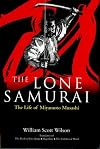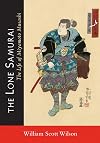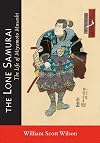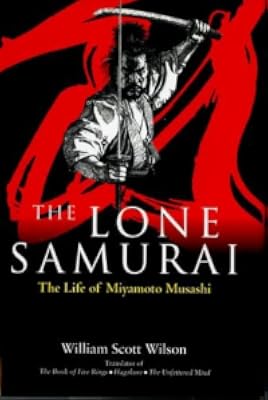
The Lone Samurai: The Life of Miyamoto Musashi
by William Scott Wilson
On This Page
Description
A vivid, multi-faceted portrait of feudal Japan and the legendary samurai who wrote the classic martial arts text The Book of Five Rings Born in 1584, Miyamoto Musashi was the legendary samurai known throughout the world as a master swordsman, spiritual seeker, and author of the classic book on strategy, The Book of Five Rings. Over 350 years after his death, Musashi and his legacy still fascinate readers worldwide, inspiring artists, authors, and filmmakers. In The Lone Samurai, show more respected translator and expert on samurai culture William Scott Wilson presents both a vivid account of a fascinating period in feudal Japan and a portrait of the courageous, iconoclastic samurai who wrestled with philosophical and spiritual ideas that are as relevant today as they were in his time. For Musashi, the way of the martial arts was about mastery of the mind rather than simply technical prowess--and it is this path to mastery that is the core teaching in his Book of Five Rings. This special volume includes supplemental material on Musashi's legacy as a martial arts icon, his impact on literature and film, and the influence of his Book of Five Rings. show lessTags
Recommendations






Member Reviews
This was a beautiful book. I have not come across a biography written with such a respect to the person of interest without becoming cringe or little bit over the top, especially in the world of martial arts or war.
Musashi presented in this book is a man that even after all his deeds and written works remains a mystery (and as such great basis for various works, novels and movies about his life and deeds). We do know that he was dedicated to his martial arts, to the philosophy of it than he also applied in ordinary, non-martial-art-related, life. But we only see the surface,with occasional glimpse of his views and attitude toward life, very interesting views obviously built through his experiences (that unfortunately remain hidden and show more majorly unknown). We follow him from early days when he made his name by mercilessly defeating the challengers. Then we get to know the man who decides that actual killing of his challengers is to be avoided because it does not have a purpose, so he decides to leave a trace and create a school of his own. This is period of Musashi's life during which he starts playing more of a role of wise man (in positive, true, meaning, not mafia or wise cracker way). He shows that he knows a lot of things, from governing to arts, and is more than capable to make a very durable friendships. This is a side of him that I was not aware. It shows that he was truly a quite capable polymath. Again, how did he manage to acquire this much knowledge is left unknown.
He is practical man, and has a very clear approach to combat and martial arts - goal is defeating the enemy, means are not important, important thing is to finish the fight with the other side completely defeated and no longer a danger. I like how he considers opinions (prevalent in other martial art schools) that combat involves deception as silly. It is silly to Musashi because for him combat is use of all means, all weapons and techniques available to defeat the enemy. There is nothing to consider deception when in combat everything is allowed to win. His comments how one needs to train in order to win using what is available to him in ordinary life are also very interesting. If one is dedicated to life of the martial arts, then one is always ready to engage in combat. There is no need for additional rituals or preparation. If one is at his senses, he is ready for fight at any time. Also I like his approach to death in combat. While death in combat was looked through prism of Samurai being able to understand how every day, every new conflict brought with it, can also mean warrior's death, this became sort of a cult like approach, with even some works on warrior conduct starting to state how death is the way of the warrior (as they say when simplification takes place.....). For Musashi death was something that can happen (and thus is in line with the old views on death and combat) but goal in combat was not death in any way of the warrior but defeat and death of his opponents.
Parts on Musashi's phase as artist and later as a teacher are truly epic. I did not know he was such an accomplished painter.
It is very refreshing to read about the person that never put himself under the stage light (although fame and rank was something he was always after, and good advertisement was always welcome). This, considering the way various schools and techniques fought for their spot under the sun, was extraordinary then, but is exceptional today, in time when everyone has a need to share more than required with everyone else.
Excellent story of a very interesting man, who seems to have lived by the creed of do-and-learn, but was also more than capable to learn other skills, looking at them as if they are just another facets of martial arts gem, and thus worthy to know and master. If one just takes this idea from this book, it is incredible, it opens a lot of potential. Life is something we need to embrace, live fully and recognize that any skill, any bits of knowledge we come across, every experience, is a way to grow and become stronger. Important thing - do not just read about these things, live them. That is the only way to achieve greatness.
One of the best books I ever read.
Highly recommended. show less
Musashi presented in this book is a man that even after all his deeds and written works remains a mystery (and as such great basis for various works, novels and movies about his life and deeds). We do know that he was dedicated to his martial arts, to the philosophy of it than he also applied in ordinary, non-martial-art-related, life. But we only see the surface,with occasional glimpse of his views and attitude toward life, very interesting views obviously built through his experiences (that unfortunately remain hidden and show more majorly unknown). We follow him from early days when he made his name by mercilessly defeating the challengers. Then we get to know the man who decides that actual killing of his challengers is to be avoided because it does not have a purpose, so he decides to leave a trace and create a school of his own. This is period of Musashi's life during which he starts playing more of a role of wise man (in positive, true, meaning, not mafia or wise cracker way). He shows that he knows a lot of things, from governing to arts, and is more than capable to make a very durable friendships. This is a side of him that I was not aware. It shows that he was truly a quite capable polymath. Again, how did he manage to acquire this much knowledge is left unknown.
He is practical man, and has a very clear approach to combat and martial arts - goal is defeating the enemy, means are not important, important thing is to finish the fight with the other side completely defeated and no longer a danger. I like how he considers opinions (prevalent in other martial art schools) that combat involves deception as silly. It is silly to Musashi because for him combat is use of all means, all weapons and techniques available to defeat the enemy. There is nothing to consider deception when in combat everything is allowed to win. His comments how one needs to train in order to win using what is available to him in ordinary life are also very interesting. If one is dedicated to life of the martial arts, then one is always ready to engage in combat. There is no need for additional rituals or preparation. If one is at his senses, he is ready for fight at any time. Also I like his approach to death in combat. While death in combat was looked through prism of Samurai being able to understand how every day, every new conflict brought with it, can also mean warrior's death, this became sort of a cult like approach, with even some works on warrior conduct starting to state how death is the way of the warrior (as they say when simplification takes place.....). For Musashi death was something that can happen (and thus is in line with the old views on death and combat) but goal in combat was not death in any way of the warrior but defeat and death of his opponents.
Parts on Musashi's phase as artist and later as a teacher are truly epic. I did not know he was such an accomplished painter.
It is very refreshing to read about the person that never put himself under the stage light (although fame and rank was something he was always after, and good advertisement was always welcome). This, considering the way various schools and techniques fought for their spot under the sun, was extraordinary then, but is exceptional today, in time when everyone has a need to share more than required with everyone else.
Excellent story of a very interesting man, who seems to have lived by the creed of do-and-learn, but was also more than capable to learn other skills, looking at them as if they are just another facets of martial arts gem, and thus worthy to know and master. If one just takes this idea from this book, it is incredible, it opens a lot of potential. Life is something we need to embrace, live fully and recognize that any skill, any bits of knowledge we come across, every experience, is a way to grow and become stronger. Important thing - do not just read about these things, live them. That is the only way to achieve greatness.
One of the best books I ever read.
Highly recommended. show less
An excellent biography of Miyamoto Musashi, one of the most captivating figures in world history. Deeply informative, with a catalogue of interesting tidbits about the different media representations of the man in addition to a comprehensive overview of his life and works, this is not only THE biography to read, it might be the only one available in English? (I'm not sure, but from what I can tell, there aren't any others available to read.) This is very much worth your time if you like Japanese history, or happen to like Vagabond.
The only complaints that I have are probably related to the limited sources available, but occasionally the author would mention that Musashi had adopted sons, for example, and provide no other context or show more detail. Perhaps this information doesn't exist, but it would be nice to at least acknowledge that. show less
The only complaints that I have are probably related to the limited sources available, but occasionally the author would mention that Musashi had adopted sons, for example, and provide no other context or show more detail. Perhaps this information doesn't exist, but it would be nice to at least acknowledge that. show less
By age thirteen, Miyamoto Musashi had killed his opponent in what would become the first of many celebrated swordfights. By thirty, he had fought more than sixty matches, losing none. He would live another thirty years but kill no one else. He continued to engage in swordfights but now began to show his skill simply by thwarting his opponents' every attack until they acknowledged Musashi's all-encompassing ability. At the same time, the master swordsman began to expand his horizons, exploring Zen Buddhism and its related arts, particularly ink painting, in a search for a truer Way.
Musashi was a legend in his own time. As a swordsman, he preferred the wooden sword and in later years almost never fought with a real weapon. He outfoxed his show more opponents or turned their own strength against them. At the height ofhis powers, he began to evolve artistically and spirituallly, becoming one of the country's most highly regarded ink painters and calligraphers, while deepening his practice of Zen Buddhism. He funneled his hard-earned insights about the warrior arts into his spiritual goals. Ever the solitary wanderer, Musashi shunned power, riches,and the comforts of a home or fixed position with a feudal lord in favor of a constant search for truth, perfection, and a better Way. Eventually, he came to the realization that perfecton in one art, whether peaceful or robust, could offer entry to a deeper, spiritual understanding. His philosophy, along with his warrior strategies, is distilled in his renowned work, The Book of Five Rings, written near the end of his life.
Working from original Japanese source materials, author William Scott Wilson paints an unforgettable protrait. Wilson, of course, is also the translator who brought the English-speaking world the authoritative versions of Hagakure, Musashi's Book of Five Rings, and other classics of martial arts philosophy.
Musashi remains a source of fascination for the Japanese, as well as for those in the West who have more recently discovered the ideals of the samurai and Zen Buddhism. The Lone Samurai is the first biography ever to appear in English of this richly layered, complex seventeenth-century swordsman and seeker, whose legacy has lived on far beyond his own time and place.
William Scott Wilson was born in 1944 and grew up in Fort Lauderdale, Florida. As an undergraduate student at Dartmouth College in 1966, he was invited by a friend to join a three-month kayak trip up the coast of Japan from Shimonoseki to Tokyo. This eye-opening journey, beautifully documented in National Geographic Magazine, spurred Wilson's fascination with the culture and history of Japan.
After receiving a B.A. degree in political science from Dartmouth, Wilson earned a second B.A. in Japanese language and literature from the Monterey Institute of Foreign Studies, then undertook extensive research on Edo-period (1603-1868) philosophy at the Aichi Prefectural University in Nagoya, Japan.
Wilson completed his first translation, Hagakure, while living in an old farmhouse deep in the Japanese countryside. Hagakure saw publication in 1979, the same year Wilson completed an M.A. in Japanese language and literature at the University of Washington. Wilson's other translations include The Book of Five Rings, The Life-Giving Sword, The Unfettered Mind, the Eiji Yoshikawa novel Taiko, and Ideals of the Samurai, which has been used as a college textbook on Japanese history and thought. Two decades after its initial publication in English, Hagakure was prominently featured in the Jim Jarmusch film Ghost Dog. Traveling frequently to Japan for research and pleasure, Wlilson currently lives in Miami, Florida.
The Lone Samurai is a landmark biography of Miyamoto Musashi, the legendary Japanese figure known throughout the world as a master swordsman, spiritual seeker, and author of the Book of Five Rings. A stunning protarit of a courageous and singularly determined man emerges in these pages, the first biography of Musashi to appear in English. With a compassionate yet critical eye, William Scott Wilson delves into the workings of Musashi's mind as the iconoclastic samurai wrestled with philosphical and spiritual ideas that are as relevant today as they were in his times. The Lone Samurai is far more than a vivid account of a fasinating period in feudal Japan. It is the story of one man's quest for the right path in life, and the reward it eventually led to.
Contents
Preface
Maps
Prologue
Chapter One The way of the sword: Banshu to Ganryu Island
First strike
Origins
Finding his strength
Kyoto and matches with the masters
Sharpeneing his tools
Demon of the Western Provinces
Chapter Two The way of the sword and the way of the brush: Osaka Castle to Kokura
The fire of battle
Arts of peace, arts of war
The Kyoto renaissance
Family name
A real live human being
On to Kokura
Kumoi
Shimabara
Chapter Three The way of the brush: Kumamoto
Connections
The way of the warrior
A place in the seating order
Last bouts
The thirty-five articles
An end and a beginning
The brush and the mind
Painting with the mind of the sword
The paintings
Calligraphy
Fudo Myo-o
Chapter Four The way of life and death: Reigan Cave
Old age
The five-storied pagoda
The concept of the five rings in esoteric Buddhism
Basic principles
The way of the martial arts is to win
Discipline
Real knowledge
Everldya mind
Fluidity
Psychology
Final days
Musashi's character
Afterword
Appendix I- LIfe after death
Appendix 2-Influences on and parallels to The Book of Five Rings
Appendix 3-A Mkusashi Filmgraphy
Notes
Glossary-Terms; Historical figures; Clans; Events; Fighting styles; Writings; Others
Bibliography show less
Musashi was a legend in his own time. As a swordsman, he preferred the wooden sword and in later years almost never fought with a real weapon. He outfoxed his show more opponents or turned their own strength against them. At the height ofhis powers, he began to evolve artistically and spirituallly, becoming one of the country's most highly regarded ink painters and calligraphers, while deepening his practice of Zen Buddhism. He funneled his hard-earned insights about the warrior arts into his spiritual goals. Ever the solitary wanderer, Musashi shunned power, riches,and the comforts of a home or fixed position with a feudal lord in favor of a constant search for truth, perfection, and a better Way. Eventually, he came to the realization that perfecton in one art, whether peaceful or robust, could offer entry to a deeper, spiritual understanding. His philosophy, along with his warrior strategies, is distilled in his renowned work, The Book of Five Rings, written near the end of his life.
Working from original Japanese source materials, author William Scott Wilson paints an unforgettable protrait. Wilson, of course, is also the translator who brought the English-speaking world the authoritative versions of Hagakure, Musashi's Book of Five Rings, and other classics of martial arts philosophy.
Musashi remains a source of fascination for the Japanese, as well as for those in the West who have more recently discovered the ideals of the samurai and Zen Buddhism. The Lone Samurai is the first biography ever to appear in English of this richly layered, complex seventeenth-century swordsman and seeker, whose legacy has lived on far beyond his own time and place.
William Scott Wilson was born in 1944 and grew up in Fort Lauderdale, Florida. As an undergraduate student at Dartmouth College in 1966, he was invited by a friend to join a three-month kayak trip up the coast of Japan from Shimonoseki to Tokyo. This eye-opening journey, beautifully documented in National Geographic Magazine, spurred Wilson's fascination with the culture and history of Japan.
After receiving a B.A. degree in political science from Dartmouth, Wilson earned a second B.A. in Japanese language and literature from the Monterey Institute of Foreign Studies, then undertook extensive research on Edo-period (1603-1868) philosophy at the Aichi Prefectural University in Nagoya, Japan.
Wilson completed his first translation, Hagakure, while living in an old farmhouse deep in the Japanese countryside. Hagakure saw publication in 1979, the same year Wilson completed an M.A. in Japanese language and literature at the University of Washington. Wilson's other translations include The Book of Five Rings, The Life-Giving Sword, The Unfettered Mind, the Eiji Yoshikawa novel Taiko, and Ideals of the Samurai, which has been used as a college textbook on Japanese history and thought. Two decades after its initial publication in English, Hagakure was prominently featured in the Jim Jarmusch film Ghost Dog. Traveling frequently to Japan for research and pleasure, Wlilson currently lives in Miami, Florida.
The Lone Samurai is a landmark biography of Miyamoto Musashi, the legendary Japanese figure known throughout the world as a master swordsman, spiritual seeker, and author of the Book of Five Rings. A stunning protarit of a courageous and singularly determined man emerges in these pages, the first biography of Musashi to appear in English. With a compassionate yet critical eye, William Scott Wilson delves into the workings of Musashi's mind as the iconoclastic samurai wrestled with philosphical and spiritual ideas that are as relevant today as they were in his times. The Lone Samurai is far more than a vivid account of a fasinating period in feudal Japan. It is the story of one man's quest for the right path in life, and the reward it eventually led to.
Contents
Preface
Maps
Prologue
Chapter One The way of the sword: Banshu to Ganryu Island
First strike
Origins
Finding his strength
Kyoto and matches with the masters
Sharpeneing his tools
Demon of the Western Provinces
Chapter Two The way of the sword and the way of the brush: Osaka Castle to Kokura
The fire of battle
Arts of peace, arts of war
The Kyoto renaissance
Family name
A real live human being
On to Kokura
Kumoi
Shimabara
Chapter Three The way of the brush: Kumamoto
Connections
The way of the warrior
A place in the seating order
Last bouts
The thirty-five articles
An end and a beginning
The brush and the mind
Painting with the mind of the sword
The paintings
Calligraphy
Fudo Myo-o
Chapter Four The way of life and death: Reigan Cave
Old age
The five-storied pagoda
The concept of the five rings in esoteric Buddhism
Basic principles
The way of the martial arts is to win
Discipline
Real knowledge
Everldya mind
Fluidity
Psychology
Final days
Musashi's character
Afterword
Appendix I- LIfe after death
Appendix 2-Influences on and parallels to The Book of Five Rings
Appendix 3-A Mkusashi Filmgraphy
Notes
Glossary-Terms; Historical figures; Clans; Events; Fighting styles; Writings; Others
Bibliography show less
I really enjoyed this biography. Learned a lot, about the man, about the culture of the time, and how roaming swordsmen would seek each other out and fight against each other to prove skill or technique. I was not aware either that the famous WWII battleship was named after this samurai.
I would say that he was quite the Renaissance man being that he was an author, artist, master swordsman, among many other things, but it seemed to be fairly common for the time period that the warriors were involved in many other mindful pursuits. This does not cheapen his abilities or craft though, his art is widely regarded today as being on the same level as his sword abilities, which was arguably second to none.
I would say that he was quite the Renaissance man being that he was an author, artist, master swordsman, among many other things, but it seemed to be fairly common for the time period that the warriors were involved in many other mindful pursuits. This does not cheapen his abilities or craft though, his art is widely regarded today as being on the same level as his sword abilities, which was arguably second to none.
Miyamoto Musashi (1584-1645) was an iconoclastic Samurai Warrior Mystic whose martial exploits have acquired him enduring fame and immortality. Undefeated in over 65 singular combat bouts; veteran of two epic military battles and having annihilated several schools and traditions of martial arts, Musashi's legacy is captured in his sui generis paintings and the profound text: The Book of Five Rings.
Scott Wilson sifts fact from fiction to provide a comprehensive but also an equally realistic perspective of who Musashi was and how his world shaped him in this prescient biography. Relying primarily on fieldwork, avoiding hagiography, while pursuing contemporary sources Wilson weaves a very alluring but also realistic portrait of this much show more enigmatic armed mystic.
What is significant about The Lone Samurai is that Wilson also dedicates an entire section to understanding Musashi through his own works; the works of contemporaries who he influenced and what his own words reveal about him.
This is a highly sacred read. A tribute to a man whose immortality was assured well in his own life. A must read for all would-be leaders, strategists and men of destiny today. show less
Scott Wilson sifts fact from fiction to provide a comprehensive but also an equally realistic perspective of who Musashi was and how his world shaped him in this prescient biography. Relying primarily on fieldwork, avoiding hagiography, while pursuing contemporary sources Wilson weaves a very alluring but also realistic portrait of this much show more enigmatic armed mystic.
What is significant about The Lone Samurai is that Wilson also dedicates an entire section to understanding Musashi through his own works; the works of contemporaries who he influenced and what his own words reveal about him.
This is a highly sacred read. A tribute to a man whose immortality was assured well in his own life. A must read for all would-be leaders, strategists and men of destiny today. show less
“It is difficult to imagine another character from either history or literature who has captured the imagination of a people. Miyamoto Musashi did not change the politics or shape events in Japanese history. Nor did he write a work that would affect a genre of literature or poems that would become classics. Yet there is something at the heart of his story that has commanded the attention of the Japanese people and others who have heard it. The story as told in any one iteration – any play, movie, novel or comic book is never definitive enough. The story of Musashi, even in its paucity of facts, is much too large to fit once and for all in any single package.”
At the age of thirteen Miyamoto Musashi won his first duel, by the age of show more thirty he had fought around sixty more, and had lost none, most ending in the death or serious injury of his opponent. After the age of thirty although he still fought - he chose to no longer kill or harm his opponents, he merely blocked, thwarted and demonstrated the weaknesses in their style of swordplay, until they gave up and understood that he was the better swordsman. This alone would be enough to create a legend of his life if it were all and yet, as the quote above states, there’s much, much more. Musashi was not only one of the greatest swordsman of his time, he was also a poet, an extraordinarily skilled painter, sculptor, metallurgist, garden designer and philosopher and in a time when a career as a Samurai* meant being indentured to a master, Musashi followed his own path, committing his life to the way of the warrior.
Musashi was active during a period called the Kyoto Renaissance (1550 – 1650) after suffering a disastrous 150 years of internal conflict, with ancient temples, artwork and libraries lost for all time. Japan was brought back to unification and with it a path to peace and following that peace came economic prosperity and a renewed blossoming of the arts in almost every arena. This flourishing reached across all facets of Japanese culture, raising to greater heights everything from castle architecture and classical poetry through to the martial arts, with new schools hanging up their shingles all over Japan; this was also the period when the Tea Ceremony reached its zenith. All of this fed into the mind of Miyamoto and was to resurface years later in his book 五輪書 Go Rin no Sho (The Book of Five Rings), this was written as five chapters and represented his views, the chapters were:
The Book of Earth chapter serves as an introduction, and metaphorically discusses martial arts, leadership, and training as building a house.
The Book of Water chapter describes Musashi's style, Ni-ten ichi-ryu, or "Two Heavens, One Style". It describes some basic technique and fundamental principles.
The Book of Fire chapter refers to the heat of battle, and discusses matters such as different types of timing.
The Book of Wind chapter is something of a pun, since the Japanese character can mean both "wind" and "style" (e.g., of martial arts). It discusses what Musashi considers to be the failings of various contemporary schools of swordfighting.
The Book of the Void chapter is a short epilogue, describing, in more esoteric terms, Musashi's probably Zen-influenced thoughts on consciousness and the correct mind-set.
It says in the opening quote that he never influenced politics or shaped events in Japanese history nor did he write a work that would affect a genre of literature or poems that would become classics. To that statement I would add one word – directly. Indirectly his influence can be seen through in an infinite number of ways, through writers as diverse as Yukio Mishima, Takehiko Inoue, Sean Michael Wilson and Junichiro Tanizaki. Through the films about or related to samurai, he has even had a song written about him by Bruce Dickinson of the British metal band Iron Maiden (Sun & Steel). All this shows that this 17th century fighter & artist still holds an interest and a relevance for us today.
The Majority of the information and all of the inspiration for this post came from William Scott Wilson’s book The Lone Samurai: The Life of of Miyamoto Musashi. This book is considered to be the authoritative and most reliable text on Musashi, since most of the previously known information is drawn on legends, half truths or fictional accounts.
William Scott Wilson became involved in the life and work of Miyamoto Musashi, when asked to do a translation of The Book of Five Rings, this was to be a bilingual edition and after its completion he was asked to write a short volume on the authors life. In the end this took an awful lot longer and a great deal more research than was first expected, because although stories about this fighter’s life are legion, and range from the Kokura Hibun, a monument inscribed with the story of Musashi’s life, through the Nitenki, a compilation of stories (1755) and numerous records scattered through many clan archives plus the many fictional accounts, sorting through this store of data wasn't a straight forward procedure. In the process of wading through the discrepancies in time and place and sifting between the various versions due to personal alliances etc., this book took shape. Making the Lone Samurai, not only William Scott Wilson’s personal quest, but our best resource to who Miyamoto Musashi; Swordsman, philosopher, Artist was.
“The Cherry blossoms, symbol of the warrior in Japan, had already fallen, and the new light green leaves were everywhere” he died on the 19th of May 1645. He was sixty two years old and was buried in accordance with his wishes, dressed in armour and helmet, provided with six martial accoutrements and placed in the coffin. He was buried in Handa-gun, 5-cho, Tenaga Yuge Village, with the Abbot Shunzan of the Taishoji Temple as officiating priest. When the abbot had finished his address to the departing spirit, a single crack of thunder rang from the clear sky. You can find Miyamoto Musashi’s grave marker still there today.
http://parrishlantern.blogspot.co.uk/2013/01/the-path-of-true-warrior-lone-samur... show less
At the age of thirteen Miyamoto Musashi won his first duel, by the age of show more thirty he had fought around sixty more, and had lost none, most ending in the death or serious injury of his opponent. After the age of thirty although he still fought - he chose to no longer kill or harm his opponents, he merely blocked, thwarted and demonstrated the weaknesses in their style of swordplay, until they gave up and understood that he was the better swordsman. This alone would be enough to create a legend of his life if it were all and yet, as the quote above states, there’s much, much more. Musashi was not only one of the greatest swordsman of his time, he was also a poet, an extraordinarily skilled painter, sculptor, metallurgist, garden designer and philosopher and in a time when a career as a Samurai* meant being indentured to a master, Musashi followed his own path, committing his life to the way of the warrior.
Musashi was active during a period called the Kyoto Renaissance (1550 – 1650) after suffering a disastrous 150 years of internal conflict, with ancient temples, artwork and libraries lost for all time. Japan was brought back to unification and with it a path to peace and following that peace came economic prosperity and a renewed blossoming of the arts in almost every arena. This flourishing reached across all facets of Japanese culture, raising to greater heights everything from castle architecture and classical poetry through to the martial arts, with new schools hanging up their shingles all over Japan; this was also the period when the Tea Ceremony reached its zenith. All of this fed into the mind of Miyamoto and was to resurface years later in his book 五輪書 Go Rin no Sho (The Book of Five Rings), this was written as five chapters and represented his views, the chapters were:
The Book of Earth chapter serves as an introduction, and metaphorically discusses martial arts, leadership, and training as building a house.
The Book of Water chapter describes Musashi's style, Ni-ten ichi-ryu, or "Two Heavens, One Style". It describes some basic technique and fundamental principles.
The Book of Fire chapter refers to the heat of battle, and discusses matters such as different types of timing.
The Book of Wind chapter is something of a pun, since the Japanese character can mean both "wind" and "style" (e.g., of martial arts). It discusses what Musashi considers to be the failings of various contemporary schools of swordfighting.
The Book of the Void chapter is a short epilogue, describing, in more esoteric terms, Musashi's probably Zen-influenced thoughts on consciousness and the correct mind-set.
It says in the opening quote that he never influenced politics or shaped events in Japanese history nor did he write a work that would affect a genre of literature or poems that would become classics. To that statement I would add one word – directly. Indirectly his influence can be seen through in an infinite number of ways, through writers as diverse as Yukio Mishima, Takehiko Inoue, Sean Michael Wilson and Junichiro Tanizaki. Through the films about or related to samurai, he has even had a song written about him by Bruce Dickinson of the British metal band Iron Maiden (Sun & Steel). All this shows that this 17th century fighter & artist still holds an interest and a relevance for us today.
The Majority of the information and all of the inspiration for this post came from William Scott Wilson’s book The Lone Samurai: The Life of of Miyamoto Musashi. This book is considered to be the authoritative and most reliable text on Musashi, since most of the previously known information is drawn on legends, half truths or fictional accounts.
William Scott Wilson became involved in the life and work of Miyamoto Musashi, when asked to do a translation of The Book of Five Rings, this was to be a bilingual edition and after its completion he was asked to write a short volume on the authors life. In the end this took an awful lot longer and a great deal more research than was first expected, because although stories about this fighter’s life are legion, and range from the Kokura Hibun, a monument inscribed with the story of Musashi’s life, through the Nitenki, a compilation of stories (1755) and numerous records scattered through many clan archives plus the many fictional accounts, sorting through this store of data wasn't a straight forward procedure. In the process of wading through the discrepancies in time and place and sifting between the various versions due to personal alliances etc., this book took shape. Making the Lone Samurai, not only William Scott Wilson’s personal quest, but our best resource to who Miyamoto Musashi; Swordsman, philosopher, Artist was.
“The Cherry blossoms, symbol of the warrior in Japan, had already fallen, and the new light green leaves were everywhere” he died on the 19th of May 1645. He was sixty two years old and was buried in accordance with his wishes, dressed in armour and helmet, provided with six martial accoutrements and placed in the coffin. He was buried in Handa-gun, 5-cho, Tenaga Yuge Village, with the Abbot Shunzan of the Taishoji Temple as officiating priest. When the abbot had finished his address to the departing spirit, a single crack of thunder rang from the clear sky. You can find Miyamoto Musashi’s grave marker still there today.
http://parrishlantern.blogspot.co.uk/2013/01/the-path-of-true-warrior-lone-samur... show less
Ratings
Members
- Recently Added By
Author Information

16+ Works 651 Members
William Scott Wilson was born in 1944 and grew up in Fort Lauderdale, Florida. As an undergraduate student at Dartmouth College in 1966, he was invited by a friend to join a three-month kayak trip up the coast of Japan from Shimonoseki to Tokyo. This eye-opening journey, beautifully documented in National Geographic magazine, spurred Wilson's show more fascination with the culture and history of Japan show less
Classifications
Statistics
- Members
- 266
- Popularity
- 121,537
- Reviews
- 6
- Rating
- (3.90)
- Languages
- 5 — English, French, Indonesian, Portuguese, Spanish
- Media
- Paper, Ebook
- ISBNs
- 7
- ASINs
- 2