On This Page
Description
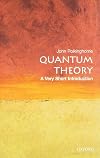
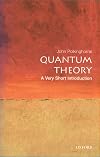
Quantum theory is the most revolutionary discovery in physics since Newton. This book gives a lucid, exciting, and accessible account of the surprising and counterintuitive ideas that shape our understanding of the sub-atomic world. It does not disguise the problems of interpretation that still remain unsettled seventy-five years after the initial discoveries. Uncertainty, probabilistic physics, complementarity, the problematic character of measurement, and decoherence are among the many show more topics discussed. This volume offers the listener access to one of the greatest discoveries in the history of physics and one of the outstanding intellectual achievements of the twentieth century. show lessTags
Recommendations






Member Reviews
A decent introduction to quantum theory, with some nice detail about the personalities involved in its discovery. However, the section on "further developments" felt rushed, and the mathematical formalism was both ignored in the main text and too brief in exposition in the appendix ; consequences of being a _very short_ introduction.
The author takes a historical approach showing what problems with a Newtonian-based view quantum theory was reacting to and then how it has developed over the years. The easiest parts of the maths involved are relegated to an appendix, although the author stresses that it's impossible to fully understand the theory without the maths. Even in this stripped down form I was struggling but I think I did get glimmers of understanding here and there.
Oct 25, 2024English (UK)
Ratings
Members
- Recently Added By
Author Information

49+ Works 4,313 Members
John Polkinghorne, K.B.E., F.R.S., is past president and now fellow of Queens' College, Cambridge, and Canon Theologian of Liverpool, England. (Bowker Author Biography)
Series

Belongs to Publisher Series
Reclams Universal-Bibliothek (18371)
Work Relationships
Is contained in
Common Knowledge
- Canonical title
- Quantum Theory: A Very Short Introduction
- Original title
- Quantum Theory. Very Short Introductions
- Original publication date
- 2002
- People/Characters
- Niels Bohr; Paul Dirac; Albert Einstein; Werner Heisenberg; Erwin Schrödinger
- Epigraph
- I think I can safely say that no one understands quantum mechanics
Richard Feynman - Dedication
- To the memory of
Paul Adrien Maurice Dirac
1902-1984 - First words
- Chapter 1
Classical cracks
The first flowering of modern physical science reached its culmination in 1687 with the publication of Isaac Newton's Principia.
Preface: The discovery of modern quantum theory in the mid-1920's brought about the greatest revision in our thinking about the nature of the physical world since the days of Isaac Newton. - Quotations
- Chapter 2
The light dawns
The years following Max Planck's pioneering proposal were a time of confusion and darkness for the physics community. Light was waves; light was particles.
(p. 15) - Last words
- (Click to show. Warning: May contain spoilers.)Like a powerful drug, quantum theory is wonderful when applied correctly, disastrous when abused and misapplied.
- Blurbers
- Atkins, Peter
Classifications
Statistics
- Members
- 668
- Popularity
- 43,460
- Reviews
- 2
- Rating
- (3.52)
- Languages
- 7 — Bosnian, Czech, Dutch, English, German, Italian, Portuguese
- Media
- Paper, Audiobook, Ebook
- ISBNs
- 14
- ASINs
- 4