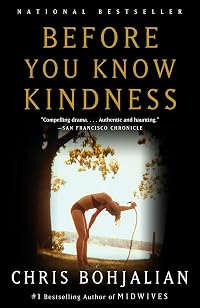
Before You Know Kindness
by Chris Bohjalian 
On This Page
Description
For ten summers, the extended Seton family met at their country home in New Hampshire, but during the eleventh summer everything changed.Tags
Recommendations

Member Recommendations
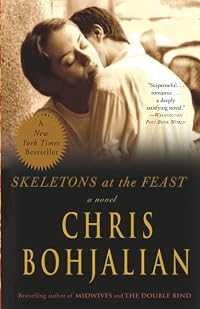
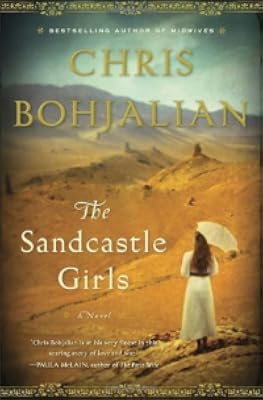
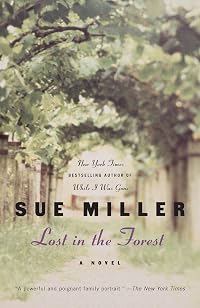
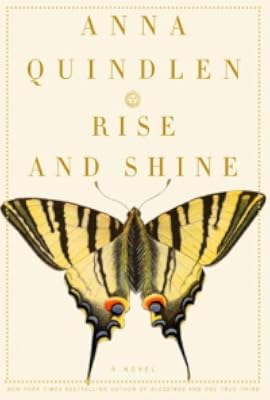
jhedlund Also addresses the fine line between environmental activism and fanaticism and the impact on family.
Member Reviews
On a hot July evening at Nan Seton's home in Sugar Hill, New Hampshire, 12-year-old Charlotte McCullough lifts a rifle from the trunk of her uncle John's car and shoots her father, Spencer, destroying his right shoulder. John Seton had left the gun locked in his trunk so that he might bring the rifle to a gunsmith before his return home to Vermont. Nearly a year had passed since a cartridge had jammed in the weapon and John, new to hunting and guns, could not remove it. Now his brother-in-law lays sprawled on the edge of the woods with a devastating wound that ultimately will not kill him but will end Spencer's use of his right arm and hand. The irony is not lost on any of the Seton/McCullough clan that Spencer is the spokesperson for show more FERAL (Federation for Animal Liberation), is a strict vegan, and loathes anything to do with hunting, guns and animal mistreatment.
For the rest of the summer the relationship between John and Spencer is non-existent as Spencer blames John for the accident. Charlotte had only picked up the rifle to look at it when her 10-year-old cousin, Willow, had opened the trunk to retrieve a box of diapers for her baby brother. Although Willow told Charlotte to leave the weapon alone, Charlotte brought the rifle to her shoulder and fired, not realizing the gun was loaded. What the two young girls did not tell anyone is that they had each drunk a beer apiece and had tried marijuana at the Country Club teen bonfire. Afraid to admit their guilt, the girls allowed the incident to spiral out of control when FERAL became involved and began a lawsuit against the rifle manufacturer. The families became even more estranged as the lawyers took control.
I have been a fan of Chris Bohjalian for quite awhile now. He writes so beautifully and his characters are always so well developed and fully fleshed out. This was a very interesting story with heroes and villains changing sides constantly throughout. However, it was way too long with very little of import happening for too many pages. I liked it but would have liked it better had it been about 150 pages shorter. show less
For the rest of the summer the relationship between John and Spencer is non-existent as Spencer blames John for the accident. Charlotte had only picked up the rifle to look at it when her 10-year-old cousin, Willow, had opened the trunk to retrieve a box of diapers for her baby brother. Although Willow told Charlotte to leave the weapon alone, Charlotte brought the rifle to her shoulder and fired, not realizing the gun was loaded. What the two young girls did not tell anyone is that they had each drunk a beer apiece and had tried marijuana at the Country Club teen bonfire. Afraid to admit their guilt, the girls allowed the incident to spiral out of control when FERAL became involved and began a lawsuit against the rifle manufacturer. The families became even more estranged as the lawyers took control.
I have been a fan of Chris Bohjalian for quite awhile now. He writes so beautifully and his characters are always so well developed and fully fleshed out. This was a very interesting story with heroes and villains changing sides constantly throughout. However, it was way too long with very little of import happening for too many pages. I liked it but would have liked it better had it been about 150 pages shorter. show less
Tried to read this, but I didn't get past the first few chapters. I really felt like there was significant condescension to the vegan characters. They were over-the-top in their approaches, yes, but I don't like a too-heavy authorial treatment that ridicules someone's experience, regardless of whether I agree with the opinion or not.
How does a family recover from the emotional torment following a devastating accident? Bohjalian leads the reader through the intense feelings behind the shooting of an animal right's activist by his 12-year-old daughter with a deer rifle which her uncle had left loaded in the trunk of his vehicle. However, being members of the Stupid Club (i.e., human race), does not make Charlotte and John bad people. Bohjalian's sensitive portrayal of their pain garners sympathy for them and other members of the Seton and McCullough families as they heal from the resentments and secrets common to many close relationships.
Bohjalian is a good storyteller, and he doesn't shy away from controversial subjects. He presents the animal rights/gun control show more issues in a nonjudgmental way, leaving the readers to make up their own minds as to right and wrong. This book reminded me that kindness is an overlooked virtue that is needed to survive our frantic lives. show less
Bohjalian is a good storyteller, and he doesn't shy away from controversial subjects. He presents the animal rights/gun control show more issues in a nonjudgmental way, leaving the readers to make up their own minds as to right and wrong. This book reminded me that kindness is an overlooked virtue that is needed to survive our frantic lives. show less
Chris Bohjalian is one of my favorite writers. But this book has me thinking I may not read anything else by him. The reasons are personal but also general.
When I read Midwives I was impressed by the accuracy and details, and the lack of judgment. Having given birth to my younger daughter with the help of two midwives I was familiar with many of the issues surrounding them then and, to some extent, now. I was therefore impressed with the evenhanded, compassionate approach Bohjalian took to the subject.
In Before You Know Kindness, Bohjalian touches another area I know well. Unfortunately, he freely gives in to his own prejudices and does not do the research I would have expected. He clearly dug into the medical, legal, and firearms show more aspects of the story, but his work with animal rights activists and veganism in general was greatly limited.
The story: an important leader of an animal rights organization that goes by "FERAL" is shot accidentally by his young daughter. Spencer McCullough has antagonized many with his views, including his wife and his relatives, and he is seen as self-centered and single-minded, caring more about animals than about people. The incident occurs while the small family of Spencer, his wife Catherine, and daughter Charlotte, are staying at the New Hampshire summer home of Nan Seton, Catherine's mother. They are joined there by Catherine's brother John Seton and his family, Sara and Willow. Charlotte is 12 and Willow 10. The rifle Charlotte was holding belongs to John Seton, who has only recently taken up hunting (without telling his brother-in-law).
The shotgun blast hits Spencer in the right shoulder, effectively destroying the joint and leaving his right arm useless. There is little hope of full recovery. Initially there is doubt he will even survive. But survive he does, and begins, haltingly, taking steps to become independent again.
Spencer is not a patient man and the idea of having to rely on someone else grates on him. He isn't easy to live with - either before or after the accident. But his organization sees an opportunity in the newsworthy story of an animal rights leader shot by a hunting rifle.
The real meat of the story, and I use that word deliberately, is in the changes that take place within Spencer and his relationship with others.
Where I find fault is in the portrayal of what it is to be vegan: the choices one makes, the effects on others, as well as the portrayal of Spencer's family as essentially captive vegans.
A vegan myself, I have experienced the gamut of misunderstandings and misrepresentations of this way of life for many years. Vegans are not a cohesive, homogenized group. Like any random group of people, vegans come in all colors, shapes, sizes, and temperaments. So Spencer being hotheaded and self-righteous is not that hard to imagine. It is a bit harder to imagine that his whole FERAL team is manipulative and deceitful in the pursuit of their goals. In other words, everyone in this novel who has deliberately chosen veganism is hard to like or understand. Not so vegetarians (those who eat dairy and eggs). More than once, Spencer's choices are portrayed as extreme when really all they are is vegan.
Bohjalian takes every opportunity to malign materials and foods that vegans supposedly consume. He creates a soy margarine that Willow hates, says it has a bitter aftertaste. He attacks the shoes a vegan lawyer wears because, obviously, leather is better. He points out that FERAL's lawyer (not a vegan) carries a plastic briefcase in her meetings with FERAL but prefers a leather one for her other clients. Even pillows get a workout - heaven forbid that a pillow not made with feathers or down could possibly be comfortable. Never mind that the majority of people, not just vegans, sleep on these so-called inferior pillows.
Where Bohjalian falls down in terms of knowledge is in not actually knowing what is in these horrific inferior vegan products. Vegan margarine is notable for what it doesn't contain, not what it does. I would gladly challenge anyone to compare it to any other margarine and determine (blind test) that it tastes funny. It isn't noticeably different in any way. And shoes? Look around. Can you tell which are leather and which are not and if the nonleather ones are obviously inferior? In many cases nonleather shoes outwear leather, are easier to care for, and are just as comfortable. There is no reason to assume that a product must contain animal products in order to be a good product. The constant digs in this book are tiring and ill-informed. The cream of this crop is the bread made with soy flour. What is wrong with wheat??? Soy flour makes lousy bread, although it has other good uses. Apparently the author does not know that wheat is vegan?
The other part of this vegan-shaming is Catherine. She married Spencer. Either she pretended to be vegetarian at the time or she took it up for Spencer's sake. Given that he has always had this animal-orientation she could hardly have missed it. It makes me wonder. What I conclude is that the theme is that this fixation of Spencer's - on animals - is blocking his ability to care for his family. His daughter generally takes up the animal rights flag, yet she feels so left out because she has never visited a zoo or an aquarium. Give me a break. If this is so, then she doesn't actually care for the animals after all, or has a misguided idea of what that caring means.
Overall, then, I had difficulty comprehending why Spencer and Catherine would have married in the first place, and I had more difficulty believing that every single person in this family is totally ignorant of what it means to be vegan, that every one had that view that "if it's vegan it's horrible". News, folks: tomatoes are vegan. Bagels are usually vegan. Much of what everyone eats every day is vegan. Much of what everyone wears is vegan. Further, when one is vegan one doesn't spend necessarily spend time looking for products that mimic animal products. We just get on with life.
Because so much time is spent in this book accusing the one vegan of being extreme and ridiculing every aspect of his life, I had a hard time with it. I wanted to like the characters. I liked the two girls generally. I wanted to feel an attachment to their journey through this difficult time. I couldn't get there. Others have gotten there, probably because they are not vegans and were able to dismiss the inaccuracies easily. I know I have raged on here forever but I just couldn't get past this aspect. Just be glad I didn't get into the inaccuracies about hunting.
----------somewhat spoiler alert-----------------
If you plan to read the book perhaps you should not read this part until you've finished.
I had difficulty also with the lawsuit. FERAL wants Spencer to sue the gun manufacturer because a) the gun was faulty, causing a shell to remain in the chamber, unable to be extracted normally, or b) the design of the gun was faulty because it does not permit unloading in one step instead of two, or even c) the design is faulty because ammunition has to be designed so it can't get stuck and the fine tolerances mean it may not be. The intent of the lawsuit was to connect the horrific damage done to Spencer to the damage hunters do to deer - particularly those who survive a shot, only to die painfully days or weeks later. FERAL wants the public to know how horrible hunting is and somehow this is supposed to make that point. It always seemed weak to me. Who would bring such a suit? I can't imagine it.
Also, the case is made that it would be embarrassing to FERAL to publicize that one of its leaders was shot by a member of his own family, by a gun owned by a brother-in-law. I know no animal rights persons or groups who insist that their whole families, especially in-laws, must adhere to their points-of-view.
I also wasn't entirely sold on Spencer's transformation. I can see a change taking place after a horrific incident like this, but it was hard for me to track it here. It was almost like an epiphany. I certainly didn't see any awakenings among the family toward animals. No epiphanies in that area, naturally. As is less often the case in the media today, this book maintains the tone that vegans are rightly objects of ridicule. I am, as I said at the top, disappointed in this author, who never questioned his own beliefs. show less
When I read Midwives I was impressed by the accuracy and details, and the lack of judgment. Having given birth to my younger daughter with the help of two midwives I was familiar with many of the issues surrounding them then and, to some extent, now. I was therefore impressed with the evenhanded, compassionate approach Bohjalian took to the subject.
In Before You Know Kindness, Bohjalian touches another area I know well. Unfortunately, he freely gives in to his own prejudices and does not do the research I would have expected. He clearly dug into the medical, legal, and firearms show more aspects of the story, but his work with animal rights activists and veganism in general was greatly limited.
The story: an important leader of an animal rights organization that goes by "FERAL" is shot accidentally by his young daughter. Spencer McCullough has antagonized many with his views, including his wife and his relatives, and he is seen as self-centered and single-minded, caring more about animals than about people. The incident occurs while the small family of Spencer, his wife Catherine, and daughter Charlotte, are staying at the New Hampshire summer home of Nan Seton, Catherine's mother. They are joined there by Catherine's brother John Seton and his family, Sara and Willow. Charlotte is 12 and Willow 10. The rifle Charlotte was holding belongs to John Seton, who has only recently taken up hunting (without telling his brother-in-law).
The shotgun blast hits Spencer in the right shoulder, effectively destroying the joint and leaving his right arm useless. There is little hope of full recovery. Initially there is doubt he will even survive. But survive he does, and begins, haltingly, taking steps to become independent again.
Spencer is not a patient man and the idea of having to rely on someone else grates on him. He isn't easy to live with - either before or after the accident. But his organization sees an opportunity in the newsworthy story of an animal rights leader shot by a hunting rifle.
The real meat of the story, and I use that word deliberately, is in the changes that take place within Spencer and his relationship with others.
Where I find fault is in the portrayal of what it is to be vegan: the choices one makes, the effects on others, as well as the portrayal of Spencer's family as essentially captive vegans.
A vegan myself, I have experienced the gamut of misunderstandings and misrepresentations of this way of life for many years. Vegans are not a cohesive, homogenized group. Like any random group of people, vegans come in all colors, shapes, sizes, and temperaments. So Spencer being hotheaded and self-righteous is not that hard to imagine. It is a bit harder to imagine that his whole FERAL team is manipulative and deceitful in the pursuit of their goals. In other words, everyone in this novel who has deliberately chosen veganism is hard to like or understand. Not so vegetarians (those who eat dairy and eggs). More than once, Spencer's choices are portrayed as extreme when really all they are is vegan.
Bohjalian takes every opportunity to malign materials and foods that vegans supposedly consume. He creates a soy margarine that Willow hates, says it has a bitter aftertaste. He attacks the shoes a vegan lawyer wears because, obviously, leather is better. He points out that FERAL's lawyer (not a vegan) carries a plastic briefcase in her meetings with FERAL but prefers a leather one for her other clients. Even pillows get a workout - heaven forbid that a pillow not made with feathers or down could possibly be comfortable. Never mind that the majority of people, not just vegans, sleep on these so-called inferior pillows.
Where Bohjalian falls down in terms of knowledge is in not actually knowing what is in these horrific inferior vegan products. Vegan margarine is notable for what it doesn't contain, not what it does. I would gladly challenge anyone to compare it to any other margarine and determine (blind test) that it tastes funny. It isn't noticeably different in any way. And shoes? Look around. Can you tell which are leather and which are not and if the nonleather ones are obviously inferior? In many cases nonleather shoes outwear leather, are easier to care for, and are just as comfortable. There is no reason to assume that a product must contain animal products in order to be a good product. The constant digs in this book are tiring and ill-informed. The cream of this crop is the bread made with soy flour. What is wrong with wheat??? Soy flour makes lousy bread, although it has other good uses. Apparently the author does not know that wheat is vegan?
The other part of this vegan-shaming is Catherine. She married Spencer. Either she pretended to be vegetarian at the time or she took it up for Spencer's sake. Given that he has always had this animal-orientation she could hardly have missed it. It makes me wonder. What I conclude is that the theme is that this fixation of Spencer's - on animals - is blocking his ability to care for his family. His daughter generally takes up the animal rights flag, yet she feels so left out because she has never visited a zoo or an aquarium. Give me a break. If this is so, then she doesn't actually care for the animals after all, or has a misguided idea of what that caring means.
Overall, then, I had difficulty comprehending why Spencer and Catherine would have married in the first place, and I had more difficulty believing that every single person in this family is totally ignorant of what it means to be vegan, that every one had that view that "if it's vegan it's horrible". News, folks: tomatoes are vegan. Bagels are usually vegan. Much of what everyone eats every day is vegan. Much of what everyone wears is vegan. Further, when one is vegan one doesn't spend necessarily spend time looking for products that mimic animal products. We just get on with life.
Because so much time is spent in this book accusing the one vegan of being extreme and ridiculing every aspect of his life, I had a hard time with it. I wanted to like the characters. I liked the two girls generally. I wanted to feel an attachment to their journey through this difficult time. I couldn't get there. Others have gotten there, probably because they are not vegans and were able to dismiss the inaccuracies easily. I know I have raged on here forever but I just couldn't get past this aspect. Just be glad I didn't get into the inaccuracies about hunting.
----------somewhat spoiler alert-----------------
If you plan to read the book perhaps you should not read this part until you've finished.
I had difficulty also with the lawsuit. FERAL wants Spencer to sue the gun manufacturer because a) the gun was faulty, causing a shell to remain in the chamber, unable to be extracted normally, or b) the design of the gun was faulty because it does not permit unloading in one step instead of two, or even c) the design is faulty because ammunition has to be designed so it can't get stuck and the fine tolerances mean it may not be. The intent of the lawsuit was to connect the horrific damage done to Spencer to the damage hunters do to deer - particularly those who survive a shot, only to die painfully days or weeks later. FERAL wants the public to know how horrible hunting is and somehow this is supposed to make that point. It always seemed weak to me. Who would bring such a suit? I can't imagine it.
Also, the case is made that it would be embarrassing to FERAL to publicize that one of its leaders was shot by a member of his own family, by a gun owned by a brother-in-law. I know no animal rights persons or groups who insist that their whole families, especially in-laws, must adhere to their points-of-view.
I also wasn't entirely sold on Spencer's transformation. I can see a change taking place after a horrific incident like this, but it was hard for me to track it here. It was almost like an epiphany. I certainly didn't see any awakenings among the family toward animals. No epiphanies in that area, naturally. As is less often the case in the media today, this book maintains the tone that vegans are rightly objects of ridicule. I am, as I said at the top, disappointed in this author, who never questioned his own beliefs. show less
I have become a fan of Bohjalian. He can be trusted to deliver characters that are complicated, flawed, and very real. How often can someone argue both sides of an issue and do it well? Bohjalian does it masterfully. Of course, we aren't impartial in our views, because he tackles subjects that touch our own lives, no matter who we are.
The Seton and McCullough families are close…and every year they meet in New Hampshire at matriarch Nan Seton’s summer home to spend Memorial Day weekend together. Nan is in her seventies but “vigorous,” and her constant activity (whether it be swimming, golfing or mowing the lawn) drives these family reunions. But when thirteen year old Charlotte finds her Uncle John’s deer hunting rifle and discharges it into the garden on the last day of July, everything changes.
In the opening paragraphs of Chris Bohjalian’s novel Before You Know Kindness, the reader learns that Charlotte’s father, Spencer McCullough - a fanatical vegan animal rights activist - is on the receiving end of his daughter’s shot into the dark. Seriously show more injured with a crippling arm injury, he is forced to re-examine his life and priorities…and the repercussions of that night will reverberate throughout the family.
Bohjalian is one of my favorite writers because he is skilled at creating gripping story lines and delving deep into his characters’ psyches. In Before You Know Kindness, Bohjalian examines the cracks which lie beneath the surface of a family, and how those cracks can become deep fissures on the heels of one tragic event. Thematically, the novel explores the political argument of gun control and animal rights…and on a more personal level, deals with the ideas of secrets, narcissism, and family relationships.
As a physical therapist, I was pulled into the psychological tension of the novel which develops as a result of a physically devastating accident - how does a person deal with a life-altering disability which has the power to either strengthen or destroy relationships? All of us have the choice to be angry or forgiving in the face of tragedy - what is it that makes us chose one over the other?
Bohjalian’s prose is honest, searing and compelling. Before You Know Kindness is ultimately a story of redemption and the power of forgiveness.
Recommended. show less
In the opening paragraphs of Chris Bohjalian’s novel Before You Know Kindness, the reader learns that Charlotte’s father, Spencer McCullough - a fanatical vegan animal rights activist - is on the receiving end of his daughter’s shot into the dark. Seriously show more injured with a crippling arm injury, he is forced to re-examine his life and priorities…and the repercussions of that night will reverberate throughout the family.
Bohjalian is one of my favorite writers because he is skilled at creating gripping story lines and delving deep into his characters’ psyches. In Before You Know Kindness, Bohjalian examines the cracks which lie beneath the surface of a family, and how those cracks can become deep fissures on the heels of one tragic event. Thematically, the novel explores the political argument of gun control and animal rights…and on a more personal level, deals with the ideas of secrets, narcissism, and family relationships.
As a physical therapist, I was pulled into the psychological tension of the novel which develops as a result of a physically devastating accident - how does a person deal with a life-altering disability which has the power to either strengthen or destroy relationships? All of us have the choice to be angry or forgiving in the face of tragedy - what is it that makes us chose one over the other?
Bohjalian’s prose is honest, searing and compelling. Before You Know Kindness is ultimately a story of redemption and the power of forgiveness.
Recommended. show less
I enjoyed this Bohjalian book, but not as much as Midwives. He is certainly masterful at presenting two sides of the coin, and leaving the reader slightly befuddled as to his own stance on the particular issue he's writing about.
Members
- Recently Added By
Author Information

37+ Works 28,895 Members
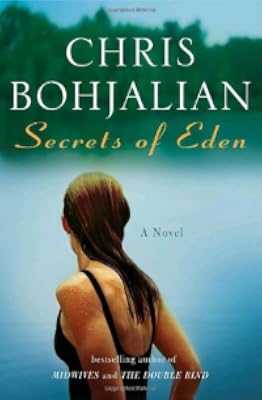
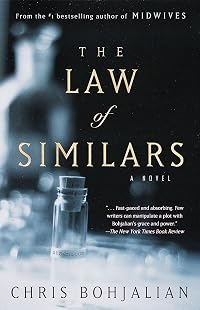
Chris Bohjalian (born on August 12, 1962 in White Plains, New York) graduated from Amherst College and worked as an account representative for J. Walter Thompson advertising agency in New York in the mid-1980s. Bohjalian is an American novelist and the author of 15 novels, including the bestsellers Midwives and The Sandcastle Girls. His first show more novel, A Killing in the Real World, was released in 1988. His other novels include Water Witches, The Law of Similars, Before You Know Kindness, Skeletons at the Feast, and The Night Strangers. Past the Bleachers and Midwives were made into Hallmark Hall of Fame movies and Secrets of Eden was made into a Lifetime Television movie. He won the New England Book Award in 2002. He also contributes to numerous publications including Cosmopolitan, Reader's Digest, Boston Globe Sunday Magazine and the Burlington Free Press. Bohjalian's The Guest Room is a New York Times bestseller. (Bowker Author Biography) show less
Chris Bohjalian is a LibraryThing Author, an author who lists their personal library on LibraryThing.
Common Knowledge
- Important places
- New York, USA; New York, New York, USA; Vermont, USA
- Epigraph
- Before you know what kindness really is you must lose things, feel the future dissolve in a moment like salt in a weakened broth." -Naomi Shihab Nye, "Kindness"
- Dedication
- For the Blewer Women: Sondra, Cecilia, Evelyn, Victoria, and Julia
- First words
- The bullet-cylindriform as a rocket but tapering to a point almost sharp enough to prick skin with a casual touch-was two and a half inches long when it was in the cartridge in the rifle.
- Last words
- (Click to show. Warning: May contain spoilers.)And when they posed for a photograph-the two men surrounding my cousin-you wouldn't have known that my uncle had lost his arm or that once, a long time ago, he had almost lost his family.
Classifications
Statistics
- Members
- 1,533
- Popularity
- 15,051
- Reviews
- 57
- Rating
- (3.41)
- Languages
- English
- Media
- Paper, Audiobook, Ebook
- ISBNs
- 9
- ASINs
- 7