On This Page
Description
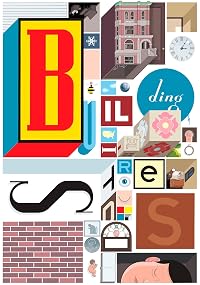
Presents an illustrated tale, told in various books and folded sheets, about the residents in a three-story Chicago apartment building, including a lonely single woman, a couple who are growing to despise each other, and an elderly landlady.Tags
Recommendations









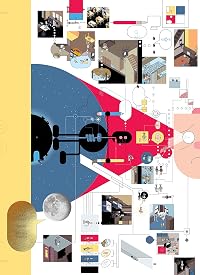












Member Recommendations

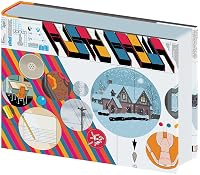
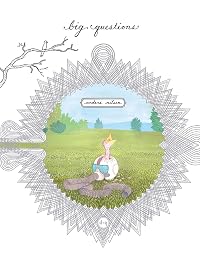
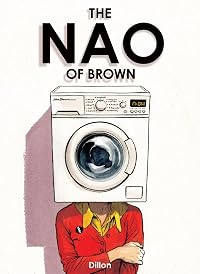
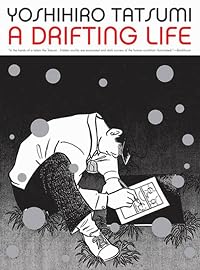
sweetiegherkin Both are graphic novels (although Building Stories is a more complex with its multiple parts) with female protagonists who feel lonely and isolated. Both are imbued with a sense of pathos, although Shoplifter has a more optimistic ending and bits of humor throughout than does Building Stories, whereas the latter has a larger scope in its storytelling, following the protagonist for a longer period of time.
Member Reviews
Thoroughly depressing, but quite brilliant graphic novel, produced as a collection of small books, newspapers, folded strips of paper, etc. There are no instructions on how to read all of this (I did it from small to large). A slices of life story with a triple pun on the title; the building itself is a character. Includes the story of Branford bee, the greatest bee in the world, and an edition of the Bee times with "God save the queen" in the header. I think the only other graphic novels I had read were Art Spiegleman's Maus I and II, but now I am intrigued...
In a large box, itself a witty graphic work of art, the reader discovers 14 discrete graphic publications ranging from books to folded “strips”. Everything, as billed, that the reader might need for building stories. This is Chris Ware at his finest, challenging the very form of the graphic novel perhaps to breaking point. There is no set route through the items contained in the box. The reader could choose any order. But of course there is a linear progression for many of the works since they follow a woman from youth to lonely adulthood, marriage, and motherhood. Other items concentrate on Brandford, The Bee. But all of them intersect at points and nothing is entirely isolated. And that might be Chris Ware’s overall theme, since show more the loneliness and self-loathing that the main character experiences are self-inflicted. Connectedness comes in many forms. And even when we feel most isolated and alone, one step back reveals an intricate pattern of lines linking, waxing and waning perhaps but still connecting, each of us to a host of others. It’s almost as though we can’t help building stories.
Of course this being a Chris Ware work, you also expect punning turns. And sure enough, at least some of the publications focus instead on the building in which the main character lives for a time.That building itself has an architectural and a social history and the story it could tell about life in Chicago over the course of a century would be just as fascinating, perhaps, as any story that focused on one of its inhabitants. But here too connectedness to a wider frame — the social architecture of an American century — draws our building into the lives of its inhabitants.
The tone across these works is nostalgic but melancholic. And although there are bright moments, even hopefulness, there are an equal number of dark moments and despair. What can’t be ignored, however, is the sheer audacity of producing such an artwork in an age of disposable literature and incorporeal “e”-books. Chris Ware and his publishers have re-established the necessity of physical publication and reconfirmed the notion that great literature is a treasure worthy of indefinite shelf life. But you’ll need an awfully big shelf for this box of wonders. Recommended. show less
Of course this being a Chris Ware work, you also expect punning turns. And sure enough, at least some of the publications focus instead on the building in which the main character lives for a time.That building itself has an architectural and a social history and the story it could tell about life in Chicago over the course of a century would be just as fascinating, perhaps, as any story that focused on one of its inhabitants. But here too connectedness to a wider frame — the social architecture of an American century — draws our building into the lives of its inhabitants.
The tone across these works is nostalgic but melancholic. And although there are bright moments, even hopefulness, there are an equal number of dark moments and despair. What can’t be ignored, however, is the sheer audacity of producing such an artwork in an age of disposable literature and incorporeal “e”-books. Chris Ware and his publishers have re-established the necessity of physical publication and reconfirmed the notion that great literature is a treasure worthy of indefinite shelf life. But you’ll need an awfully big shelf for this box of wonders. Recommended. show less
OK, are you ready to take on a reading experience unlike any you've had before? Building Stories, by Chris Ware, was ten years in the making, and comes in multiple pieces in a Monopoly-size box. You won't find this one available on Kindle. It's not an off-sthe-shelf graphic novel, it's 14 different pieces: three are like magazines, two pamphlets, four are newspaper-sized, two are comic strips, there's a little storyboard, a hardbound book and one that's reminiscent of the Golden Books of your childhood. As you may have guessed, the title reflects two meanings: the reader builds stories from these materials, and these are stories that begin in a single building. Ware takes us inside the lives of four tenants of a Chicago apartment show more building: the elderly landlady who charges less than she might to make sure the building is full, a couple at odds over life's disappointments, and the character that captivates us the most, a young woman who has a prosthetic leg and had always wanted to be an artist. They rarely interact with one another, but play out their lives in their own graphic boxes.
In reviews I've read about this book, words and phrases that come up repeatedly are "architectural", "precise", "bleak", and "lives of quiet desperation." These might be best described as interlocking short stories. They aren't fairy tales with happy endings, but sympathetic, empathetic depictions of normal people with normal desires who are stymied by life, unable to fulfill their dreams, self-aware but self-imprisoned. I kept wanting to help them out some way, and then having to remind myself that they were just color on paper. The graphic format takes you right inside their lives, and the experience of building the stories from the parts you're given draws you in further.
Much of Ware's brilliance may lie in his subtlety, and ability to tell a story economically. We see much of the couple's relationship in only a few panels, as the man's youthful hopes and dreams dissipate and he takes it out on her, not even realizing how insulting he is or the sorrow he's creating. In another story, a woman at a party needs a trip to the bathroom to slip away from a character obliviously venting at length her obsession with the death of a neglected friend.
The would-be artist captures the reader's heart, as in books, pamphlets and newspaper-sized stories she encounters life's ups and downs, learning to enjoy sex, losing her parents, perceiving herself as a failure as an artist, getting married and moving to the suburbs, and seeing her marriage deteriorate. Her struggles with physical (she's a city girl at heart) and spiritual displacement is always accompanied by the practicality of her dealing with having a prosthetic leg. Because of the piece-together-the parts nature of this work, it took me a while to learn why she was missing a leg - was she born without it, did she lose it through disease, or was there an accident?
There are currents of happiness that occasionally surface in the bleakness - for example, her love for her daughter shines, and their playing together outside one day is beautiful and affecting. Brightly colored tales of Branford the Bee remind us of the importance of awareness, including self-awareness. Beyond his obsessions with sex and food, Branford has virtually no understanding of himself or his surroundings. In one sequence he cannot understand that he's trapped in a basement, looking out a window at the flowers he desires. All he knows is something inexplicable (could it be God?) is keeping him from the flowers, something he keeps bumping against but cannot overcome.
This is a challenging read, both conceptually as you read the various parts and piece them together, and because these lives are not easy ones. Loneliness, dissatisfaction, social yearning and social awkwardness, failures to meet dreams or at times to accomplish even simple tasks, permeate these stories. But it all rings true, and fills you in the way the best art does. Ware has constructed a building, and its encapsulated lives, for your exploration. The bleakness will be off-putting for some, the unusual format or use of graphics for others, but if you're game, it's a top to bottom brilliant experience. show less
In reviews I've read about this book, words and phrases that come up repeatedly are "architectural", "precise", "bleak", and "lives of quiet desperation." These might be best described as interlocking short stories. They aren't fairy tales with happy endings, but sympathetic, empathetic depictions of normal people with normal desires who are stymied by life, unable to fulfill their dreams, self-aware but self-imprisoned. I kept wanting to help them out some way, and then having to remind myself that they were just color on paper. The graphic format takes you right inside their lives, and the experience of building the stories from the parts you're given draws you in further.
Much of Ware's brilliance may lie in his subtlety, and ability to tell a story economically. We see much of the couple's relationship in only a few panels, as the man's youthful hopes and dreams dissipate and he takes it out on her, not even realizing how insulting he is or the sorrow he's creating. In another story, a woman at a party needs a trip to the bathroom to slip away from a character obliviously venting at length her obsession with the death of a neglected friend.
The would-be artist captures the reader's heart, as in books, pamphlets and newspaper-sized stories she encounters life's ups and downs, learning to enjoy sex, losing her parents, perceiving herself as a failure as an artist, getting married and moving to the suburbs, and seeing her marriage deteriorate. Her struggles with physical (she's a city girl at heart) and spiritual displacement is always accompanied by the practicality of her dealing with having a prosthetic leg. Because of the piece-together-the parts nature of this work, it took me a while to learn why she was missing a leg - was she born without it, did she lose it through disease, or was there an accident?
There are currents of happiness that occasionally surface in the bleakness - for example, her love for her daughter shines, and their playing together outside one day is beautiful and affecting. Brightly colored tales of Branford the Bee remind us of the importance of awareness, including self-awareness. Beyond his obsessions with sex and food, Branford has virtually no understanding of himself or his surroundings. In one sequence he cannot understand that he's trapped in a basement, looking out a window at the flowers he desires. All he knows is something inexplicable (could it be God?) is keeping him from the flowers, something he keeps bumping against but cannot overcome.
This is a challenging read, both conceptually as you read the various parts and piece them together, and because these lives are not easy ones. Loneliness, dissatisfaction, social yearning and social awkwardness, failures to meet dreams or at times to accomplish even simple tasks, permeate these stories. But it all rings true, and fills you in the way the best art does. Ware has constructed a building, and its encapsulated lives, for your exploration. The bleakness will be off-putting for some, the unusual format or use of graphics for others, but if you're game, it's a top to bottom brilliant experience. show less
Chris Ware's Building Stories is a graphic novel presented in a boxed set of 14 connected but not connected stories, told through various types of formats. In the box you will find pamphlets of various sizes, a book that resembles an over-sized Golden Book, a couple of softcover books, one clothbound hardcover book, a newspaper, a board that resembles the board from a board game, and a handful of other layouts. Not one of these needs to be read in order as you find them in the box (even though that's how I read it), but as you read them, they all find a way to interconnect to tell a story greater than their individual parts, hence you're building the story.
Building Stories is the story about a three-flat apartment building in Chicago show more and the people that live there: the elderly landlady, the married/possibly not married couple on the second floor who never seem to be happy with each other, and an amputee who lives on the third floor, and chose to live there as a means of getting exercise due to her lost leg. There is nothing fanciful in these people's stories; there is nothing idyllic about their lives. If anything, this is the only complaint that I have with the story as a whole: nobody ever really seems to be happy. I know that Ware is trying to show people and their real lives, but as I finished reading, I was filled more with a morose feeling than anything else. Don't get me wrong, the emotions that Ware is able to pull from his simplistic art and bare dialogue is astonishing, I guess I just wish there was something of a "happy ending" in the book, even though there is no true ending per se. We see certain parts of the character's lives, but like any life that we witness from the outside, I still think there is so much more to the characters than what we have been shown. We are presented with snippets of their past and present, but we don't really know what their future holds, much like any person that we may know. I think I would be interested to see Ware revisit these characters in a couple of years, and show us where their lives took them.
I'm torn on whether I want to read anything else by Ware. There was such a pervading sense of melancholy throughout the entire collection, I don't know that I would trust anything else of his to not have that same feeling throughout. Yet, he presents these emotions so well that I think it would be a shame not to read something else of his again sometime. Maybe I just need to give myself some time to absorb everything from Building Stories before I move on to anything else of his, as I think this story is going to stick with me for some time. show less
Building Stories is the story about a three-flat apartment building in Chicago show more and the people that live there: the elderly landlady, the married/possibly not married couple on the second floor who never seem to be happy with each other, and an amputee who lives on the third floor, and chose to live there as a means of getting exercise due to her lost leg. There is nothing fanciful in these people's stories; there is nothing idyllic about their lives. If anything, this is the only complaint that I have with the story as a whole: nobody ever really seems to be happy. I know that Ware is trying to show people and their real lives, but as I finished reading, I was filled more with a morose feeling than anything else. Don't get me wrong, the emotions that Ware is able to pull from his simplistic art and bare dialogue is astonishing, I guess I just wish there was something of a "happy ending" in the book, even though there is no true ending per se. We see certain parts of the character's lives, but like any life that we witness from the outside, I still think there is so much more to the characters than what we have been shown. We are presented with snippets of their past and present, but we don't really know what their future holds, much like any person that we may know. I think I would be interested to see Ware revisit these characters in a couple of years, and show us where their lives took them.
I'm torn on whether I want to read anything else by Ware. There was such a pervading sense of melancholy throughout the entire collection, I don't know that I would trust anything else of his to not have that same feeling throughout. Yet, he presents these emotions so well that I think it would be a shame not to read something else of his again sometime. Maybe I just need to give myself some time to absorb everything from Building Stories before I move on to anything else of his, as I think this story is going to stick with me for some time. show less
Stunning. As an artistic and a mental exercise, the book -- a collection of 14 different types of graphic narrative, from long, horizontal stand-alone comic strips to children's books to newspapers to a huge gameboard-like fold-out -- is a marvel of construction. And as a composite narrative (the more accurate but less attractive term for "story cycle" or "novel-in-stories," but never has "composite narrative" so aptly fit a work of fiction), this book is a mind-boggling piece of ingenuity, with each separate item in the book informing and overlapping on each other, and all the orbital stories circling back into the main narrative as well. It doesn't matter which order you read the stories in or how many times you read -- and this will show more reward re-reading -- the mental exercises and hidden surprises available in this work are exhilarating.
But that's not why I love Chris Ware. I love Chris Ware because he writes so beautifully and honestly about the basic, ordinary human experience that he renders the mundane sublime and heart-shattering. His book Jimmy Corrigan was the first that ever caused me to break open in wracking sobs, and Building Stories did it again. I sat at my kitchen with pieces of the book open before me and I quaked from crying. My toes shook.
And I felt so... known... afterward. It's a kind of compassion that Ware accomplishes in writing these stories. A kind of perfect empathy. You weep because you know that someone out there understands life -- your life -- so well that he has managed to put it into words and images, even if the people look a little different, if the circumstances aren't exactly the same. He knows how you feel or have felt or will feel. And you will love him for it. show less
But that's not why I love Chris Ware. I love Chris Ware because he writes so beautifully and honestly about the basic, ordinary human experience that he renders the mundane sublime and heart-shattering. His book Jimmy Corrigan was the first that ever caused me to break open in wracking sobs, and Building Stories did it again. I sat at my kitchen with pieces of the book open before me and I quaked from crying. My toes shook.
And I felt so... known... afterward. It's a kind of compassion that Ware accomplishes in writing these stories. A kind of perfect empathy. You weep because you know that someone out there understands life -- your life -- so well that he has managed to put it into words and images, even if the people look a little different, if the circumstances aren't exactly the same. He knows how you feel or have felt or will feel. And you will love him for it. show less
I received this "book" as a Santathing gift this Christmas. I really enjoyed piecing this story together. It comes in a big box with various artifacts inside that contain parts of the graphic novel. They come in all shapes and sizes, and have no reading order, so it really feels like you are a detective trying to put the events of the main character's life in order. The main character herself is a very ordinary person, which I think is kind of the point. How many huge, beautiful, and exhaustive graphic novels zero in on the inner life of an ordinary housewife like this? Not very many from my reading experience. I loved the minute details in the art work, especially those that feature cross-sections of her apartment building. From this show more graphic novel, I got the feeling of opening up a doll house and peering into the lives inside. Thank you to whoever bought me this book! show less
Chris Ware's new book –– or new "box", I should say –– is ridiculously fantastic. Fourteen individual comics intersect to form one big, nebulous graphic "novel", and it's wonderful from start to finish (wherever your start and finish may be).
For years, Ware has been pushing the limits of graphic expression, bringing stream of consciousness into the visual form, and to great effect. HIs talent for this way of writing/drawing has just been getting better and better in recent years. His last major published work, ACME Library #20 (Lint), very much felt like the apotheosis of his idiom, a tightly structured, sharply focused, yet imaginatively expansive work. It is, in my opinion, Ware's greatest graphic novel, and one of the best show more graphic novels, and I would still recommend it to anyone new to Ware.
With Building Stories, Ware goes beyond the graphic novel, by (literally) deconstructing the graphic novel. With no direction or order to its fourteen intersecting narratives, the reader is left to her own devices to piece together Ware's patchwork quilt. This piecing together of characters and stories from disjoint and sparse pieces of evidence has always been an element of Ware's style; but not until this work has it been such a conspicuous presence. Building Stories forces its readers to physically grapple with the act of interpretation, shaking them free from any usual sense of passivity. And that's awesome, fun, new, and wonderful.
At the same time, Building Stories is no puzzle; its pieces do not slowly fit together to reveal any big secret. Its concerns are mundane, its characters ordinary. Of course, this makes its story/stories feel all the more human and relatable. But then again, some readers will surely want more from their fiction: something extraordinary, even if a bit exaggerated. For these readers, Building Stories may bore, and even upset. (Like any Ware work, Building Stories is depressing.)
Beyond their narrative role, the fourteen pieces of Building Stories also serve as a sort of showcase of the wide range of comic expression. From fold-up minis to big newspaper inserts, from bound books to posters, Ware covers all the bases. It's just unfortunate that Ware's own visual style didn't change as much from format to format; what you often get is the same old Ware tropes, only in different sizes. Yet the experience from piece to piece is still varied enough not to bore the reader too much.
If you're already a fan of Ware's work, Building Stories is everything you could've wished for. If you're new to Ware, it is probably not the place to start; ACME Library #20, #19, and #16 would be better introductions. But Building Stories is definitely something to look forward to, something to treat yourself to after discovering the joy of Ware's genius. show less
For years, Ware has been pushing the limits of graphic expression, bringing stream of consciousness into the visual form, and to great effect. HIs talent for this way of writing/drawing has just been getting better and better in recent years. His last major published work, ACME Library #20 (Lint), very much felt like the apotheosis of his idiom, a tightly structured, sharply focused, yet imaginatively expansive work. It is, in my opinion, Ware's greatest graphic novel, and one of the best show more graphic novels, and I would still recommend it to anyone new to Ware.
With Building Stories, Ware goes beyond the graphic novel, by (literally) deconstructing the graphic novel. With no direction or order to its fourteen intersecting narratives, the reader is left to her own devices to piece together Ware's patchwork quilt. This piecing together of characters and stories from disjoint and sparse pieces of evidence has always been an element of Ware's style; but not until this work has it been such a conspicuous presence. Building Stories forces its readers to physically grapple with the act of interpretation, shaking them free from any usual sense of passivity. And that's awesome, fun, new, and wonderful.
At the same time, Building Stories is no puzzle; its pieces do not slowly fit together to reveal any big secret. Its concerns are mundane, its characters ordinary. Of course, this makes its story/stories feel all the more human and relatable. But then again, some readers will surely want more from their fiction: something extraordinary, even if a bit exaggerated. For these readers, Building Stories may bore, and even upset. (Like any Ware work, Building Stories is depressing.)
Beyond their narrative role, the fourteen pieces of Building Stories also serve as a sort of showcase of the wide range of comic expression. From fold-up minis to big newspaper inserts, from bound books to posters, Ware covers all the bases. It's just unfortunate that Ware's own visual style didn't change as much from format to format; what you often get is the same old Ware tropes, only in different sizes. Yet the experience from piece to piece is still varied enough not to bore the reader too much.
If you're already a fan of Ware's work, Building Stories is everything you could've wished for. If you're new to Ware, it is probably not the place to start; ACME Library #20, #19, and #16 would be better introductions. But Building Stories is definitely something to look forward to, something to treat yourself to after discovering the joy of Ware's genius. show less
Members
- Recently Added By
Lists

Recommended Comics / Graphic Novels
595 works; 122 members

TED 2013 Summer Reading List
190 works; 13 members

Read
293 works; 4 members

Books Read in 2016
4,666 works; 199 members

Top Five Books of 2016
795 works; 229 members

Gimmicks
56 works; 12 members

Cult Classics
30 works; 1 member
Author Information

68+ Works 10,343 Members
Awards and Honors
Awards
Distinctions
Series

Belongs to Publisher Series
Work Relationships
Common Knowledge
- Canonical title
- Building Stories
- Original publication date
- 2012
- Epigraph
- Don't forget to go outside of the house once in a while or you'll lose your source of pollination.
-Clara Louise Ware (1905 - 1990)
Everything you can imagine is real.
- Pablo Picasso (1881 - 1973) - Dedication
- For Marnie, Clara and Mom.
- First words
- Second picture strip: "I don't care. I just don't care."
- Quotations
- This is a work of fiction. Names, characters, places and incidents are either the product of the author's imagination or are employed deceptively. Any resemblance to actual living, dead or insensate persons, events muni... (show all)cipalities, locales, historical figures, emotions, sensations or unnameable poetic impressions is entirely coincidental, or at least not deliberately intended to catalyze litigation.
(Printed inside the cover of the box)
I already felt like a statue that'd stood in one place for too long, blackened by time, passers-by not even looking up at me or remembering why I was there ...
They all felt behind me, anyway, a past I was no longer a part of ... and what did I have to look forward to? - Last words
- (Click to show. Warning: May contain spoilers.)The last folded graphics "comic": "Will I be the most important thing you ever do?"
Classifications
- Genre
- Graphic Novels & Comics
- DDC/MDS
- 741.5 — Arts & recreation Drawing & decorative arts Drawing Comic books, graphic novels, fotonovelas, cartoons, caricatures, comic strips
- LCC
- PN6727 .W285 .B85 — Language and Literature Literature (General) Literature (General) Collections of general literature Comic books, strips, etc.
- BISAC
Statistics
- Members
- 1,070
- Popularity
- 24,024
- Reviews
- 42
- Rating
- (4.41)
- Languages
- English, French, German, Italian
- Media
- Paper
- ISBNs
- 6
- ASINs
- 3