On This Page
Description
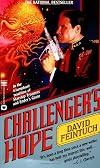
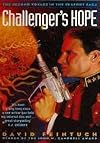
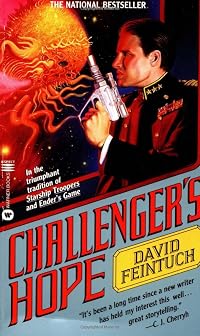
The second installment of the Seafort Saga finds Nick Seafort heading back to Hope Nation, but danger isn't far behind... After his heroics aboard the Hibernia in Midshipman's Hope, Nicholas Seafort wins command of his first ship, the Challenger, and joins Admiral Tremaine's task force. Their first meeting is a rude awakening, however, as Tremaine demotes him to a smaller, overcrowded ship and blatantly ignores Seafort's report of alien life on Hope Nation. Above all, Seafort is anxious for show more his pregnant wife, who's due to have their baby on the journey. After an alien attack and an admiral's betrayal, a wounded Seafort is left stranded aboard a ship short of weapons and fuel. Hundreds of lives hang in the balance as Seafort must find a way to survive. show lessTags
Recommendations






































Member Reviews
Seafort must suffer.
If you need a three-word summary of the novel - that's all you need to know. Decades ago, when I first read "Challenger's Hope" I was in middle school. I made it halfway through the book during the weekend, returned it to the school library in disgust on Monday, then after wrestling with not knowing how he extracts himself from his situation (and knowing that there were several other future Seafort novels sitting on the shelves) signed it back out on Friday!
Seafort's sufferings and tribulations hit so much harder now than they did as a child, yet if anyone feels the way I once did upon first reading, I would encourage them to persevere. It's a commendable work of fiction - it doesn't quite rise to the heights of its show more predecessor, but when you finish you'll be eager to discover what awaits Seafort in his next adventure. show less
If you need a three-word summary of the novel - that's all you need to know. Decades ago, when I first read "Challenger's Hope" I was in middle school. I made it halfway through the book during the weekend, returned it to the school library in disgust on Monday, then after wrestling with not knowing how he extracts himself from his situation (and knowing that there were several other future Seafort novels sitting on the shelves) signed it back out on Friday!
Seafort's sufferings and tribulations hit so much harder now than they did as a child, yet if anyone feels the way I once did upon first reading, I would encourage them to persevere. It's a commendable work of fiction - it doesn't quite rise to the heights of its show more predecessor, but when you finish you'll be eager to discover what awaits Seafort in his next adventure. show less
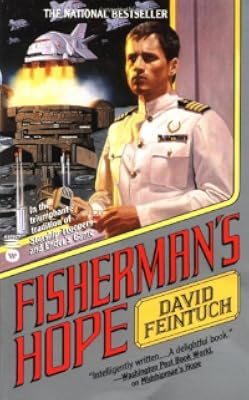
The last time I read through David Feintuch's Seafort Saga, I stopped here. The second time, I forged through to Fisherman's Hope, the fourth book in the seven [eight] book series. I can at least recommend that anyone who is interested in this series persevere that far. I hope to finish the last three books soon. There was an eighth in the pipeline when Feintuch died, but I don't know if it will ever see the light of day.
I liked Seafort the least in Challenger's Hope. I blame his youth, and his unexpected, but unrelinquished, authority. At the august age of twenty, he is insufferable in command, although other fictional Captains I have known have done better at that age. However, this is the crucible where he forges his character, for show more better, well actually for worse, and the rest of the series would be incomprehensible without it.
I think the hardest part of this book for me is how I find Seafort a little too much like myself. Seafort suffers from the spiritual malady a Catholic would call scrupulosity. James Chastek at Just Thomism recently penned this bit about scruples:
Nicholas Seafort's faults are many, but they are precisely not the things he worries the most about: being a poor leader, and being damned for breaking his oath. I blame his father for that. His father did do well, by his own lights, but he did poor Nick a disservice by passing onto him a strict interpretation of the creed his personality could not sustain. It helps to be a Catholic, rather than a Protestant. Especially an English Protestant. After Henry VIII made a mockery of religious oaths, the Jesuit order in particular helped push away from the inspirational, but very literal interpretation of oaths that was popular in Christendom pre-Reformation. So much else the English non-conformists tossed away, but this thing they kept, and cherished, and polished to a bright hue. And by this thing, Nicholas Seafort felt himself damned, when he is really the most dutiful, and honor-bound man in the United Nations Naval Service.
Nick can forgive anything, except himself. What he really needs to do, is admit that he is a great man. Nicholas Seafort inspires men to die for him. Of course, he makes mistakes, loses his temper, and makes a general mess of things. In fact, I think I hated him here. So did many others. However, he inspires greatness in others, precisely because he expects more of himself than he does of anyone else. And because he really is incorruptible. No one cares less for their career, or their life, than Nicholas Seafort. Of course, Feintuch makes him suffer for it. Everything Seafort does advances his career, no matter how hard he tries to resign. Providence reigns in his life. There is something else he needs to do. show less
I liked Seafort the least in Challenger's Hope. I blame his youth, and his unexpected, but unrelinquished, authority. At the august age of twenty, he is insufferable in command, although other fictional Captains I have known have done better at that age. However, this is the crucible where he forges his character, for show more better, well actually for worse, and the rest of the series would be incomprehensible without it.
I think the hardest part of this book for me is how I find Seafort a little too much like myself. Seafort suffers from the spiritual malady a Catholic would call scrupulosity. James Chastek at Just Thomism recently penned this bit about scruples:
-Scruples: They are a trick that keeps us from seeing our true faults. We obsess and worry over dramatic faults and wonder if we have fallen into something that we have no real love for or even temptation towards, when in fact what we need to work on – the evils we are much more attached to – go unnoticed.
Those who suffer under scruples are eaten alive by them, but it helps to see them as impediments to moral growth. Whether by subconscious connivance or a trick of the devil, they are smokescreens that keep us from getting to the things that we really need to work on and change. We continually fantasize about dramatic moral improvements when in fact the real real improvements we need to make are at once more obvious and harder for us to see in the face of scruples.
Nicholas Seafort's faults are many, but they are precisely not the things he worries the most about: being a poor leader, and being damned for breaking his oath. I blame his father for that. His father did do well, by his own lights, but he did poor Nick a disservice by passing onto him a strict interpretation of the creed his personality could not sustain. It helps to be a Catholic, rather than a Protestant. Especially an English Protestant. After Henry VIII made a mockery of religious oaths, the Jesuit order in particular helped push away from the inspirational, but very literal interpretation of oaths that was popular in Christendom pre-Reformation. So much else the English non-conformists tossed away, but this thing they kept, and cherished, and polished to a bright hue. And by this thing, Nicholas Seafort felt himself damned, when he is really the most dutiful, and honor-bound man in the United Nations Naval Service.
Nick can forgive anything, except himself. What he really needs to do, is admit that he is a great man. Nicholas Seafort inspires men to die for him. Of course, he makes mistakes, loses his temper, and makes a general mess of things. In fact, I think I hated him here. So did many others. However, he inspires greatness in others, precisely because he expects more of himself than he does of anyone else. And because he really is incorruptible. No one cares less for their career, or their life, than Nicholas Seafort. Of course, Feintuch makes him suffer for it. Everything Seafort does advances his career, no matter how hard he tries to resign. Providence reigns in his life. There is something else he needs to do. show less
Top stuff. Non-stop action.
Ratings
Members
- Recently Added By
Author Information

15 Works 4,763 Members
Some Editions
Series

Work Relationships
Common Knowledge
- Canonical title
- Challenger's Hope
- Original publication date
- 1995-05
- People/Characters
- Nicholas Seafort; Vax Holser; Philip Tyre
- Epigraph
- Being the second voyage of Nicholas Seafort, U.N.N.S., in the year of our Lord 2197
- Dedication
- To Tony Straseske and Marshall Spencer, who helped me through, to Ragtime Rick of Toledo, Ohio, at whose corner booth an author often taps the keys of his laptop while the ragtime soars, and of course, to Jettie, who makes it... (show all) worthwhile.
Ardath Mayhar, C. J. Cherryh and Roger MacBride Allen each contributed invaluable wisdom and wit while the author struggled this work. No thanks can possibly be enough. - First words
- "Carry on!" Geoffrey Tremaine strutted to his place at the head of the Admiralty conference table.
- Last words
- (Click to show. Warning: May contain spoilers.)Outside banished, lit within by the glow of our bodies, rising and falling as if to the waves, sliding, flowing, grasping at each other, floating together, as the great silent ship sailed ever onward through the void.
- Blurbers
- Cherryh, C. J. ; Drake, David; Allen, Roger MacBride
- Original language
- English
Classifications
Statistics
- Members
- 717
- Popularity
- 39,646
- Reviews
- 3
- Rating
- (3.51)
- Languages
- Czech, English, German
- Media
- Paper, Audiobook, Ebook
- ISBNs
- 13
- ASINs
- 4