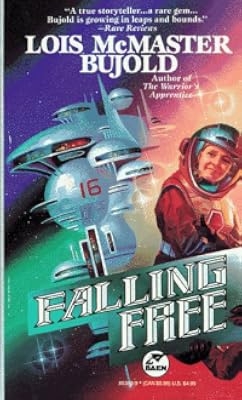
Falling Free
by Lois McMaster Bujold
Vorkosigan: Chronological Order (1), Vorkosigan: Publication Order (4)
On This Page
Description
Leo Graf was just your average highly efficient engineer: mind your own business, fix what's wrong, and move on to the next job. But all that changed on his assignment to the Cay Habitat, where a group of humanoids had been secretly, commercially bioengineered for working in free fall. Could he just stand there and allow the exploitation of hundreds of helpless children merely to enhance the bottom line of a heartless mega-corporation? He hadn't anticipated a situation where the right thing show more to do was neither safe, nor in the rules. Leo adopted a thousand quaddies. Now all he had to do was teach them to be free. show lessTags
Recommendations

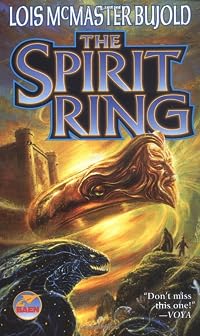
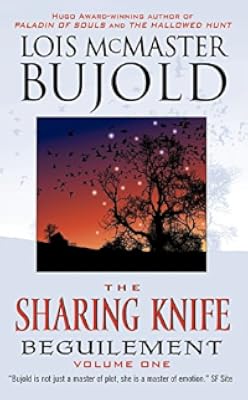
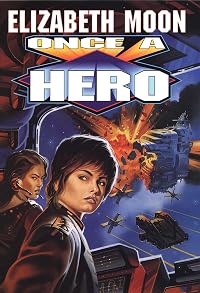


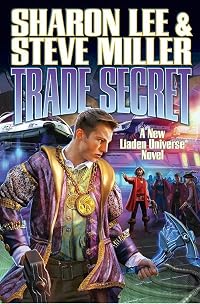
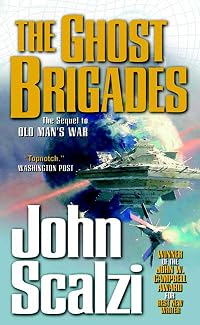
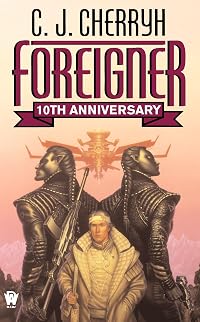

Member Recommendations
Member Reviews
Leo Graf arrives to the Habitat on work assignment to teach free-fall welding -- but he soon finds a new calling leading children to form their own independent null-gee community.
This is a light adventure sprinkled with bigger themes, and just to my taste. Although the baddie is almost over the line into too self-centered to be believed and the plot is as straightforward as you might expect for 300 pages, Bujold hits on some deeper themes (my favorite), and I quite liked this book. In particular, I loved the two competing readings of the quaddie predicament whose cognitive dissonance eventually resolved into a clear proclamation of slavery, the depth of Dr. Yei, the deliberate socialized (feminized?) nature of the quaddies leading them show more to be kind to the downsiders set on their destruction and to see not sharing as a grave sin, the importance of women/children and the wry phrases tapping Bujold insight (like planets being so dirty... since they are made of dirt), the recurring theme of choice even when embedded in hierarchy and calls to action when one is best-placed to do act, the increased quiet insubordination of the downsiders ostensibly helping Van Atta reflecting a newfound morality, and the perception of the strangeness of gravity that suffuses the novel that matches our perceptions and experiments with the strangeness of weightlessness -- from worrying about babies falling off edges to expectations about how materials will move.
Quite a fun novella that clearly hits on themes relevant to its time, lightly enough to not be dated or held back by them even nearly thirty years on. Well recommended as an engaging and substance-containing light read. show less
This is a light adventure sprinkled with bigger themes, and just to my taste. Although the baddie is almost over the line into too self-centered to be believed and the plot is as straightforward as you might expect for 300 pages, Bujold hits on some deeper themes (my favorite), and I quite liked this book. In particular, I loved the two competing readings of the quaddie predicament whose cognitive dissonance eventually resolved into a clear proclamation of slavery, the depth of Dr. Yei, the deliberate socialized (feminized?) nature of the quaddies leading them show more to be kind to the downsiders set on their destruction and to see not sharing as a grave sin, the importance of women/children and the wry phrases tapping Bujold insight (like planets being so dirty... since they are made of dirt), the recurring theme of choice even when embedded in hierarchy and calls to action when one is best-placed to do act, the increased quiet insubordination of the downsiders ostensibly helping Van Atta reflecting a newfound morality, and the perception of the strangeness of gravity that suffuses the novel that matches our perceptions and experiments with the strangeness of weightlessness -- from worrying about babies falling off edges to expectations about how materials will move.
Quite a fun novella that clearly hits on themes relevant to its time, lightly enough to not be dated or held back by them even nearly thirty years on. Well recommended as an engaging and substance-containing light read. show less
Leo Graf is assigned to a space station as a welding instructor, where he meets the quaddies - genetically engineered people who, instead of legs, have a second set of arms. Perfect for zero-gravity situations, but a tad off-putting to us "downsiders". What's more, all of them are under the age of 25, and even the oldest are so naive that the entire thousand-strong population could reasonably be considered children. But when the quaddies - who are technically owned by the massive corporation that employs Leo - cease to be profitable, Leo must make some tough decisions. And that's great, but what really got me were 1. the diversity of characters and 2. that the science, even when made up, sounded legit. And when I say diversity, I don't show more just mean skin color, but there was a good distribution of men and women in a variety of roles, not sticking to the stereotypes that have plagued science fiction for eons. I'm a little surprised that this is the first Bujold I've read, but I'm definitely going to have to pick up other books by her. show less
I’m reading the Vorkosigan books in order of internal chronology rather than date of publication. Although claiming Falling Free is part of the Vorkosigan series is a bit of a stretch - it’s set in the same universe, but 200 years earlier, features none of the characters of the later books, nor do I think its event are ever mentioned. Falling Free was actually the fourth novel published in the series, and it must have been the success of the earlier three that persuaded Bujold, and her editor, and her publisher, that Falling Free was a book worth publishing. Because it really isn’t.
A grizzled engineer is sent to a secret project on a habitat orbiting a world on the edge of settled space. He discovers the project is the creation show more of genetically-engineered humans adapted for zero gravity, with a second pair of arms where everyone else has legs. An administrator has been put in place to ensure the project is profitable, which means training the “quaddies” as zero-gravity technicians and engineers. There are 1000 of them, ranging in age from a few months to, I think, 16 or 17 years or old. They are not considered human, but treated as “corporate assets”, with no rights. And no one bats an eye. It’s worse than chattel slavery, and everyone at the habitat blithely accepts it.
Until… a senior manager visits and decides to close down the project. This means euthanising all 1000 children and teenager quaddies, but this is later changed to sterilising them and then dumping them on the world below and leaving them to rot. At this point, the grizzled engineer decides to do something, and hatches a plan for the quaddies to hijack the habitat, convert it into a ship, and then fly off to another star system. Needless to say, the plan does not go without a hitch.
It’s all very… competent - the prose, the plotting, the world-building. And yet… and yet… A future no more than a couple of centuries from now, in which an entire race of people - babies, children and teenagers - are condemned to death because they’re not considered human. Yes, there are examples of this happening now - I can think of two groups - but this is *fiction*, more so it’s *science fiction*. This is not fit material for an adventure story. Bujold doesn’t even comment on the morality of the quaddies’ situation - the novel is all about their escape. If you’re going to read the Vorkosigan series - and it has many, many fans - then I recommend avoiding Falling Free. You won’t be missing anything. show less
A grizzled engineer is sent to a secret project on a habitat orbiting a world on the edge of settled space. He discovers the project is the creation show more of genetically-engineered humans adapted for zero gravity, with a second pair of arms where everyone else has legs. An administrator has been put in place to ensure the project is profitable, which means training the “quaddies” as zero-gravity technicians and engineers. There are 1000 of them, ranging in age from a few months to, I think, 16 or 17 years or old. They are not considered human, but treated as “corporate assets”, with no rights. And no one bats an eye. It’s worse than chattel slavery, and everyone at the habitat blithely accepts it.
Until… a senior manager visits and decides to close down the project. This means euthanising all 1000 children and teenager quaddies, but this is later changed to sterilising them and then dumping them on the world below and leaving them to rot. At this point, the grizzled engineer decides to do something, and hatches a plan for the quaddies to hijack the habitat, convert it into a ship, and then fly off to another star system. Needless to say, the plan does not go without a hitch.
It’s all very… competent - the prose, the plotting, the world-building. And yet… and yet… A future no more than a couple of centuries from now, in which an entire race of people - babies, children and teenagers - are condemned to death because they’re not considered human. Yes, there are examples of this happening now - I can think of two groups - but this is *fiction*, more so it’s *science fiction*. This is not fit material for an adventure story. Bujold doesn’t even comment on the morality of the quaddies’ situation - the novel is all about their escape. If you’re going to read the Vorkosigan series - and it has many, many fans - then I recommend avoiding Falling Free. You won’t be missing anything. show less
This is marked as the first work in Bujold's Vorkosigan Saga, but I don't think it's necessarily the one you want to read first. This is more a prequel to the main timeline of the series. It's known as the "Vorkosigan Saga" because it mostly focuses on the family of that name, and particularly Miles Vorkosigan--who isn't even mentioned in this standalone story set 200 years before the character that gives this series its name was born. It's also an early work of Bujold, only her fourth published novel, and I think she's one of those writers who only got better with time rather than peaked early. So I'd recommend starting with the omnibus works Cordelia's Honor (centered on Miles' parents) or Young Miles, where Miles finally takes center show more stage.
This is recognizably in the same universe though, and is an entertaining story in its own right. But while Miles Vorkosigan is one of the most memorable fictional characters in science fiction, this merely has likable ones. Leo Graf, an engineer, finds himself teaching "quaddies," a bioengineered species of human with four arms designed to work in free fall who are disturbingly treated like property--and a new tech is about to make their purpose obsolete. The story is good space opera in the tradition of the Heinlein juveniles--but with stronger, more believable female characters. I liked and enjoyed this--but I love lots of the other entries in the series. So if you don't find yourself entranced by this one, do try Young Miles before giving up on the series. show less
This is recognizably in the same universe though, and is an entertaining story in its own right. But while Miles Vorkosigan is one of the most memorable fictional characters in science fiction, this merely has likable ones. Leo Graf, an engineer, finds himself teaching "quaddies," a bioengineered species of human with four arms designed to work in free fall who are disturbingly treated like property--and a new tech is about to make their purpose obsolete. The story is good space opera in the tradition of the Heinlein juveniles--but with stronger, more believable female characters. I liked and enjoyed this--but I love lots of the other entries in the series. So if you don't find yourself entranced by this one, do try Young Miles before giving up on the series. show less
It has been quite a while since I’ve delved into a sci-fi, and I’m so happy that I’ve done so with a Bujold book. Falling Free is a novel set in the Vorkosigan Saga that’s separated from the rest of the main storyline; no Vorkosigans are involved. Rather, it tells the story of the quaddies and how Leo Graf helps them free themselves and live as people rather than a corporation’s property.
There’s something magical about Bujold’s works, and I really can’t put my finger on just what it is. I fall in love with the characters every time — despite living in a completely different world, they seem so real and genuine; their concerns are very similar to our concerns, and I can’t help but internalize them and think of these show more characters as friends. The story of Falling Free is no different. Leo comes in to train “the quaddies” — people who were created for zero-gravity work and are considered the property of a corporation because they paid to genetically modify humans to create them; they are essentially humans, but have four arms rather than a pair each of arms and legs. He struggles with how the staff and higher-ups in the corporation that created them view them and talk about them, but tries to be a professional and insists to himself that he’s just there to train them — that’s all he needs to concern himself with. However, he gets to know the quaddies and befriends them, inspired by their innocence and strength. I love how real the struggle is for him and how we can see deep internal conflict within his actions.
One of my favorite things about sci-fi is that it gives us a different context for talking about issues; in this case, Bujold explores the meaning of humanity, the ethics of genetic experimentation and the results of that, among other things. She’s a pro at crafting a suspenseful, interesting story line around deep issues, which is part of the reason why I love her books so much. They’re fun, have just the right amount of action and romance, and then give food for thought. Absolutely perfect, in my opinion.
Falling Free is a fun romp in the Vorkosigan universe; we see a bit of the science stuff being developed that will be touched on in future novels and get to see how the quaddies originated. I greatly enjoyed reading this novel and recommend it to any science fiction fan — even if you haven’t read anything in the Vorkosigan series, you’ll be able to follow along without any trouble and I guarantee you will enjoy yourself.
Also posted on Purple People Readers. show less
There’s something magical about Bujold’s works, and I really can’t put my finger on just what it is. I fall in love with the characters every time — despite living in a completely different world, they seem so real and genuine; their concerns are very similar to our concerns, and I can’t help but internalize them and think of these show more characters as friends. The story of Falling Free is no different. Leo comes in to train “the quaddies” — people who were created for zero-gravity work and are considered the property of a corporation because they paid to genetically modify humans to create them; they are essentially humans, but have four arms rather than a pair each of arms and legs. He struggles with how the staff and higher-ups in the corporation that created them view them and talk about them, but tries to be a professional and insists to himself that he’s just there to train them — that’s all he needs to concern himself with. However, he gets to know the quaddies and befriends them, inspired by their innocence and strength. I love how real the struggle is for him and how we can see deep internal conflict within his actions.
One of my favorite things about sci-fi is that it gives us a different context for talking about issues; in this case, Bujold explores the meaning of humanity, the ethics of genetic experimentation and the results of that, among other things. She’s a pro at crafting a suspenseful, interesting story line around deep issues, which is part of the reason why I love her books so much. They’re fun, have just the right amount of action and romance, and then give food for thought. Absolutely perfect, in my opinion.
Falling Free is a fun romp in the Vorkosigan universe; we see a bit of the science stuff being developed that will be touched on in future novels and get to see how the quaddies originated. I greatly enjoyed reading this novel and recommend it to any science fiction fan — even if you haven’t read anything in the Vorkosigan series, you’ll be able to follow along without any trouble and I guarantee you will enjoy yourself.
Also posted on Purple People Readers. show less
Despite being an avid sci-fi reader, I'm pretty sure this is my first Lois McMaster Bujold novel. I've heard a lot about the Volkosigan saga, not least in Jo Walton's [b:What Makes This Book So Great|17910076|What Makes This Book So Great|Jo Walton|https://i.gr-assets.com/images/S/compressed.photo.goodreads.com/books/1370009391l/17910076._SY75_.jpg|25095529], but only got round to trying it when a friend lent me 'Falling Free'. Although part of the saga, this novel stands alone really well and I found it sufficiently gripping to read in one evening. The plot is ingeniously simple: an engineer arrives on a space station, finds an exploited underclass there, and discovers the limits of what he'll put up with from an employer. Other show more characters confront similar dilemmas about what is and isn't morally acceptable in pursuit of profit. Leo, the engineer protagonist, begins the book with a stance of Just Doing His Job and Not Getting Involved. He slowly realises that he is complicit in brutal injustice and must decide how to respond. Leo's thought processes are those of a Mark Watney progenitor, as he applies his engineering skills creatively to the problems at hand.
I found 'Falling Free' very tense and compelling, as the stakes are high and the villain is an avatar of amoral capitalism. The pace increases after setting and characters have been established, culminating in a very exciting denouement.I was delighted that the accidental petrol shipment turns out to be a gun on the mantelpiece, providing a source of explosives when one was needed. Although the narrative is action-heavy, I also appreciated the thoughtful examination of employee loyalty and moral compromises. Leo actively resists GalacTech's treatment of the quaddies, while others require appeals to self-interest (Ti) or resist more passively via protocol (Bannerji) or observe and wait until the last possible moment to intervene (Yei). I loved this line : "This is mutiny!" yelled Van Atta. "No, it isn't," Banerjee disagreed cordially. "This isn't the military."' The quaddies also react in different ways, although the main characters are all more rebellious types.
The reader largely observes the story via Leo and he makes an interesting protagonist. The scenes from the quaddies point of view were among my favourites, though. Notably the conversation Silver and Madame Minchenko have about music while waiting in the shuttle. While the technologies are futuristic, the underlying themes of exploitation and resistance are older than industrialisation. Bujold handles them skillfully in a deft combination of action and insight. The only aspect I wasn't keen on was Leo's unnecessary romance subplot. show less
I found 'Falling Free' very tense and compelling, as the stakes are high and the villain is an avatar of amoral capitalism. The pace increases after setting and characters have been established, culminating in a very exciting denouement.
The reader largely observes the story via Leo and he makes an interesting protagonist. The scenes from the quaddies point of view were among my favourites, though. Notably the conversation Silver and Madame Minchenko have about music while waiting in the shuttle.
I have always thought of Falling Free as a minor entry in the Vorkosigan saga (it's not even part of the saga proper, just set in the same universe). However, rereading it, I think it's as enjoyable as the books with Miles, although not boasting such a charismatic main character.
The story is straightforward but very appealing, and the stakes high: the very survival of the quaddies' race. They are a genetic experiment made by a giant corporation: people with four arms instead of two arms and two legs, perfectly adapted to work in free fall. They are basically slaves with no rights, even if they are relatively well-treated, as valuable instruments. Unfortunately, they are rendered obsolete just before going into production, because of the show more development of artificial gravity.
One of their teachers, a veteran engineer called Graf, decides to sacrifice his career and his pension to try to help them. I wonder if this would be considered politically-incorrect nowadays (someone who is not a member of a minority saving that minority, like the equivalent of a white savior). But it's done in a natural manner. The quaddies need Graf because the oldest among them are still very young and inexperienced when they have to fight for their life and their future, and some of the quaddies are also effective leaders of their 'revolution'.
One thing that bothered me is that the human administrators were a bit heavy-handed (like when assigning the quaddies reproductive partners against their will). If they have to manage workers who are basically slaves but don't know they are, it would make sense not to be too heavy-handed, because that way the quaddies will realize how little say they have in their own lives and some kind of rebellion is almost unavoidable.
Anyway, a good story, quite enjoyable, even if Miles Vorkosigan is not in it. show less
The story is straightforward but very appealing, and the stakes high: the very survival of the quaddies' race. They are a genetic experiment made by a giant corporation: people with four arms instead of two arms and two legs, perfectly adapted to work in free fall. They are basically slaves with no rights, even if they are relatively well-treated, as valuable instruments. Unfortunately, they are rendered obsolete just before going into production, because of the show more development of artificial gravity.
One of their teachers, a veteran engineer called Graf, decides to sacrifice his career and his pension to try to help them. I wonder if this would be considered politically-incorrect nowadays (someone who is not a member of a minority saving that minority, like the equivalent of a white savior). But it's done in a natural manner. The quaddies need Graf because the oldest among them are still very young and inexperienced when they have to fight for their life and their future, and some of the quaddies are also effective leaders of their 'revolution'.
One thing that bothered me is that the human administrators were a bit heavy-handed (like when assigning the quaddies reproductive partners against their will). If they have to manage workers who are basically slaves but don't know they are, it would make sense not to be too heavy-handed, because that way the quaddies will realize how little say they have in their own lives and some kind of rebellion is almost unavoidable.
Anyway, a good story, quite enjoyable, even if Miles Vorkosigan is not in it. show less
Members
- Recently Added By
Published Reviews
ThingScore 75
Falling Free is one of Bujold’s early books, and it isn’t as technically accomplished as her later work. It’s definitely one of her minor books, but she’s so good that a minor book for her would be a major one for anyone else.
added by Shortride
Lists

Favorite Science Fiction by Women Authors
737 works; 196 members

NPRs your picks: top 100 Sci-Fi/Fantasy books
297 works; 80 members
Nebula Award
111 works; 14 members

Wishlist
50 works; 1 member

Character-driven SF
59 works; 1 member

Books Read in 2014
2,343 works; 89 members

Books Read in 2017
4,249 works; 130 members

Books Read in 2022
5,166 works; 112 members

Books Read in 2025
4,091 works; 97 members

AbeBooks: 50 essential science fiction books
50 works; 6 members
Talk Discussions
Past Discussions
Vorkosigan Group Read: Miles, Mutants and Microbes in 2014 Category Challenge (April 2015)
Author Information

104+ Works 85,804 Members
Science fiction and fantasy author Lois McMaster Bujold was born in Columbus, Ohio in 1949. After graduating from Ohio State University, she worked as a pharmacy technician at Ohio State University Hospitals. Her first short story was published in Twilight Zone Magazine in 1984 and her first three novels were published in 1986. She received the show more Nebula Award for Falling Free and The Mountains of Mourning and the Hugo Award for The Vor Game, Barrayar, Mirror Dance, The Mountains of Mourning, and Paladin of Souls. She also received the Locus award for Mirror Dance and Paladin of Souls, the Minnesota Book Award for Komarr, the Mythopoeic Award for The Curse of Chalion, and a Romantic Times 2003 Reviewers' Choice Award for Paladin of Souls. She is best known for her series featuring Miles Vorkosigan. She currently lives in Minneapolis, Minnesota. (Bowker Author Biography) show less
Some Editions
Awards and Honors
Awards
Notable Lists
Series


Belongs to Publisher Series
Work Relationships
Is contained in
Common Knowledge
- Canonical title
- Falling Free
- Original title
- Falling Free
- Alternate titles*
- Chute libre
- Original publication date
- 1988-04
- People/Characters
- Leo Graf; Silver; Tony; Bruce Van Atta
- Important places
- Cay Habitat (fictional)
- Dedication
- For Dad.
- First words
- The shining rim of the planet Rodeo wheeled dizzily past the observation port of the orbital transfer station.
- Quotations
- There was no limit to what one man might do, if he gave all, and held back nothing.
- Last words
- (Click to show. Warning: May contain spoilers.)They turned their faces to the new sun
- Original language
- English
*Some information comes from Common Knowledge in other languages. Click "Edit" for more information.
Classifications
Statistics
- Members
- 2,913
- Popularity
- 6,152
- Reviews
- 80
- Rating
- (3.68)
- Languages
- 7 — Czech, English, French, German, Italian, Polish, Spanish
- Media
- Paper, Audiobook, Ebook
- ISBNs
- 28
- ASINs
- 15