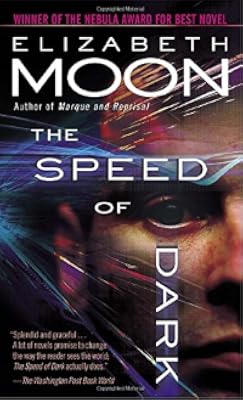
The Speed of Dark
by Elizabeth Moon
On This Page
Description
Thoughtful, provocative, poignant, unforgettable, The Speed of Dark is a gripping journey into the mind of an autistic person as he struggles with profound questions of humanity and matters of the heart. In the near future, disease will be a condition of the past. Most genetic defects will be removed at birth; the remaining during infancy. Lou Arrendale, a high-functioning autistic adult, is a member of the lost generation, born at the wrong time to reap the rewards of medical science. show more He lives a low-key, independent life. But then he is offered a chance to try a brand-new experimental "cure" for his condition. With this treatment Lou would think and act and be just like everyone else. But if he was suddenly free of autism, would he still be himself? Would he still love the same classical music--with its complications and resolutions? Would he still see the same colors and patterns in the world--shades and hues that others cannot see? Most important, would he still love Marjory, a woman who may never be able to reciprocate his feelings? Now Lou must decide if he should submit to a surgery that might completely change the way he views the world . . . and the very essence of who he is. Tenth anniversary edition * With a new Introduction by the author Praise for The Speed of Dark "Splendid and graceful . . . A lot of novels promise to change the way a reader sees the world; The Speed of Dark actually does."--The Washington Post Book World "[A] beautiful and moving story . . . [Elizabeth] Moon is the mother of an autistic teenager and her love is apparent in the story of Lou. He makes a deep and lasting impact on the reader while showing a different way of looking at the world."--The Denver Post "Every once in a while, you come across a book that is both an important literary achievement and a completely and utterly absorbing reading experience--a book with provocative ideas and an equally compelling story. Such a book is The Speed of Dark."--Fort Lauderdale Sun-Sentinel "A remarkable journey [that] takes us into the mind of an autistic with a terrible choice: become normal or remain an alien on his own planet."--Mary Doria Russell, author of The Sparrow "A powerful portrait . . . an engaging journey into the dark edges that define the self."--The Seattle Times show lessTags
Recommendations


Member Recommendations
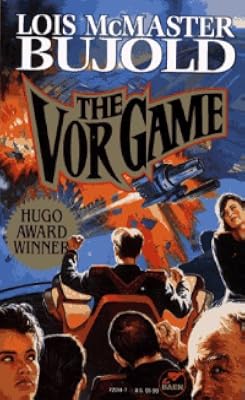
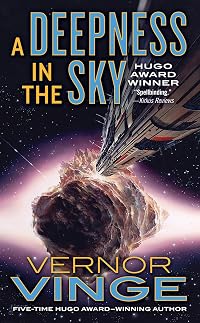
tortoise Both are well-written novels with a first-person autistic-spectrum narrator. The Curious Incident has a better-constructed plot (the villain in The Speed of Dark is a bit cartoonish), but The Speed of Dark is I think more interesting as a commentary on autism.
110
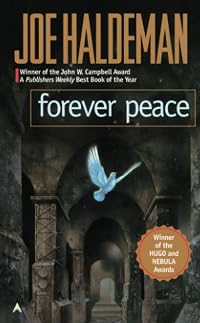
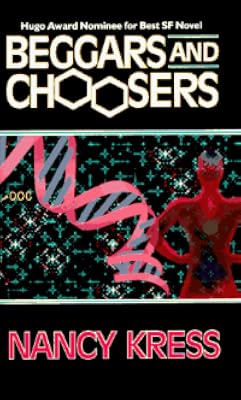
infiniteletters Charlie is definitely not like Lou, true. But their experiences and perspectives have the same mental effect on readers.
110
LamontCranston Pathological corporate greed, manipulation of the disabled/differently abled, and both for space applications, but Falling Free has a much more proactive response to being exploited
20
MyriadBooks For the exploration of human intelligences and mental health.
10
MyriadBooks For not knowing enough yet.
2wonderY One of the young wizard's is autistic. For comparison of viewpoint and choices.
hoddybook A somewhat more lighthearted look...
Member Reviews
MINI REVIEW:
Every now and then a book comes along that defies all expectations, and transcends genres. THE SPEED OF DARK is one of those books. Though technically science fiction, this certainly doesn’t feel like it. It’s first and foremost a character-oriented story; so much so that the ‘story’ barely applies. Very introspective and enlightening from someone who knows autism intimately (her son is autistic). This is certainly one of those books that make you think and reevaluate your opinions. I highly recommend this book to EVERYONE, not just science fiction readers.
Every now and then a book comes along that defies all expectations, and transcends genres. THE SPEED OF DARK is one of those books. Though technically science fiction, this certainly doesn’t feel like it. It’s first and foremost a character-oriented story; so much so that the ‘story’ barely applies. Very introspective and enlightening from someone who knows autism intimately (her son is autistic). This is certainly one of those books that make you think and reevaluate your opinions. I highly recommend this book to EVERYONE, not just science fiction readers.
I adored this book until the last...40 pages or so. The ending made me want to scream and throw things. Why cure him of his autism and take away everything that made Lou *him*? As an autistic person, the treatment of this as a *good* thing (because look, now he can be an astronaut! It only requires he give up everything pleasurable and good in his life, and all his relationships!) Ugh. Still 4 stars, because of just how much I loved everything preceding, but just...ugh.
A solid read for me. Moon imagines a near-future where autism has been cured but there is a percentage of people that were born slightly too early to receive the genetic fix. The final autistic generation, if you will. A small group of them work at process analysis and pattern-recognition for a large corporate conglomerate. The bulk of the narrative is told in first-person via Lou Arrendale, one of the autistic employees of the company.
When Lou is speaking or contemplating, the story fires on all cylinders. I haven't decided yet if the lack of development of the supporting cast is perhaps an intentional attempt to show how those other characters are perceived via Lou's autistic viewpoint. If so, that only adds to the brilliance of the show more novel. If not, (and the more I ponder, the less I think it's fully intentional), there is not enough of it to detract very much from Lou's story. And this is Lou's story. From beginning to end, a more compelling protagonist is difficult to come by. The 'voice' that Moon employs as Lou describes his daily routines and how he perceives what people say and do is nearly pitch-perfect. There is gem after gem relating how an autistic person might view terms and speech that us 'normals' take for granted. But then, as the autistics mention once or twice, "Normal is a dryer setting".
Highly recommended. show less
When Lou is speaking or contemplating, the story fires on all cylinders. I haven't decided yet if the lack of development of the supporting cast is perhaps an intentional attempt to show how those other characters are perceived via Lou's autistic viewpoint. If so, that only adds to the brilliance of the show more novel. If not, (and the more I ponder, the less I think it's fully intentional), there is not enough of it to detract very much from Lou's story. And this is Lou's story. From beginning to end, a more compelling protagonist is difficult to come by. The 'voice' that Moon employs as Lou describes his daily routines and how he perceives what people say and do is nearly pitch-perfect. There is gem after gem relating how an autistic person might view terms and speech that us 'normals' take for granted. But then, as the autistics mention once or twice, "Normal is a dryer setting".
Highly recommended. show less
Technically because E. Moon writes sf and fantasy and because [The Speed of Dark] is set in the near future one could make an argument for putting the book in the speculative fiction slot, but I choose not to because Moon's attention to how the high-functioning autistic person experiences the world is the core of the experience of reading the book and there is nothing speculative about that, not to me anyway. The premise is that in this near future there is a treatment, new and experimental (as in dangerously untried), that can "cure" autism. Lou is autistic and very very bright, continually underestimated by all the "normals" around him. At work, where he and a select group of other autists work on programming, a new boss wants all of show more them to take the treatment. Lou has other concerns as well, a "normal" who becomes jealous of his accomplishments. What carries the story though is simply Lou himself, earnest and hard-working, honest and insightful. A great read. ****1/2 show less
Oh, wow. I've had this for years and never got around to reading it - dumb of me, this is amazing. Lots of echoes of Flowers for Algernon, but actually it's kind of reversed - we don't get much image of Charlie until he's "fixed", but here Lou is a very solid and real character (with interesting angles of perception, but that doesn't make him any less a person) before the "fix" is offered, and we get little more than sketches of him afterward. I don't understand why he chose what he did; his worst nightmare came true and it's barely skimmed over. A very interesting story with a lot to think about in it - definitely worth reading and rereading.
This is one hell of a fantastic SF and it hit me in all the right feels. It's not flashy, either, just really well made.
It's also custom-made for anyone wanting to see and feel what life would be like as a high-functioning autistic. Its set in the near future, with talk of highly advanced treatments and AIs, but the real joy is in the narrator's outlook, the focus on patterns in everything, everywhere.
For while this novel is pretty soft-SF, it actually has a hard-SF feel because of the character. And even though he goes to work, has hobbies, thinks about having a love life, and continually strives to be better, the difference within his perception of things is a real joy.
I love this book. I really love this book. It's not even one I show more would have normally picked to love, either. It just slammed into me from out of nowhere. It even has sword fights. :) Well, fencing. And bombs! Um, dangerous pranks and jilted lovers. :)
Yes, it is a joyous celebration of differences in humanity, but more than that, this novel is also a great story. :)
I totally recommend it for anyone, anywhere.
Even those of us who already "think differently". :) show less
It's also custom-made for anyone wanting to see and feel what life would be like as a high-functioning autistic. Its set in the near future, with talk of highly advanced treatments and AIs, but the real joy is in the narrator's outlook, the focus on patterns in everything, everywhere.
For while this novel is pretty soft-SF, it actually has a hard-SF feel because of the character. And even though he goes to work, has hobbies, thinks about having a love life, and continually strives to be better, the difference within his perception of things is a real joy.
I love this book. I really love this book. It's not even one I show more would have normally picked to love, either. It just slammed into me from out of nowhere. It even has sword fights. :) Well, fencing. And bombs! Um, dangerous pranks and jilted lovers. :)
Yes, it is a joyous celebration of differences in humanity, but more than that, this novel is also a great story. :)
I totally recommend it for anyone, anywhere.
Even those of us who already "think differently". :) show less
Lou is an autist, among the last cohort before 21st century medicine developed a “cure”, changing neural connections in infancy. He works for a pharmaceutical corporation, in a group of autists who investigate and discover patterns. The new boss is zealous about cost effectiveness, and pressures the autists to undergo an experimental treatment that similarly rewires adults, so they won’t need special accommodations. This seems a tad shortsighted, even for a cardboard villain, because the autists were hired for their special and presumably neural abilities, and as a plot it is rather artificially contrived, but it provides a structure for day-to-day concerns and philosophical considerations as Lou and his colleagues discuss the show more pros and cons. Lou has suspicions and reservations, but also curiosity and a tinge of hope; he has been closed out of opportunities because he is not “normal”. So what is normal anyway, when events reveal that normal people also at times misperceive thoughts and emotions or behave inappropriately. I’m generally irritated by present tense, but here I was completely engaged by the immediate interior POV. As a bonus, I came to appreciate fencing, which apparently is a very pattern-laden sport. The ending was horribly sad, I felt like I’d lost a person, even though he was happy. I suppose this was intentional. show less
Members
- Recently Added By
Lists

Best Science Fiction Novels
816 works; 430 members

Favorite Science Fiction by Women Authors
741 works; 197 members
Survey of Classic Science Fiction
171 works; 48 members

Recommend the 20 best books you've read in the last five years
2,168 works; 608 members

Diversity in Fantasy and Science Fiction
219 works; 33 members

Bookriot's 100 Must-Read Sci-Fi Fantasy Novels By Female Authors
100 works; 9 members

Arthur C. Clarke Award Winners and Shortlisted Books
219 works; 14 members
Nebula Award
111 works; 14 members

Science Fiction by female authors
43 works; 4 members

Jean's Sci Fi/Fantasy Reading list
189 works; 12 members

Speculative Fiction to Read
706 works; 32 members

SFFCat 2015
35 works; 1 member

Speculative Fiction: The Award Winners
27 works; 6 members

Carole's List
445 works; 13 members

Books Read in 2017
4,249 works; 130 members

Books Read in 2023
5,638 works; 147 members

madness prompts and reason writes, says Gide
26 works; 3 members

To Read
617 works; 7 members

Best medical fiction
26 works; 17 members

Books Read in 2015
3,299 works; 129 members
Amazon's 100 Science Fiction & Fantasy Books to Read in a Lifetime
87 works; 23 members

I See the Moon and the Moon Sees Me
24 works; 7 members

SF&F Book Chat options
15 works; 1 member

BingoDOG - Books About Autism: Fiction
27 works; 14 members

BingoDOG 2015 Challenge
49 works; 3 members
Books That Made Us Cry
278 works; 145 members
Talk Discussions
Past Discussions
FEBRUARY READ - SPOILERS - The Speed of Dark in The Green Dragon (February 2015)
FEBRUARY READ - NO SPOILERS - The Speed of Dark in The Green Dragon (February 2015)
Author Information

120+ Works 37,148 Members
Elizabeth Moon was born March 7, 1945, and grew up in McAllen, Texas, graduating from McAllen High School in 1963. She has a B.A. in History from Rice University (1968) and another in Biology from the University of Texas at Austin (1975) with graduate work in Biology at the University of Texas, San Antonio. She served in the USMC from 1968 to show more 1971, first at MCB Quantico and then at HQMC. She married Richard Moon, a Rice classmate and Army officer, in 1969; they moved to the small central Texas town where they still live in 1979. They have one son, born in 1983. (Publisher Fact Sheets) Elizabeth Moon was born on March 7, 1945 in Texas. She received a B.A. in history from Rice University in 1968 and a B.S. in biology from the University of Texas at Austin in 1975 with graduate work in biology at the University of Texas, San Antonio. She served in the United States Marine Corps from 1968 to 1971. In the early 1980s, she wrote the Florence News column for the county weekly newspaper. She is a science fiction and fantasy author. In 1986, she published her first science fiction story in the monthly magazine Analog and the anthology series Sword and Sorceress. Her first novel, The Sheepfarmer's Daughter, was published in 1988 and won the Compton Crook Award in 1989. Her other works include Remnant Population, Oath of Fealty, Kings of the North, and Echoes of Betrayal. She has won several awards including the Nebula Award for Best Novel for The Speed of Dark in 2003 and the Heinlein Award in 2007. (Bowker Author Biography) show less
Some Editions
Awards and Honors
Awards
Distinctions
Series
Belongs to Publisher Series
Gallimard, Folio SF (329)
Work Relationships
Is abridged in
Common Knowledge
- Canonical title
- The Speed of Dark
- Original publication date
- 2002-11
- People/Characters
- Lou Arrendale; Tom; Marjory Shaw; Gene Crenshaw; Donald Poiteau; Lucia (show all 18); Pete Aldrin; Cameron; Linda; Emmy Sanderson; Malcolm Stacy; Bailey; Danny Bryce; Chuy; Eric; Dale; Simon; John L. Slazik
- First words
- Questions, always questions.
- Quotations
- Normal is a setting on a dryer.
I had to learn to say conventional things even when I did not feel them, because that is part of fitting in and learning to get along. Has anyone ever asked Mr. Crenshaw to fit in, to get along?
I wonder, not for the first time, why a woman friend is called a girlfriend and not a womanfriend.
Bad parents make things hard and painful for their children and then say it was to help them grow. Growing and living are hard enough already; children do not need things to be harder.
I do not understand the rules about interrupting. It is always impolite for me to interrupt other people, but other people do not seem to think it is impolite for them to interrupt me in circumstances when I should not interr... (show all)upt them.
Everything in my life that I value has been gained at the cost of not saying what I really think and saying what they want me to say.
What I mean is the speed of dark is as interesting as the speed of light, and maybe it is faster and who will find out?
It is all knowing what to start with. If you start in the right place and follow all the steps, you will get to the right end.
It feels to me that too many things are happening so fast that they cannot be seen. They are happening ahead of awareness, in the dark that is always faster than light because it gets there first.
But there is simple ignorance, not knowing, and willful ignorance that refuses to know, that covers the light of knowledge with the dark blanket of bias. So I think there may be positive darkness, and I think dark can have a ... (show all)speed.
No matter what I do, no matter how predictable I try to make my life, it will not be any more predictable than the rest of the world.
Supposedly autistic persons do not care what others think of them, but this is not true. I do care, and it hurts when people do not like me because I am autistic. - Last words
- (Click to show. Warning: May contain spoilers.)Now I get to ask the questions.
- Blurbers
- Bear, Greg; McCaffrey, Anne; McDevitt, Jack
Classifications
Statistics
- Members
- 2,385
- Popularity
- 8,256
- Reviews
- 112
- Rating
- (3.99)
- Languages
- 9 — Czech, English, French, German, Hungarian, Italian, Portuguese, Spanish, Turkish
- Media
- Paper, Audiobook, Ebook
- ISBNs
- 26
- ASINs
- 12