On This Page
Description
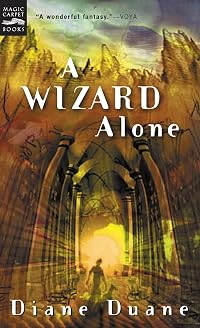
While Nita mourns her mother's death, teenage wizard Kit and his dog Ponch set out to find a young autistic boy who vanished in the middle of his Ordeal, pursued by the Lone Power.Tags
Recommendations







Member Recommendations
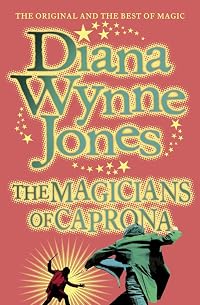
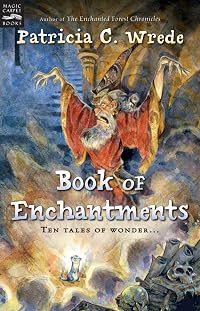
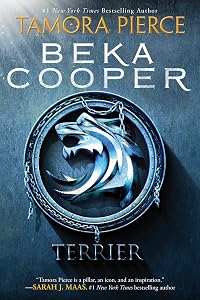
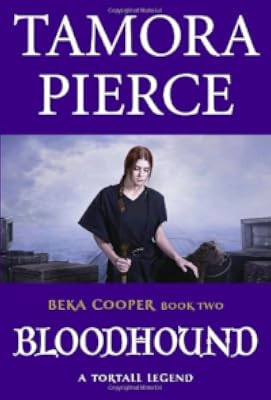
2wonderY Protagonist is autistic. Variations on viewpoint and choices.
Member Reviews
auuuuuggghhh the ableism I may vomit
At the beginning, I was really excited about this book, because I thought it would have a positive take on how an autistic person could wield magic and fight ultimate evil in his own way. I also liked the description of how Nita dealt with grief. I thought this was going to be the best book in the series yet.
Wow, was I disappointed. The depictions of autism got worse and worse as the book went on, and by the end I was gnashing my teeth in rage. Autism does not make you a saint or an otherworldly power. Autistic people are fully aware that other people exist in the world, so it's not solipsism, thanks. Most importantly, most autistic people who are able to articulate their own desires and choices would show more not, if you gave them the opportunity, choose to be "cured." Autistic people aren't broken. They have a different way of seeing the world that people who don't share that view don't understand. But that doesn't mean they can't live happy lives and even value the way their alternative neural wiring reveals the world to them.
Magical cures for neurodivergent and disabled people are an old, old trope that needs to die. Maybe instead of obsessing over how to get rid of these types of difference, we should think about how to accept them. I love Diane Duane, but I was deeply disappointed by this book. show less
At the beginning, I was really excited about this book, because I thought it would have a positive take on how an autistic person could wield magic and fight ultimate evil in his own way. I also liked the description of how Nita dealt with grief. I thought this was going to be the best book in the series yet.
Wow, was I disappointed. The depictions of autism got worse and worse as the book went on, and by the end I was gnashing my teeth in rage. Autism does not make you a saint or an otherworldly power. Autistic people are fully aware that other people exist in the world, so it's not solipsism, thanks. Most importantly, most autistic people who are able to articulate their own desires and choices would show more not, if you gave them the opportunity, choose to be "cured." Autistic people aren't broken. They have a different way of seeing the world that people who don't share that view don't understand. But that doesn't mean they can't live happy lives and even value the way their alternative neural wiring reveals the world to them.
Magical cures for neurodivergent and disabled people are an old, old trope that needs to die. Maybe instead of obsessing over how to get rid of these types of difference, we should think about how to accept them. I love Diane Duane, but I was deeply disappointed by this book. show less
It's been barely a month since Nita's mother died, and Nita, Dairine, and their father are all still deep in grief and only marginally functional. When Tom and Carl assign Kit to look into a case of a new wizard who has apparently been stuck in his Ordeal for three months--a wizard who's an autistic eleven-year-old--Nita doesn't feel ready to act as back-up. She's still too distracted by her own pain, by trying to keep up at school anyway, and trying to keep Dairine at least going through the motions, if nothing else. On top of all that, she's having weird dreams, of clowns and robots attempting to contact her, apparently asking for help, but who aren't really understandable even in the wizardly Speech. Kit gets drawn in deeper and show more deeper to the autistic wizard's Ordeal, causing serious worry to his dog, Ponch, who is himself getting very strange even by the standards of wizards' pets, and Nita gets more and more absorbed by the strange creature(s) that's apparently trying to contact her, and eventually everything blows up quite satisfyingly. The last Wizards book, The Wizard's Dilemma, felt a bit as if Duane might be losing interest in the series; if so, she's recovered her interest. Enjoyable. show less
I'm a big fan of Duane's Young Wizards series. I picked up the third book, High Wizardry, around 11 years ago at a KMart or some such when I was on a long trip with my parents and needed something to read. I did, I admit, judge a book by its cover, but I wasn't disappointed. It took me a few years to realize it was part of a series, though. These are ostensibly written for young adults but the writing style - particularly of some of the later books - and many of the themes can speak to adult readers of fantasy as well.
The two main characters in most of the books are friends and wizarding partners Kit and Nita. In this book, Nita is suffering from depression due to a great loss in the previous book (The Wizard's Dilemma) and so Kit show more strikes out on his own to try and contact another local wizard who is stuck in the middle of his Ordeal - a sort of test that every wizard goes through when the power is first offered to them. The catch is that that wizard, Darryl, is autistic, and entering his mind to try to communicate with him starts to take its toll on Kit.
A lot of YW fans don't care for this book, and I believe it is not because it's not a good book but because it is - because it gives you a taste of the depression, the lonliness that Nita is feeling, and even an idea of how cut off from the world Kit feels because of his time spent with Darryl. I tend to read it when I'm a little depressed, because while it intesifies those feelings for a while, it eventually brings you back out of it, too. show less
The two main characters in most of the books are friends and wizarding partners Kit and Nita. In this book, Nita is suffering from depression due to a great loss in the previous book (The Wizard's Dilemma) and so Kit show more strikes out on his own to try and contact another local wizard who is stuck in the middle of his Ordeal - a sort of test that every wizard goes through when the power is first offered to them. The catch is that that wizard, Darryl, is autistic, and entering his mind to try to communicate with him starts to take its toll on Kit.
A lot of YW fans don't care for this book, and I believe it is not because it's not a good book but because it is - because it gives you a taste of the depression, the lonliness that Nita is feeling, and even an idea of how cut off from the world Kit feels because of his time spent with Darryl. I tend to read it when I'm a little depressed, because while it intesifies those feelings for a while, it eventually brings you back out of it, too. show less
First off I want to emphasize that the favorable rating I gave this book refers to the new millennium edition, not the original novel.
The depictions and information about autism in the old book were not only factually a mess, but also really offensive. When I first read the book I didnt really understand this, but I checked some passages from my old copy while I was rereading the revised edition and found it pretty upsetting. Im so glad the author revised this story heavily to change this while still keeping the original feel of the book in other areas. Its not perfect, but it is a big improvement and good to see an author I love and admire learning and changing her words accordingly.
This book is a little more serious as far as the show more series goes, but still a good read and a needed emotional follow up to the previous novel. show less
The depictions and information about autism in the old book were not only factually a mess, but also really offensive. When I first read the book I didnt really understand this, but I checked some passages from my old copy while I was rereading the revised edition and found it pretty upsetting. Im so glad the author revised this story heavily to change this while still keeping the original feel of the book in other areas. Its not perfect, but it is a big improvement and good to see an author I love and admire learning and changing her words accordingly.
This book is a little more serious as far as the show more series goes, but still a good read and a needed emotional follow up to the previous novel. show less
I really enjoyed this as another installment in the series. Like A Wizard's Dilemma, it followed Kit and Nita at home, which I appreciated. Again, it felt a lot more like a genuine follow-up to So You Want To Be A Wizard than second through fourth books in the series to me. The emotional gloominess experienced by all the characters dragged it down a little for me, but it made sense in the context of the story, so I can't really complain.
An autistic character was introduced in this story, which is an idea that I liked, though I was a bit underwhelmed by the execution. I have heard that Diane Duane rewrote the book to update her portrayal of autism with a more modern understanding of it, and the edition I read was definitely the original, show more so I can't speak one way or another as to whether I like her new representation. All I can say about the original was that the way other characters' viewed Darryl, the autistic character, was strange to me. For one, Kit viewed him for a brief moment or two and knew instantly that he was autistic, which seemed strange for me. As someone who worked at a center for people with developmental disabilities, a person could act like Darryl did in that scene for a variety of reasons, not all of which are autism, so the fact that Kit instantly landed on that diagnosis and no one questioned it seemed a little odd. I was also a little skeptical at the idea that Darryl couldn't understand the concept of other people; I've never met anyone, autistic or otherwise, who seemed completely incapable of understanding that other people existed. Aside from that, however, I don't think Darryl's autism was represented much, at all, because no one ever really interacts with him normally in this book. He is seen very briefly from afar, and every subsequent scene he is in takes place within his own mind. Nita and Kit don't meet him in real life until the end of the book, at which time he is no longer autistic.
These comments aside, I wasn't bothered by all of the things that other people are criticizing in their reviews. One of the biggest issues that people seem to have with this book was that Darryl got rid of his autism at the end of it. I don't find that too unreasonable, and it kind of annoys me a bit that this is so taboo to some people. I can totally respect that there are people out there with autism who are completely content to remain the way they are, but I'm certain that there are also people out there who would prefer not to have it, and the attitude that it's ableist to even consider finding a way to get rid of it for people who want to just seems like it would hold society back. Darryl wanted to get rid of it, and he did. That should be empowering, should it not? I didn't see anywhere in the book where Darryl was told he would be less of a person if he chose to keep it.
Another issue that a lot of people seem to have is the fact that Darryl is both autistic and an abdal, but I don't think these things are necessarily related. Nowhere in the book does it say that Darryl's autism caused him to be an abdal. In fact, I doubt that's true, as I was under the impression an abdal is something you are born to be, while the book implied that Darryl wasn't always autistic. Also, he remains an abdal even after he is no longer autistic; therefore, the condition can't have been a cause of his being an abdal.
Therefore, while I'll admit that Diane Duane's portrayal of autism is far from perfect in the original version of this novel, I also think people have been a bit oversensitive about it, as well. Either way, I definitely enjoyed this book and look forward to continuing the series. show less
An autistic character was introduced in this story, which is an idea that I liked, though I was a bit underwhelmed by the execution. I have heard that Diane Duane rewrote the book to update her portrayal of autism with a more modern understanding of it, and the edition I read was definitely the original, show more so I can't speak one way or another as to whether I like her new representation. All I can say about the original was that the way other characters' viewed Darryl, the autistic character, was strange to me. For one, Kit viewed him for a brief moment or two and knew instantly that he was autistic, which seemed strange for me. As someone who worked at a center for people with developmental disabilities, a person could act like Darryl did in that scene for a variety of reasons, not all of which are autism, so the fact that Kit instantly landed on that diagnosis and no one questioned it seemed a little odd. I was also a little skeptical at the idea that Darryl couldn't understand the concept of other people; I've never met anyone, autistic or otherwise, who seemed completely incapable of understanding that other people existed. Aside from that, however, I don't think Darryl's autism was represented much, at all, because no one ever really interacts with him normally in this book. He is seen very briefly from afar, and every subsequent scene he is in takes place within his own mind. Nita and Kit don't meet him in real life until the end of the book, at which time he is no longer autistic.
These comments aside, I wasn't bothered by all of the things that other people are criticizing in their reviews. One of the biggest issues that people seem to have with this book was that Darryl got rid of his autism at the end of it. I don't find that too unreasonable, and it kind of annoys me a bit that this is so taboo to some people. I can totally respect that there are people out there with autism who are completely content to remain the way they are, but I'm certain that there are also people out there who would prefer not to have it, and the attitude that it's ableist to even consider finding a way to get rid of it for people who want to just seems like it would hold society back. Darryl wanted to get rid of it, and he did. That should be empowering, should it not? I didn't see anywhere in the book where Darryl was told he would be less of a person if he chose to keep it.
Another issue that a lot of people seem to have is the fact that Darryl is both autistic and an abdal, but I don't think these things are necessarily related. Nowhere in the book does it say that Darryl's autism caused him to be an abdal. In fact, I doubt that's true, as I was under the impression an abdal is something you are born to be, while the book implied that Darryl wasn't always autistic. Also, he remains an abdal even after he is no longer autistic; therefore, the condition can't have been a cause of his being an abdal.
Therefore, while I'll admit that Diane Duane's portrayal of autism is far from perfect in the original version of this novel, I also think people have been a bit oversensitive about it, as well. Either way, I definitely enjoyed this book and look forward to continuing the series. show less
That's good. I want to reread the old edition too - she mentioned that she made a lot of changes because of people who deal with real autism writing to her to point out where her original depiction of autism failed. And a lot of the reviews here mention that! Hey, guys, try the New Millennium edition of the book. Darryl does _not_ end up cured - functional, yes, but not "cured". That aside - I do like this book, particularly because it's the first time we get a clear view of another wizard's view of things. OK, Dairine, and to some extent the Irish wizards - but Darryl gives us (by showing Kit and Nita) a fascinating look at a completely different opinion about what wizardry "should" be. We also see some developments - Nita starts show more working her way through her grief and back into full functionality for her, and Kit...goes a little off the tracks, and has to be fetched back. Ponch starts encountering some foreshadowing of his future - but honestly, my favorite character in the book is Millman. I forgot, as I usually do, the revelation concerning him at the end. I think that's great, that there are non-wizards working in their own ways to help - and I can identify with him more than with the wizards. And one more thing - because Nita's working through/past her grief, this one is - not light, but less heavy and depressing than Dilemma. Good as always. show less
Kit Rodriguez is having a rough time. While he and his wizard partner Nita are more or less reconciled, Nita is still sunk deeply in grief from recent events. Kit is spending more and more time with his unusual dog, Ponch, who has begun to display what appears to be the power to create, enter, and alter universes.
Then Kit is given a very special assignment by his local Senior wizards. A wizard has gone missing on Ordeal, which isn't unusual by itself. But it turns out the young wizard, Darryl, was autistic. And in order to find him and discover what went wrong, Kit and Ponch must use Ponch's newfound abilities to journey inside Darryl's mind, where they will encounter a stunning visual landscape created by Darryl's autism. Meanwhile, show more Nita is beginning to have lucid dreams told in bizarre metaphor, dreams involving robots, knights in armor, and circus clowns. Do these strange dreams have anything to do with Kit's quest?
With her unique brand of magic and science, Duane creates an amazing sci-fi/fantasy. With references to the world that people with autism might indeed experience within their minds, she follows both Nita and Kit through their individual pathways, so we see each one operating independently, before they finally come together, to face the ultimate battle together. show less
Then Kit is given a very special assignment by his local Senior wizards. A wizard has gone missing on Ordeal, which isn't unusual by itself. But it turns out the young wizard, Darryl, was autistic. And in order to find him and discover what went wrong, Kit and Ponch must use Ponch's newfound abilities to journey inside Darryl's mind, where they will encounter a stunning visual landscape created by Darryl's autism. Meanwhile, show more Nita is beginning to have lucid dreams told in bizarre metaphor, dreams involving robots, knights in armor, and circus clowns. Do these strange dreams have anything to do with Kit's quest?
With her unique brand of magic and science, Duane creates an amazing sci-fi/fantasy. With references to the world that people with autism might indeed experience within their minds, she follows both Nita and Kit through their individual pathways, so we see each one operating independently, before they finally come together, to face the ultimate battle together. show less
Members
- Recently Added By
Lists

Diversity in Fantasy and Science Fiction
219 works; 32 members

Travel from real to fantasy world -- children's/young adult fiction
125 works; 11 members

Books Read in 2014
2,344 works; 86 members

Telepathic dog -- children's/young adult fiction
27 works; 2 members
Author Information

132+ Works 35,952 Members
Author Diane Duane was born in New York City on May 18, 1952, and grew up in Roosevelt, Long Island. She is an American science fiction and fantasy author. Duane studied nursing in college and became a psychiatric nurse. She began writing full time in 1980 and has published numerous novels, including several with her husband, Peter Morwood. She show more also writes screenplays, served as senior writer for the BBC-TV education series "Science Challenge," and writes scripts for CD-ROM computer games. Her "Young Wizards" series won a special commendation in the Anne Spencer Lindbergh Prize in Children's Literature, 2003. She currently lives in County Wicklow, Ireland. (Bowker Author Biography) show less

Diane Duane is a LibraryThing Author, an author who lists their personal library on LibraryThing.
Some Editions
Awards and Honors
Distinctions
Series


Work Relationships
Common Knowledge
- Canonical title
- A Wizard Alone
- Original publication date
- 2002
- People/Characters
- Dairine Callahan; Harold Edward Callahan; Nita Callahan; Raoul Eschemeling; the Lone One; Mr. Mack (a.k.a. Mr. Machiavelli) (show all 14); Darryl McAllister; Robert Millman; Ponch (dog); Carmela Rodriguez; Kit Rodriguez; Carl Romeo; Tom Swale; Akagane-sama (marmalade koi)
- Important places
- Hempstead, New York, USA; Nassau County, New York, USA; New York, USA; USA; Long Island, New York, USA; Baldwin, New York, USA
- Epigraph
- Footsteps in the snow
suggest where you have been,
point where you were going:
but where they suddenly vanish,
never dismiss the possibility
of flight...
-Book of Night with Moon, xi, v.3
Life:
more than just being alive (and worth the pain)
but hurts:
fix it
grows:
keep it growing
wants to stop:
remind / check / don’... (show all)t hurt
be sure!
One’s watching: get it right!
later it all works out,
honest
meantime, make it work now
(because now is all you ever get:
now is)
—The Wizard’s Oath, excerpt from a private recension - Dedication
- For all the friends from Payne Whitney
For all the friends from Payne Whitney
and all the other voices newly heard - First words
- In a living room of a suburban house on Long Island, a wizard sat with a TV remote in his hand, and an annoyed expression on his face.
- Last words
- (Click to show. Warning: May contain spoilers.)I'll be right over...
- Original language
- English
Classifications
- Genres
- Fiction and Literature, Fantasy, Teen, Young Adult
- DDC/MDS
- 813.54 — Literature & rhetoric American literature in English American fiction in English 1900-1999 1945-1999
- LCC
- PZ7 .D84915 .W — Language and Literature Fiction and juvenile belles lettres Fiction and juvenile belles lettres Juvenile belles lettres
- BISAC
Statistics
- Members
- 1,669
- Popularity
- 13,447
- Reviews
- 22
- Rating
- (3.89)
- Languages
- English
- Media
- Paper, Audiobook, Ebook
- ISBNs
- 19
- UPCs
- 1
- ASINs
- 9