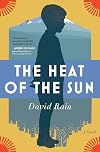
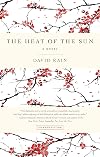
The Heat of the Sun
by David Rain
On This Page
Description
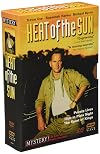
A tangled web of blackmail, murder and passion awaits former Scotland Yard detective Albert Tyburn when he arrives in Nairobi. In three mysteries-Private Lives, Hide in Plain Sight and Sport of Kings-Tyburn battles arson, murder, drug-dealers and more.Tags
Recommendations





















Member Recommendations

Member Reviews
David Rain’s debut novel, The Heat of the Sun, is an unusual and ambitious one: an updating of one of the most famous fictional romances of the twentieth century, Puccini’s Madame Butterfly. As the opera begins, in 1904, an American Naval officer is marrying a young woman in Nagasaki, Japan. The officer returns to the United States soon after the wedding without knowing that his Japanese bride carries his child. The young woman bears a son but, for complicated reasons, ends up taking her own life.
Rain picks up the story in America a few years later – where the child, completely unaware of his personal history, is being raised by his father and upper class stepmother. Coincidentally (and the author is not at all bashful about show more asking his readers to suspend their sense of disbelief for the duration of this novel), Ben “Trouble” Pinkerton will soon meet another boy whose father played a role in Madame Butterfly’s sad fate.
Woodley Sharpless and Ben Pinkerton meet in the boarding school to which their parents have relegated them and form an attachment that, despite long periods during which they lose contact, will be the longest and most enduring friendship of their lives. Together, more times than not, the pair will play roles in some of the key events of the twentieth century – everything from experiencing the Roaring Twenties in New York City to involvement in the Los Alamos Project that would ultimately almost destroy Trouble Pinkerton’s city of birth.
The Heat of the Sun is a wild ride, but readers willing to suspend judgment pertaining to the plausibility of the plot’s several chance-meetings between its main characters are going to enjoy that ride immensely. The author presents his story within an operatic framework: with sections marked, Overture, Act One, Act Two, Between the Acts, Act Three, Act Four, and Curtain. Each of these sections marks the passage of a number of years and a major of changing of circumstances for our narrator and other of the book’s main characters.
David Rain is an Australian author whose mother was English. He now lives in London where he teaches writing at Middlesex University. He numbers Dickens and F. Scott Fitzgerald among his favorite authors, and there are shades of both in his debut novel. The novel also reminds me a bit of John Irving’s work and, bottom line, The Heat of the Sun is one of the more imaginative debut novels I have encountered in a while.
Rated at: 4.5 show less
Rain picks up the story in America a few years later – where the child, completely unaware of his personal history, is being raised by his father and upper class stepmother. Coincidentally (and the author is not at all bashful about show more asking his readers to suspend their sense of disbelief for the duration of this novel), Ben “Trouble” Pinkerton will soon meet another boy whose father played a role in Madame Butterfly’s sad fate.
Woodley Sharpless and Ben Pinkerton meet in the boarding school to which their parents have relegated them and form an attachment that, despite long periods during which they lose contact, will be the longest and most enduring friendship of their lives. Together, more times than not, the pair will play roles in some of the key events of the twentieth century – everything from experiencing the Roaring Twenties in New York City to involvement in the Los Alamos Project that would ultimately almost destroy Trouble Pinkerton’s city of birth.
The Heat of the Sun is a wild ride, but readers willing to suspend judgment pertaining to the plausibility of the plot’s several chance-meetings between its main characters are going to enjoy that ride immensely. The author presents his story within an operatic framework: with sections marked, Overture, Act One, Act Two, Between the Acts, Act Three, Act Four, and Curtain. Each of these sections marks the passage of a number of years and a major of changing of circumstances for our narrator and other of the book’s main characters.
David Rain is an Australian author whose mother was English. He now lives in London where he teaches writing at Middlesex University. He numbers Dickens and F. Scott Fitzgerald among his favorite authors, and there are shades of both in his debut novel. The novel also reminds me a bit of John Irving’s work and, bottom line, The Heat of the Sun is one of the more imaginative debut novels I have encountered in a while.
Rated at: 4.5 show less
Few stories are more beloved and compelling than that of Madama Butterfly. As brought to life in Puccini’s timeless opera, Cio-Cio-San, a young Japanese woman of noble birth, is forced into the life of a geisha after her father’s fall from grace and suicide. She falls in love with Pinkerton, an American naval officer for whom an arranged marriage is a matter of temporary convenience rather than long-term commitment. Butterfly takes her vow seriously, though, even renouncing her family and faith to keep her pledge to her husband. Pinkerton soon departs Nagasaki, leaving behind a faithful wife and son who wait patiently for his return. After three years, he does return, but with a new wife and the intention to take his son back to show more America. Rather than live in disgrace, Butterfly commits hara-kiri using the same dagger as her father.
For most of us, that is where this classic tale ends, no matter how many times we read it, listen to it, or see it played out on stage. Fortunately, David Rain, the author of this engaging debut novel, had the audacity to ask: What ends up happening to the boy? For that matter, what becomes of Pinkerton and his new wife as well as those other characters so pivotal to the original story (e.g., Prince Yamadori, Sharpless, Suzuki, Goro)? In The Heat of the Sun, we get the author’s highly imaginative answers to those questions. That those answers do not produce an altogether effective narrative does not diminish the creativity and thoughtfulness of the effort.
As told through the eyes of Woodley Sharpless, son of the American consul in Nagasaki who served as Lieutenant Pinkerton’s confidant and alter ego, we first meet Ben “Trouble” Pinkerton when the boys are classmates at an exclusive private school. This is by far the most successful part of the book; the author manages to create a subtle and highly atmospheric world that hints at so many of the struggles that Trouble and Woodley will experience throughout their lives. The story then follows the boys as they progress through early adulthood (in Greenwich Village of the 1920s) to the development of the professional careers (in Japan and the United States) to their tangential association with the development of the atomic bomb in middle age (at Alamogordo) and, finally, into their respective old ages.
Sadly, it is in these post-school vignettes that the novel loses a considerable amount of its focus, almost as if Rain could not decide whether he wanted to tell an affecting personal story about a son estranged from his parents or use the book as a pulpit to make sweeping (and heavy-handed) cultural and anti-war statements. Further, the links and parallels to the Butterfly story seemed a little contrived at times; virtually everyone who appeared in the opera makes an appearance in this story at some point. Still, I found reading The Heat of the Sun to be an enjoyable experience, if for no other reason than being transported to another place and time while listening to “Un Bel Di Vedremo” and “Vogliatemi Bene”. On balance, then, this is a book that I can recommend and I would not hesitate to read more of the author’s work in the future. show less
For most of us, that is where this classic tale ends, no matter how many times we read it, listen to it, or see it played out on stage. Fortunately, David Rain, the author of this engaging debut novel, had the audacity to ask: What ends up happening to the boy? For that matter, what becomes of Pinkerton and his new wife as well as those other characters so pivotal to the original story (e.g., Prince Yamadori, Sharpless, Suzuki, Goro)? In The Heat of the Sun, we get the author’s highly imaginative answers to those questions. That those answers do not produce an altogether effective narrative does not diminish the creativity and thoughtfulness of the effort.
As told through the eyes of Woodley Sharpless, son of the American consul in Nagasaki who served as Lieutenant Pinkerton’s confidant and alter ego, we first meet Ben “Trouble” Pinkerton when the boys are classmates at an exclusive private school. This is by far the most successful part of the book; the author manages to create a subtle and highly atmospheric world that hints at so many of the struggles that Trouble and Woodley will experience throughout their lives. The story then follows the boys as they progress through early adulthood (in Greenwich Village of the 1920s) to the development of the professional careers (in Japan and the United States) to their tangential association with the development of the atomic bomb in middle age (at Alamogordo) and, finally, into their respective old ages.
Sadly, it is in these post-school vignettes that the novel loses a considerable amount of its focus, almost as if Rain could not decide whether he wanted to tell an affecting personal story about a son estranged from his parents or use the book as a pulpit to make sweeping (and heavy-handed) cultural and anti-war statements. Further, the links and parallels to the Butterfly story seemed a little contrived at times; virtually everyone who appeared in the opera makes an appearance in this story at some point. Still, I found reading The Heat of the Sun to be an enjoyable experience, if for no other reason than being transported to another place and time while listening to “Un Bel Di Vedremo” and “Vogliatemi Bene”. On balance, then, this is a book that I can recommend and I would not hesitate to read more of the author’s work in the future. show less
 This review was written for LibraryThing Early Reviewers.
Inspired by Puccini's Madame Butterfly and Luigi Illica's libretto, and other works on which it was based, David Rain has read into the story of Butterfly, expanded it and continued it towards the end of the C20th through the lives of Pinkerton's son Benjamin and Sharpless' son Woodley. Woodley and Ben, known as Trouble, first meet as young boys at Blaze Academy. Bookish Woodley is immediately drawn to the charismatic and extravagant Trouble, although it takes a while, and a turn of events, for the two to establish a relationship, a relationship that will repeatedly wax and wane over the years as the meet, part and meet up again.
Woodley does his best to look after his wayward friend, encouraged, or rather charged with the commission, by show more Kate Pinkerton, Trouble's step-mother and wife of the now influential Senator Pinkerton. They live it up in the 1920s, meet again in Japan just before the outbreak of WWII, later they find themselves working together on a secret project that will bring an end to hostilities between Japan and the US. But the fall-out could mean they will not see each other again.
This is a story that seems much bigger than its 270 plus pages, it covers so much with so many twists and turns. I found once or twice, if the story was ever in the possible danger of loosing my attention a new turn of events would rekindle my interest, and the more so on each occasion to the extent that the latter part I read in one sitting. It is much helped by the quality of the writing which alone makes the reading a pleasure.
Woodley, who narrates the account portrays himself as a rather lack-lustre character sometimes failing in his convictions, ponderous and limited by a childhood injury that leaves him crippled; but this only accentuates Trouble's wild, extrovert nature with his lithe, boyish physique. There is a third man in their relationship, Le Vol, a friend of Woodley's from Blaze, a friend who is not so taken with Trouble. Throughout there are rare hints of the real nature of the relationship between Woodley and Trouble, and Woodley and Le Vol, and we must wait until the last pages to find even a hint of a confirmation or otherwise; but then we never really doubted, did we?
This is a compelling story, with a cast of colourful and often powerful men and women; and we can feel very safe throughout in the hands of David Rain and his impeccable prose. show less
Woodley does his best to look after his wayward friend, encouraged, or rather charged with the commission, by show more Kate Pinkerton, Trouble's step-mother and wife of the now influential Senator Pinkerton. They live it up in the 1920s, meet again in Japan just before the outbreak of WWII, later they find themselves working together on a secret project that will bring an end to hostilities between Japan and the US. But the fall-out could mean they will not see each other again.
This is a story that seems much bigger than its 270 plus pages, it covers so much with so many twists and turns. I found once or twice, if the story was ever in the possible danger of loosing my attention a new turn of events would rekindle my interest, and the more so on each occasion to the extent that the latter part I read in one sitting. It is much helped by the quality of the writing which alone makes the reading a pleasure.
Woodley, who narrates the account portrays himself as a rather lack-lustre character sometimes failing in his convictions, ponderous and limited by a childhood injury that leaves him crippled; but this only accentuates Trouble's wild, extrovert nature with his lithe, boyish physique. There is a third man in their relationship, Le Vol, a friend of Woodley's from Blaze, a friend who is not so taken with Trouble. Throughout there are rare hints of the real nature of the relationship between Woodley and Trouble, and Woodley and Le Vol, and we must wait until the last pages to find even a hint of a confirmation or otherwise; but then we never really doubted, did we?
This is a compelling story, with a cast of colourful and often powerful men and women; and we can feel very safe throughout in the hands of David Rain and his impeccable prose. show less
I liked David Rain's The Heat of the Sun much more than I expected I would at the outset. It begins as a typical boys' boarding school narrative which is not one of my favorite genres -- seems to me they're all pretty much the same story over and over. Fortunately, it gets better once the boys are out of school and on their own in the years leading up to World War II and during the war. I enjoyed all the many plot twists and turns, even though some of the coincidental meetings and developments were just a bit implausible. It was a little difficult to suspend my disbelief enough to accept that the Madame Butterfly story was real and that there had never been a famous opera based on the tale. I guess secretly I kept thinking that sooner show more or later one of the characters was going to say something like, "Hey, doesn't this all sound really familiar?" But that's a problem I have with a lot of historical fiction, and it wasn't enough of an issue to keep me from being thoroughly entertained. Definitely a good read, if you give it a chance. show less
This review was written for LibraryThing Early Reviewers.Firstly, I want to make a distinction between parts of this book I disliked because I felt it was poor, and parts of the book I disliked because it was a style I don't care for. David Rain is extremely adept at beautiful description, and painted multiple vivid tableaux of various locations throughout the first half of the twentieth century. I love the story of Madame Butterfly, and I loved the visits to the story in this novel. This is not my preferred type of novel or setting, but it is done well in many places.
That being said, I felt that many of the moments in the book were unearned. The very end being a big one. Several of the relationships developed in ways that I couldn't follow with a sufficient amount of suspended disbelief. show more Rain seems to love starting new chapters at a new era in the characters' lives, in media res, and letting the interim details leak in. While this is a great tactic for storytelling, it missed the mark for me in a few places.
Lastly, the most frustrating thing for me was the inconsistency in just how much detail the reader was given. A drawing is shown on a chalkboard, but the contents of the drawing is only hinted at, and never described. Someone falls down the stairs, but the description seems deliberately confusing at first to who it is that has fallen. And yet, we get dialogue like "It's them! After all this time!" when the description has already been more than clear about who it is. At times I felt like I was reading far above my comprehension level, not understanding what had transpired in what I had just read, and at other times I felt it was far below.
Overall, I was entertained by David Rain's portrayal of two friends and the evolution of their relationship over decades of knowing each other. If the style had been a bit more consistent in places, and the decisions the characters made examined a little further, it would have really hit home. show less
That being said, I felt that many of the moments in the book were unearned. The very end being a big one. Several of the relationships developed in ways that I couldn't follow with a sufficient amount of suspended disbelief. show more Rain seems to love starting new chapters at a new era in the characters' lives, in media res, and letting the interim details leak in. While this is a great tactic for storytelling, it missed the mark for me in a few places.
Lastly, the most frustrating thing for me was the inconsistency in just how much detail the reader was given. A drawing is shown on a chalkboard, but the contents of the drawing is only hinted at, and never described. Someone falls down the stairs, but the description seems deliberately confusing at first to who it is that has fallen. And yet, we get dialogue like "It's them! After all this time!" when the description has already been more than clear about who it is. At times I felt like I was reading far above my comprehension level, not understanding what had transpired in what I had just read, and at other times I felt it was far below.
Overall, I was entertained by David Rain's portrayal of two friends and the evolution of their relationship over decades of knowing each other. If the style had been a bit more consistent in places, and the decisions the characters made examined a little further, it would have really hit home. show less
This review was written for LibraryThing Early Reviewers.I loved the way this book started. The two boys meeting at a boarding school, although some of the things that happened at the school were rather horrific. Than they meet up again , years later and renew their friendship. I might have appreciated this more, and I really wish I had re-read Madame Butterfly because I could have understood who some of these characters were meant to be portraying. The prose was great and the book included some widespread history, the Manhattan Project, the bombings of Hiroshima among others. The prose was brilliant in many areas , but somewhere in the middle of the book the author lost me or I got lost. It almost seemed as if the style in the second half was completely different. So this was a good read for show more me but it could have been so much more. show less
I loved the idea of this book - what happened to the son of Madame Butterfly? A classic tale of love and the fruit of that love Ben "Trouble" Pinkerton has his tale related by author David Rain in a book that starts off so well you know it's just going to be a great read - and then it's such a disappointment.
I really had to struggle to stay with it and ended up wishing for a different story for the offspring of such a spellbinding love story.
I really had to struggle to stay with it and ended up wishing for a different story for the offspring of such a spellbinding love story.
This review was written for LibraryThing Early Reviewers.Members
- Recently Added By
Lists

Books Read in 2015
3,299 works; 129 members
Author Information
2+ Works 104 Members
Common Knowledge
- Canonical title
- The Heat of the Sun
- Original publication date
- 2012-11-13
- People/Characters
- Woodley Sharpless; Trouble Pinkerton; Le Vol; Senator Benjamin Pinkerton
- Important places
- Vermont, USA; Manhattan, New York, New York, USA; Japan; New Mexico, USA
- Important events
- World War II (1939 | 1945); Atomic Bombings of Hiroshima and Nagasaki (1945)
- Epigraph
- On the gravity of Americans and why it does not prevent them from acting rashly -
Chapter title from Alexis de Tocqueville's Democracy in America. - Dedication
- For Anthony, who asked "What happened to that boy?"
- First words
- In Havana before the revolution, I sat one afternoon on a hotel terrace, playing chess with an elderly gentleman who had struck up my acquaintance.
- Last words
- (Click to show. Warning: May contain spoilers.)Darkness gathered; the waters, defiantly, were a sea of flame, but within a short time the paper boats were sinking, some taking on water, some burned through already by the candles they carried.
- Disambiguation notice
- John Luther Long is not another author of this book. His story was one of the inspirations for the book, but he shouldn't be included as another author.
Classifications
Statistics
- Members
- 84
- Popularity
- 379,825
- Reviews
- 9
- Rating
- (3.17)
- Languages
- English
- Media
- Paper, Audiobook, Ebook
- ISBNs
- 20
- UPCs
- 5
- ASINs
- 5