
Elle Newmark (1946–2011)
Author of The Book of Unholy Mischief
About the Author
Image credit: PAPERBACK WRITER
Works by Elle Newmark
O Aprendiz de Veneza 1 copy
Tagged
Common Knowledge
- Canonical name
- Newmark, Elle
- Legal name
- Newmark, Ellen
- Birthdate
- 1946
- Date of death
- 2011-06-24
- Gender
- female
- Occupations
- novelist
historical novelist - Short biography
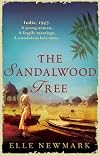
- From her obituary in the San Diego Union-Tribune: Elle Newmark was 10 years old when she knew she wanted to be a writer, but life had other plans — marriage, two children, divorce. She went into advertising so she could pay the rent and buy groceries. At age 43, remarried and living in Germany, she rekindled the dream. She started writing short stories. When she’d done one she thought was good enough to share, she sent it off to a magazine, which turned her down. Many more rejections followed. But she didn’t — she said she couldn’t — stop writing. When nobody would publish her book "Bones of the Dead" (aka "The Book of Unholy Mischief" or "The Chef's Apprentice"), about a chef’s apprentice in 15th-century Venice, she paid thousands of dollars to publish it herself. And then she did something novel for her novel. She threw a virtual book launch party for herself on the Internet, inviting hundreds of thousands of people, including book agents and publishers, for a gathering of music, conversation and party favors. What she hoped to do was sell a few hundred copies of "Bones" and boost her ranking on Amazon, which would generate even more sales. Instead what happened was a publishing world frenzy. An auction was held in New York to sell the publishing rights to the novel, and won Elle a two-book deal for more than $1 million dollars from Simon & Schuster. But in 2009, while she was working on the second book, "The Sandalwood Tree," a tale of love and war set in India, she got very sick. Complications from gallbladder surgery put her in the hospital five times, in and out of drug-induced comas, on ventilators. Her daughter sat with her day after day, reviewing editors' notes and revising the manuscript. When the book was finally published in April 2011, Elle Newmark was at home, on hospice care. She couldn’t tour in support of the book, couldn’t bask in the glory of her unusual success story. On her website, ellenewmark.com, she kept a blog, and the last entry, in June 2011, talks about how lucky she felt to find something — writing — she cared so deeply about for so long. "Passion,” she wrote, “is our consolation for mortality."
- Nationality
- USA
- Place of death
- San Diego, California, USA
- Associated Place (for map)
- California, USA
Members
Reviews

I adored this book! After some misgivings, I am generally not a fan of mysteries, I read this on the recommendation of a friend. I am however a fan of books about India particularly those that deal with the British raj and subsequent independence and partition. This book moved easily between the days leading up to partition and Victorian India with parallel stories of an American woman living in the same hill station cottage as two Victorian women once occupied. I sometimes find this show more literary device to be confusing and contrived but not in this case. Ms.Newmark weaves the two stories together so skillfully that the transitions between past and present are seamless and very dependent on each other. Yes, the ending is perhaps a bit too neat and happy, but there's nothing wrong with that, is there? Simply put, a great read! show less
The book is like a story within a story. The book begins with the framing story of a woman, Evie, in 1947, who accompanies her husband and young son to India with the dual purpose of seeking adventure and hoping to mend her failing marriage with a man just returned from World War II, broken. When she discovers a bundle of 90-year-old letters hidden in the wall during a cleaning frenzy, the second story of the friendship between Felicity and Adela is revealed. From there, Evie's story show more diverges from that of Felicity and Adela's as Evie struggles to find more evidence of the two other women's existence and uses her fascination as a distraction from the political turmoil occurring around her.
The British are pulling out of India and separating the religious factions of Muslims and Hindus into the two countries of India and Pakistan, causing chaos and mayhem all over the country of India. The imagery and descriptions that Newmark fills the pages with are mesmerizing in their intensity and splendor. The colors, smells, and sounds have me half-falling in love with India to the point that I search for images online to match what I am reading to get a clearer picture of what the characters experience. Even though I struggled to stay interested in the plot for the first third of the book, the descriptions kept me reading and reading.
Felicity and Adela's story begins from childhood, describing how Felicity was born in India, but fostered with Adela's family. The infamous husband hunt brought them both back to India through different means, though neither had any interest in a husband, for different scandalous reasons. Residing in the same home that Evie now occupies, Felicity and Adela shun the conventional life of an Englishwoman in India, instead adopting an independent lifestyle and embracing India in all its diverse beauty.
Evie herself also seeks to shun what is expected of her, desiring to fully experience the culture of India all around her and use it to heal the problems in her own life. Eventually, she reconnects with the story of the two other women, even as major obstacles present themselves in both her private life and in the immediate villages. Letters take over the narration of Felicity and Adela's tale as Evie finds more to continue the story, instead of the author simply narrating what Evie can't find.
On the whole, the novel was beautifully written and contained a worthwhile plot, though I struggled to stay interested at the beginning. I would recommend this book to anyone who enjoys a mystery and craves the beauty of India. show less
The British are pulling out of India and separating the religious factions of Muslims and Hindus into the two countries of India and Pakistan, causing chaos and mayhem all over the country of India. The imagery and descriptions that Newmark fills the pages with are mesmerizing in their intensity and splendor. The colors, smells, and sounds have me half-falling in love with India to the point that I search for images online to match what I am reading to get a clearer picture of what the characters experience. Even though I struggled to stay interested in the plot for the first third of the book, the descriptions kept me reading and reading.
Felicity and Adela's story begins from childhood, describing how Felicity was born in India, but fostered with Adela's family. The infamous husband hunt brought them both back to India through different means, though neither had any interest in a husband, for different scandalous reasons. Residing in the same home that Evie now occupies, Felicity and Adela shun the conventional life of an Englishwoman in India, instead adopting an independent lifestyle and embracing India in all its diverse beauty.
Evie herself also seeks to shun what is expected of her, desiring to fully experience the culture of India all around her and use it to heal the problems in her own life. Eventually, she reconnects with the story of the two other women, even as major obstacles present themselves in both her private life and in the immediate villages. Letters take over the narration of Felicity and Adela's tale as Evie finds more to continue the story, instead of the author simply narrating what Evie can't find.
On the whole, the novel was beautifully written and contained a worthwhile plot, though I struggled to stay interested at the beginning. I would recommend this book to anyone who enjoys a mystery and craves the beauty of India. show less
I read and reviewed this book as part of the Transworld Book Group.
This is a lovely tale of India around the time of partition in 1947, and also in a time of unrest in 1857. A dual time narrative story, and one in which, unusually for me, I preferred the older story to the more recent one.
Evie Mitchell, her husband, Martin, and their young son, Billy, have moved to India so that he can carry out research. Martin is deeply troubled by his experiences during World War II and their marriage is show more suffering as a result. When Evie finds letters hidden in the wall of their rented bungalow it takes her on a journey of discovery, both about the events of 1857 and also about her own situation.
The 1857 story was fascinating to me. It involved two friends, Felicity and Adela, women doing their own thing in India. I loved all the letters and journal entries that formed this part of the book, and how that story was tied up in the end. The 1947 story was also good, although Evie's voice, as the narrator, didn't quite ring true, both for the period and also the way she came across sometimes. Billy was also very precocious for a five year old, and I don't think his voice was entirely convincing either. I must admit to being irritated by the number of pet names he had!
I love books set in two different times, where there is a mystery to unravel, and this is one of those books. I felt the setting was very evocative, with the sights, sounds and smells being described very well. I believe the author visited India and saw it first-hand and I think it showed. On the whole this was a good read, and one which kept me interested all the way through. show less
This is a lovely tale of India around the time of partition in 1947, and also in a time of unrest in 1857. A dual time narrative story, and one in which, unusually for me, I preferred the older story to the more recent one.
Evie Mitchell, her husband, Martin, and their young son, Billy, have moved to India so that he can carry out research. Martin is deeply troubled by his experiences during World War II and their marriage is show more suffering as a result. When Evie finds letters hidden in the wall of their rented bungalow it takes her on a journey of discovery, both about the events of 1857 and also about her own situation.
The 1857 story was fascinating to me. It involved two friends, Felicity and Adela, women doing their own thing in India. I loved all the letters and journal entries that formed this part of the book, and how that story was tied up in the end. The 1947 story was also good, although Evie's voice, as the narrator, didn't quite ring true, both for the period and also the way she came across sometimes. Billy was also very precocious for a five year old, and I don't think his voice was entirely convincing either. I must admit to being irritated by the number of pet names he had!
I love books set in two different times, where there is a mystery to unravel, and this is one of those books. I felt the setting was very evocative, with the sights, sounds and smells being described very well. I believe the author visited India and saw it first-hand and I think it showed. On the whole this was a good read, and one which kept me interested all the way through. show less
Last year I waffled back and forth over whether or not to accept a review copy of Elle Newmark's debut novel, The Book of Unholy Mischief. The cover copy mentioned some things that made me leery of reading it. Eventually I went ahead and said yes because the things that intrigued me about the book overcame my qualms. And I have rarely been happier that I took the chance. So when The Sandalwood Tree was made available, I jumped at the chance to read it. The fact that it is set in India in the show more final year of the British Raj and follows the life of a woman whose marriage is under intense pressure and who finds and becomes obsessed with the Victorian letters of two British women who lived in her home a hundred years prior made it almost tailor-made to my tastes. And like The Book of Unholy Mischief, this is an expansive and engrossing tale.
Evie and Martin used to have a strong and happy marriage. Then Martin went off to Germany to fight and came home a different man. Now their marriage is crumbling. So when Martin, an historian, is offered a Fulbright scholarship to go to India to document the end of the British Raj, Evie fights to accompany him with their 5 year old son Billy in the hope that a new place will help them find their way back to the open and loving relationship they once had. But India is in turmoil, facing Partition, and tension runs high, exacerbating Martin's fears and making Evie feel constrained and resentful. And while they are in a fairly safe place, removed from the bulk of the religious violence breaking out elsewhere, there are menaces even in this British summer outpost.
As Martin goes about adopting native costume and habits and courting danger, he forbids Evie to move freely herself, an order she disobeys, driven by her curiousity about a set of letters from the mid-1800's that she found secreted behind a brick in the kitchen wall. Wanting to know more about Felicity and Adela, Evie embarks on a search to learn more about them, their circumstances, and what could possibly send at least one of these Englishwomen to India in the midst of the Sepoy Rebellion. Slowly Evie pieces together the story of Felicity and Adela, their lives and loves, and the long-forgotten scandal(s) swirling about them.
Evie and Martin's marriage continues to founder and fail as Evie reads about these two unusual Victorian women who pushed so hard against the constraints of the historical time in which they lived. As the women declared, they "lived for joy." Evie wants desperately to live for joy also, trying, pushing, and demanding an opening back into Martin's life and mind.
This is a sweeping love story on so many fronts and involving so many character combinations: the love of husband and wife, the love between illicit lovers, the love of parent for child, the love between friends, and unrequited love. Even as the country itself is being torn asunder, all of these unifying relationships are playing out on the page and serving as a path for Evie and Martin to find their way back to each other.
The place is beautifully rendered in this novel. India and her overwhelming color and lushness stand out even as Newmark has captured the insularity, racism, and surprising compassion of the late 1940's British ex-pat community there. Making Evie and Martin American allows them to stand out as different from the start and enables Newmark to have Evie interact a bit more with the Indian community than would otherwise have been believable. The parallel stories twine together nicely and keep the reader engaged with both plots. Each chapter starts with a year heading making it easy to know when Evie and Martin's story flips to Felicity and Adela's story. Despite this though, the story must be narrated by a modern day Evie based on a few comments (a remark about Vietnam vets is just one example) in the narration. This is rather disconcerting as the sensibility of these comments is at odds with the post-WWII society during which the tale is set. This only happens a few times in the very beginning of the book and then the incongruous and modern Evie disappears, which is all to the good. The ending of the book is a bit rushed, predictable, and a little too easy but the ride to that point makes it forgivable. Over all, a very enjoyable read and I'll definitely look forward to Newmark's next book. show less
Evie and Martin used to have a strong and happy marriage. Then Martin went off to Germany to fight and came home a different man. Now their marriage is crumbling. So when Martin, an historian, is offered a Fulbright scholarship to go to India to document the end of the British Raj, Evie fights to accompany him with their 5 year old son Billy in the hope that a new place will help them find their way back to the open and loving relationship they once had. But India is in turmoil, facing Partition, and tension runs high, exacerbating Martin's fears and making Evie feel constrained and resentful. And while they are in a fairly safe place, removed from the bulk of the religious violence breaking out elsewhere, there are menaces even in this British summer outpost.
As Martin goes about adopting native costume and habits and courting danger, he forbids Evie to move freely herself, an order she disobeys, driven by her curiousity about a set of letters from the mid-1800's that she found secreted behind a brick in the kitchen wall. Wanting to know more about Felicity and Adela, Evie embarks on a search to learn more about them, their circumstances, and what could possibly send at least one of these Englishwomen to India in the midst of the Sepoy Rebellion. Slowly Evie pieces together the story of Felicity and Adela, their lives and loves, and the long-forgotten scandal(s) swirling about them.
Evie and Martin's marriage continues to founder and fail as Evie reads about these two unusual Victorian women who pushed so hard against the constraints of the historical time in which they lived. As the women declared, they "lived for joy." Evie wants desperately to live for joy also, trying, pushing, and demanding an opening back into Martin's life and mind.
This is a sweeping love story on so many fronts and involving so many character combinations: the love of husband and wife, the love between illicit lovers, the love of parent for child, the love between friends, and unrequited love. Even as the country itself is being torn asunder, all of these unifying relationships are playing out on the page and serving as a path for Evie and Martin to find their way back to each other.
The place is beautifully rendered in this novel. India and her overwhelming color and lushness stand out even as Newmark has captured the insularity, racism, and surprising compassion of the late 1940's British ex-pat community there. Making Evie and Martin American allows them to stand out as different from the start and enables Newmark to have Evie interact a bit more with the Indian community than would otherwise have been believable. The parallel stories twine together nicely and keep the reader engaged with both plots. Each chapter starts with a year heading making it easy to know when Evie and Martin's story flips to Felicity and Adela's story. Despite this though, the story must be narrated by a modern day Evie based on a few comments (a remark about Vietnam vets is just one example) in the narration. This is rather disconcerting as the sensibility of these comments is at odds with the post-WWII society during which the tale is set. This only happens a few times in the very beginning of the book and then the incongruous and modern Evie disappears, which is all to the good. The ending of the book is a bit rushed, predictable, and a little too easy but the ride to that point makes it forgivable. Over all, a very enjoyable read and I'll definitely look forward to Newmark's next book. show less
Lists
You May Also Like


Associated Authors
Statistics
- Works
- 5
- Members
- 985
- Popularity
- #26,139
- Rating
- 3.7
- Reviews
- 94
- ISBNs
- 50
- Languages
- 7
- Favorited
- 1