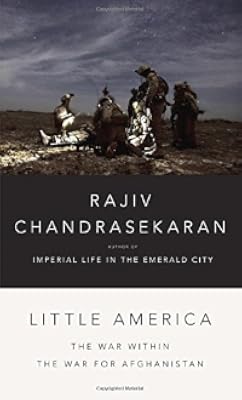
Little America: The War Within the War for Afghanistan
by Rajiv Chandrasekaran
On This Page
Description
In this book, the author focuses on southern Afghanistan in the year of Obama's surge. This is the story of the long arc of American involvement, and of the campaign to salvage a victory in southern Afghanistan on Obama's watch., and reveals the epic tug of war that occurred between the President and a military that, once on the ground, increasingly went its own way.Tags
Recommendations














Member Reviews
As he did in his book on the Green Zone in Iraq, Chandrasekaran blisteringly reveals American arrogance, wastefulness, and infighting leading to incompetent planning and execution of the mission/s (because people disagreed about what the idea was) in Afghanistan. It’s hard to pick out the most awful part, but my candidate is the way that USAID repeatedly stopped projects to get Afghan farmers growing cotton—a cash crop that they really could have sold in-country in place of opium poppies—because Afghan cotton might someday, theoretically, compete with American cotton. Because that’s really much more important than cutting off the Taliban’s funding and providing Afghan farmers with a sustainable crop!
The conflict in Afghanistan is already America's longest war, and from reading any daily newspaper or watching any news show, we know that there's still much to do before the original U.S. objectives and expectations are likely to be achieved. So the fact that Chandrasekaran describes planning, organizational, civilian, military and political mistakes having been made in the Afghanistan war should surprise no one. And while we may recognize these problems in general terms, it's hard for most stateside civilians to fully understand the nature or extent of the problems faced by our people in Afghanistan. "Little America", explains these problems in painful detail. Chandrasekaran spent time in Country, and his first-hand accounts explain show more how and why huge nation building efforts are so complex, and so prone to failure due to changing plans, changing circumstances, not having a clear understanding of the local customs and values, and no clear vision of how to accomplish the goals. Particularly troubling are Chandrasekaran's descriptions of how conflicting programs and Government Agency policies lead to self defeating decisions in Afghanistan. Among these are how Agricultural experts, after determining that cotton would be a more benefical and easier to grow crop than poppies by Afghan farmers, were prohibited from implementing this program because U.S. laws prohibit helping non-U.S. farmers to raise competing cotton crops. So the result is that U.S. cotton growers, already subsidized, face no competition, and Afghan farmers continue to grow poppies, increasing drug supply in the U.S. and benefiting the Taliban insurgents. Not the type of story you want to read about after years of involvement in Afghanistan. In summary, despite the frustration of seeing how difficult it for an overreaching bureaucracy to succeed in rebuilding a failing nation, if you're interested in understanding why we weren't more successful in Afghanistan, this book is an excellent source of information. show less
Little America analyzes the efforts of US and allied forces to combat the Taliban and “nation build” in Afghanistan. “Little America” refers to a large-scale program carried out in the 1950’s and 1960’s by the US Agency for International Development (USAID) to reclaim unproductive land in southwest Afghanistan by an elaborate network of irrigation canals and electric power stations. An American village for the planners and engineers was constructed in the region called “Little America” by the inhabitants.
Despite millions of dollars of investment the plan failed. The engineers failed to recognize that the salinity of the water used to irrigate would ultimately make growing crops nearly impossible. The area reverted to show more its dilapidated and hard scrabble state. Little American exemplifies American overreach and our persistent mistake of presuming that what works in American can – with American “know-how” – be transplanted anywhere.
Fast forward 50 years and we find Americans trying yet again to bring prosperity to the region while fighting Taliban insurgents throughout the Helmand province. After the misguided adventure in Iraq subsided in 2008-09 the US switched its focus to Afghanistan. A counter insurgency strategy, successful in Iraq under General David Petraeus, was shifted to Afghanistan. Counter insurgency was aimed at winning the “hearts and minds” of Afghanis through the infusion of massive amount of funds for public works projects. A close corollary was to build the capacity of the national government so that the people would see the government as a desirable alternative to the Taliban. While fighting the Taliban was the key to securing a region the follow along efforts to bring benefits to the people was thought to be the means to secure and maintain the loyalty of the local population.
Chandrasekaran spent several years on the ground in the country looking closely at all aspects of this initiative. He concludes that it largely has failed. He looked primarily in Helmand province, a hotbed of Taliban activity whose major city Kandahar was threatened by Taliban takeover. The so-called surge of troops implemented by President Obama early in his first term gave the fighting forces sufficient strength to push the Taliban back. The top military leaders felt that going into the rural areas was a waste of effort, that the most attention should be paid to Kandahar and surrounding environs. The Marine commanders felt otherwise driven by their bias toward offensive actions everywhere throughout the province. This meant that they were capturing control over areas that had little strategic or practical value given the alternative for use of combat resources.
The civic works projects, intended to win over the population, largely failed. Communication, coordination and cooperation between the State Department (particularly the USAID) and the military was poor. Massive sums of money were made available with the expectation that projects would be quickly designed and rapidly implemented. It was clear that Obama intended to draw down US involvement in the country and that it must be “saved” in short order so that the US effort could be deemed a success. Adding greatly to the poor outcomes of this well-meaning effort was the utter corruption of the national government. By intending to build a strong and effective Afghanis government the US was forced to work closely with corrupt government officials which meant essentially that we were abetting criminality. While the final outcome is still not known it seems highly doubtful that in the long term a western style ethos of impartial competent governance will prevail.
Some astute analysts counseled that a long and steady engagement with Afghanistan could ultimately achieve stability. Clearly, this approach is not acceptable to policy makers in the US and certainly not the general public as well. Should it not be plain after decades of foreign policy failures that American simply cannot tolerate the long pull? We seem to demand quick fixes that don’t create sacrifices or even inconveniences on our part. show less
Despite millions of dollars of investment the plan failed. The engineers failed to recognize that the salinity of the water used to irrigate would ultimately make growing crops nearly impossible. The area reverted to show more its dilapidated and hard scrabble state. Little American exemplifies American overreach and our persistent mistake of presuming that what works in American can – with American “know-how” – be transplanted anywhere.
Fast forward 50 years and we find Americans trying yet again to bring prosperity to the region while fighting Taliban insurgents throughout the Helmand province. After the misguided adventure in Iraq subsided in 2008-09 the US switched its focus to Afghanistan. A counter insurgency strategy, successful in Iraq under General David Petraeus, was shifted to Afghanistan. Counter insurgency was aimed at winning the “hearts and minds” of Afghanis through the infusion of massive amount of funds for public works projects. A close corollary was to build the capacity of the national government so that the people would see the government as a desirable alternative to the Taliban. While fighting the Taliban was the key to securing a region the follow along efforts to bring benefits to the people was thought to be the means to secure and maintain the loyalty of the local population.
Chandrasekaran spent several years on the ground in the country looking closely at all aspects of this initiative. He concludes that it largely has failed. He looked primarily in Helmand province, a hotbed of Taliban activity whose major city Kandahar was threatened by Taliban takeover. The so-called surge of troops implemented by President Obama early in his first term gave the fighting forces sufficient strength to push the Taliban back. The top military leaders felt that going into the rural areas was a waste of effort, that the most attention should be paid to Kandahar and surrounding environs. The Marine commanders felt otherwise driven by their bias toward offensive actions everywhere throughout the province. This meant that they were capturing control over areas that had little strategic or practical value given the alternative for use of combat resources.
The civic works projects, intended to win over the population, largely failed. Communication, coordination and cooperation between the State Department (particularly the USAID) and the military was poor. Massive sums of money were made available with the expectation that projects would be quickly designed and rapidly implemented. It was clear that Obama intended to draw down US involvement in the country and that it must be “saved” in short order so that the US effort could be deemed a success. Adding greatly to the poor outcomes of this well-meaning effort was the utter corruption of the national government. By intending to build a strong and effective Afghanis government the US was forced to work closely with corrupt government officials which meant essentially that we were abetting criminality. While the final outcome is still not known it seems highly doubtful that in the long term a western style ethos of impartial competent governance will prevail.
Some astute analysts counseled that a long and steady engagement with Afghanistan could ultimately achieve stability. Clearly, this approach is not acceptable to policy makers in the US and certainly not the general public as well. Should it not be plain after decades of foreign policy failures that American simply cannot tolerate the long pull? We seem to demand quick fixes that don’t create sacrifices or even inconveniences on our part. show less
Another great job of interpretive, analytical reporting bu Chandrasekaran. I wish my years in the U.S. Foreign Service did not reinforce the failures of accountability, cooperation, and strategic thought and action that he documents. Unfortunately, everything he writes rings true. More people outside the Beltway should read this book and then demand change based on its lessons.
After reading this book, one would wonder if it even possible to govern a country like Afghanistan. After pumping billions of dollars and committing thousands of troops to that country, the US has very little to show in terms of progress. The extremists seem to be gaining the upper hand and it seems like a lost cause. The big questions is, what will happen if the US pulls out.
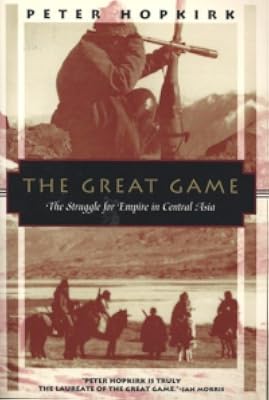
Pair this with The Great Game to understand what we don't understand about Afghanistan. To truly grasp it, take notes while reading to map the maze of dysfunction created by both the foreign and indigenous players.
After reading this book, one would wonder if it even possible to govern a country like Afghanistan. After pumping billions of dollars and committing thousands of troops to that country, the US has very little to show in terms of progress. The extremists seem to be gaining the upper hand and it seems like a lost cause. The big questions is, what will happen if the US pulls out.
Members
- Recently Added By
Author Information

6 Works 1,933 Members
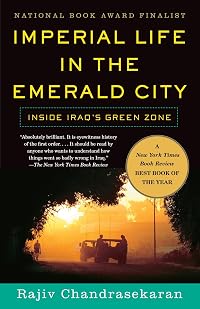
Rajiv Chandrasekaran is a senior correspondent and associate editor at The Washington Post, where he has worked since 1994. He has been the newspaper's bureau chief in Baghdad, Cairo, and Southeast Asia. He is the author or co-author of Little America, Imperial Life in the Emerald City, and For Love of Country: What Our Veterans Can Teach Us about show more Citizenship, Heroism, and Sacrifice. (Bowker Author Biography) show less
Some Editions
Awards and Honors
Common Knowledge
- Original publication date
- 2012
- People/Characters
- Taliban
- Important places
- Afghanistan
Classifications
Statistics
- Members
- 201
- Popularity
- 162,670
- Reviews
- 8
- Rating
- (4.12)
- Languages
- English
- Media
- Paper, Audiobook, Ebook
- ISBNs
- 11
- ASINs
- 4