
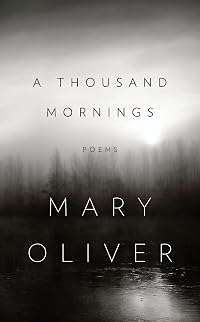
A Thousand Mornings: Poems
by Mary Oliver
On This Page
Description
In A THOUSAND MORNINGS, Mary Oliver returns to the imagery that has come to define her life's work, transporting us to the marshland and coastline of her beloved home, Provincetown, Massachusetts. In these pages, Oliver shares the wonder of dawn, the grace of animals, and the transformative power of attention. Whether studying the leaves of a tree or mourning her adored dog, Percy, she is ever patient in her observations and open to the teachings contained in the smallest of moments.Tags
Recommendations

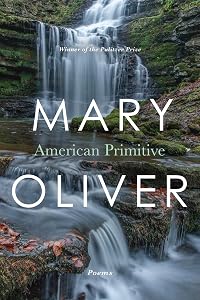
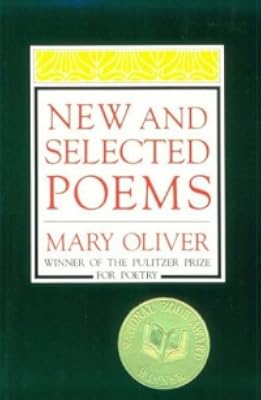





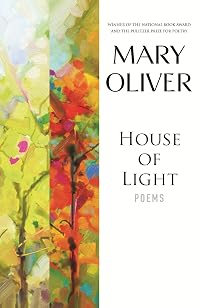




Member Reviews
For me, reading Mary Oliver is like meeting a rarely seen, but much-loved and admired friend; a conversation and a glimpse into their life feels like a gift, but leaves a surprisingly aching sense of loss. Her writing has consistently been self-reflective observances of and within nature, unexpectedly exposing our own poverty of a life without. In her world, she approaches life with a soft, and open inquisitiveness to the (mostly) silent earthly elders; the aging black oak, the sea (that speaks to her), wrens that pray, and ants that squirm for life in the midst of death. She writ large a life in nature, and though her work is not strongly political, she makes clear her concern in "On Traveling To Beautiful Places"
"But it's late, for show more all of us,
and in truth the only ship there is
is the ship we are all on
Burning the world as we go."
For a poet who has spent her life silently observing the world as if a "pearl of water on the eider's glossy back," it must seem hopeless. What is most striking, is what is absent; anger, blame, indictments, rants, jokes, irony. The lack of these things, which are so much a part of the culture, might target her as a quaint nature writer, but this label would be a mistake. She doesn't have to write apocalyptic warnings about global warming, or fracking directly to get us thinking about what we're losing; she only has to let us glimpse in on her life that has been indelibly shaped by the lessons of nature.
LINES WRITTEN IN THE DAYS
OF GROWING DARKNESS
Every year we have been
witness to it: how the
world descends
Into a rich mash, in order that
it may resume.
And therefore
who would cry out
to the petals on the ground
to stay,
knowing as we must,
how the vivacity of what was is married
to the vitality of what will be?
I don't say
it's easy, but
what else will do
if the love one claims to have for the world
be true?
So let us go on, cheerfully enough,
this and every crisping day,
though the sun be swinging east,
and the ponds be cold and black,
and the sweets of the year be doomed. show less
"But it's late, for show more all of us,
and in truth the only ship there is
is the ship we are all on
Burning the world as we go."
For a poet who has spent her life silently observing the world as if a "pearl of water on the eider's glossy back," it must seem hopeless. What is most striking, is what is absent; anger, blame, indictments, rants, jokes, irony. The lack of these things, which are so much a part of the culture, might target her as a quaint nature writer, but this label would be a mistake. She doesn't have to write apocalyptic warnings about global warming, or fracking directly to get us thinking about what we're losing; she only has to let us glimpse in on her life that has been indelibly shaped by the lessons of nature.
LINES WRITTEN IN THE DAYS
OF GROWING DARKNESS
Every year we have been
witness to it: how the
world descends
Into a rich mash, in order that
it may resume.
And therefore
who would cry out
to the petals on the ground
to stay,
knowing as we must,
how the vivacity of what was is married
to the vitality of what will be?
I don't say
it's easy, but
what else will do
if the love one claims to have for the world
be true?
So let us go on, cheerfully enough,
this and every crisping day,
though the sun be swinging east,
and the ponds be cold and black,
and the sweets of the year be doomed. show less
I am not a poetry person, but so many people told me to try Mary Oliver. This was my first foray into her work and I absolutely loved it. Her observations about the beauty of simple moments in nature around her took my breath away.
“The man who has many answers
is often found
in the theaters of information
where he offers, graciously,
his deep findings.
While the man who has only questions,
to comfort himself, makes music.”
“The man who has many answers
is often found
in the theaters of information
where he offers, graciously,
his deep findings.
While the man who has only questions,
to comfort himself, makes music.”
I love the ideas in Oliver's poetry, but her language rarely has the same vivaciousness or beauty as her sense of vision:
Sometimes I spend all day trying to count
the leaves on a single tree. To do this I
have to climb branch by branch and
write down the numbers in a little book.
So, I suppose, from their point of view,
it's reasonable that my friends say: what
foolishness! She's got her head in the clouds
again.
But it's not. Of course I have to give up,
but by then I'm half crazy with the wonder
of it--the abundance of the leaves, the
quietness of the branches, the hopelessness
of my effort. And I am in that delicious
and important place, roaring with laughter,
full of earth-praise.
"Full of earth praise" is a good description of the poetry of show more Mary Oliver. She homes in on moments of it in everything from a bird chattering in a shrub to a caught fish, to a tree, defoliated by a storm leafing out again out of season. (That poem, "Hurricane" resonated with me because I have lived through many a hurricane and seen the Bradford pears drop all their wind-desiccated leaves in the aftermath, and burst into bloom in September, fully seven months out of season).
And I love her earth praise, I do. That quiet wonder that seems to overtake her at the smallest thing. I have this idea of her standing out in the open, arms spread towards the wind and the weather and the fullness of life, taking it all into herself.
But her words are not as beautiful as her vision. She sometimes calls them prayers, but prayers are often very beautiful. Mary Oliver's poetry is....accessible. But it is not...gorgeous. Where it comes close, the thought becomes a little trite:
This morning
the beautiful white heron
was floating along above the water
and then into the sky of this
the one world
we all belong to
where everything
sooner or later
is a part of everything else
which thought made me feel
for a little while
quite beautiful myself.
it's like you can have the idea, or the vision, but not both.
My favorite poem in the collection was called "Hum, Hum"; which I won't reproduce here because the spacing it important, but it is about how the music of the bees, the music of live, works its way into her even when life has been something that must be survived, rather than lived.
It would be wrong to say I don't like the poetry of Mary Oliver--I do, oh so very much. She writes about things I see and feel when I'm walking in my own garden, or along my own bit of sea marsh. But while her poetry might give me a feeling of quiet comfort and pleasure, it doesn't make me shiver, and it doesn't make me gasp in shock. And it almost never makes me think "that is the most beautiful line I have ever read." show less
Sometimes I spend all day trying to count
the leaves on a single tree. To do this I
have to climb branch by branch and
write down the numbers in a little book.
So, I suppose, from their point of view,
it's reasonable that my friends say: what
foolishness! She's got her head in the clouds
again.
But it's not. Of course I have to give up,
but by then I'm half crazy with the wonder
of it--the abundance of the leaves, the
quietness of the branches, the hopelessness
of my effort. And I am in that delicious
and important place, roaring with laughter,
full of earth-praise.
"Full of earth praise" is a good description of the poetry of show more Mary Oliver. She homes in on moments of it in everything from a bird chattering in a shrub to a caught fish, to a tree, defoliated by a storm leafing out again out of season. (That poem, "Hurricane" resonated with me because I have lived through many a hurricane and seen the Bradford pears drop all their wind-desiccated leaves in the aftermath, and burst into bloom in September, fully seven months out of season).
And I love her earth praise, I do. That quiet wonder that seems to overtake her at the smallest thing. I have this idea of her standing out in the open, arms spread towards the wind and the weather and the fullness of life, taking it all into herself.
But her words are not as beautiful as her vision. She sometimes calls them prayers, but prayers are often very beautiful. Mary Oliver's poetry is....accessible. But it is not...gorgeous. Where it comes close, the thought becomes a little trite:
This morning
the beautiful white heron
was floating along above the water
and then into the sky of this
the one world
we all belong to
where everything
sooner or later
is a part of everything else
which thought made me feel
for a little while
quite beautiful myself.
it's like you can have the idea, or the vision, but not both.
My favorite poem in the collection was called "Hum, Hum"; which I won't reproduce here because the spacing it important, but it is about how the music of the bees, the music of live, works its way into her even when life has been something that must be survived, rather than lived.
It would be wrong to say I don't like the poetry of Mary Oliver--I do, oh so very much. She writes about things I see and feel when I'm walking in my own garden, or along my own bit of sea marsh. But while her poetry might give me a feeling of quiet comfort and pleasure, it doesn't make me shiver, and it doesn't make me gasp in shock. And it almost never makes me think "that is the most beautiful line I have ever read." show less
I was thinking this collection was more Sufi-like than her other collections I have read so far, and then she directly references spinning and Sufi tradition, so I guess I was right on. Favorite was "Out of the Stump Rot, Something," which captures that moment of first spring.
If you like prettiness,
don't come here.
Look at pictures instead,
or wait for the daffodils.
If you like prettiness,
don't come here.
Look at pictures instead,
or wait for the daffodils.
Mary Oliver writes free verse poetry that has a lot of flow but not a lot of rhyme. Many of the poems are reflections of nature, sometimes almost a worshipful mood. I like nature, but not quite to that extent, so I found myself reading against the grain at times. But I enjoyed her vivid imagery and straightforward approach. Sure, I had to look up a word or a phrase here and there to make sure I understood, but I didn't feel like the poet was trying to be obscure or hard to understand the way some poetry can be. One of my favorite poems was "The Mockingbird," the one in the collection that I could read over and over. Here's just a piece of it: "for he is the thief of other sounds-- / whistles and truck brakes and dry hinges / plus all show more the songs / of other birds in his neighborhood; // mimicking and elaborating, / he sings with humor and bravado, / so I have to wait a long time / for the softer voice of his own life // to come through." show less
A brief collection of poems that in one moment inspires through allusion to nature's beauty and in another stuns through revelation of humanity's hubris. These poems are by turns, thoughtful, mournful, meditative, compelling and energizing. A lovely collection to savor and contemplate.
Favorite poems: Today, The Morning Paper, On Traveling to Beautiful Places, Life Story
Favorite poems: Today, The Morning Paper, On Traveling to Beautiful Places, Life Story
Mary Oliver does it again. A short collection of her poetry that offers her signature realism and wholesome, literal evocation of her tasteful and spectacularly insightful reactions to the world around her, and around us. The reader is never in doubt about what she’s saying—obscurity is not her thing, and disjointed word play and annoying sentence fragments are not her thing. I take instruction from Mary Oliver every time I read her work. There is calm, quiet joy in her words. She invites the reader to respect stillness. “Stillness. One of the doors into the temple.” [from “Today”]
More on my blogs:
http://barleyliterate.blogspot.com/
http://historybottomlines.blogspot.com/
http://magisterlibrorum.blogspot.com/
More on my blogs:
http://barleyliterate.blogspot.com/
http://historybottomlines.blogspot.com/
http://magisterlibrorum.blogspot.com/
Members
- Recently Added By
Lists

Favorite Recent Poetry: 1980-2022
178 works; 71 members

Books Read in 2022
5,166 works; 114 members

Vlogbrothers Book Recommendations
307 works; 4 members
Author Information

54+ Works 21,173 Members
Mary Oliver was born in Cleveland, Ohio on September 10, 1935. She attended Ohio State University and Vassar College, but did not receive a degree. Her first collection of poems, No Voyage and Other Poems, was published in 1963. She wrote more than 20 volumes of poetry including The River Styx, Ohio; The Leaf and the Cloud; Evidence; Blue Horses; show more and Felicity. She received several awards including the Pulitzer Prize for American Primitive, the Christopher Award and the L. L. Winship/PEN New England Award for House of Light, and the National Book Award for New and Selected Poems. Her books of prose include A Poetry Handbook, Rules for the Dance: A Handbook for Writing and Reading Metrical Verse, and Long Life: Essays and Other Writings. She held the Catharine Osgood Foster Chair for Distinguished Teaching at Bennington College from 1995 to 2001. She died on January 17, 2019 at the age of 83. (Bowker Author Biography) show less
Awards and Honors
Awards
Work Relationships
Is contained in
Common Knowledge
- Canonical title
- A Thousand Mornings: Poems
- Alternate titles
- A Thousand Mornings
- Original publication date
- 2012
- Epigraph
- The life that I could still live, I should
live, and the thoughts that I could still
think, I should think.
&n... (show all)bsp; —C. G. Jung, The Red Book
Anything worth thinking about is worth
singing about.
—Bob Dylan, The Essential Interviews - Dedication
- For
Anne Taylor - Quotations
- POEM OF THE ONE WORLD
This morning
the beautiful white heron
was floating along above the water
and then into the sky of this
the one world
we all belong to
where everything
sooner or later... (show all)
is a part of everything else
which thought made me feel
for a little while
quite beautiful myself.
THE MOTH, THE MOUNTAINS, THE RIVERS
Who can guess the luna's sadness who lives so
briefly? Who can guess the impatience of stone
longing to be ground down, to be part again of
something livelier? Who can imagi... (show all)ne in what
heaviness the rivers remember their original clarity?
Strange questions, yet I have spent worthwhile
time with them. And I suggest them to you also,
that your spirit grow in curiosity, that your life
be richer than it is, that you bow to the earth as
you feel how it actually is, that we—so clever, and
ambitious, and selfish, and unrestrained—are only
one design of the moving, the vivacious many.
4. OF THE FATHER
He wanted a body
so he took mine.
Some wounds never vanish.
Oh the house of denial has thick walls
and very small windows
and whoever lives there, little by little,
will turn to stone.
I HAVE DECIDED
I have decided to find myself a home
in the mountains, somewhere high up
where one learns to live peacefully in
the cold and the silence. It's said that
in such a place certain revelations ma... (show all)y
be discovered. That what the spirit
reaches for may be eventually felt, if not
exactly understood. Slowly, no doubt. I'm
not talking about a vacation.
Of course at the same time I mean to
stay exactly where I am.
Are you following me?
WAS IT NECESSARY TO DO IT?
I tell you that ant is very alive!
Look at how he fusses at being stepped on.
GREEN, GREEN IS MY SISTER'S HOUSE
Don't you dare climb that tree
or even try, they said, or you will be
sent away to the hospital of the
very foolish, if not the other one.
And I suppose, considering my age... (show all),
it was fair advice.
But the tree is a sister to me, she
lives alone in a green cottage
high in the air and I know what
would happen, she'd clap her green hands,
she'd shake her green hair, she'd
welcome me. Truly
I try to be good but sometimes
a person just has to break out and
act like the wild and springy thing
one used to be. It's impossible not
to remember wild and want it back. So
if someday you can't find me you might
look into that tree or—of course
it's possible—under it.
THE WAY OF THE WORLD
The chickens ate all the crickets.
The foxes ate all the chickens.
This morning a friend hauled his
boat to shore and gave me the most
wondrous fish. In its silver scales
it seem... (show all)ed dressed for a wedding.
The gills were pulsing, just above
where shoulders would be, if it had
had shoulders. The eyes were still
looking around, I don't know what
they were thinking.
The chickens ate all the crickets.
The foxes ate all the chickens.
I ate the fish. - Last words
- (Click to show. Warning: May contain spoilers.)Pray God I remember this.
- Original language
- English
Classifications
Statistics
- Members
- 1,194
- Popularity
- 20,796
- Reviews
- 35
- Rating
- (4.19)
- Languages
- English, Spanish
- Media
- Paper, Ebook
- ISBNs
- 6
- ASINs
- 6