On This Page
Description
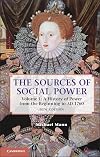
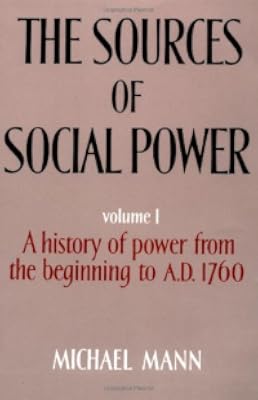
Distinguishing four sources of power in human societies - ideological, economic, military and political - The Sources of Social Power traces their interrelations throughout human history. In this first volume, Michael Mann examines interrelations between these elements from neolithic times, through ancient Near Eastern civilizations, the classical Mediterranean age and medieval Europe, up to just before the Industrial Revolution in England. It offers explanations of the emergence of the show more state and social stratification; of city-states, militaristic empires and the persistent interaction between them; of the world salvation religions; and of the particular dynamism of medieval and early modern Europe. It ends by generalizing about the nature of overall social development, the varying forms of social cohesion and the role of classes and class struggle in history. First published in 1986, this new edition of Volume 1 includes a new preface by the author examining the impact and legacy of the work. show lessTags
Recommendations



















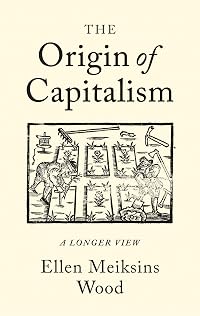

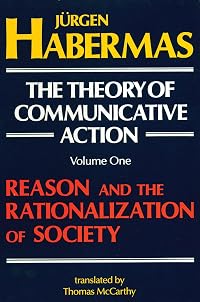


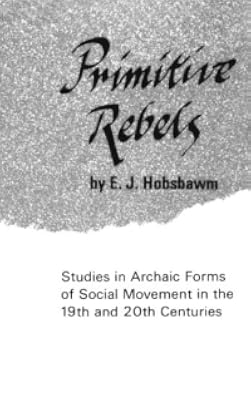
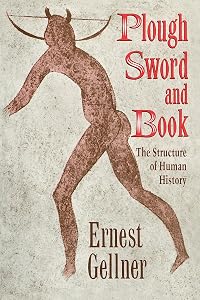

Member Recommendations
thcson Both of these books are excellent and challenging works. The Sources of Social Power volume 1 is more theoretical while Understanding Early Civilizations takes a more direct comparative approach.
Member Reviews
This is an impressive work for the ages, no doubt about that. The author presents a meticulous sociological analysis of power, where ancient agrarian civilizations (with a particular focus on Mesopotamia) form the first focal point. The second part of the book deals with European developments (with a particular focus on England) from the middle ages to about 1760. This is not a universal history of power, but the delimitations are well justified and clearly sufficient for the author's theoretical arguments.
The author argues that there are four kinds of organized power networks: economic, military, ideological and political. As far as agrarian civilizations were concerned I thought this division worked well and the first half of the book show more was very interesting. However, I must admit that I failed to keep up in the second half. The author goes into a lot more detail in discussing Europe and England, which makes his analysis quite hard to read and understand. It's not made any easier by his style, which often tends to move deeper and deeper into the subject without pausing for any intermediate summaries. Even the summary at the end of the book seemed diffuse to me.
For the above reasons this seems like a book for professionals in historical sociology (for generations to come). To me it was a bit too difficult. If you want to actually benefit from reading this work, you should study thoroughly in European political, economic and religious history (about 1000-1800) before tackling it. In other words, it's a challenge but certainly worth the effort if you can put some work into it. show less
The author argues that there are four kinds of organized power networks: economic, military, ideological and political. As far as agrarian civilizations were concerned I thought this division worked well and the first half of the book show more was very interesting. However, I must admit that I failed to keep up in the second half. The author goes into a lot more detail in discussing Europe and England, which makes his analysis quite hard to read and understand. It's not made any easier by his style, which often tends to move deeper and deeper into the subject without pausing for any intermediate summaries. Even the summary at the end of the book seemed diffuse to me.
For the above reasons this seems like a book for professionals in historical sociology (for generations to come). To me it was a bit too difficult. If you want to actually benefit from reading this work, you should study thoroughly in European political, economic and religious history (about 1000-1800) before tackling it. In other words, it's a challenge but certainly worth the effort if you can put some work into it. show less
Very difficult read, but interesting perspectives on how power develops.
Ratings
Members
- Recently Added By
Lists

Books in the Bibliography of The Dawn of Everything by Graeber & Wengrow
478 works; 2 members
Author Information

20+ Works 941 Members
Michael Mann is Professor of Sociology at the University of California, Los Angeles.
Awards and Honors
Awards
Series

Common Knowledge
- Canonical title
- A History of Power from the Beginning to AD 1760
- Original title
- The Sources of Social Power Volume 1: A History of Power from the Beginning to AD 1760
- Original publication date
- 1986
- First words
- The three projected volumes of this book provide a history and theory of power relations in human societies.
- Last words
- (Click to show. Warning: May contain spoilers.)In Volume III, I shall move to a higher level of theoretical generality; but I must first delineate the patterns and accidents of industrial societies.
- Original language
- English
Classifications
- Genres
- Sociology, Nonfiction, History, General Nonfiction, Politics and Government, Religion & Spirituality
- DDC/MDS
- 303.3 — Society, government, & culture Social sciences, sociology & anthropology Social processes Coordination and control
- LCC
- HN8 .M28 — Social sciences Social history and conditions. Social problems. Social reform Social history and conditions. Social problems.
- BISAC
Statistics
- Members
- 206
- Popularity
- 159,087
- Reviews
- 2
- Rating
- (3.93)
- Languages
- Chinese, English, Spanish
- Media
- Paper, Ebook
- ISBNs
- 21
- ASINs
- 3