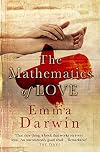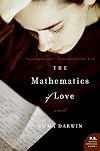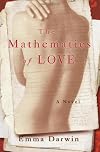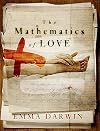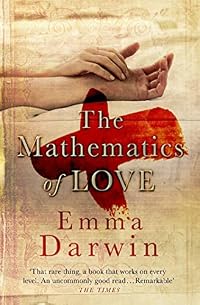
The Mathematics of Love
by Emma Darwin
On This Page
Description
Remember this moment. These moments are rare. You are about to discover your favourite book of the year, the book you will give to all your friends, the book that will linger in your thoughts long after you've turned the final page. You are about to discover THE MATHEMATICS OF LOVE. From the gentle Suffolk countryside to the battlefields of Waterloo and the ports of Spain, this is an extraordinarily moving account of war and the pain of loss, the heat of passion and the redemptive power of love.Tags
Recommendations














Member Reviews
Summary: In the first of two interweaving story lines, it is 1819 and Major Stephen Fairhurst is trying to rebuild his life as a civilian after sacrificing so much in the Napoleonic wars. He has inherited Kersey Hall, his family estate, and he soon meets Lucy Durward, a bright and opinionated young lady with whom he develops a correspondence and friendship. However, as well-matched as they are, the horrors of war will not let him be, and the secrets in his past threaten to destroy any small peace he might build for himself.
In the summer of 1976, fifteen-year-old Anna Ware has been sent by her flighty mother to stay with her uncle at Kersey, which since the time of Stephen has become a school. Anna is lonely and bored - there's nothing show more much to do for a teenager who's used to the activity of London, and the only people around to talk to are her alcoholic and mentally unstable grandmother, and Cecil, a small boy who mostly runs wild. Then Anna meets Eva and Theo, two photographers who live nearby, and their eccentric ways open Anna's eyes to a new way of seeing the world... but that broader scope is not without its costs.
Review: I knew, from reading Emma Darwin's A Secret Alchemy last summer, that Darwin's writing required a substantial input of both time and attention to be worthwhile, but if you can make that investment, the payoff is more than worthwhile. I knew that, but somehow it completely slipped my mind when I picked up this book from my TBR pile. I have recently been busy and rather stressed, and just have not had the mental energy nor the three-hour-blocks of reading time that I think this book deserved. As a result this book took me forever to finish - almost three times longer than I would have predicted given its size - but not through any fault of its own.
When I was able to devote some time and energy to this book, it was absolutely lovely. It was full of things that I enjoy - historical fiction! Napoleonic wars! Intertwining storylines! 19th century courtship! Photography! All of it, too, is rendered in Darwin's exquisite prose. She's equally adept at evoking the horror of a battlefield and the delicate tension of a sitting room and the close atmosphere of a darkroom pungent with developer, and her tone shifts effortlessly to match her time - not always an easy feat in a book with two first-person narrators. The plot(s) and characters are equally well-done; I thought Stephen's story in particular was excellent in the way that it slowly unfurled, carefully drawing the reader in with bits of accumulating information about what had happened to him... much like the gradual appearance of a photographic print in its chemical bath. The layers of meaning and metaphor present here are remarkable for a first novel, and Darwin's writing is mature enough to leave them mostly below the surface, so that the reader has to uncover them for herself.
Although the themes of Stephen's and Anna's stories parallel and intertwine beautifully, the actual plots are less interconnected. They are living in the same place, and Anna reads some of Stephen's letters to Lucy, but neither of these really affect either story in a material way. There are some additional elements of a magical realism nature - Cecil and Anna having dreams that seem drawn from Stephen's memories, Stephen catching a glimpse of Cecil in the fields around the house - that I thought were one of the weaker elements of the story. I don't have a problem with Gothic-y ghosts and imprinted memories and different periods of time overlapping, that's fine - I've read plenty of books that do that well. However, if you're going to include things like that, I feel like you really need to commit to it and embrace it fully - which Darwin didn't, and so the nightmares and the visions wind up not very well explained and sort of superfluous.
Overall, though, I really enjoyed this book - despite my non-existent attention span, I never wished I was reading something else, and when I was able to get into it, I was richly rewarded with a lovely story, beautifully told. 4 out of 5 stars.
Recommendation: I would give this to readers of historical fiction who like their novels well-written, literary, and mature, and are willing to put some effort into their reading. show less
In the summer of 1976, fifteen-year-old Anna Ware has been sent by her flighty mother to stay with her uncle at Kersey, which since the time of Stephen has become a school. Anna is lonely and bored - there's nothing show more much to do for a teenager who's used to the activity of London, and the only people around to talk to are her alcoholic and mentally unstable grandmother, and Cecil, a small boy who mostly runs wild. Then Anna meets Eva and Theo, two photographers who live nearby, and their eccentric ways open Anna's eyes to a new way of seeing the world... but that broader scope is not without its costs.
Review: I knew, from reading Emma Darwin's A Secret Alchemy last summer, that Darwin's writing required a substantial input of both time and attention to be worthwhile, but if you can make that investment, the payoff is more than worthwhile. I knew that, but somehow it completely slipped my mind when I picked up this book from my TBR pile. I have recently been busy and rather stressed, and just have not had the mental energy nor the three-hour-blocks of reading time that I think this book deserved. As a result this book took me forever to finish - almost three times longer than I would have predicted given its size - but not through any fault of its own.
When I was able to devote some time and energy to this book, it was absolutely lovely. It was full of things that I enjoy - historical fiction! Napoleonic wars! Intertwining storylines! 19th century courtship! Photography! All of it, too, is rendered in Darwin's exquisite prose. She's equally adept at evoking the horror of a battlefield and the delicate tension of a sitting room and the close atmosphere of a darkroom pungent with developer, and her tone shifts effortlessly to match her time - not always an easy feat in a book with two first-person narrators. The plot(s) and characters are equally well-done; I thought Stephen's story in particular was excellent in the way that it slowly unfurled, carefully drawing the reader in with bits of accumulating information about what had happened to him... much like the gradual appearance of a photographic print in its chemical bath. The layers of meaning and metaphor present here are remarkable for a first novel, and Darwin's writing is mature enough to leave them mostly below the surface, so that the reader has to uncover them for herself.
Although the themes of Stephen's and Anna's stories parallel and intertwine beautifully, the actual plots are less interconnected. They are living in the same place, and Anna reads some of Stephen's letters to Lucy, but neither of these really affect either story in a material way. There are some additional elements of a magical realism nature - Cecil and Anna having dreams that seem drawn from Stephen's memories, Stephen catching a glimpse of Cecil in the fields around the house - that I thought were one of the weaker elements of the story. I don't have a problem with Gothic-y ghosts and imprinted memories and different periods of time overlapping, that's fine - I've read plenty of books that do that well. However, if you're going to include things like that, I feel like you really need to commit to it and embrace it fully - which Darwin didn't, and so the nightmares and the visions wind up not very well explained and sort of superfluous.
Overall, though, I really enjoyed this book - despite my non-existent attention span, I never wished I was reading something else, and when I was able to get into it, I was richly rewarded with a lovely story, beautifully told. 4 out of 5 stars.
Recommendation: I would give this to readers of historical fiction who like their novels well-written, literary, and mature, and are willing to put some effort into their reading. show less
well-crafted and involving story - or stories, rather, since there are two timelines being followed here. Post-Napoleonic europe I found to be wonderfully detailed and engaging, and I would have to say I liked this piece of the novel the best. However it wouldn't have been entirely complete without the complementing modern-ish timeline (I believe it was around the '70s, although thinking about it, I'm not sure it was ever stated... it *felt* like the 70s to me, however).
I also learnt a fair amount about the development of photography's beginnings in the one timeline, and the art photography was becoming in the other, although it by no means dominated the story - but it certainly made me look at my camera in a different (and more show more appreciative) way!
There were a few niggling issues - a few things were just confusing (the whole thing with Cecil, for instance, and Ray and Belle for that matter were never really explained), I'm not entirely sure what was up with the italic sequences at the end of chapters, and as others have said, I could have done without the sex. Most of all, without getting too detailed, I would have preferred it if she hadn't attempted to tie the two stories together right at the end; there were already plenty of mirrors and touchpoints between the two and what had been until then a lovely parallel became somewhat clumsy right in the closing pages of the story.
But overall: I very much enjoyed reading this book, and would definitely recommend it. show less
I also learnt a fair amount about the development of photography's beginnings in the one timeline, and the art photography was becoming in the other, although it by no means dominated the story - but it certainly made me look at my camera in a different (and more show more appreciative) way!
There were a few niggling issues - a few things were just confusing (the whole thing with Cecil, for instance, and Ray and Belle for that matter were never really explained), I'm not entirely sure what was up with the italic sequences at the end of chapters, and as others have said, I could have done without the sex. Most of all, without getting too detailed, I would have preferred it if she hadn't attempted to tie the two stories together right at the end; there were already plenty of mirrors and touchpoints between the two and what had been until then a lovely parallel became somewhat clumsy right in the closing pages of the story.
But overall: I very much enjoyed reading this book, and would definitely recommend it. show less
A curious mixture of two stories: one set in the early 1800s, featuring a veteran soldier, the other taking place in 1976, featuring a rather loose teenage girl. The two are connected by the letters written by the soldier to a woman. The teenager, Anna Ware, is given copies of the letters by an art dealer when she is staying at a failed school that years ago was the home of the soldier, Stephen Fairhurst. She becomes intrigued by the story that is unfolding in the letters, and they cause her to think about her own life differently.
Stephen's story is told in the first person, in a style that is based on the novels of Jane Austen. I felt that the style was rather stiffer and, to me, irritatingly sluggish. I haven't read Austen for some show more time so I can't say for sure that she did not write like this, but I suspect her writing had a spark I find missing here.
I came to feel irritation at Stephen himself, partly because of my own sensibilities. Two incidents bothered me: 1) when he takes his favorite horse on a fox hunt, and 2) when he writes of having to have men under his command flogged. Both of these practices strike me as barbaric and I know that just because they were common then does not mean that everyone would have found them to their taste. His later actions, traipsing after a lost love and not bothering to meet the child he had with her, reinforced my feelings about him, for different reasons. I simply felt he was not that sensitive or thoughtful. He writes to his friend Lucy what it was like to have part of his leg missing, how difficult it was initially to get around. The details of his walking in pain struck me as self-serving. I guess I just didn't like the chap.
Thus it was a bit of a mystery to me why Anna would like his letters. I preferred Anna's story by a long shot. Frequently Anna's mother would leave her in various places while she went off with her current lover. At this time she sent Anna to her brother's school to spend the summer and perhaps more. Only, when Anna gets to the school she learns that it has failed and it is just her uncle, her mother's mother (unexpected), and a wild little boy named Cecil, clanking around the old house and making do rather casually. It's not too surprising that she jumps at the chance to get to know the neighbors, Theo and Eva. Theo and Eva introduce her to photography, the profession both practice, although their styles vary considerably.
As she reads about the budding love affair between Stephen and Lucy, Anna develops an attraction of her own, but her choice is not quite as suitable as Stephen's. Did the letters have anything to do with her actions? I did not see how, yet others may disagree. show less
Stephen's story is told in the first person, in a style that is based on the novels of Jane Austen. I felt that the style was rather stiffer and, to me, irritatingly sluggish. I haven't read Austen for some show more time so I can't say for sure that she did not write like this, but I suspect her writing had a spark I find missing here.
I came to feel irritation at Stephen himself, partly because of my own sensibilities. Two incidents bothered me: 1) when he takes his favorite horse on a fox hunt, and 2) when he writes of having to have men under his command flogged. Both of these practices strike me as barbaric and I know that just because they were common then does not mean that everyone would have found them to their taste. His later actions, traipsing after a lost love and not bothering to meet the child he had with her, reinforced my feelings about him, for different reasons. I simply felt he was not that sensitive or thoughtful. He writes to his friend Lucy what it was like to have part of his leg missing, how difficult it was initially to get around. The details of his walking in pain struck me as self-serving. I guess I just didn't like the chap.
Thus it was a bit of a mystery to me why Anna would like his letters. I preferred Anna's story by a long shot. Frequently Anna's mother would leave her in various places while she went off with her current lover. At this time she sent Anna to her brother's school to spend the summer and perhaps more. Only, when Anna gets to the school she learns that it has failed and it is just her uncle, her mother's mother (unexpected), and a wild little boy named Cecil, clanking around the old house and making do rather casually. It's not too surprising that she jumps at the chance to get to know the neighbors, Theo and Eva. Theo and Eva introduce her to photography, the profession both practice, although their styles vary considerably.
As she reads about the budding love affair between Stephen and Lucy, Anna develops an attraction of her own, but her choice is not quite as suitable as Stephen's. Did the letters have anything to do with her actions? I did not see how, yet others may disagree. show less
This was this month's book group choice, and I really enjoyed it. The novel operates on two time lines, one following Stephen Fairhurst around 1819 when he's getting used to his new role as a landowner and the master of Kersey Hall, ex-soldier with a missing leg, and a man who lost the woman he loved. His story takes him to Lancashire to court a young widow, to his old haunts in Brussels and in Spain, and sees a solid friendship with the widow's artist sister, Lucy. The other time line is in the summer of 1973 when 15-year-old Anna is sent to her uncle for the summer (or until her mother and mother's boyfriend have found a hotel to buy in Spain)--it is a grim summer for her, if it weren't for Eva and Theo, photographers who live and show more work in the converted stables of Kersey Hall, currently a school that has just folded. I liked the Stephen story more than I did Anna's, largely because of the person she falls for; Stephen and his budding friendship with Lucy seemed more engaging. show less
This book had a lot of ingredients to make it a great book. It tells two stories in two different eras with a manor as link between the stories. Especially the historical story in the 1800s had interesting characters: a Waterloo survivor and a woman who is fighting what is expected of her. However, the book never really gripped me. The way things are described, all the problems and struggles are very obvious and repeated too much. Also, the modern day story could have easily been left out, since I found it boring. There were some interesting bits where the two stories mixed, but I felt it should have been elaborated on.
All in all, the book is an ok read, but I would not recommend buying it. I am curious though about the next book of show more Emma Darwin, since she obviously has interesting story ideas. show less
All in all, the book is an ok read, but I would not recommend buying it. I am curious though about the next book of show more Emma Darwin, since she obviously has interesting story ideas. show less
A well-crafted novel that switches between England and post-Napoleonic Europe of 1819, and the heatwave summer of 1979, the two segments sharing the location of Kersey Hall, Stephen Fairhurst’s Regency home and a temporary refuge for modern-day teenaged Anna, along with themes of loss, abandonment, and violence. Fairhurst is trying to rebuild his life after a war which has left him crippled, but finds little in English country society to keep him there; his travels into Europe bring him deeper understanding of himself and, eventually, lead him to confront a vital piece of his past. Anna has been dumped on an uncle she barely knows while her mother tries to sort out yet another new life for them, only to find herself defending her show more uncle’s unacknowledged child from their crazed, bitter, violent grandmother. She finds respite and consolation with the exotic European photo-journalists who rent the old stables next door, but this ends in grief when she finds herself falling in love with the much-older Theo. And then there are the old letters she’s given to read – letters from the long-dead Stephen Fairhurst.
A good book; just, somehow, not mammothly endearing. The acknowledgement page at the end tells us that it was written for the author’s MPhil in Writing at the University of Glamorgan, and this may account for the slightly impersonal feel. show less
A good book; just, somehow, not mammothly endearing. The acknowledgement page at the end tells us that it was written for the author’s MPhil in Writing at the University of Glamorgan, and this may account for the slightly impersonal feel. show less
Fab. I'll have to go back over my list of books but this is a leading contender for my best read of 2007 (not that I ever get around to the award ceremony). As with many of the best reads it was a book I wasn't at all sure I'd like when I pulled it off the library shelf.
Historical story of a Waterloo veteran muddled up with a present day (well 1976, does that count as historical yet?) story of a teenage girl. The paired stories fought for my attention and at the joins between them I was torn between wanting to keep on reading the half of the tale I was in and needing to find out what was happening in the other half. Extremely well written, I look forward to more books from Darwin, this is her first.
Members
- Recently Added By
Published Reviews
ThingScore 50
Darwin’s two independent story lines suggest riches — the way the past and present, and sometimes even the future, can meet in artistic representation — that remain, for the most part, unexplored. Like her visual artists, Darwin plays intriguingly with light, shadow and perception, but her novel’s overall picture isn’t fully developed. Some equations remain to be solved.
added by SimoneA
Author Information

5+ Works 640 Members
Common Knowledge
- Canonical title
- The Mathematics of Love
- Original publication date
- 2006
- People/Characters
- Major Stephen Fairhurst; Lucy Durward; Anna Ware; Cecil
- Important places
- Lancashire, England, UK; Spain
- Important events
- Napoleonic Wars
- Epigraph
- But must not all these new prodigies efface themselves before the most amazing, the most troubling of all: that which at last appears to give man the power to create in his turn, to make solid the unreachable ghost which fade... (show all)s as soon as seen, without leaving a shadow in the looking-glass, a shiver in the water of the pool?
Nadar, Quand j'etais photographe, 1899 - Dedication
- For Hugh and Lucie
- First words
- Had I not been there, no account, no print, no evidence of witnesses could have made me believe what I saw that day.
- Last words
- (Click to show. Warning: May contain spoilers.)Then, together, they turn away, and take the path that leads to the village.
Classifications
Statistics
- Members
- 395
- Popularity
- 78,517
- Reviews
- 17
- Rating
- (3.33)
- Languages
- English, French, Portuguese, Spanish
- Media
- Paper, Ebook
- ISBNs
- 18
- ASINs
- 6