On This Page
Description
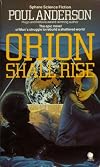
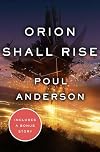
On an Earth that barely survived a nuclear holocaust, visionaries who dream of reaching for the stars attempt to revive the forbidden technology that once destroyed their world. Centuries ago, humankind was nearly destroyed in a nuclear apocalypse. Many generations have passed since that terrible time, and the remnants of civilization have re-formed into separate, vastly different societies. The dominant culture of a widely diminished Earth, the ecologically sensitive Maurai hold fast to show more their belief that "non-green" science is an unacceptable evil. But the reborn dream of space flight harbored by a forward-thinking few could herald the revival of the nuclear technology that once ravaged the planet and its people - and the powerful Maurai Federation will take every step necessary, no matter how drastic, to prevent doomsday from dawning again. An enthralling work of speculative fiction, Poul Anderson's Orion Shall Rise is a feat of world-building and a sobering view of tomorrow by one of the twentieth century's most revered science fiction masters. Anderson's monumental tale combines science, anthropology, philosophy, and global politics with breathtaking action and adventure, offering an ingeniously unique and provocative vision of humankind's all-too-possible destiny. This ebook includes the bonus story "The Sky People." show lessTags
Recommendations






















Member Reviews
This was a an unexpected gem. Orion Shall Rise is set 800 years after a nuclear war has erased our civilisation. New civilisations have rebuilt and the world is dominated by the Maurai, a seafaring empire which polices the world to prevent the rebuilding of nuclear technologies. The Northwest Confederation occupies the northwest region of North America and seeks to recapture the old industry of the twentieth century. Between the two sits the Domain, a federation occupying the ancient lands of France and overseen by a massive floating citadel called Skyholm, which is used to defend the land against the lesser civilisations of Espayn, Italya and the Rhineland and to break up massive storms which sweep in from the Atlantic. As agents from show more the Northwest Confederation (Norries) scour the world for fissionable materials left over from the pre-holocaust days., a coup in Skyholm sends a young nobleman, Iern, deposed from his rightful place as heir to the Captain, on an epic journey across the world where he becomes involved in an illicit project to build a spacecraft using rediscovered nuclear warheads for propulsion. Once the project is discovered a terrible conflict begins, leading the world to the edge of a second holocaust.
It took me a while to get into this book, but once I had cleared the first 100 pages or so I was gripped by this marvellous, imaginative tale. At times the plot dragged a little, but the dragging passages served the purpose of fleshing out all of the key characters and some minor ones besides. The picture of the new post-apocalypse world was well-drawn and fascinating. Aspects of the world come across almost as medieval with old-fashioned titles and manners, yet threaded through that world are jet aircraft, laser weapons and battleships. I was especially interested in the fact that although Anderson wrote this in 1983, it has a very strong eco theme in which the world is swept by a religion focused on the concept of Gaea and all civilisations apart from the Norries seek to utilise technologies that preserve the land. This novel has war, technology, romance, philosophy, religion and visions of future technology and hasn't suffered from being nearly 40 years old. show less
It took me a while to get into this book, but once I had cleared the first 100 pages or so I was gripped by this marvellous, imaginative tale. At times the plot dragged a little, but the dragging passages served the purpose of fleshing out all of the key characters and some minor ones besides. The picture of the new post-apocalypse world was well-drawn and fascinating. Aspects of the world come across almost as medieval with old-fashioned titles and manners, yet threaded through that world are jet aircraft, laser weapons and battleships. I was especially interested in the fact that although Anderson wrote this in 1983, it has a very strong eco theme in which the world is swept by a religion focused on the concept of Gaea and all civilisations apart from the Norries seek to utilise technologies that preserve the land. This novel has war, technology, romance, philosophy, religion and visions of future technology and hasn't suffered from being nearly 40 years old. show less
After nuclear weapons ravaged the Earth, only Skyholm, a huge solar-powered station floating above Europe, remains in possession of high technology. But as Skyholm is seized by a religious faction, a young noble escapes to the ground below and joins a group who conspires to use the power of the atom, outlawed for centuries, to regain the lost heritage of space flight.
This is in some sense a sequel to a previous story about the post-apocalyptic earth dominated ( a a fairly mild way) by the Maurai, a Pacific-island based culture which wishes to at least delay of not prevent a return to the technology that led to the disastrous war. The previous story in Homeward and Beyond basically presented the Maurai as the "good guys" but in this story there is more sympathy for the side trying to revive industrial technology and space exploration in particular,
Originale ed interessante interpretazione di un futuro post-atomico in cui il pianeta si è risollevato grazie alla guida di una federazione Oceanica e di un stazione atmosferica iper-tecnologica-pre-apocalisse (stazionata sulla Francia) che guidano le altre comunità rimaste più indietro al livello tecnologico/sociale. Ma come è ben noto, ogni forma di governo “imposto” è fonte di ribellioni e guai vari.
Opera composita e ricca di situazioni, personaggi, avventure, speculazioni filosofiche e religiose, storie d'amore, poesia (...insomma...), una forte impronta ecologista e pacifista ed ancora fortemente impregnata del clima di guerra fredda che regnava quando è stata scritta (1983).
Il libro è piuttosto articolato e numerosi show more eventi si susseguono inchiodando il lettore pag. dopo pag. almeno per una buona metà; successivamente l'autore si dilunga troppo in sottotrame poco interessanti che rallentano un po' la lettura. Man mano che la storia principale prosegue, emozionante, aumentano anche quelle parti che sembrano proprio “allungature gratuite di brodo” e vien voglia di saltare qualche pag.
Il finale è, purtroppo, mediocre e patetico tanto quanto poco plausibile e per di più evidentemente tirato via. * ( vedi commenti)
Il libro, comunque, è nel complesso discreto. show less
Opera composita e ricca di situazioni, personaggi, avventure, speculazioni filosofiche e religiose, storie d'amore, poesia (...insomma...), una forte impronta ecologista e pacifista ed ancora fortemente impregnata del clima di guerra fredda che regnava quando è stata scritta (1983).
Il libro è piuttosto articolato e numerosi show more eventi si susseguono inchiodando il lettore pag. dopo pag. almeno per una buona metà; successivamente l'autore si dilunga troppo in sottotrame poco interessanti che rallentano un po' la lettura. Man mano che la storia principale prosegue, emozionante, aumentano anche quelle parti che sembrano proprio “allungature gratuite di brodo” e vien voglia di saltare qualche pag.
Il finale è, purtroppo, mediocre e patetico tanto quanto poco plausibile e per di più evidentemente tirato via. * ( vedi commenti)
Il libro, comunque, è nel complesso discreto. show less
May 5, 2013 (Edited)Italian
Ratings
Members
- Recently Added By
Author Information

693+ Works 53,584 Members
Poul Anderson, November 25, 1926 - July 31, 2001 Poul Anderson was born on November 25, 1926 in Bristol, Pennsylvania to parents Anton and Astrid. After his father's death, Poul's mother took them first to Denmark and then to Maryland and Minnesota. He earned his degree in Physics from the University of Minnesota, but chose instead to write show more stories for science fiction magazines, such as "Astounding." Anderson is considered a "hard science fiction" writer, meaning that his books have a basis in scientific fact. To attain this high level of scientific realism, Anderson spent many hours researching his topics with scientists and professors. He liked to write about individual liberty and free will, which was a well known theme in many of his books. He also liked to incorporate his love of Norse mythology into his stories, sometimes causing his modern day characters to find themselves in fantastical worlds, such as in "Three Hearts and Three Lions," published in 1961. Anderson has written over a hundred books, his last novel, "Genesis" won the John W. Campbell Award, one of the three major science fiction awards. He is a former president of the Science Fiction and Fantasy Writers of America and won three Nebula awards and nine Hugo Awards. In 1997, Anderson was named a Grandmaster by the Science Fiction and Fantasy Writers of America and was also inducted into the Science Fiction Fantasy Hall of Fame. Poul Anderson died on July 31, 2001 at the age of 74. (Bowker Author Biography) show less
Some Editions
Awards and Honors
Series

Belongs to Publisher Series
Common Knowledge
- Original title
- Orion shall rise
- Original publication date
- 1983
- Epigraph
- When you stand on the peak of time it is time to perish
— Robinson Jeffers,
‘The Broken Balance' - Dedication
- To Karen--again, and always
- First words
- There was a man called Mael the Red who dwelt in Ar-Mor.
Classifications
Statistics
- Members
- 672
- Popularity
- 42,947
- Reviews
- 4
- Rating
- (3.56)
- Languages
- English, German, Hungarian, Italian
- Media
- Paper, Ebook
- ISBNs
- 10
- ASINs
- 14