On This Page
Description
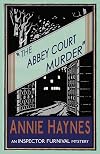
"A crime of a peculiarly mysterious nature was perpetrated some time last night in a block of flats called Abbey Court."Lady Judith Carew acted furtively on the night of the Denboroughs' party. Her secret assignation at 9:30pm was a meeting to which she took a loaded revolver. The Abbey Court apartment building would play host to violent death that very night, under cover of darkness. The killer's identity remained a mystery, though Lady Carew had a most compelling motive - and her revolver show more was left in the dead man's flat...
Enter the tenacious Inspector Furnival in the first of his golden age mysteries, first published in 1923. Though there are many clues, there are just as many red herrings and the case takes numerous Christie-esque twists before the murderer can be revealed. This new edition, the first printed in over 80 years, features an introduction from crime fiction historian Curtis Evans.
"Annie Haynes does, in The Abbey Court Murder, what all writers of mystery stories aspire to do, and so few carry off successfully... It is a first-rate story... the plot thickens with every page, leading us on to the final climax in a state of unfluctuating interest." Bookman. show less
Tags
Recommendations




















Member Reviews
A melodrama where the bad are very bad, and the silly are very silly. Was the murder committed to prevent a scandal? Oh the horror! There are many holes in the investigation by Furnival who just makes wild guesses and chats up a maid to get information. I can imagine this as an amateur stage production with the audience encouraged to make exaggerated oohs and aahs. And the amount of fainting and swooning makes me worry for the health of the women. When Judith tries to drown herself in the moat (where else?) she is dragged out and proclaimed ok, just fainted. Fun, if you can take this sort of thing but Haynes is no Christie, not even close.
Inspector Furnival is introduced in this 1920’s novel. He’s a character with possibilities, but the book itself...
Reading much more like a Victorian sensationalist novel, as a mystery this is somewhat disappointing since the clues clearly telegraph the murderer and the motive. The reader is inundated with past secrets, mistaken identity, an overly emotional heroine, and just about any cliche you can think of.
All that being said, there’s a nice love story, some good detecting, and one or two engaging if old-fashioned characters. Be warned, though: there’s a reason Annie Haynes isn’t remembered as a mystery writer from the Golden Age.
Reading much more like a Victorian sensationalist novel, as a mystery this is somewhat disappointing since the clues clearly telegraph the murderer and the motive. The reader is inundated with past secrets, mistaken identity, an overly emotional heroine, and just about any cliche you can think of.
All that being said, there’s a nice love story, some good detecting, and one or two engaging if old-fashioned characters. Be warned, though: there’s a reason Annie Haynes isn’t remembered as a mystery writer from the Golden Age.
My first Annie Haynes read, and my last.
Judith Carew is living a lie. Living in a fool’s paradise. A day of reckoning arrives, and instead of trusting her loving husband, and confiding in him, she keeps an ill-advised assignation with someone from her past. Her husband follows her there. They are present when a man is murdered, and both flee the scene, with Judith learning only later that her husband had been there. Which one of them, if either, shot the victim? Lies, deceptions, mistrust, and misery ensue. What else would you expect? Inspector Furnival comes to the rescue.
It is never a good sign if I find myself struggling to feel any empathy with even one character in a book. That alone would not condemn a book to my ‘bad show more author/bad book’ dump heap. Sadly, the author of this sorry exercise committed what I consider to be a cardinal sin in a mystery novel. She created a plot that was driven by the stupid actions of, in this case, two of the main characters, and by the inevitable misunderstandings that arose from those actions. Really, there is no getting around it. They acted like utter fools. Throughout the book these characters steadfastly refused every opportunity to rectify their mistakes, make a clean breast of things, clear the air, whatever, even though this pig-headedness nearly cost one of them his life. I don’t find such behavior in any way entertaining. The book is billed as the first in a series that features Inspector Furnival of Scotland Yard. He didn’t appear in this book, as a real living breathing character – only as someone’s whose existence was mentioned – until more than 40% of the way through the book. Even when ‘on scene’, he did his detecting pretty much off stage. His solving of the crime was almost incidental to the bulk of the book. There was nothing about this book, not even the author’s prose style, which was the least objectionable thing about the book, which would make me want to read another of her mysteries. Not when there are so many other authors who have devised much better plots, and more interesting characters. show less
Judith Carew is living a lie. Living in a fool’s paradise. A day of reckoning arrives, and instead of trusting her loving husband, and confiding in him, she keeps an ill-advised assignation with someone from her past. Her husband follows her there. They are present when a man is murdered, and both flee the scene, with Judith learning only later that her husband had been there. Which one of them, if either, shot the victim? Lies, deceptions, mistrust, and misery ensue. What else would you expect? Inspector Furnival comes to the rescue.
It is never a good sign if I find myself struggling to feel any empathy with even one character in a book. That alone would not condemn a book to my ‘bad show more author/bad book’ dump heap. Sadly, the author of this sorry exercise committed what I consider to be a cardinal sin in a mystery novel. She created a plot that was driven by the stupid actions of, in this case, two of the main characters, and by the inevitable misunderstandings that arose from those actions. Really, there is no getting around it. They acted like utter fools. Throughout the book these characters steadfastly refused every opportunity to rectify their mistakes, make a clean breast of things, clear the air, whatever, even though this pig-headedness nearly cost one of them his life. I don’t find such behavior in any way entertaining. The book is billed as the first in a series that features Inspector Furnival of Scotland Yard. He didn’t appear in this book, as a real living breathing character – only as someone’s whose existence was mentioned – until more than 40% of the way through the book. Even when ‘on scene’, he did his detecting pretty much off stage. His solving of the crime was almost incidental to the bulk of the book. There was nothing about this book, not even the author’s prose style, which was the least objectionable thing about the book, which would make me want to read another of her mysteries. Not when there are so many other authors who have devised much better plots, and more interesting characters. show less
Lady Carew and Sir Anthony Carew have been happily married for two years. Prior to her marriage, Judith (Lady Carew) was the governess for Sir Anthony’s half-sister, Peggy While attending a society wedding, a passer-by spots Judith and seeks her out, while her husband is busy elsewhere. Judith is stunned to find that this man is not dead, and he coerces her to meet him at his residence in Abbey Court later that evening. A worried Judith feigns illness and escapes her house that evening, taking her husband’s revolver and making her way to the apartments of the mystery man. During their confrontation, the man reveals certain things that Judith would not want her husband to know, and as she tries to flee, she accidentally turns out the show more lights. She is frantic and in the confusion that follows a bottle of ink is knocked over, a shot rings out, and she runs into the man, who is bleeding. Judith manages to escape from the man’s apartments, but unbeknownst to her, someone is watching her from the shadows of the house across the street. The next day, she feels that Sir Anthony’s affections for her have cooled. She becomes frantic at the thought that the police will believe she killed the man, and she contrives to be taken to their country home, Heron’s Carew. There she meets another old acquaintance, who has recently inherited a neighboring estate and become Lord Chesterham. He knows more about Judith’s past than she would like, and he blackmails Judith into agreeing to his wedding to Peggy by threatening to reveal her secret if she opposes the marriage. Finally, Inspector Furnival of Scotland Yard gets involved in straightening out the mess and uncovering the murderer.
The Abbey Court Murder, written in 1923, is the first book in the three-book Inspector Furnival series written by Annie Haynes. It is marketed as a Golden Age mystery, and in the introduction to the book, we learn that Haynes was only one of two female authors published by The Bodley Head at the time – the other being Agatha Christie.
As much as I enjoy Golden Age mysteries, this one didn’t really appeal to me. It doesn’t read like a true GA mystery – we spend quite a bit of time inside Judith’s head, worrying about whether her secret will be discovered, or whether someone will think her guilty of the murder. None of the other characters are very fleshed out, which is somewhat typical of a GA mystery, but I think we get to know Judith a little too well. Also, Inspector Furnival doesn’t come into the book until around the 40% mark, and even though this is his series, he doesn’t really play a large part in the book. The only real detecting is done “off screen,” so to speak, and in the book, he merely detects by confirming what he already seems to know. In fact, it is still a mystery to me how Scotland Yard even remotely connected the Carews to Abbey Court (I’m not giving anything away here, of course, we know that both Judith and Sir Anthony must be suspected.) It was, at least to me, fairly obvious as to who the murderer was.
I thought both Judith and Sir Anthony acted very stupidly towards each other. Honestly, I felt at times I was reading more of a romance novel than a mystery novel, you know the kind, where there is a misunderstanding on both sides and neither wants to confide in the person that they love. The writing itself was easy to read, but her style just did not appeal to me. It wasn’t necessarily a bad book, it just was not what I was expecting, and from that aspect, I was disappointed. show less
The Abbey Court Murder, written in 1923, is the first book in the three-book Inspector Furnival series written by Annie Haynes. It is marketed as a Golden Age mystery, and in the introduction to the book, we learn that Haynes was only one of two female authors published by The Bodley Head at the time – the other being Agatha Christie.
As much as I enjoy Golden Age mysteries, this one didn’t really appeal to me. It doesn’t read like a true GA mystery – we spend quite a bit of time inside Judith’s head, worrying about whether her secret will be discovered, or whether someone will think her guilty of the murder. None of the other characters are very fleshed out, which is somewhat typical of a GA mystery, but I think we get to know Judith a little too well. Also, Inspector Furnival doesn’t come into the book until around the 40% mark, and even though this is his series, he doesn’t really play a large part in the book. The only real detecting is done “off screen,” so to speak, and in the book, he merely detects by confirming what he already seems to know. In fact, it is still a mystery to me how Scotland Yard even remotely connected the Carews to Abbey Court (I’m not giving anything away here, of course, we know that both Judith and Sir Anthony must be suspected.) It was, at least to me, fairly obvious as to who the murderer was.
I thought both Judith and Sir Anthony acted very stupidly towards each other. Honestly, I felt at times I was reading more of a romance novel than a mystery novel, you know the kind, where there is a misunderstanding on both sides and neither wants to confide in the person that they love. The writing itself was easy to read, but her style just did not appeal to me. It wasn’t necessarily a bad book, it just was not what I was expecting, and from that aspect, I was disappointed. show less
While I was entertained by this Golden Age mystery, I found it irritating to have the story told primarily from Judith's point of view while hiding from the reader facts about her past which obviously she knew. It would have been better from her husband Anthony's point of view if the author wanted these facts hidden.
I was also a bit disappointed by the fact that Inspector Furnival does almost all of his detecting "off stage" and barely appears until the last quarter of the book. It was more like a Gothic Victorian romance, focusing on the horror and fear of Judith rather than on finding the solution of the crime.
I was also a bit disappointed by the fact that Inspector Furnival does almost all of his detecting "off stage" and barely appears until the last quarter of the book. It was more like a Gothic Victorian romance, focusing on the horror and fear of Judith rather than on finding the solution of the crime.
Lady Judith Carew, wife to Sir Anthony for the last two years and the ex-governess to his sister has had her peace disturbed by the appearance of her presumed dead first husband. Then a murder occurs in the Abbey Court apartments.
Apart from that I could not find any sympathy for Lady Carew and took a dislike to Peggy Carew, it was an enjoyable mystery
Originally published in 1923
Apart from that I could not find any sympathy for Lady Carew and took a dislike to Peggy Carew, it was an enjoyable mystery
Originally published in 1923
While I was entertained by this Golden Age mystery, I found it irritating to have the story told primarily from Judith's point of view while hiding from the reader facts about her past which obviously she knew. It would have been better from her husband Anthony's point of view if the author wanted these facts hidden.
I was also a bit disappointed by the fact that Inspector Furnival does almost all of his detecting "off stage" and barely appears until the last quarter of the book. It was more like a Gothic Victorian romance, focusing on the horror and fear of Judith rather than on finding the solution of the crime.
I was also a bit disappointed by the fact that Inspector Furnival does almost all of his detecting "off stage" and barely appears until the last quarter of the book. It was more like a Gothic Victorian romance, focusing on the horror and fear of Judith rather than on finding the solution of the crime.
Members
- Recently Added By
Lists

Books Read in 2018
4,360 works; 110 members
Author Information
18 Works 389 Members
Series

Common Knowledge
- Canonical title
- The Abbey Court Murder
- Original title
- The Abbey Court Murder
- Original publication date
- 1923
- People/Characters
- Inspector Furnival (undercover as Walter Lennox); Judith Carew; Anthony Carew; Peggy Carew; Stephen Crasster; Lady Sybil Palmer (show all 9); Lorrimer, Lord Chesterham; Mrs. Rankin; Celestine Delafours
- Important places
- London, England, UK
- Dedication
- TO DEAR
MRS. W.K. CLIFFORD
IN DEEP AFFECTION
AND PROFOUND ADMIRATION FOR HER WORK - First words
- St. Peter's was rapidly becoming the church for fashionable weddings; but even St. Peter's had seldom been the centre of a larger or more fashionable crowd than was assembling this warm April afternoon to see Lady Geraldine S... (show all)ummerhouse married to the man of her choice.
- Last words
- (Click to show. Warning: May contain spoilers.)"To the woman he loves," he whispered. "Didn't you know that Judith, my darling, my wife."
Classifications
Statistics
- Members
- 53
- Popularity
- 573,824
- Reviews
- 7
- Rating
- (2.94)
- Languages
- English, Italian
- Media
- Paper, Ebook
- ISBNs
- 5
- ASINs
- 3