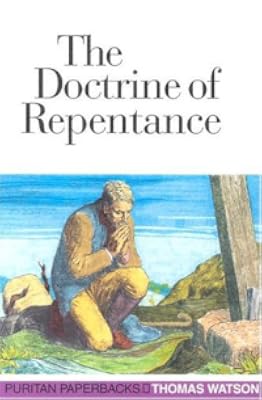
The Doctrine of Repentance
by Thomas Watson
On This Page
Description
Repentance is not optional. It is not left to our choice whether or not we will repent, but it is an indispensable command. God has enacted a law in the High Court of heaven that no sinner will be saved except the repenting sinner, and he will not break his own law. No one can willfully continue in sin and expect to be covered by the blood of Christ. Even if all the angels stood before God and begged for the life of an unrepenting person, God would not grant it. The Lord God, compassionate show more and merciful, . . . who keeps faithfulness for thousands, . . . will by no means leave the guilty unpunished (Exodus 34:6-7). Though God is more full of mercy than the sun is of light, still He will not forgive a sinner who willfully continues to sin. Dying to sin is the life of repentance. The very day a Christian turns from sin, he must require of himself a perpetual fast. The eye must fast from impure glances. The ear must fast from listening to slander. The tongue must fast from cursing. The hands must fast from bribes. The feet must fast from unclean paths. And the soul must fast from the love of wickedness. This turning away from sin implies a noticeable change in the lives of those who truly follow Christ. Therefore let us, while we are on this side of the grave, make our peace with God! About the Author Thomas Watson, a 17th-century English Puritan pastor, served at St. Stephen Walbrook Church in London for 16 years. He married Abigail Beadle and had seven children, four of whom died young. Imprisoned briefly in 1651 for plotting to restore Charles II, he returned to his pastoral duties until 1662 when laws against Nonconformists forced him to preach privately. In 1672, he obtained a license to preach at Crosby Hall, London, where he continued until his health declined. He died in 1686 in Barnston, Essex. Known for works like The Godly Man's Picture and The Ten Commandments, Watson was a devout Christian who faced hardships with unwavering faith. show lessTags
Recommendations








Member Reviews
Watson’s short work is a systematic theology on the doctrine of repentance. He covers the topic from all angles and every corner of Scripture. He brings a great deal of understanding to how the human heart works and the calculated lies concocted by our sinful hearts in order to quiet the conscience in venturing upon sin. His biblical correctives are spot on. Many regard Watson as the most readable of all the puritans and this work, though relatively short at only 122 pages, is full of wisdom, force, and insight.
In one chapter, Watson highlights how it is natural for us to put off and procrastinate repentance. His counsel is to be speedy in this area as we remember God is quick in granting his mercies. Repentance is the healing day show more for our souls and it is best to repent quickly to bring glory to God. The candle of our life may soon be blown out, as man’s life is like a flower of the field which withers sooner than the grass (Psa. 103:15). Today, hear God’s voice (Heb. 3:7).
Later, Watson gives a helpful qualification: Repentance is not meritorious, nor does it win God’s pardon. Repentance is a qualification, not a cause, he says. Tears are not satisfactory for sin; they please God but do not satisfy. Christ’s blood only merits pardon. To trust our repentance is to make it a false savior. Christ’s blood alone washes away the guilt of sin. Do not idolize repentance or rest upon anything other than Christ for pardon (96-97).
Chapter 11 is worth the price of admission alone. Watson titles it, “prescribing some means for repentance: serious consideration.” And it is certainly that. He says every sin is a recession from God, is walking contrary to God, is an injury to God, is rooted in ignorance, a hazard to the soul, smears the soul with filth, and is an expression of odious ingratitude. He goes on: sin debases, burdens, and damages. It is a debt, it is deceitful, and a spiritual sickness. It is a bondage and a spreading malignity and vexing sort of thing always bringing trouble. Watson devotes a paragraph or two to illustrate and convey each of these things.
Just as Watson paints sin’s dangers, he cuts straight to the heart in his conclusion, asking after all this, “What private mercies have we had? We have been enemies, yet God has fed us. He has made the honeycomb of mercy drop on us” (114). The goodness, kindness, and patience of God ought to lead us to repentance (Rom. 2:4). show less
In one chapter, Watson highlights how it is natural for us to put off and procrastinate repentance. His counsel is to be speedy in this area as we remember God is quick in granting his mercies. Repentance is the healing day show more for our souls and it is best to repent quickly to bring glory to God. The candle of our life may soon be blown out, as man’s life is like a flower of the field which withers sooner than the grass (Psa. 103:15). Today, hear God’s voice (Heb. 3:7).
Later, Watson gives a helpful qualification: Repentance is not meritorious, nor does it win God’s pardon. Repentance is a qualification, not a cause, he says. Tears are not satisfactory for sin; they please God but do not satisfy. Christ’s blood only merits pardon. To trust our repentance is to make it a false savior. Christ’s blood alone washes away the guilt of sin. Do not idolize repentance or rest upon anything other than Christ for pardon (96-97).
Chapter 11 is worth the price of admission alone. Watson titles it, “prescribing some means for repentance: serious consideration.” And it is certainly that. He says every sin is a recession from God, is walking contrary to God, is an injury to God, is rooted in ignorance, a hazard to the soul, smears the soul with filth, and is an expression of odious ingratitude. He goes on: sin debases, burdens, and damages. It is a debt, it is deceitful, and a spiritual sickness. It is a bondage and a spreading malignity and vexing sort of thing always bringing trouble. Watson devotes a paragraph or two to illustrate and convey each of these things.
Just as Watson paints sin’s dangers, he cuts straight to the heart in his conclusion, asking after all this, “What private mercies have we had? We have been enemies, yet God has fed us. He has made the honeycomb of mercy drop on us” (114). The goodness, kindness, and patience of God ought to lead us to repentance (Rom. 2:4). show less
Slowly, page by page as you read, your sins in the deepest level will come to the surface. As I kept reading, I could sense how deceitful it is to think that I am a passionate follower of Christ –– There is still a long way to go. All I could say is, I am like the Beggar who says to Jesus, "Son of David, have mercy on Me."
I think, this book is the best book on Repentance, it takes a lot of time to reflect and read this. Repentance comes from the Holy Spirit. Also, you can check out John Owen's book on this topic.
There is cruelty in your sin, with every sin you commit, you stab at your own soul.
A dead man has no sense, He who is dead has no taste.
Sin is spiritual sickness, one man is sick of pride, another of lust, another of show more malice.
Repentance is necessary.
"The Very day a Christian turns from sin, he must enjoy himself a perpetual fast, the eye must fast from impure glance, the ear must fast from hearing slanders, the tongue must fast from oaths, the hands must fast from bribes, the feet must fast from the path of harlot. And the soul must fast from the love of wickedness" -- Thomas Watson show less
I think, this book is the best book on Repentance, it takes a lot of time to reflect and read this. Repentance comes from the Holy Spirit. Also, you can check out John Owen's book on this topic.
There is cruelty in your sin, with every sin you commit, you stab at your own soul.
A dead man has no sense, He who is dead has no taste.
Sin is spiritual sickness, one man is sick of pride, another of lust, another of show more malice.
Repentance is necessary.
"The Very day a Christian turns from sin, he must enjoy himself a perpetual fast, the eye must fast from impure glance, the ear must fast from hearing slanders, the tongue must fast from oaths, the hands must fast from bribes, the feet must fast from the path of harlot. And the soul must fast from the love of wickedness" -- Thomas Watson show less
Slowly, page by page as you read, your sins in the deepest level will come to the surface. As I kept reading, I could sense how deceitful it is to think that I am a passionate follower of Christ –– There is still a long way to go. All I could say is, I am like the Beggar who says to Jesus, "Son of David, have mercy on Me."
I think, this book is the best book on Repentance, it takes a lot of time to reflect and read this. Repentance comes from the Holy Spirit. Also, you can check out John Owen's book on this topic.
There is cruelty in your sin, with every sin you commit, you stab at your own soul.
A dead man has no sense, He who is dead has no taste.
Sin is spiritual sickness, one man is sick of pride, another of lust, another of show more malice.
Repentance is necessary.
"The Very day a Christian turns from sin, he must enjoy himself a perpetual fast, the eye must fast from impure glance, the ear must fast from hearing slanders, the tongue must fast from oaths, the hands must fast from bribes, the feet must fast from the path of harlot. And the soul must fast from the love of wickedness" -- Thomas Watson show less
I think, this book is the best book on Repentance, it takes a lot of time to reflect and read this. Repentance comes from the Holy Spirit. Also, you can check out John Owen's book on this topic.
There is cruelty in your sin, with every sin you commit, you stab at your own soul.
A dead man has no sense, He who is dead has no taste.
Sin is spiritual sickness, one man is sick of pride, another of lust, another of show more malice.
Repentance is necessary.
"The Very day a Christian turns from sin, he must enjoy himself a perpetual fast, the eye must fast from impure glance, the ear must fast from hearing slanders, the tongue must fast from oaths, the hands must fast from bribes, the feet must fast from the path of harlot. And the soul must fast from the love of wickedness" -- Thomas Watson show less
Como as demais obras de Thomas Watson, profundamente bíblico (onde vc corta, sangra Bíblia), e com ricas ilustrações sobre o lugar do arrependimento na vida de um cristão.
Watson, Thomas, The Doctrine of Repentance (Puritan Paperback Series. Carlisle, PA: The Banner of Truth Trust), EEBO.
"Knowing what repentance is, and actually repenting are essentials to true Christianity. Jesus Christ himself said that if we do not repent, we will perish! It is vital, therefore, to read and study what Scripture has to say about this theme.
"Few better guides have existed in this or any other language. . . . He was a master of both Scripture and the human heart, and wrote with a simplicity and directness that keeps his work fresh and powerful for the twentieth century." -- Publisher's Annotation
The Doctrine of Repentance, excerpts
Online etext.
http://www.fivesolas.com/watson/drepenti.htm
"Knowing what repentance is, and actually repenting are essentials to true Christianity. Jesus Christ himself said that if we do not repent, we will perish! It is vital, therefore, to read and study what Scripture has to say about this theme.
"Few better guides have existed in this or any other language. . . . He was a master of both Scripture and the human heart, and wrote with a simplicity and directness that keeps his work fresh and powerful for the twentieth century." -- Publisher's Annotation
The Doctrine of Repentance, excerpts
Online etext.
http://www.fivesolas.com/watson/drepenti.htm
Ratings
Members
- Recently Added By
Author Information

60+ Works 10,346 Members
Thomas Watson (ca. 1620-1686) graduated from Cambridge University and became one of the leading Puritan minsters of London.
Series
Belongs to Publisher Series
Common Knowledge
- Canonical title
- The Doctrine of Repentance
- Original publication date
- 1668
Classifications
Statistics
- Members
- 1,426
- Popularity
- 16,643
- Reviews
- 5
- Rating
- (4.51)
- Languages
- English, German
- Media
- Paper, Audiobook, Ebook
- ISBNs
- 16
- ASINs
- 15