On This Page
Description
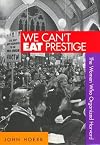
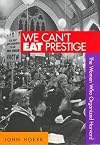
This story explodes the popular belief that women white-collar workers tend to reject unionization and accept a passive role in the workplace. On the contrary, the women workers of Harvard University created a powerful and unique union--one that emphasizes their own values and priorities as working women and rejects unwanted aspects of traditional unionism.The workers involved comprise Harvard's 3,600-member "support staff," which includes secretaries, library and laboratory assistants, show more dental hygienists, accounting clerks, and a myriad of other office workers who keep a great university functioning. Even at prestigious private universities like Harvard and Yale, these workers--mostly women--have had to put up with exploitive management policies that denied them respect and decent wages because they were women. But the women eventually rebelled, declaring that they could not live on "prestige" alone.Encouraged by the women's movement of the early 1970's, a group of women workers (and a few men) began what would become a 15-year struggle to organize staff employees at Harvard. The women persisted in the face of patronizing and sexist attitudes of university administrators and leaders of their own national unions. Unconscionably long legal delays foiled their efforts. But they developed innovative organizing methods, which merged feminist values with demands for union representation and a means of influencing workplace decisions.Out of adversity came an unorthodox form of unionism embodied in the Harvard Union of Clerical and Technical Workers (HUCTW). Its founding was marked by an absorbing human drama that pitted unknown workers, such as Kris Rondeau, a lab assistant who came to head the union, against famous educators such as Harvard President Derek Bok and a panoply of prestigious deans. Other characters caught up in the drama included Harvard's John T. Dunlop, the nation's foremost industrial relations scholar and former U.S. Secretary of Labor. The drama was played out in innumerable hearings before the National Labor Relations Board, in the streets of Cambridge, and on the walks of historic Harvard Yard, where union members marched and sang and employed new tactics like "ballooning," designed to communicate a message of joy and liberation rather than the traditional "hate-the-boss" hostility.John Hoerr tells this story from the perspective of both Harvard administrators and union organizers. With unusual access to its meetings, leaders, and files, he examines the unique culture of a female-led union from the inside. Photographs add to the impact of this dramatic narrative. postamble(); show lessTags
Recommendations



















Member Recommendations

Member Reviews
The history of the Harvard Union of Clerical and Technical Workers, founded in the 1970's and built on feminist principles. This books follows the epic quest of the organizers to gain acceptance and help the workers have a voice at the university. Finally, after 17 years the union is approved in a dramatic vote. 4800 members strong, the HUCTW is a model for the 21st-century union, one that works for problem solving and the respect and dignity of everyone in the workplace. Harvard works because we do!
Ratings
Members
- Recently Added By
Lists

The 99% -- Most Readable Non-Fiction
37 works; 8 members
Author Information

4 Works 123 Members
Series

Common Knowledge
- Canonical title
- We Can't Eat Prestige: The Women Who Organized Harvard
- Important places
- Harvard University, Cambridge, Massachusetts, USA
Classifications
- Genres
- Nonfiction, Economics, History, Sexuality and Gender Studies, Business
- DDC/MDS
- 331.88 — Society, government, & culture Economics Labor economics Labor unions, labor-management bargaining and disputes Labor unions (Trade unions)
- LCC
- LD2120 .H64 — Education Individual institutions – United States United States Universities. Colleges
- BISAC
Statistics
- Members
- 27
- Popularity
- 1,009,787
- Reviews
- 1
- Rating
- (4.67)
- Languages
- English
- Media
- Paper
- ISBNs
- 2