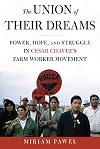
The Union of Their Dreams: Power, Hope, and Struggle in Cesar Chavez's Farm Worker Movement
by Miriam Pawel
On This Page
Description
Documents the rise, fall, and legacy of the United Farm Workers movement as reflected by the story of the iconic community organizer, drawing on extensive original sources to describe the UFW's early activist days and Chavez's ultimate inability to transition to the role of a union leader.Tags
Recommendations



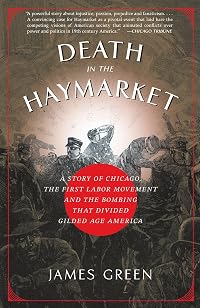
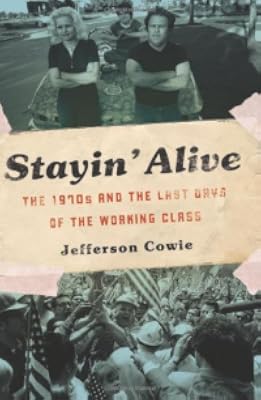
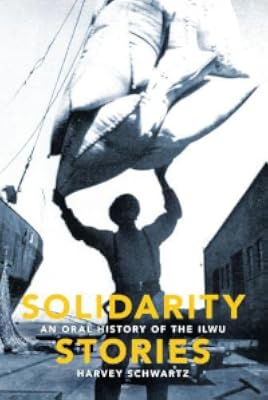





Member Recommendations
Member Reviews
I've never known much about Cesar Chávez and the United Farm Worker's union so I was pleased to receive a free copy of this book from the Library Thing Early Reviewers program. The book is not about Chávez directly although his presence hovers over the events covered in this book for both good and ill. Instead Pawel focuses on the stories of nine individuals who dedicated their lives to the farm worker movement - field hands, organizers, lawyers and a ministers. Their overlapping stories offer a glimpse into the movement's rise and fall from the 1960s to the 1980s.
At first it's an inspiring story of boycotts, strikes and union elections where the union prevails against the growers (and their Teamster thugs) as well as scoring show more legislative victories. Chávez becomes a national hero for his inspiration, non-violent leadership. Unfortunately like many organizations the UFW is torn apart by internal conflicts and Chávez only exacerbates the problems. Pawel details how these close friend and colleagues of Chávez see him becoming increasingly paranoid, micromanaging and megalomaniac, purging the union of people on specious grounds and making life miserable for those who remain.
This book is ultimately heartbreaking but there are glimpses of hope nevertheless. It's inspiring that despite all the difficulties these nine people dedicated themselves to an ideal and a cause. While shattering the myth of Chávez the hero, this book still illustrates the good that can be done by ordinary people working for social justice. show less
At first it's an inspiring story of boycotts, strikes and union elections where the union prevails against the growers (and their Teamster thugs) as well as scoring show more legislative victories. Chávez becomes a national hero for his inspiration, non-violent leadership. Unfortunately like many organizations the UFW is torn apart by internal conflicts and Chávez only exacerbates the problems. Pawel details how these close friend and colleagues of Chávez see him becoming increasingly paranoid, micromanaging and megalomaniac, purging the union of people on specious grounds and making life miserable for those who remain.
This book is ultimately heartbreaking but there are glimpses of hope nevertheless. It's inspiring that despite all the difficulties these nine people dedicated themselves to an ideal and a cause. While shattering the myth of Chávez the hero, this book still illustrates the good that can be done by ordinary people working for social justice. show less
 This review was written for LibraryThing Early Reviewers.
This book reads like a case-study in leadership gone wrong. It was really fascinating to read about the union/movement as it started from a very small organization, to a large union that just imploded on itself. A lot of the themes in this book are classic - a micro-managing leader who increasingly becomes paranoid as his hold over the union wanes, an organization that becomes big at a pace faster than their leadership can keep with, purges of once-loyal members, etc. At times the book got a bit mired in minutiae, but overall it was interesting, and I found myself rooting for certain people as the drama unfolded.
Unfortunately, this book isn't fiction, and the reality is that a union, which could have done so much good for so many show more farmworkers, wound up as a shell of itself, and ultimately didn't help the farmworkers of California, much less of the entire US. show less
Unfortunately, this book isn't fiction, and the reality is that a union, which could have done so much good for so many show more farmworkers, wound up as a shell of itself, and ultimately didn't help the farmworkers of California, much less of the entire US. show less
Miriam Pawel presents an incomplete but illuminating history of the United Farm Workers (UFW) from 1965 through 1989. The book focuses tightly on the experiences of eight people in the movement, including boycott organizers, attorneys, a minister, and farmworkers who became team leaders and union organizers. Although Cesar Chavez is a dominant figure in the story, he is presented at a distance, always through others' eyes, and Pawel spends virtually no time explaining his background. For the reader, as for the focal characters, Chavez' leadership and legendary status is a given from the outset. This stylistic choice makes it easier to grasp how, for so long, movement and union members could defer to Chavez and overlook his flaws, while show more giving greatly of themselves to realize his dreams.
For students of advocacy movements, the central lesson of the story is that Chavez was a charismatic and idealistic movement leader, and a terrible administrator. Once the movement won -- institutionalizing, through state legislation in 1975, the right of workers to form a union -- Chavez should have stepped away from the fledgling UFW, turning it over to the gifted organizers and managers he had recruited. That would have freed him to build new movements -- a broad campaign for poor people, a utopian spiritual community, a community services organization. Instead, Chavez tried to have it all, refusing to hand over control of the union, but neglecting union business to pursue a series of experimental initiatives. The story Pawel tells is a tragedy -- for Chavez, who destroyed much of what he had built and turned on staff who loved him; for the farmworkers, many of whom lost contracts they had fought hard to win; and especially for committed union staffers forced out in a series of emotionally brutal purges.
While this book will benefit anyone interested in labor or advocacy movements, it has too narrow a focus to serve as the definitive account of the entire UFW. For example, Dolores Huerta comes across in this book as Cesar Chavez' hatchet woman, though she has had a distinguished career in Sacramento as a lobbyist for workers. Richard Chavez, Cesar's brother, comes across as a Cassandra who repeatedly warns Cesar against his mistakes but is ignored. The book is simply silent on Richard and Dolores' long-running relationship, which could hardly be overlooked in a book that wanted to address all facets of the UFW's history. In later chapters, Chavez' son Paul and son-in-law Arturo Rodriguez climb to leadership positions in the union, but are never sketched with any depth. The book also gives little sense of how the union has evolved since Cesar Chavez' unexpected death in 1993 (although Pawel published a long and highly critical article on that in the Los Angeles Times in 2006). Pawel has little to say about the theory of organizing, another dimension of the story that would have been interesting to understand better. But, with respect to its purpose -- capturing the experience of working for Cesar Chavez during the UFW's initial rise and fall -- the Union of Their Dreams does an excellent job. show less
For students of advocacy movements, the central lesson of the story is that Chavez was a charismatic and idealistic movement leader, and a terrible administrator. Once the movement won -- institutionalizing, through state legislation in 1975, the right of workers to form a union -- Chavez should have stepped away from the fledgling UFW, turning it over to the gifted organizers and managers he had recruited. That would have freed him to build new movements -- a broad campaign for poor people, a utopian spiritual community, a community services organization. Instead, Chavez tried to have it all, refusing to hand over control of the union, but neglecting union business to pursue a series of experimental initiatives. The story Pawel tells is a tragedy -- for Chavez, who destroyed much of what he had built and turned on staff who loved him; for the farmworkers, many of whom lost contracts they had fought hard to win; and especially for committed union staffers forced out in a series of emotionally brutal purges.
While this book will benefit anyone interested in labor or advocacy movements, it has too narrow a focus to serve as the definitive account of the entire UFW. For example, Dolores Huerta comes across in this book as Cesar Chavez' hatchet woman, though she has had a distinguished career in Sacramento as a lobbyist for workers. Richard Chavez, Cesar's brother, comes across as a Cassandra who repeatedly warns Cesar against his mistakes but is ignored. The book is simply silent on Richard and Dolores' long-running relationship, which could hardly be overlooked in a book that wanted to address all facets of the UFW's history. In later chapters, Chavez' son Paul and son-in-law Arturo Rodriguez climb to leadership positions in the union, but are never sketched with any depth. The book also gives little sense of how the union has evolved since Cesar Chavez' unexpected death in 1993 (although Pawel published a long and highly critical article on that in the Los Angeles Times in 2006). Pawel has little to say about the theory of organizing, another dimension of the story that would have been interesting to understand better. But, with respect to its purpose -- capturing the experience of working for Cesar Chavez during the UFW's initial rise and fall -- the Union of Their Dreams does an excellent job. show less
This review was written for LibraryThing Early Reviewers.Heroes are funny things. We choose to put someone on a pedestal for any number of reasons, from the way they look to the way they sing to the causes they champion. But beneath the façade of every hero beats the heart of a human being, with all the quirks and foibles that make up all of our complex personalities.
César Chávez was a hero to many people in the 1960s and 1970s. He was the driving force behind making the plight of migrant farmworkers visible to the rest of America through boycotts of grapes and lettuce. With the founding of the United Farm Workers union, he and his dedicated staff fought for what most of us recognize as basic human rights: a safe workplace, a fair wage, decent housing, education for our children. Under his show more leadership, the UFW boycotts captured the attention of the nation and won major concessions from field owners to improve the lives of the workers. His accomplishments have been enshrined in American life: schools, parks, libraries and streets have been named after him, and the state of California officially celebrates his birthday as César Chávez Day.
As Miriam Pawel illuminates in The Union of Their Dreams: Power, hope, and struggle in Cesar Chavez's farm worker movement, Chávez's considerable accomplishments were not without setbacks. Over the years, his initial dedication to the cause of farm workers shifted to a determination to preserve his control over the organization he created. After farm workers at many farms and ranches in California won the right to hold union elections and chose the UFW to represent them, the union found it difficult to actually deliver on the promises it had made. Chávez could be capricious, transferring staff members out of communities in which they were working hard to win the trust of and organize workers. As the union grew, Chávez became preoccupied with fighting off what he perceived to be challenges to his authority from board members, resulting in midnight purges of staffers who had lived in poverty and dedicated their lives for years to the farm workers' cause.
Pawel creates her complicated portrait of Chávez indirectly, by telling the stories of nine of the UFW's most dedicated workers in alternating vignettes. The style allows us to get to know each of the workers well, but muddies the reader's sense of a coherent timeline of events, and sometimes leads to incidents being told twice and out of order. The Union of Their Dreams is not a hatchet job in any sense; Pawel does not try to demonize Chávez nor lay the UFW's failures solely at his feet. The most grievous flaw of the book, however, is the lack of representation from UFW officials who remained loyal to Chávez throughout the 1970s turmoil. But Pawel, a journalist by trade, has a very accessible writing style, and her informality creates an intimacy that makes the reader feel part of the story.
This book is a worthy read not only for for those interested in progressive politics, but also readers looking for insight into how organization are formed, grow, and are stifled by their success. It's a familiar story for anyone who has volunteered or worked for a nonprofit organization, but it seems especially poignant in this case, because the stakes were so high for so many people, and even more significant victories were so close. I came away from this book deeply impressed by the incredible accomplishments of a group of idealistic, committed men and women, and saddened by thoughts of the opportunities lost to power struggles, disorganization and petty quarrels. show less
César Chávez was a hero to many people in the 1960s and 1970s. He was the driving force behind making the plight of migrant farmworkers visible to the rest of America through boycotts of grapes and lettuce. With the founding of the United Farm Workers union, he and his dedicated staff fought for what most of us recognize as basic human rights: a safe workplace, a fair wage, decent housing, education for our children. Under his show more leadership, the UFW boycotts captured the attention of the nation and won major concessions from field owners to improve the lives of the workers. His accomplishments have been enshrined in American life: schools, parks, libraries and streets have been named after him, and the state of California officially celebrates his birthday as César Chávez Day.
As Miriam Pawel illuminates in The Union of Their Dreams: Power, hope, and struggle in Cesar Chavez's farm worker movement, Chávez's considerable accomplishments were not without setbacks. Over the years, his initial dedication to the cause of farm workers shifted to a determination to preserve his control over the organization he created. After farm workers at many farms and ranches in California won the right to hold union elections and chose the UFW to represent them, the union found it difficult to actually deliver on the promises it had made. Chávez could be capricious, transferring staff members out of communities in which they were working hard to win the trust of and organize workers. As the union grew, Chávez became preoccupied with fighting off what he perceived to be challenges to his authority from board members, resulting in midnight purges of staffers who had lived in poverty and dedicated their lives for years to the farm workers' cause.
Pawel creates her complicated portrait of Chávez indirectly, by telling the stories of nine of the UFW's most dedicated workers in alternating vignettes. The style allows us to get to know each of the workers well, but muddies the reader's sense of a coherent timeline of events, and sometimes leads to incidents being told twice and out of order. The Union of Their Dreams is not a hatchet job in any sense; Pawel does not try to demonize Chávez nor lay the UFW's failures solely at his feet. The most grievous flaw of the book, however, is the lack of representation from UFW officials who remained loyal to Chávez throughout the 1970s turmoil. But Pawel, a journalist by trade, has a very accessible writing style, and her informality creates an intimacy that makes the reader feel part of the story.
This book is a worthy read not only for for those interested in progressive politics, but also readers looking for insight into how organization are formed, grow, and are stifled by their success. It's a familiar story for anyone who has volunteered or worked for a nonprofit organization, but it seems especially poignant in this case, because the stakes were so high for so many people, and even more significant victories were so close. I came away from this book deeply impressed by the incredible accomplishments of a group of idealistic, committed men and women, and saddened by thoughts of the opportunities lost to power struggles, disorganization and petty quarrels. show less
This review was written for LibraryThing Early Reviewers.Miriam Pawel, in her book The Union of Their Dreams, chronicles the rise and fall of the United Farm Workers movement through the eyes of a handful of central participants. Pawal's approach is particularly valuable because it allows her to evade the hero worship and iconography that surrounds Cesar Chavez and his legacy. Instead, Chavez is sketched by others' relationships with him and the reader gets a much fuller picture of the UFW as an organization.
Earlier, I reviewed John Dittmer's The Good Doctors which explored a civil rights organization from its birth in the segregation-era South to its eventual dissentigration. Whereas the Medical Committee for Human Rights eventually fell prey to its diversified interestsand lack of strong show more leaders that diluted its clout, the UFW profiled by Pawal was an organization bound too tightly to a single charismatic leader. It reminds the reader that institutions have many ways to fail, no matter how much good they've effected.
Pawal's book is an important addition to the history of American labor, and is unique in its attention to the relatively anonymous participants. It was heartbreaking to read the stories of people who had poured their lives into the movement and been discarded and forgotten. Chavez played a major role in the UFW, but he was never alone. show less
Earlier, I reviewed John Dittmer's The Good Doctors which explored a civil rights organization from its birth in the segregation-era South to its eventual dissentigration. Whereas the Medical Committee for Human Rights eventually fell prey to its diversified interestsand lack of strong show more leaders that diluted its clout, the UFW profiled by Pawal was an organization bound too tightly to a single charismatic leader. It reminds the reader that institutions have many ways to fail, no matter how much good they've effected.
Pawal's book is an important addition to the history of American labor, and is unique in its attention to the relatively anonymous participants. It was heartbreaking to read the stories of people who had poured their lives into the movement and been discarded and forgotten. Chavez played a major role in the UFW, but he was never alone. show less
This review was written for LibraryThing Early Reviewers.This is a wonderfully told story about Cesar Chavez and the United Farm Workers as seen through the experiences of eight people who were either with Chavez from the birth of the union or who held key positions at critical junctures in the union's history. Idealists first and foremost, organizers, teachers, farmworkers and ministers second, they devoted a significant portion of their adult lives working for little or no pay simply to be part of that cause.
However, as so often happens with idealistic visions, reality inevitably sets in and the result to the psyche is seldom pretty. Unfortunately in this case, the weaknesses and mistakes of Chavez (who is not portrayed sympathetically by the author) are exposed and offered as the main show more reason the union ultimately failed, and why all eight eventually parted ways with Chavez, some on their own terms, some unwillingly, all unhappily.
Nonetheless, the book ends on a positive note. The final pages are devoted to a "Where are they now?" recap. There we find no regrets over the time each worked for the UFW, despite the pain and bitternes of their final days. All feel the time spent at the UFW influenced their lives in significant, permanent ways. Sandy Nathan, one of the eight, carried in his wallet a quote from Dostoyevsky's "The Brothers Karamazov" which sums up perfectly their attitude and the real message of this book: "...still let us remember how good it was once here, when we were all together, united by a good and kind feeling which made us...better perhaps than we are." show less
However, as so often happens with idealistic visions, reality inevitably sets in and the result to the psyche is seldom pretty. Unfortunately in this case, the weaknesses and mistakes of Chavez (who is not portrayed sympathetically by the author) are exposed and offered as the main show more reason the union ultimately failed, and why all eight eventually parted ways with Chavez, some on their own terms, some unwillingly, all unhappily.
Nonetheless, the book ends on a positive note. The final pages are devoted to a "Where are they now?" recap. There we find no regrets over the time each worked for the UFW, despite the pain and bitternes of their final days. All feel the time spent at the UFW influenced their lives in significant, permanent ways. Sandy Nathan, one of the eight, carried in his wallet a quote from Dostoyevsky's "The Brothers Karamazov" which sums up perfectly their attitude and the real message of this book: "...still let us remember how good it was once here, when we were all together, united by a good and kind feeling which made us...better perhaps than we are." show less
This review was written for LibraryThing Early Reviewers.This is a very readable history of the United Farm Workers union--a true organizational history and not a more general history of farmworkers or the labor movement. Through the perspectives of a handful of union workers, Pawel tells the story of the early, unexpected success of the movement, which was due in large part to Cesar Chavez's ability to inspire volunteers. Once the union got off the ground, though, Chavez was unable to consolidate that success. He lacked organizational skills and was unwilling to relinquish any power to those who could have done a better job, and the result was that the union fell apart.
I did not know much at all about this subject before reading this book, but I thought the story was very interesting both show more as an analysis of organizational failures in a political movement and as a history of one segment of the labor movement. Although the end of the story is depressing--the complete failure to protect the farmworkers after such a promising start--the stories of the individuals who worked with the movement are more uplifting. Some of them were farmworkers who learned how to organize and how to speak on behalf of the other workers. Others were college students, ministers, etc. who wanted an opportunity to make a difference. show less
I did not know much at all about this subject before reading this book, but I thought the story was very interesting both show more as an analysis of organizational failures in a political movement and as a history of one segment of the labor movement. Although the end of the story is depressing--the complete failure to protect the farmworkers after such a promising start--the stories of the individuals who worked with the movement are more uplifting. Some of them were farmworkers who learned how to organize and how to speak on behalf of the other workers. Others were college students, ministers, etc. who wanted an opportunity to make a difference. show less
This review was written for LibraryThing Early Reviewers.Members
- Recently Added By
Published Reviews
ThingScore 100
The Union of Their Dreams paints a vivid portrait of the cost of leadership that stifles dissent and activists who accept being silenced for the sake of the struggle.
added by ToTheWest
Lists

Bloomsbury Publishing
37 works; 2 members
Author Information

4 Works 253 Members
Miriam Pawel is a writer, independent scholar, and the author of The Crusades of Cesar Chavez, a National Book Crities Circle Award finalist, and The Union of Their Dreams. She has received several fellowships, including from the National Endowment for the Humanities. She was a Pulitzer Prize-winning editor at Newsday and the Los Angeles Times and show more is a contributing opinion writer for the New York Times. She lives in Pasadena, California. show less
Awards and Honors
Common Knowledge
- Original publication date
- 2009
- People/Characters
- César Chávez; Jerry Cohen
- Important places
- California, USA; Keene, California, USA; Delano, California, USA
- Dedication
- For those who believe they can change the world.
¡Que vivan! - First words
- The history of the United Farm Workers union begins and ends with Cesar Chavez, who had the audacity to single-handedly challenge California's most powerful industry, and the will to keep fighting for three decades. By the ti... (show all)me he died in 1993, he stood alone again.
- Last words
- (Click to show. Warning: May contain spoilers.)Chris still believes he could not have played the same role in the farmworker struggle without turning his ministry into an arm of the union, though some days he wonders.
- Blurbers
- von Hoffman, Nicholas; Guitérrez, David G.; Davis, Mike; Camarillo, Albert M.; Deverell, William
- Original language
- English
Classifications
- Genres
- Nonfiction, History, General Nonfiction, Biography & Memoir
- DDC/MDS
- 331.88 — Society, government, & culture Economics Labor economics Labor unions, labor-management bargaining and disputes Labor unions (Trade unions)
- LCC
- HD6515 .A292 .U546 — Social sciences Industries. Land use. Labor Industries. Land use. Labor Labor. Work. Working class Trade unions. Labor unions. Workers'
- BISAC
Statistics
- Members
- 71
- Popularity
- 443,274
- Reviews
- 19
- Rating
- (3.85)
- Languages
- English
- Media
- Paper, Ebook
- ISBNs
- 3
- ASINs
- 3