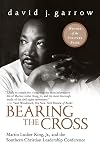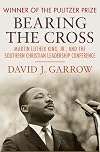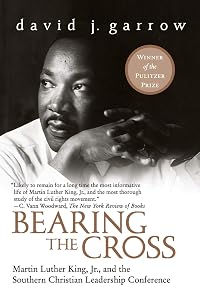
Bearing the Cross: Martin Luther King, Jr., and the Southern Christian Leadership Conference
by David J. Garrow
MLK: An American Legacy (3)
On This Page
Description
Winner of the Pulitzer Prize: The definitive biography of Martin Luther King Jr. In this monumental account of the life of Martin Luther King Jr., professor and historian David Garrow traces King's evolution from young pastor who spearheaded the 1955-56 bus boycott of Montgomery, Alabama, to inspirational leader of America's civil rights movement. Based on extensive research and more than seven hundred interviews, with subjects including Andrew Young, Jesse Jackson, and Coretta Scott King, show more Garrow paints a multidimensional portrait of a charismatic figure driven by his strong moral obligation to lead-and of the toll this calling took on his life. Bearing the Cross provides a penetrating account of King's spiritual development and his crucial role at the Southern Christian Leadership Conference, whose protest campaigns in Birmingham and Selma, Alabama, led to enactment of the landmark Civil Rights Act of 1964 and Voting Rights Act of 1965. This comprehensive yet intimate study reveals the deep sense of mission King felt to serve as an unrelenting crusader against prejudice, inequality, and violence, and his willingness to sacrifice his own life on behalf of his beliefs. Written more than twenty-five years ago, Bearing the Cross remains an unparalleled examination of the life of Martin Luther King Jr. and the legacy of the civil rights movement. show lessTags
Recommendations







Member Recommendations

Member Reviews
Quite often, I’ve reviewed books that I enjoyed and wanted to pass along, but before I was even finished with this one, I knew that I’d be compelled to write a lengthier review than usual. It’s personal, as I’ve come to realize that I am 39 years old, having grown and lived predominantly in a place that King once referred to as the most segregated city in America, and yet I have never before read the history of Bull Connor’s dogs and firehoses, Fred Shuttlesworth, lunch counter sit-ins, George Wallace and the University of Alabama, and so forth. My birthplace certainly must carry the scars of this war, yet this was my first time reading intently about how those scars got there. I have the feeling that I’m not alone in this, show more and I would highly encourage anyone in this same position to take the time and learn about where we’ve come from with regards to civil rights in our nation. Of course, one book will hardly bring us up to speed, but I can say this book has gone a long way in helping me to see some of my roots better.
The book is simply a detailed piece of journalism, following Dr. Martin Luther King, Jr. from the moment he was thrust into the civil rights battle in Montgomery in 1955 to his death in Memphis nearly 13 years later. Author David Garrow has obviously done his homework, backing up his 625 page story with another 90 pages of endnotes and 47 pages of bibliography. The New York Review of Books refers to it as “likely to remain for a long time the most informative life of Martin Luther King, Jr., and the most thorough study of the civil rights movement.” I don’t intend here to review the book in great detail, but I do want to share certain aspects of it that impacted me profoundly.
First of all, it is incredible to me to learn that King was only 26 years of age when he was elected president of the newly formed Montgomery Improvement Association (MIA), which was organized in response to the arrest of Rosa Parks. King had recently declined an invitation to be considered for president of the local NAACP chapter and reluctantly joined the bus boycott efforts, being a fairly new pastor in the city with his first newborn at home. He’d just received his Ph.D. a few months earlier from Boston University. And, so begins a theme that would run throughout King’s life story, as he often felt under qualified, undesiring of, or unprepared for the burdens that were laid upon him, but he knew that he could not refuse the calling of his God. He very much felt the call of Esther, “Who knows whether you have not come for such a time as this?” In actuality, King was quite introverted and uncomfortable with personal fame (though he was often accused of seeking his own glory), as he even refused to accept the Nobel Prize reward of $54,000 for himself (more than $500K in today’s market), insisting it belonged to the movement. He would have loved a much calmer life teaching theology in the classroom. But, he took each successive step in the fight for civil rights because he absolutely had to. He could not say no to God.
Of course, King was unprepared for much of the job he was called to do. As King’s scope extended beyond Montgomery into the entire Deep South, and eventually beyond, his MIA presidency gave way to presidency over the Southern Christian Leadership Conference (SCLC), which he headed until his death. But, King had no experience organizing large budgets and staffs, and the demands on his time and energy were enormous. The inner workings of the SCLC read like a constant mess, year after year, as offices are poorly managed, funds are mismanaged, and both staff and programs run crossways against one another. The organization would often run into situations with little or conflicted vision for how it planned to make a difference, and it would leave communities in a lurch when it moved on to the next locale. It’s abundantly clear that King and the SCLC championed a noble cause and were instrumental in achieving great successes, but it is also clear that such successes were no result of organizational genius. Certainly, they learned things about managing a movement along the way, and I in no way want to detract from what they were able to achieve. But, I believe they stand as a testament to the fact that God uses people to do great things who step into deep waters and get in way over their heads. To a large extent, the movement consisted of folks that didn’t exactly know what they were doing, but they knew what was right and they threw their lives into doing what they could. Sometimes it worked and sometimes it didn’t, but God used it in the end to accomplish great things.
On top of the challenges of simply managing the movement, there was another more fundamental and frustrating challenge that plagued King throughout the years – EGO. King himself was a very calming presence within the movement, but infighting abounded all around. There was infighting within the SCLC. There was infighting between the younger activists and the older generation. There was infighting between national organizations like SCLC and the local residents where they worked. And, there was infighting between organizations. In particular, the NAACP didn’t come out looking very good at all, as they constantly begrudged and butted heads with King and his SCLC. At the end of the day, they were all on the same team, but you have to wonder how much more they might have achieved had they avoided all the jealousy and ego-centric infighting.
On top of all these challenges, King carried daily the burden of his own mortality. He knew beyond a doubt that we would die. He watched with the entire nation as President Kennedy was assassinated. He heard the news when Malcolm X was cut down by gunfire. His home was bombed. He was stabbed. He knew – he absolutely knew – that he was going to die young. He talked about it often, even to the point of joking about it, though he certainly struggled with his “come to Jesus” moments as he worked to accept it. But, he did accept it, and it emboldened him to know that he was doing God’s work on God’s time.
Of course, King was just a man, and a man under extreme pressure. He often suffered bouts of depression and fell ill from the exhaustion of his hectic schedule. On top of his activity organizing communities, King’s speeches were also a vital source of fund-raising for the SCLC, and he traveled away from home upwards of 25 days out of each month. One of the ways King dealt with all the stress was with women. He knew it was wrong, as he would say in his own sermons, but it was a demon he never shook. From his early college days, King was something of a quiet Casanova, and he admitted to close friends that his womanizing was a form of anxiety reduction that he fell back on. Of course, the cognitive dissonance this caused for the Baptist pastor surely added to the anxiety he carried.
With regards to the Civil Rights Movement itself, its absolutely astounding to see the intense magnitude of the racism that has gripped our country, and the Deep South in particular. Thank God we’ve made great strides in the past 60 years, but it really is no wonder at all that our nation has still not recovered from the dehumanizing hatred that ran so rampant so recently. Of course, hatred is ultimately a great weakness, and I was fascinated with several particularly hateful characters that advanced civil rights far more than they ever meant to. For a contrasting context, I would first say that the movement largely failed in Albany, Georgia in the early 1960’s because of the savvy racism of chief Laurie Pritchett, who calmly arrested activists and played his politics well. Fast forward to Birmingham in 1963, however, and commissioner Eugene “Bull” Connor had far less control over his hatred. As he turned his dogs and firehoses on the protestors (including school age children), he turned the conscience of the nation in favor of the people he hated. So it was also at Selma in 1965, when sheriff Jim Clark led his men (which included members of the KKK) in a violent charge against a crowd of marchers, which has come to be known as Bloody Sunday. Unwittingly, hateful and violent men such as Connor and Clark demonstrated for the nation just how weak and despicable their racist worldview was, as their actions spurred the nation to denounce racism even faster. Men like Connor and Clark illustrate the truth so well that when you invite Satan to root in your heart, you just become a pawn and ultimately lose control.
Looking back, some have criticized King and his SCLC for provoking men like Connor and Clark. After all, the reason young students were treated so brutally in Birmingham was because civil rights activists kept organizing wave after wave of them and sending them up against Connor, knowing the violence he was capable of. In private conversation, organizers even admitted that they were hoping for the exact response that they got. So, is it not the activists’ fault for provoking violence? And, here we have to get real with nature of racism, because racism can thrive and plague a community for quite a long while when it’s allowed to lay low in the shadows. As long as nobody talks about it out loud and as long as it’s relegated to certain understandings concerning the unspoken boundary lines we keep in place, racism can go unchecked for year after year. Forget the notion that racism will eventually peter out of its own accord. It’s a dark ideology that will never give up without a fight. Yes, the movement provoked Connor in Birmingham, and they provoked him in order that they might bring a sickness into the light that Birmingham had been struggling with for quite some time. The racism was there. The hatred was there. The dehumanizing policies were there. The movement didn’t manufacture any of these things; it simply exposed them. Too often times, activists are cast as trouble makers and loud mouths (and sometimes they are) because they bring things to light that we’d be much more comfortable keeping in the shadows. But, if a thing can’t exist in the light, why should we be content living with darkness? As King so eloquently pointed out, peace is not measured negatively, as though it is simply the absence of demonstrations. Peace is the positive presence of justice.
One more thing that I have found particularly troubling – I often found my “side” in the Civil Rights story to be the wrong side. As a conservative Christian with conservative, capitalist political and economic values, I was amused almost to the point of frustration that King prescribed to a more liberal theology, found support from the more liberal politicians, and flirted with communism. He certainly believed in what he called “democratic socialism.” I came away from the book saying, “This should have been our movement!” And, it should have, if conservative Christians had actually lived up to the best of their values. I can understand why minorities and social activists lean towards liberal ideals to this day, and in part I don’t blame them. We conservatives failed them. We cared more about our power and our traditions and our comfortable way of life more than we cared about making the radical changes that needed to be made in order to do what was right. We undermined the case for our own values. Case in point: I absolutely believe in a government of the people – very limited federal power with robust states’ rights. At least, I believe this conceptually. But, if I were given the choice between a nation with small federal government and abundant racism, or a nation with overreaching federal government that was effective in curtailing racism, I would have to admit that states’ rights aren’t always worth it. I’ll continue to applaud decisions like Dobbs that shrink federal overreach and give power back to the people, but I also recognize the fact that we the people created the beast we have today. If we want a conservative way of life, let’s work for a conservative way of life that values everyone and refuses to trample on the weak in order to benefit the strong.
One last word on King – I think it’s important to honor those things which made King a truly great leader: principles and faithful self-sacrifice. King certainly made his fair share of mistakes, and I wouldn’t agree with everything he preached. But, it’s a lot easier to criticize the man than it is to be the man. King held onto his principles even when he knew they’d cost him funding, publicity, rest, votes, security, or anything else. He paid whatever cost necessary to keep a clean conscience. And, he volunteered his life for a role that few would want. He was criticized from all sides. He was certainly criticized by those who opposed civil rights. He was criticized by those who fought for civil rights and then were disappointed when King “couldn’t deliver” (as though it was up to him to deliver). He was accused of making agreements and settlements that “sold out” his constituency. Truth is, it’s a tough business leading change, and concessions must be made. And, when they are, the disappointed masses look for someone the vent their frustrations upon. King was vastly under-appreciated for his work during his lifetime, but he poured himself into it because of his principled commitment, not for the publicity. King today is a beloved and respected leader because he wasn’t driven by the love and respect of the masses. That was certainly a strength to him when he had it, and he battled harsh depression when it waned, but it didn’t drive him. He was driven by an unrelenting passion to do what he knew he’d been called to do, and he laid down his life for it.
As I read through the final chapter of this biography, detailing King’s last six months, the sheer weight of the hectic reality of King’s life came home. He was terribly depressed towards the end, hanging on by a thin thread. Still, he moved forward. I’ll conclude as Garrow concludes, with the words of Charles Willie, “By idolizing those whom we honor, we do a disservice both to them and to ourselves. By exalting the accomplishments of Martin Luther King, Jr., to a legendary tale that is annually told, we fail to recognize his humanity – his personal and public struggles – that are similar to yours and mine. By idolizing those whom we honor, we fail to realize that we could go and do likewise.” show less
The book is simply a detailed piece of journalism, following Dr. Martin Luther King, Jr. from the moment he was thrust into the civil rights battle in Montgomery in 1955 to his death in Memphis nearly 13 years later. Author David Garrow has obviously done his homework, backing up his 625 page story with another 90 pages of endnotes and 47 pages of bibliography. The New York Review of Books refers to it as “likely to remain for a long time the most informative life of Martin Luther King, Jr., and the most thorough study of the civil rights movement.” I don’t intend here to review the book in great detail, but I do want to share certain aspects of it that impacted me profoundly.
First of all, it is incredible to me to learn that King was only 26 years of age when he was elected president of the newly formed Montgomery Improvement Association (MIA), which was organized in response to the arrest of Rosa Parks. King had recently declined an invitation to be considered for president of the local NAACP chapter and reluctantly joined the bus boycott efforts, being a fairly new pastor in the city with his first newborn at home. He’d just received his Ph.D. a few months earlier from Boston University. And, so begins a theme that would run throughout King’s life story, as he often felt under qualified, undesiring of, or unprepared for the burdens that were laid upon him, but he knew that he could not refuse the calling of his God. He very much felt the call of Esther, “Who knows whether you have not come for such a time as this?” In actuality, King was quite introverted and uncomfortable with personal fame (though he was often accused of seeking his own glory), as he even refused to accept the Nobel Prize reward of $54,000 for himself (more than $500K in today’s market), insisting it belonged to the movement. He would have loved a much calmer life teaching theology in the classroom. But, he took each successive step in the fight for civil rights because he absolutely had to. He could not say no to God.
Of course, King was unprepared for much of the job he was called to do. As King’s scope extended beyond Montgomery into the entire Deep South, and eventually beyond, his MIA presidency gave way to presidency over the Southern Christian Leadership Conference (SCLC), which he headed until his death. But, King had no experience organizing large budgets and staffs, and the demands on his time and energy were enormous. The inner workings of the SCLC read like a constant mess, year after year, as offices are poorly managed, funds are mismanaged, and both staff and programs run crossways against one another. The organization would often run into situations with little or conflicted vision for how it planned to make a difference, and it would leave communities in a lurch when it moved on to the next locale. It’s abundantly clear that King and the SCLC championed a noble cause and were instrumental in achieving great successes, but it is also clear that such successes were no result of organizational genius. Certainly, they learned things about managing a movement along the way, and I in no way want to detract from what they were able to achieve. But, I believe they stand as a testament to the fact that God uses people to do great things who step into deep waters and get in way over their heads. To a large extent, the movement consisted of folks that didn’t exactly know what they were doing, but they knew what was right and they threw their lives into doing what they could. Sometimes it worked and sometimes it didn’t, but God used it in the end to accomplish great things.
On top of the challenges of simply managing the movement, there was another more fundamental and frustrating challenge that plagued King throughout the years – EGO. King himself was a very calming presence within the movement, but infighting abounded all around. There was infighting within the SCLC. There was infighting between the younger activists and the older generation. There was infighting between national organizations like SCLC and the local residents where they worked. And, there was infighting between organizations. In particular, the NAACP didn’t come out looking very good at all, as they constantly begrudged and butted heads with King and his SCLC. At the end of the day, they were all on the same team, but you have to wonder how much more they might have achieved had they avoided all the jealousy and ego-centric infighting.
On top of all these challenges, King carried daily the burden of his own mortality. He knew beyond a doubt that we would die. He watched with the entire nation as President Kennedy was assassinated. He heard the news when Malcolm X was cut down by gunfire. His home was bombed. He was stabbed. He knew – he absolutely knew – that he was going to die young. He talked about it often, even to the point of joking about it, though he certainly struggled with his “come to Jesus” moments as he worked to accept it. But, he did accept it, and it emboldened him to know that he was doing God’s work on God’s time.
Of course, King was just a man, and a man under extreme pressure. He often suffered bouts of depression and fell ill from the exhaustion of his hectic schedule. On top of his activity organizing communities, King’s speeches were also a vital source of fund-raising for the SCLC, and he traveled away from home upwards of 25 days out of each month. One of the ways King dealt with all the stress was with women. He knew it was wrong, as he would say in his own sermons, but it was a demon he never shook. From his early college days, King was something of a quiet Casanova, and he admitted to close friends that his womanizing was a form of anxiety reduction that he fell back on. Of course, the cognitive dissonance this caused for the Baptist pastor surely added to the anxiety he carried.
With regards to the Civil Rights Movement itself, its absolutely astounding to see the intense magnitude of the racism that has gripped our country, and the Deep South in particular. Thank God we’ve made great strides in the past 60 years, but it really is no wonder at all that our nation has still not recovered from the dehumanizing hatred that ran so rampant so recently. Of course, hatred is ultimately a great weakness, and I was fascinated with several particularly hateful characters that advanced civil rights far more than they ever meant to. For a contrasting context, I would first say that the movement largely failed in Albany, Georgia in the early 1960’s because of the savvy racism of chief Laurie Pritchett, who calmly arrested activists and played his politics well. Fast forward to Birmingham in 1963, however, and commissioner Eugene “Bull” Connor had far less control over his hatred. As he turned his dogs and firehoses on the protestors (including school age children), he turned the conscience of the nation in favor of the people he hated. So it was also at Selma in 1965, when sheriff Jim Clark led his men (which included members of the KKK) in a violent charge against a crowd of marchers, which has come to be known as Bloody Sunday. Unwittingly, hateful and violent men such as Connor and Clark demonstrated for the nation just how weak and despicable their racist worldview was, as their actions spurred the nation to denounce racism even faster. Men like Connor and Clark illustrate the truth so well that when you invite Satan to root in your heart, you just become a pawn and ultimately lose control.
Looking back, some have criticized King and his SCLC for provoking men like Connor and Clark. After all, the reason young students were treated so brutally in Birmingham was because civil rights activists kept organizing wave after wave of them and sending them up against Connor, knowing the violence he was capable of. In private conversation, organizers even admitted that they were hoping for the exact response that they got. So, is it not the activists’ fault for provoking violence? And, here we have to get real with nature of racism, because racism can thrive and plague a community for quite a long while when it’s allowed to lay low in the shadows. As long as nobody talks about it out loud and as long as it’s relegated to certain understandings concerning the unspoken boundary lines we keep in place, racism can go unchecked for year after year. Forget the notion that racism will eventually peter out of its own accord. It’s a dark ideology that will never give up without a fight. Yes, the movement provoked Connor in Birmingham, and they provoked him in order that they might bring a sickness into the light that Birmingham had been struggling with for quite some time. The racism was there. The hatred was there. The dehumanizing policies were there. The movement didn’t manufacture any of these things; it simply exposed them. Too often times, activists are cast as trouble makers and loud mouths (and sometimes they are) because they bring things to light that we’d be much more comfortable keeping in the shadows. But, if a thing can’t exist in the light, why should we be content living with darkness? As King so eloquently pointed out, peace is not measured negatively, as though it is simply the absence of demonstrations. Peace is the positive presence of justice.
One more thing that I have found particularly troubling – I often found my “side” in the Civil Rights story to be the wrong side. As a conservative Christian with conservative, capitalist political and economic values, I was amused almost to the point of frustration that King prescribed to a more liberal theology, found support from the more liberal politicians, and flirted with communism. He certainly believed in what he called “democratic socialism.” I came away from the book saying, “This should have been our movement!” And, it should have, if conservative Christians had actually lived up to the best of their values. I can understand why minorities and social activists lean towards liberal ideals to this day, and in part I don’t blame them. We conservatives failed them. We cared more about our power and our traditions and our comfortable way of life more than we cared about making the radical changes that needed to be made in order to do what was right. We undermined the case for our own values. Case in point: I absolutely believe in a government of the people – very limited federal power with robust states’ rights. At least, I believe this conceptually. But, if I were given the choice between a nation with small federal government and abundant racism, or a nation with overreaching federal government that was effective in curtailing racism, I would have to admit that states’ rights aren’t always worth it. I’ll continue to applaud decisions like Dobbs that shrink federal overreach and give power back to the people, but I also recognize the fact that we the people created the beast we have today. If we want a conservative way of life, let’s work for a conservative way of life that values everyone and refuses to trample on the weak in order to benefit the strong.
One last word on King – I think it’s important to honor those things which made King a truly great leader: principles and faithful self-sacrifice. King certainly made his fair share of mistakes, and I wouldn’t agree with everything he preached. But, it’s a lot easier to criticize the man than it is to be the man. King held onto his principles even when he knew they’d cost him funding, publicity, rest, votes, security, or anything else. He paid whatever cost necessary to keep a clean conscience. And, he volunteered his life for a role that few would want. He was criticized from all sides. He was certainly criticized by those who opposed civil rights. He was criticized by those who fought for civil rights and then were disappointed when King “couldn’t deliver” (as though it was up to him to deliver). He was accused of making agreements and settlements that “sold out” his constituency. Truth is, it’s a tough business leading change, and concessions must be made. And, when they are, the disappointed masses look for someone the vent their frustrations upon. King was vastly under-appreciated for his work during his lifetime, but he poured himself into it because of his principled commitment, not for the publicity. King today is a beloved and respected leader because he wasn’t driven by the love and respect of the masses. That was certainly a strength to him when he had it, and he battled harsh depression when it waned, but it didn’t drive him. He was driven by an unrelenting passion to do what he knew he’d been called to do, and he laid down his life for it.
As I read through the final chapter of this biography, detailing King’s last six months, the sheer weight of the hectic reality of King’s life came home. He was terribly depressed towards the end, hanging on by a thin thread. Still, he moved forward. I’ll conclude as Garrow concludes, with the words of Charles Willie, “By idolizing those whom we honor, we do a disservice both to them and to ourselves. By exalting the accomplishments of Martin Luther King, Jr., to a legendary tale that is annually told, we fail to recognize his humanity – his personal and public struggles – that are similar to yours and mine. By idolizing those whom we honor, we fail to realize that we could go and do likewise.” show less
Martin Luther King Jr. is as close to a secular saint as America has. Every child learns the outlines of the story, the non-violent activist with a dream who was martyred for the sins of a racist nation. Garrow has written a deeply researched account of King's career with the SCLC, but in an effort to avoid drama or grandiosity, I think this book misses the forest for the trees.
King was thrust into leadership when he just 25, with the Montgomery bus boycott prompted by Rosa Park's refusal to give up her seat to a white person. Parks was selected as a test case for Brown v Board of education by the local NAACP, and King as a newcomer to the city was thought to be less influenced by city fathers. The boycott, a combination of non-violent show more activism and organizing, proved effective over more than a year of effort, bringing King to national attention, and leading to his calling as a civil rights leader.
King and the SCLC was at the center of the civil rights movement, a central front between the more conservative NAACP and firebrands of the SNCC. And King showed energy, fortitude, and moral courage. Yet its interesting that the account of the book reveals a much more desperate and hardscrabble movement popular history. Civil rights was always unpopular, always fighting uphill. King's moral center worked best against overt brutal segregationists like Birmingham Police Chief 'Bull' Connor, who could be counted on to do something stupid in front of the cameras. Yet the SCLC had perennial organizational problems and conflicts with local activists, rarely building something new. Garrow skims lightly over King's personal problems, his serial infidelity, exhaustion, and likely abuse of prescription stimulants, the last being common in the 1960s. The man was a man, not an angel, and had human appetites, though Garrow does not dive into salacious detail.
King had a reputation as moderate, and compared to the rising Black Power activists he was, but he also had a keen sense of universal justice that drew him to take unpopular stances against the Vietnam War in 1967, at immense cost to political alliances with President Johnson and much of the Democratic establishment. His last effort was a multiracial Poor Person's March, to demand a much more robust social safety net, including what in 2020 would be called universal basic income, before he was assassinated.
So about that forest, it's a counter-intuitive judgement, but King wasn't actually much of an organizer or politician. What he had was an absolute moral clarity about the fundamental injustice of America, and about the possibility for national redemption. I think that's the real story of King, not where he traveled and when he gave a speech. The book is at it's best when Garrow quotes King at length, or reveals a personal anecdote; King was a talented mimic and enjoyed teasing impressions of close friends, contentious late night meetings devolving into pillow fights, the perennially late King pausing on his way to a board meeting to ask a church janitor about his wife's back.
This is a key reference for the facts, or at least one interpretation of the facts, given the fallibility of human memory, but Bearing the Cross is a door stopper of a book, and I'm still looking for a volume on King I love. show less
King was thrust into leadership when he just 25, with the Montgomery bus boycott prompted by Rosa Park's refusal to give up her seat to a white person. Parks was selected as a test case for Brown v Board of education by the local NAACP, and King as a newcomer to the city was thought to be less influenced by city fathers. The boycott, a combination of non-violent show more activism and organizing, proved effective over more than a year of effort, bringing King to national attention, and leading to his calling as a civil rights leader.
King and the SCLC was at the center of the civil rights movement, a central front between the more conservative NAACP and firebrands of the SNCC. And King showed energy, fortitude, and moral courage. Yet its interesting that the account of the book reveals a much more desperate and hardscrabble movement popular history. Civil rights was always unpopular, always fighting uphill. King's moral center worked best against overt brutal segregationists like Birmingham Police Chief 'Bull' Connor, who could be counted on to do something stupid in front of the cameras. Yet the SCLC had perennial organizational problems and conflicts with local activists, rarely building something new. Garrow skims lightly over King's personal problems, his serial infidelity, exhaustion, and likely abuse of prescription stimulants, the last being common in the 1960s. The man was a man, not an angel, and had human appetites, though Garrow does not dive into salacious detail.
King had a reputation as moderate, and compared to the rising Black Power activists he was, but he also had a keen sense of universal justice that drew him to take unpopular stances against the Vietnam War in 1967, at immense cost to political alliances with President Johnson and much of the Democratic establishment. His last effort was a multiracial Poor Person's March, to demand a much more robust social safety net, including what in 2020 would be called universal basic income, before he was assassinated.
So about that forest, it's a counter-intuitive judgement, but King wasn't actually much of an organizer or politician. What he had was an absolute moral clarity about the fundamental injustice of America, and about the possibility for national redemption. I think that's the real story of King, not where he traveled and when he gave a speech. The book is at it's best when Garrow quotes King at length, or reveals a personal anecdote; King was a talented mimic and enjoyed teasing impressions of close friends, contentious late night meetings devolving into pillow fights, the perennially late King pausing on his way to a board meeting to ask a church janitor about his wife's back.
This is a key reference for the facts, or at least one interpretation of the facts, given the fallibility of human memory, but Bearing the Cross is a door stopper of a book, and I'm still looking for a volume on King I love. show less
"Early morning, April 4th,
Shot rings out in the Memphis sky,
Free at last! They took your life,
They could not take your pride".
I learned many things from this book. For example, that MLK was assassinated at 6 pm, so i have to say that the Irish guy with the funny latin name got that wrong in his lyrics. Then of course "pride" rhymes a bit with "life", so it worked in the song, but other than that, i believe it would be a poor choice to summarize the spirit of Martin Luther King with the word "pride".
"Bearing the cross" is a long book. 800 pages with 170 pages of footnotes. It is, as the cover says, "the most informative life of Martin Luther King, Jr., and the most thorough study of the civil rights movement" (from the New York Review show more of Books). Note that this comment does not express any literary quality, or, for that matter, any reason at all why you should read this book unless you need to do a research on MLK and you don't have access to Google.
The writing is - and I'll be soaring to the majestic heights of elegance here - as dry as a popcorn fart. Most of the book can be described as a collection of data and facts, organized in chronological order, from Rosa Parks to MLK's death. Many paragraphs begin with "The following day", or "Later that afternoon" or even "Twenty minutes later". That's the level of detail!! Garrow took many years to put this book together, and he had access to an immense amount of hard-copy information, from interviews to newspapers to copies of FBI wiretaps.
Now, this is not necessarily a bad thing. In fact, the subject matter is so important and fascinating per se, that it still resounds and shines despite the flat, dry writing. To be fair to the author, at some points he will concede a little dramatization, in the choice of a particular verb or in the semi-emotional conclusion of a chapter. Mind you, we are talking about 1% emotion and 99% cold delivery of facts.
But emotion and drama is precisely what Garrow wanted to avoid. As he says at the end, "by idolizing those whom we honor, we do a disservice both to them and to ourselves". His goal seems to be the 360 degrees representation of MLK as a man, almost as a reaction to all the hype and drama that seems to engulf and cloud MLK's history.
I can tell you that after reading this book I feel like I know MLK thoughts, feelings and motivations much, much better than what I did before. And that is a good thing.
I can tell you that this man's life should celebrated even more than what it is today, for what it represents. His weaknesses, his womanizing, his over-eating and his vanity, are dwarfed by his achievements and by the historical weight of the civil rights movement. MLK was not the only black movement's leader, he was not the smartest, he was not the first or most original. But he became a symbol. That he accepted to live as such an important symbol for the last 10 years of his life, while thinking of quitting almost every other day, is a remarkable thing.
One thing above everything else differentiated him and elevated his message to real "majestic heights": his relentless commitment to non-violence.
Now, I felt the importance of MLK's religious faith was addressed but not properly highlighted by Garrow. It's understandble, for when you collect an endless series of facts, you won't find much that says "on that morning, he knelt down and prayed for 10 minutes", etc. Unfortunately, Garrow touches on MLK's spiritual side only at the beginning, ignoring it almost completely for the rest of the book. This is in line with the fact-shoveling style of the book, but it pays little respect to MLK's most important relationship, the one he had with God.
Despite the author's lack of interest for the importance that King's spiritual life had for himself and the people around him, the author never forgets to mention that King, whatever he was doing, was always "extremely tired", "exhausted", almost every two pages. It gets ridiculous after a while. Oh, I certainly believe it to be true. Not hard at all to believe. To keep up with his schedule, he was taking some non specified "pills". Again, not surprising at all. Every big political figure, today like in the past, is constantly using medicines and drugs to be able to keep going at that super-human pace.
But if you find the time to write that Dr King was exhausted all the time, had a slight bronchitis on that day, and a cough the other day, why don't you find any time to mention his constant, daily praying, or at least some comments on some religious sermons he held, that was far more important stuff? One time MLK goes on holiday and then he's back on the road for a series of speeches, and again every single thing Garrow describes must be preceded by "despite his exhaustion, King did this and that...". Please give me a break. MLK was a big boy, a 30-something man with the constitution of a bull who, just like thousands of businessmen, yesterday and today, had to fly around and work long hours. Is that so out of the ordinary? I was really baffled by this aspect of the book. Perhaps writing the book became such an exhausting task for Garrow that he found the need to express his own feelings of exhaustion through MLK's life? But i'm overthinking here.
At any rate, I really enjoyed reading this book. This is history at its most detailed, which means you are free to judge and jump to conclusions, but not to invent something that is not true, or to exaggerate things. I found particularly grippong the part about the relationship with the FBI, and the conflict with J E Hoover, the Darth Vader of those years.
MLK was a pastor. He came from a priviledged background. He was a very gifted and spiritual man, who was chosen by history to play a special, unique part. Watching his speeches and interviews (on youtube) after having read this book is a particularly moving experience. Despite being aware of his shortfalls and weaknesses, you are even more inspired and filled with admiration.
And what an orator. In the words murmured by JFK immediately after the "I have a dream" speech in Washington: "He is damn good". show less
Shot rings out in the Memphis sky,
Free at last! They took your life,
They could not take your pride".
I learned many things from this book. For example, that MLK was assassinated at 6 pm, so i have to say that the Irish guy with the funny latin name got that wrong in his lyrics. Then of course "pride" rhymes a bit with "life", so it worked in the song, but other than that, i believe it would be a poor choice to summarize the spirit of Martin Luther King with the word "pride".
"Bearing the cross" is a long book. 800 pages with 170 pages of footnotes. It is, as the cover says, "the most informative life of Martin Luther King, Jr., and the most thorough study of the civil rights movement" (from the New York Review show more of Books). Note that this comment does not express any literary quality, or, for that matter, any reason at all why you should read this book unless you need to do a research on MLK and you don't have access to Google.
The writing is - and I'll be soaring to the majestic heights of elegance here - as dry as a popcorn fart. Most of the book can be described as a collection of data and facts, organized in chronological order, from Rosa Parks to MLK's death. Many paragraphs begin with "The following day", or "Later that afternoon" or even "Twenty minutes later". That's the level of detail!! Garrow took many years to put this book together, and he had access to an immense amount of hard-copy information, from interviews to newspapers to copies of FBI wiretaps.
Now, this is not necessarily a bad thing. In fact, the subject matter is so important and fascinating per se, that it still resounds and shines despite the flat, dry writing. To be fair to the author, at some points he will concede a little dramatization, in the choice of a particular verb or in the semi-emotional conclusion of a chapter. Mind you, we are talking about 1% emotion and 99% cold delivery of facts.
But emotion and drama is precisely what Garrow wanted to avoid. As he says at the end, "by idolizing those whom we honor, we do a disservice both to them and to ourselves". His goal seems to be the 360 degrees representation of MLK as a man, almost as a reaction to all the hype and drama that seems to engulf and cloud MLK's history.
I can tell you that after reading this book I feel like I know MLK thoughts, feelings and motivations much, much better than what I did before. And that is a good thing.
I can tell you that this man's life should celebrated even more than what it is today, for what it represents. His weaknesses, his womanizing, his over-eating and his vanity, are dwarfed by his achievements and by the historical weight of the civil rights movement. MLK was not the only black movement's leader, he was not the smartest, he was not the first or most original. But he became a symbol. That he accepted to live as such an important symbol for the last 10 years of his life, while thinking of quitting almost every other day, is a remarkable thing.
One thing above everything else differentiated him and elevated his message to real "majestic heights": his relentless commitment to non-violence.
Now, I felt the importance of MLK's religious faith was addressed but not properly highlighted by Garrow. It's understandble, for when you collect an endless series of facts, you won't find much that says "on that morning, he knelt down and prayed for 10 minutes", etc. Unfortunately, Garrow touches on MLK's spiritual side only at the beginning, ignoring it almost completely for the rest of the book. This is in line with the fact-shoveling style of the book, but it pays little respect to MLK's most important relationship, the one he had with God.
Despite the author's lack of interest for the importance that King's spiritual life had for himself and the people around him, the author never forgets to mention that King, whatever he was doing, was always "extremely tired", "exhausted", almost every two pages. It gets ridiculous after a while. Oh, I certainly believe it to be true. Not hard at all to believe. To keep up with his schedule, he was taking some non specified "pills". Again, not surprising at all. Every big political figure, today like in the past, is constantly using medicines and drugs to be able to keep going at that super-human pace.
But if you find the time to write that Dr King was exhausted all the time, had a slight bronchitis on that day, and a cough the other day, why don't you find any time to mention his constant, daily praying, or at least some comments on some religious sermons he held, that was far more important stuff? One time MLK goes on holiday and then he's back on the road for a series of speeches, and again every single thing Garrow describes must be preceded by "despite his exhaustion, King did this and that...". Please give me a break. MLK was a big boy, a 30-something man with the constitution of a bull who, just like thousands of businessmen, yesterday and today, had to fly around and work long hours. Is that so out of the ordinary? I was really baffled by this aspect of the book. Perhaps writing the book became such an exhausting task for Garrow that he found the need to express his own feelings of exhaustion through MLK's life? But i'm overthinking here.
At any rate, I really enjoyed reading this book. This is history at its most detailed, which means you are free to judge and jump to conclusions, but not to invent something that is not true, or to exaggerate things. I found particularly grippong the part about the relationship with the FBI, and the conflict with J E Hoover, the Darth Vader of those years.
MLK was a pastor. He came from a priviledged background. He was a very gifted and spiritual man, who was chosen by history to play a special, unique part. Watching his speeches and interviews (on youtube) after having read this book is a particularly moving experience. Despite being aware of his shortfalls and weaknesses, you are even more inspired and filled with admiration.
And what an orator. In the words murmured by JFK immediately after the "I have a dream" speech in Washington: "He is damn good". show less
Incredibly well-researched and moving, this book both humanizes King for his fans and shows his tremendous courage and dedication to the betterment of the lives of African Americans to his detractors. I found the documented details skillfully employed by the author, chosen wisely to paint the portrait of this man in multiple dimensions. A lot of information, complexities of the human person, and often depressing realities of our world - it's not for entertainment. But I've re-read this book multiple times for what it gives to us. Great biography. We're lucky to have it.
An exhaustive day-by-day biography of Martin Luther King's public life in the Civil Rights movement. Much of the source material for this biography comes from FBI files which include entire conversations reproduced verbatim. As a result the reader gets to see King's not always pure and honest in his personal life. On the other hand this book presents fascinating detail about how King and his colleagues planned the campaigns for Civil Rights. An excellent biography on every level.
2179 Bearing the Cross: Martin Luther King, Jr., and the Southern Christian Leadership Conference, by David J. Garrow (read 16 Jan 1989) (Pulitzer Biography prize for 1987) This is an account of King's life and work. It is a pedestrian account, plodding on strictly chronologically for the most part. King was really not a noble character, though he did some great things. The book is unsparing in depicting his immoral life, and it seems clear his marriage was mostly dead by the time he was shot in April of 1968. In fact, King's great work was clearly over, and his death had more to do with insuring his fame than anything.
A thorough biography of Rev. Dr. Martin Luther King, there is nothing really new here. Garrow begins with the Montgomery Bus Boycottw hich fist pushes MLK into the national spotlight and follows him until his death. It is almost too dense with facts and in need of more narrative. It chronicles every trip, speech and project Dr. King undertook which leaves very little room for anything else making it a rather dry read.
Members
- Recently Added By
Author Information
15+ Works 2,187 Members
David J. Garrow is an American historian, born in Massachusetts in 1953. He is a graduate of Wesleyan University, and earned his Ph.D. from Duke University. He has taught at Duke University, the University of North Carolina at Chapel Hill, the City University of New York, The Cooper Union, the College of William and Mary, American University, and show more Emory University. Currently, he is Professor of Law & History and Distinguished Faculty Scholar at the University of Pittsburgh School of Law. He is the author of numerous essays, articles, and academic writings. His books include Liberty and Sexuality: The Right to Privacy and the Making of Roe v. Wade; Bearing the Cross: Martin Luther King, Jr., and the Southern Christian Leadership Conference; The FBI and Martin Luther King, Jr.; and Protest at Selma. His book, Bearing the Cross: Martin Luther King, Jr., and the Southern Christian Leadership Conference, won the 1987 Pulitzer Prize in Biography, and the seventh annual Robert F. Kennedy Book Award. His latest book is Rising Star: The Making of Barack Obama. (Bowker Author Biography) show less
Awards and Honors
Awards
Notable Lists
Series

Work Relationships
Is contained in
Common Knowledge
- Canonical title
- Bearing the Cross: Martin Luther King, Jr., and the Southern Christian Leadership Conference
- People/Characters
- Martin Luther King, Jr.
- Epigraph
- This is the cross that we must bear for the freedom of our people. - Martin Luther King, Jr. October 26, 1960 Reidville State Prison, Rattnall Count, Geogia
The cross we bear precedes the crown we wear. To be a Christian one must take up his cross, with all of its difficulties and agonizing and tension-packed content and carry it until that very cross leaves its marks upon us and... (show all) redeems us to that more excellent way which comes only through suffering. - Martin Luther King, Jr. January 17, 1963 National Conference on Religion & Race, Chicago, Illinois
When I took up the cross, I recognized its meang.... The cross is something that you bear, and ultimately that you die on. - Martin Luther King, Jr. May 22, 1967 Penn Community Center, Frogmore, South Carolina - Blurbers
- Williams, Cecil; Lewis, Claude; McFeely, William S.; Raines, Howell; Jones, James H.; Lewis, Anthony
- Original language
- English
Classifications
- Genres
- Nonfiction, Politics and Government, History, Biography & Memoir, General Nonfiction, Religion & Spirituality
- DDC/MDS
- 323.092 — Society, government, & culture Political science Civil Rights & Liberties/ Human Rights Civil Rights Biography And History Biography
- LCC
- E185.97 .K5 .G36 — History of the United States United States Elements in the population Afro-Americans Biography. Genealogy
- BISAC
Statistics
- Members
- 711
- Popularity
- 39,996
- Reviews
- 8
- Rating
- (4.12)
- Languages
- English
- Media
- Paper, Audiobook, Ebook
- ISBNs
- 13
- UPCs
- 1
- ASINs
- 11