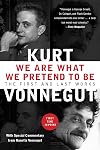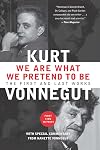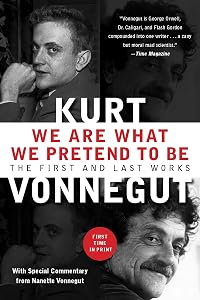
We Are What We Pretend To Be: The First and Last Works
by Kurt Vonnegut
On This Page
Description
A posthumous double volume of the influential author's first and last written works, published to coincide with the 90th anniversary of his birth, includes the bitter satire "Basic training" and the unfinished final novel "If God were alive today".Tags
Recommendations






Member Reviews
The first story, "Basic Training," was something of a gem, if only to witness a frayed and undeveloped Vonnegut still finding his voice. The story itself is fine, if lacking Vonnegut's usual wit, but it is a harmless pleasure and a formative step in his writing career. With that and daughter Nanette's introduction, all this collection had to do was provide a tragically short glimpse at the chapters of his unfinished last novel and I would surrender a 3 or 4 star rating. Instead, the few chapters I read of "If God Were Alive Today" are as much of a step backward for Vonnegut as "Basic Training" was a step forward. I mean, the glimpse into his creative process is still appreciated, but what a clunker. All of the protagonist-comedian's show more jokes fall flat. Why does the he keep quoting Vonnegut? Even if the recycled lines are meant to be self-aware, they just come off as lazy in this unfinished draft. I think that is the problem with the unpublished works in this collection: the early work is charming for its youth, the late work is depressing for having never been edited, much less completed. show less
I read my most recent Kurt Vonnegut novel under eerily similar circumstances. I'd just left my wife and was going back to school, about this time two years ago when I'd read The Monkey House. Thankfully, we now have an immigration lawyer so that part of my life should be moving along smoothly soon.
... random aside! The book itself.
I enjoyed the two pieces in this collection. It was interesting to read his first and last work together. I feel like Vonnegut writes his characters so compassionately because there is often a part of his stories that is autobiographical. I would urge anyone who wants to read this collection not to skip the foreword because it really helped give me some insight.
Interestingly though, these two stories could not show more be more different. The first is a warm, melancholy little novella written by a young Vonnegut about a young man who spent his time in the country. The second piece is an unfinished novel with an antagonistic comedian character, in all Kurt's deadpan black humour, full of that trademark satire of a restless romantic, a hopeless cynic and a totally mad scientist.
I loved the first piece, but struggled to understand some of the second piece. Some of it just went right over my head but I feel like that's my perceptions as a reader more than a fault on Vonnegut's part.
Some people are recommending this for hardcore Vonnegut fans only and I guess that makes me a hardcore Vonnegut fan.
Thanks, Kurt, for making my days a little less lonely and a little more gentle. show less
... random aside! The book itself.
I enjoyed the two pieces in this collection. It was interesting to read his first and last work together. I feel like Vonnegut writes his characters so compassionately because there is often a part of his stories that is autobiographical. I would urge anyone who wants to read this collection not to skip the foreword because it really helped give me some insight.
Interestingly though, these two stories could not show more be more different. The first is a warm, melancholy little novella written by a young Vonnegut about a young man who spent his time in the country. The second piece is an unfinished novel with an antagonistic comedian character, in all Kurt's deadpan black humour, full of that trademark satire of a restless romantic, a hopeless cynic and a totally mad scientist.
I loved the first piece, but struggled to understand some of the second piece. Some of it just went right over my head but I feel like that's my perceptions as a reader more than a fault on Vonnegut's part.
Some people are recommending this for hardcore Vonnegut fans only and I guess that makes me a hardcore Vonnegut fan.
Thanks, Kurt, for making my days a little less lonely and a little more gentle. show less
Re-read. This 'work' always fascinates me because it contains Vonnegut's first (unpublished) written work and his last (unpublished) before dying. Written nearly 50 some years apart. The first is so optimistic and even written in kind of a 'naive' manner; whereas the last piece is so cynical. It's probably Vonnegut at his most vulgar and skeptic and cynical of the US and of humans in general. The two works are such a contrast.
I would have given Kurt Vonnegut's final fiction piece a higher rating if he didn't seem so cranky. Whereas there was always sweet undertone to his other novels and short stories, IF GOD WERE ALIVE TODAY just felt mean. Also, it could have ended on an incredible note, but I guess Mr. Vonnegut wrote a few more pages before he died, so the finale was kind of abrupt. Had it ended on the previous chapter, it could have been viewed as a masterfully stroke. The first novella was fine and enjoyable, but certainly lacked much of Vonnegut's later dark wit. Still, I preferred that to his last work.
This book has both Vonnegut's first and last works, which were published posthumously. The first is a very sweet story about a boy who goes to work on the farm of some relative's after his parents died. The second is about a middle aged comedian. What is interesting about these two stories is how different they are. In Vonnegut's first work, he hasn't found his voice yet, and it could be a novel written by anyone. In his last, the reader gets to experience Vonnegut's trademark wit and dark sense of humor. While neither novella is great, they are at least enjoyable and provide a glimpse at the growth of a writer over time.
The idea behind this was that they would publish the first and last works of Kurt Vonnegut. The first, a novella, is very barebones. It moves at a steady pace but there's a level of disconnect, very little flavor to the writing. The plot is slightly predictable but still fairly well-conceived. The second half is a meandering character study of a stand up comedian who seems to be dealing with his contempt for the world by trying to make it laugh. The writing was infinitely more interesting, but appeared to be treading water. It wasn't until the last sentence of the unfinished story that my interest was fully piqued and I could see the story actually heading somewhere.
Together these pieces feel very off-kilter. Obviously the stories were show more separated by a lifetime of work, and they feel like they were written by different people. The second half may have become a great story in time, but it just wasn't developed (obviously, since it was left unfinished). This book is interesting if you have a fascination with Vonnegut and want to read every word he wrote. Otherwise it's not the most worthwhile excursion. show less
Together these pieces feel very off-kilter. Obviously the stories were show more separated by a lifetime of work, and they feel like they were written by different people. The second half may have become a great story in time, but it just wasn't developed (obviously, since it was left unfinished). This book is interesting if you have a fascination with Vonnegut and want to read every word he wrote. Otherwise it's not the most worthwhile excursion. show less
Easy read on the way from Philadelphia to NYC on the Amtrak. The first story was clearly early V: well-written, with good character development, but lacking any bite. The last (last!) story was clearly later V, but without polish--a draft that was not nearly ready for publication. Bittersweet.
Members
- Recently Added By
Author Information

291+ Works 201,108 Members
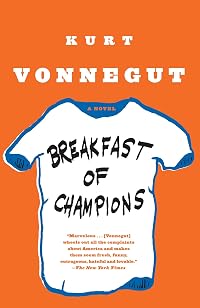
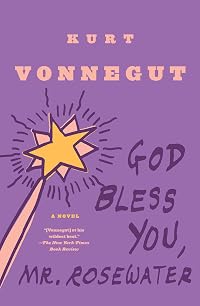
The appeal of Kurt Vonnegut, especially to bright younger readers of the past few decades, may be attributed partly to the fact that he is one of the few writers who have successfully straddled the imaginary line between science-fiction/fantasy and "real literature." He was born in Indianapolis and attended Cornell University, but his college show more education was interrupted by World War II. Captured during the Battle of the Bulge and imprisoned in Dresden, he received a Purple Heart for what he calls a "ludicrously negligible wound." After the war he returned to Cornell and then earned his M.A. at the University of Chicago.He worked as a police reporter and in public relations before placing several short stories in the popular magazines and beginning his career as a novelist. His first novel, Player Piano (1952), is a highly credible account of a future mechanistic society in which people count for little and machines for much. The Sirens of Titan (1959), is the story of a playboy whisked off to Mars and outer space in order to learn some humbling lessons about Earth's modest function in the total scheme of things. Mother Night (1962) satirizes the Nazi mentality in its narrative about an American writer who broadcasts propaganda in Germany during the war as an Allied agent. Cat's Cradle (1963) makes use of some of Vonnegut's experiences in General Electric laboratories in its story about the discovery of a special kind of ice that destroys the world. God Bless You, Mr. Rosewater (1965) satirizes a benevolent foundation set up to foster the salvation of the world through love, an endeavor with, of course, disastrous results. Slaughterhouse-Five; or The Children's Crusade (1969) is the book that marked a turning point in Vonnegut's career. Based on his experiences in Dresden, it is the story of another Vonnegut surrogate named Billy Pilgrim who travels back and forth in time and becomes a kind of modern-day Everyman. The novel was something of a cult book during the Vietnam era for its antiwar sentiments. Breakfast of Champions (1973), the story of a Pontiac dealer who goes crazy after reading a science fiction novel by "Kilgore Trout," received generally unfavorable reviews but was a commercial success. Slapstick (1976), dedicated to the memory of Laurel and Hardy, is the somewhat wacky memoir of a 100-year-old ex-president who thinks he can solve society's problems by giving everyone a new middle name. In addition to his fiction, Vonnegut has published nonfiction on social problems and other topics, some of which is collected in Wampeters, Foma and Granfalloons (1974). He died from head injuries sustained in a fall on April 11, 2007. (Bowker Author Biography) show less
Work Relationships
Contains
Common Knowledge
- Original title
- We Are What We Pretend To Be: The First and Last Works
- Original publication date
- 2012
- Original language
- English
Classifications
Statistics
- Members
- 263
- Popularity
- 123,014
- Reviews
- 8
- Rating
- (3.71)
- Languages
- English
- Media
- Paper, Audiobook, Ebook
- ISBNs
- 4
- ASINs
- 4