On This Page
Description
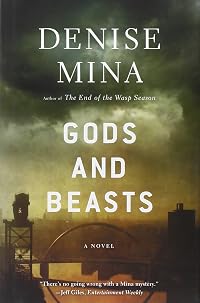
It's the week before Christmas when a lone robber bursts into a busy Glasgow post office carrying an AK-47. An elderly man suddenly hands his young grandson to a stranger and wordlessly helps the gunman fill bags with cash, then carries them to the door. He opens the door and bows his head; the robber fires off the AK-47, tearing the grandfather in two. DS Alex Morrow arrives on the scene and finds that the alarm system had been disabled before the robbery. Yet upon investigation, none of show more the employees can be linked to the gunman. And the grandfather-a life-long campaigner for social justice-is above reproach. As Morrow searches for the killer, she discovers a hidden, sinister political network. Soon it is chillingly clear: no corner of the city is safe, and her involvement will go deeper than she could ever have imagined. show lessTags
Recommendations










Member Reviews
DC Alex Morrow has changed over time. In the first few books of this series she was combative and angry, but now, what with being a mother of twins and happy in her personal life, she's mellowed at work and worried that the officers working under her can sense she's gone soft. And this is Glasgow. No place for a cop who's lost her edge.
A few days before Christmas and there's been a brutal shooting during a robbery at a post office, leaving a man dead. There are questions about the victim's behavior before he was shot and the man who had been standing behind him seems to be more than just a by-stander. Morrow wants to do more than just find the perpetrator, she wants to find out why it happened. Along the way, there's a disgraced show more politician and the possibility of police corruption.
Mina always writes fantastic books, tartan noir at its finest. Alex Morrow is a wonderful protagonist; she's tough and ballsy, while still able to hurt for all the people scarred by life in a tough city. show less
A few days before Christmas and there's been a brutal shooting during a robbery at a post office, leaving a man dead. There are questions about the victim's behavior before he was shot and the man who had been standing behind him seems to be more than just a by-stander. Morrow wants to do more than just find the perpetrator, she wants to find out why it happened. Along the way, there's a disgraced show more politician and the possibility of police corruption.
Mina always writes fantastic books, tartan noir at its finest. Alex Morrow is a wonderful protagonist; she's tough and ballsy, while still able to hurt for all the people scarred by life in a tough city. show less
This is the third police procedural featuring Alex Morrow. At first I thought I'd made a mistake by listening to it on audio instead of reading it, but as the story went on, the players became clearer. The story got a good deal grimmer, too. Alex tries to reconcile with her half-brother Danny, gangster though he is. She is baffled by roadblocks in her investigation of a killing at a post-office, constantly frustrated by how little she learns about the victim. And ultimately she is infuriated by the depth of corruption she uncovers, and where it lies.
One of what seems to be a subordinate thread involves a left-leaning politician with serious moral failings. But it is not really subordinate, and leads to the bleakness of the ending. I show more really couldn't believe where the novel stopped. Maybe Mina will address this at least tangentially in the next in the series. show less
One of what seems to be a subordinate thread involves a left-leaning politician with serious moral failings. But it is not really subordinate, and leads to the bleakness of the ending. I show more really couldn't believe where the novel stopped. Maybe Mina will address this at least tangentially in the next in the series. show less
You can always count on Denise Mina to tackle uncomfortable truths in her books, and she does it again in this third Alex Morrow mystery, Gods and Beasts. The framework of the book can be found in two quotes she uses. One from Abraham Lincoln: "Nearly all men can stand adversity, but if you want to test a man's character, give him power." The second from Aristotle: "Those who live outside the city walls and are self sufficient, are either Gods or Beasts." Gods and Beasts is the story of how some people abuse power, of how some people face the possibility of losing their jobs, of how the marginalized find themselves living from day to weary day.
Mina is a master at writing about the marginalized, at writing about the grit and grime of show more living "outside the city walls" of Glasgow, and I once again found myself immersed in Alex Morrow's world as she tries to solve this crime, deal with her co-workers, and be a wife and mother. Mina's world isn't always pleasant. The days are often overcast and gloomy, and violence can blindside you. But there's comfort in knowing that someone like Alex Morrow is on the job. That someone like Alex Morrow will keep fighting the bad guys with intelligence and determination.
There's a power to Mina's writing that you don't see every day. Take, for example, this one tiny scene that doesn't mean all that much in the scheme of things: "On the ground, by the side of the concrete front step, was a small ash tray, four half-smoked cigarettes laid out in a neat row, filters by filters, the burnt tips concertinaed. They made him think of diagrams of slave ships." This one small descriptive scene made this reader think of the smoker, so precise with those half-smoked cigarettes, so enslaved by an addiction to nicotine, but the scene keeps on giving. Diagrams of slave ships? My mind went on to think of people stolen from their homes, packed into filthy ships holds, and taken to work in tobacco fields. Of how slavery and poverty and drudgery grind people down.
It's a tiny scene with so much depth and power that it still takes my breath away, and it's one of the many reasons why I read Denise Mina's books. If you haven't, I hope you'll give them a try. As much as I enjoy Mina's Alex Morrow series, I found her Garnethill trilogy and her novels featuring Paddy Meehan to be excellent. Don't miss out on Denise Mina, one of the founders of Tartan Noir. show less
Mina is a master at writing about the marginalized, at writing about the grit and grime of show more living "outside the city walls" of Glasgow, and I once again found myself immersed in Alex Morrow's world as she tries to solve this crime, deal with her co-workers, and be a wife and mother. Mina's world isn't always pleasant. The days are often overcast and gloomy, and violence can blindside you. But there's comfort in knowing that someone like Alex Morrow is on the job. That someone like Alex Morrow will keep fighting the bad guys with intelligence and determination.
There's a power to Mina's writing that you don't see every day. Take, for example, this one tiny scene that doesn't mean all that much in the scheme of things: "On the ground, by the side of the concrete front step, was a small ash tray, four half-smoked cigarettes laid out in a neat row, filters by filters, the burnt tips concertinaed. They made him think of diagrams of slave ships." This one small descriptive scene made this reader think of the smoker, so precise with those half-smoked cigarettes, so enslaved by an addiction to nicotine, but the scene keeps on giving. Diagrams of slave ships? My mind went on to think of people stolen from their homes, packed into filthy ships holds, and taken to work in tobacco fields. Of how slavery and poverty and drudgery grind people down.
It's a tiny scene with so much depth and power that it still takes my breath away, and it's one of the many reasons why I read Denise Mina's books. If you haven't, I hope you'll give them a try. As much as I enjoy Mina's Alex Morrow series, I found her Garnethill trilogy and her novels featuring Paddy Meehan to be excellent. Don't miss out on Denise Mina, one of the founders of Tartan Noir. show less
Oh. This was an unexpected turn.
The first two books in this series were brilliant- immediately engaging and expertly wove together the perspectives of DS Alex Morrow and the wrong-doers who she hunted down. Morrow is a relatable character. She’s a detective who works hard and gets results, and at the same time she has a home life with a husband and children, personal hopes and fears.
This third novel took a lot of getting into. There was a lot going on with characters who it was hard to get a handle on. Whereas the other books built the story gradually, this one dumped a huge amount into my lap within the first couple of chapters and left me having to juggle half a dozen different threads before I’d even got my head around who was show more who. Mina was trying something different here. In previous outings she effectively created a double-handed narrative with chapters alternating between Morrow and the killers points of view. This time she tangled the web by following several perspectives- Morrow, Leonard, Pavel and Gallagher all getting their time in the spotlight. This is a much harder balancing act to pull off.
There was a coarseness to some sections, which I didn’t like and some of it wasn’t really in-keeping with the characters involved.
For all of those criticisms, I liked this book. It grew into itself and grew on me. Unlike its predecessors it was hard to predict the direction it would take. The protagonists kept their secrets for longer, and Morrow’s character had grown. She was softer, more giving, kinder and closer to her colleagues. Rather than ending with the almost gentle resolutions of the previous two outings, there was tension right up to the end. I certainly couldn’t read which way it was going to go.
By the end I felt rewarded for sticking with it. Mina’s ability to weave social commentary into a crime narrative remains impressive, and even when the plotting feels messy, her writing has a raw energy that carries you along. Gods and Beasts may not reach the taut brilliance of the first two books, but it’s still a powerful, unsettling read that pushes the series into more ambitious territory. Morrow is a great character - a female detective with a difference - and I’m curious to see where she goes next. show less
The first two books in this series were brilliant- immediately engaging and expertly wove together the perspectives of DS Alex Morrow and the wrong-doers who she hunted down. Morrow is a relatable character. She’s a detective who works hard and gets results, and at the same time she has a home life with a husband and children, personal hopes and fears.
This third novel took a lot of getting into. There was a lot going on with characters who it was hard to get a handle on. Whereas the other books built the story gradually, this one dumped a huge amount into my lap within the first couple of chapters and left me having to juggle half a dozen different threads before I’d even got my head around who was show more who. Mina was trying something different here. In previous outings she effectively created a double-handed narrative with chapters alternating between Morrow and the killers points of view. This time she tangled the web by following several perspectives- Morrow, Leonard, Pavel and Gallagher all getting their time in the spotlight. This is a much harder balancing act to pull off.
There was a coarseness to some sections, which I didn’t like and some of it wasn’t really in-keeping with the characters involved.
For all of those criticisms, I liked this book. It grew into itself and grew on me. Unlike its predecessors it was hard to predict the direction it would take. The protagonists kept their secrets for longer, and Morrow’s character had grown. She was softer, more giving, kinder and closer to her colleagues. Rather than ending with the almost gentle resolutions of the previous two outings, there was tension right up to the end. I certainly couldn’t read which way it was going to go.
By the end I felt rewarded for sticking with it. Mina’s ability to weave social commentary into a crime narrative remains impressive, and even when the plotting feels messy, her writing has a raw energy that carries you along. Gods and Beasts may not reach the taut brilliance of the first two books, but it’s still a powerful, unsettling read that pushes the series into more ambitious territory. Morrow is a great character - a female detective with a difference - and I’m curious to see where she goes next. show less
Third in the series, and a strange and dark one involving a man who helps a boy during a robbery gone wrong when his grandfather, who apparently knows the robbers, follows orders, helps them with their crime, and then is shot dead. As the police probe deeper, the young man turns out to have a dark secret: he's rich, and he's not at all comfortable with his money. It's a complicated novel to put together - Mina is a terrific writer who respects readers and doesn't spell it all out for you in short chapters and simple prose. She also usually has a surprise up her sleeve - not the standard double-axle plot twist at the end, but a tilting of the fictional universe, when things suddenly aren't what you thought. The ending really left me show more thinking. show less
The story begins with a post office robbery one week before Christmas. By New Year, many characters' lives are changed permanently. This includes a politician on the ropes because of an affair, and police officers who prove to have all-too-human frailties with regard to money. Alex Morrow ably juggles these cases with her usual forceful yet understated determination. This was my favourite in the series so far, and I went out and borrowed the next in series immediately. Denise Mina is possibly the only author whose books are so compulsively readable for me.
I'll say from the outset that I think Denise Mina is the finest of the "tartan noire" writers, and that's still the case with [b:Gods and Beasts|14781160|Gods and Beasts (Alex Morrow, #3)|Denise Mina|http://d.gr-assets.com/books/1356078725s/14781160.jpg|19213687]. It's well-written, interesting, one I looked forward to each evening, all that. Probably a four-star book, really, but there's something holding me back.
Part of what I find lacking is the one thing I really enjoy about reading series novelists, that of returning to a familiar character. Alex Morrow, however, is perhaps the least defined of Mina's recurring characters, and that's a shame. It's also odd, to me, that she becomes more and more backgrounded as this series show more continues. There is no sense of growth, like you get with Rebus and even more with Mina's own Paddy Meehan (who makes a cameo in this book, more on that later), and in fact there's no real sense of dimension at all with Morrow. In the first book, [b:Still Midnight|6389743|Still Midnight (Alex Morrow, #1)|Denise Mina|http://d.gr-assets.com/books/1348096067s/6389743.jpg|6578134], it was almost all Morrow, and to be honest I can't even recall the crime at the center. It was the hardest of Mina's books to get through, as it was very introspective but not so forthcoming-- if that makes any sense. Morrow is grieving over the loss of a child, and that takes center stage. You get the sense that her marriage is failing, and that's important to the book, too. I got the feeling that with the new series, perhaps she was de-centering the crime from the crime novel, and focusing on the life of a detective. That's fine, but there was almost too much tiptoeing, too much hinting and not enough actual development. There was never a reason given to care about Morrow because she never revealed enough about herself.
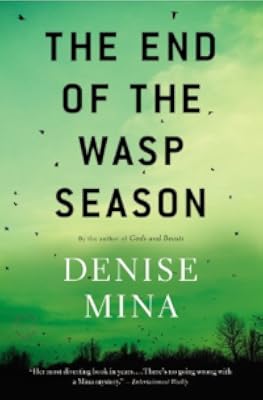
Perhaps that's unfair to say, years after having read the book, and admittedly not remembering what it was about (the crime, that is). The second book,[b:The End of the Wasp Season|11156902|The End of the Wasp Season (Alex Morrow, #2)|Denise Mina|http://d.gr-assets.com/books/1344270227s/11156902.jpg|14647221] was much better, and still the best of the three so far. The approach was different, in the same vein as [b:Laidlaw|952162|Laidlaw|William McIlvanney|http://d.gr-assets.com/books/1318156284s/952162.jpg|937081], where it was a true procedural in that the question was "why?" and "how?" moreso than "who?" Still, I was would have been hard pressed to talk much about the central character, as Morrow remained much of a mystery. In [b:Gods and Beasts|14781160|Gods and Beasts (Alex Morrow, #3)|Denise Mina|http://d.gr-assets.com/books/1356078725s/14781160.jpg|19213687], the story is very good: multifaceted, taking place among a few distinct story lines that come together as the novel draws to a close, each as interesting as the next. In a move that I always enjoy, Paddy Meehan is one of the journalists involved in a main story line, which makes sense-- she's a Glasgow journalist in her own series, it would make sense she would cover a major news story in Morrow's universe as well. So I ask myself, what is it that makes it so enjoyable when characters bleed into each other's turfs? In Paddy's case, it's because I feel like I know her, and like the Council of Elrond in [b:Fellowship of the Rings|34|The Fellowship of the Ring (The Lord of the Rings, #1)|J.R.R. Tolkien|http://d.gr-assets.com/books/1298411339s/34.jpg|3204327] (a scene that makes me tear up every time!), I enjoy running into old friends from adventures past. From time to time I would wonder, reading this book, what Rebus might be up do. Three books in, and I don't know that Morrow ever crosses my mind when I'm reading a different Scottish crime novel.
Anyway, it was a pleasure to read Mina's prose. She's a skilled writer, and Kenny Gallagher was a fully-realized (if pathetic) character. Maybe he should be spun off? And I can't wait for the next Paddy Meehan novel--two more remaining!--and I can't help wonder if Paddy's foray into Morrow's neck of the woods doesn't presage the next stage in the journalist's career. show less
Part of what I find lacking is the one thing I really enjoy about reading series novelists, that of returning to a familiar character. Alex Morrow, however, is perhaps the least defined of Mina's recurring characters, and that's a shame. It's also odd, to me, that she becomes more and more backgrounded as this series show more continues. There is no sense of growth, like you get with Rebus and even more with Mina's own Paddy Meehan (who makes a cameo in this book, more on that later), and in fact there's no real sense of dimension at all with Morrow. In the first book, [b:Still Midnight|6389743|Still Midnight (Alex Morrow, #1)|Denise Mina|http://d.gr-assets.com/books/1348096067s/6389743.jpg|6578134], it was almost all Morrow, and to be honest I can't even recall the crime at the center. It was the hardest of Mina's books to get through, as it was very introspective but not so forthcoming-- if that makes any sense. Morrow is grieving over the loss of a child, and that takes center stage. You get the sense that her marriage is failing, and that's important to the book, too. I got the feeling that with the new series, perhaps she was de-centering the crime from the crime novel, and focusing on the life of a detective. That's fine, but there was almost too much tiptoeing, too much hinting and not enough actual development. There was never a reason given to care about Morrow because she never revealed enough about herself.
Perhaps that's unfair to say, years after having read the book, and admittedly not remembering what it was about (the crime, that is). The second book,[b:The End of the Wasp Season|11156902|The End of the Wasp Season (Alex Morrow, #2)|Denise Mina|http://d.gr-assets.com/books/1344270227s/11156902.jpg|14647221] was much better, and still the best of the three so far. The approach was different, in the same vein as [b:Laidlaw|952162|Laidlaw|William McIlvanney|http://d.gr-assets.com/books/1318156284s/952162.jpg|937081], where it was a true procedural in that the question was "why?" and "how?" moreso than "who?" Still, I was would have been hard pressed to talk much about the central character, as Morrow remained much of a mystery. In [b:Gods and Beasts|14781160|Gods and Beasts (Alex Morrow, #3)|Denise Mina|http://d.gr-assets.com/books/1356078725s/14781160.jpg|19213687], the story is very good: multifaceted, taking place among a few distinct story lines that come together as the novel draws to a close, each as interesting as the next. In a move that I always enjoy, Paddy Meehan is one of the journalists involved in a main story line, which makes sense-- she's a Glasgow journalist in her own series, it would make sense she would cover a major news story in Morrow's universe as well. So I ask myself, what is it that makes it so enjoyable when characters bleed into each other's turfs? In Paddy's case, it's because I feel like I know her, and like the Council of Elrond in [b:Fellowship of the Rings|34|The Fellowship of the Ring (The Lord of the Rings, #1)|J.R.R. Tolkien|http://d.gr-assets.com/books/1298411339s/34.jpg|3204327] (a scene that makes me tear up every time!), I enjoy running into old friends from adventures past. From time to time I would wonder, reading this book, what Rebus might be up do. Three books in, and I don't know that Morrow ever crosses my mind when I'm reading a different Scottish crime novel.
Anyway, it was a pleasure to read Mina's prose. She's a skilled writer, and Kenny Gallagher was a fully-realized (if pathetic) character. Maybe he should be spun off? And I can't wait for the next Paddy Meehan novel--two more remaining!--and I can't help wonder if Paddy's foray into Morrow's neck of the woods doesn't presage the next stage in the journalist's career. show less
Members
- Recently Added By
Lists

British Mystery
469 works; 14 members

Top Five Books of 2015
811 works; 241 members
Author Information

61+ Works 11,458 Members
Denise Mina was born in Glasgow in 1966. She initially left school at the age of 16 and worked a variety of low skilled jobs like bar maid and kitchen porter. She later returned to school and earned a law degree from Glasgow University. She has since become a crime writer and playwright. She has authored the Garnethill trilogy and three novels show more featuring the character Patricia Meehan, a Glasgow journalist. She has also done some comic book writing with 13 issues of Hellblazer. She won the John Creasy Dagger for Best First Crime Novel for her book, Garnethill, in 1998. She also won the Theakston's Old Peculier Crime Novel of the Year Award with her title,The End of Wasp Season, in 2012. (Bowker Author Biography) show less
Awards and Honors
Awards
Distinctions
Notable Lists
Series

Common Knowledge
- Canonical title
- Gods and Beasts
- Original title
- Gods and Beasts
- Alternate titles
- Gods and Animals
- People/Characters*
- Alex Morrow
- Important places*
- Glasgow, Scotland, UK
*Some information comes from Common Knowledge in other languages. Click "Edit" for more information.
Classifications
Statistics
- Members
- 453
- Popularity
- 66,793
- Reviews
- 34
- Rating
- (3.63)
- Languages
- 6 — Dutch, English, Finnish, French, German, Swedish
- Media
- Paper, Audiobook, Ebook
- ISBNs
- 35
- ASINs
- 7