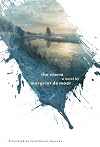
The Storm
by Margriet de Moor
On This Page
Description
On the night of January 31, 1953, a mountain of water, literally piled up out of the sea by a freak winter hurricane, swept down on the Netherlands, demolishing the dikes protecting the country and wiping a quarter of its landmass from the map. It was the worst natural disaster to strike the Netherlands in three hundred years. The author interweaves the stories of two sister, deftly alternating between the cataclysm and the long years of its grief-strewn aftermath.Tags
Recommendations














Member Reviews
“They looked alike. Everyone thought so. They were tall girls with narrow, strong shoulders, always a little bent, which gave them a worried appearance that was quite misleading. And if they had turned round at that moment the double portrait would really have been striking: dark hair, almost chestnut-black, falling smoothly down their backs, exposing delicate little ears, and cut in a straight fringe that concealed the forehead completely. Nobody would ever see their foreheads. But everything could be read in the two pairs of eyes: merriment, sadness, mockery, indifference, passion, and also the speed of their shifting moods, yet what conveyed itself most clearly was that the two sisters appeared to see the world in exactly the same show more way, and to judge it.”
Lidy and Armanda are sisters. Lidy, 23, is married with a young daughter, and Armanda is just 18 and somehow manages to persuade her sister to exchange lives for a day. Lidy leaves for Zeeland to attend a birthday party, Armanda stays in Amsterdam to look after Nadja and Sjoerd. How are they to know that this is the very night of the storm of 31 January 1953 that would sweep away “1,836 people, 120,000 animals, and 772 square miles of land at one stroke”?
“The sound of a storm defies words. Or rather, the effect it has. The world makes noises. There isn’t a moment of peace in which it isn’t creaking or rustling or banging or talking and uttering every possible nuance of a lament until sometimes it even sings. Some of these noises can wait a little, but others are absolutely urgent.”
It is an odd feeling, reading this book.
The chapters alternate between present and past of sorts. The music of Lidy’s story is slow, gradual, as she awaits the storm, the flood. The time ticks by slowly as the floodwaters rise, and her fate looms. The chapters with Armanda stride on briskly, first it is just as the storm hits, then the aftermath and the tragedy, and then 18 months later at Lidy’s memorial service.
I suppose that is the intention. For you to grieve along with Armanda and the rest of the loved ones, then be struck as you return in the next chapter to Lidy waiting for the flood, high up in that attic room, knowing there is nothing she or anyone else can do. As a result, your heart is pulled towards Lidy waiting her death. But Armanda’s life too has changed, she has outlived her sister, but feels haunted by her presence:
“Do you know what I sometimes still think? Lidy’s just gone for a day, and she’s relying on me to live her life for her, all organized and proper, and that’s exactly what I’m damn well doing.”
The Storm, or De Verdronkene, was an emotional, unforgettable read. show less
In “The Storm,” Margriet de Moor presents for our imaginations the howling, insensate destruction wrought by the freak hurricane that fell on The Netherlands in January and February 1953. Against this dark and furious backdrop she draws out the drama of two sisters who have switched places on a whim – one who drives to a relative’s birthday party in southern Holland, and one who stays behind in Amsterdam. The switch results in the “wrong” sister’s death in the epic storm.
Seldom will you find this much energy and attention to detail devoted to a single natural cataclysm – see Harris’s “Pompeii” for a possible parallel. The ill-fated sister’s (Lidy’s) odyssey to the estuaries at The Netherlands’ south end, and show more her trials and death there, take up half the book. Ms. de Moor impresses deeply with the depth and breadth of this part of the story. She draws it out so that it runs alongside the entire adult life of the surviving sister, Armanda. And this elegant device, the running of separate narratives for each sister: one a long protraction of horrific catastrophes that last but a few days, and the other a meditation on the surviving sister’s mixture of relief and guilt – deals with exceptional emotional clarity the journeys the sisters take. It gives the departed sister’s last days the depth and importance they deserve – we feel them the same way Armanda does.
Armanda feels like she takes on her sister’s life. She marries Lidy’s widowed husband and becomes the only mother her young niece ever knows. With a quiet grudge she suffers the slings and arrows of events she thinks of as her sister’s, especially the husband’s unfaithfulness and divorce. She does, however, become very close to her adoptive daughter. Her father becomes ill and has a brush with death, during which time Lidy goes unacknowledged. He survives, however, and becomes a near-stranger – a doctor who won’t listen to medical advice, a man-about-town who carries a sudden amount of extra girth. I think the author includes this brief episode to contrast with Armanda’s all-too-faithful adherence to Lidy’s purported life. There may be other purposes at work, but they escape me just now. The sisters achieve a fanciful rapprochement near the end of Armanda's life, and some readers may find it helpful to wrapping up the strands; for me it went in the direction of something too pat and tidy.
“The Storm” is a highly worthy piece of fiction. The unobtrusive translation from the Dutch by Carol Brown Janeway serves it in a highly effective way – it reads very naturally. A combination of harrowing, deadly detail and a fine portrait of guilt and ambivalence – all in all a heady and unique combination.
http://bassoprofundo1.blogspot.com/2011/04/storm-by-margriet-de-moor.html show less
Seldom will you find this much energy and attention to detail devoted to a single natural cataclysm – see Harris’s “Pompeii” for a possible parallel. The ill-fated sister’s (Lidy’s) odyssey to the estuaries at The Netherlands’ south end, and show more her trials and death there, take up half the book. Ms. de Moor impresses deeply with the depth and breadth of this part of the story. She draws it out so that it runs alongside the entire adult life of the surviving sister, Armanda. And this elegant device, the running of separate narratives for each sister: one a long protraction of horrific catastrophes that last but a few days, and the other a meditation on the surviving sister’s mixture of relief and guilt – deals with exceptional emotional clarity the journeys the sisters take. It gives the departed sister’s last days the depth and importance they deserve – we feel them the same way Armanda does.
Armanda feels like she takes on her sister’s life. She marries Lidy’s widowed husband and becomes the only mother her young niece ever knows. With a quiet grudge she suffers the slings and arrows of events she thinks of as her sister’s, especially the husband’s unfaithfulness and divorce. She does, however, become very close to her adoptive daughter. Her father becomes ill and has a brush with death, during which time Lidy goes unacknowledged. He survives, however, and becomes a near-stranger – a doctor who won’t listen to medical advice, a man-about-town who carries a sudden amount of extra girth. I think the author includes this brief episode to contrast with Armanda’s all-too-faithful adherence to Lidy’s purported life. There may be other purposes at work, but they escape me just now. The sisters achieve a fanciful rapprochement near the end of Armanda's life, and some readers may find it helpful to wrapping up the strands; for me it went in the direction of something too pat and tidy.
“The Storm” is a highly worthy piece of fiction. The unobtrusive translation from the Dutch by Carol Brown Janeway serves it in a highly effective way – it reads very naturally. A combination of harrowing, deadly detail and a fine portrait of guilt and ambivalence – all in all a heady and unique combination.
http://bassoprofundo1.blogspot.com/2011/04/storm-by-margriet-de-moor.html show less
Over de relatie tussen twee zussen en één man. De ene zus verdrinkt bij de Watersnoodramp; de andere blijft achter met haar zwager en kleine nichtje. Ze neemt al snel de plaats van de zus in. De verdrinking van de oudste zus blijft door het hele boek heenspelen; traag wordt de ene dag beschreven waarop ze langzaam doodgaat. Het leven van de andere zus voltrekt zich in een sneltreinvaart; tientallen jaren worden overgeslagen. Uiteindelijk sterft ook de andere zus en komen beide zussen weer samen in het sterven. Literair en mooi geschreven.
I was unable to finish this book, as it was too confusing for me, going back and forth from one set of characters to another. For a reader who is able and likes this type of writing, this book might be a good read, but my mind couldn't follow the plot. I knew about the dikes breaking and the flood in Holland in 1953, which killed one third of the Netherlands population at the time, having lived in Holland for ten years. The author uses the plot of one sister trading places with her younger sister to attend a godchild's birthday party in another town. The remaining sister eventually takes over the life of the drowned sister, including marrying the widower and deceased wonan's daughter. Reading blow by blow accounting(fiction) of the show more flood was more than I wanted to know, but for those who like this type of story, again, this might be a book to consider. Many remarks about this book on the blurb calls it brilliant, masterful, technically perfect, informative and compelling, and in fairness, this may be so to many readers. I just was not able to get into the descriptions in THE STORM, as love and death are described and intertwined. My heart went out to Lidy, who agreed to the plot of changing places with Armanda, so that Armanda could go to a party. While Lily struggles to survive, surrounded by strangers, Armanda lives out the life or her missing sister as if it were her own. Meshing history and imagination, the author writes a powerfully dramatic and psychologically gripping novel of one of the Netherlands worst disasters in three hundred years. If this is your type of reading, by all means, give it a try. For those who get anxious with too much detail about horrific events, skip this one. show less
Even though the author informs the reader about the death of one of the main characters very early in the book-we don't learn HOW until almost the last page, which kept me turning them.
First of all, why in the world did the sisters trade places? What possessed them? Second, how many chapters needed to be devoted to the actual drowning?
Aanrader.
Members
- Recently Added By
Author Information

30+ Works 1,662 Members
Some Editions
Awards and Honors
Distinctions
Series
Belongs to Publisher Series
dtv (13635)
Work Relationships
Has as a reference guide/companion
Common Knowledge
- Canonical title
- The Storm
- Original title
- De verdronkene
- Original publication date
- 2005
- Important places*
- Zeeland, Nederland
- Important events*
- Watersnoodramp (1953)
- Epigraph*
- Het is alsof de tijd niet meer recht voor ons uit loopt,
in een vervangende lijn, maar als een bochtige draad
parallel tussen ons in...
William Faulkner, Terwijl ik op sterven lag
Es bellen die Hunde, es rasseln die Ketten
Die Menschen schlafen in ihren Betten
Wilhelm Müller/Franz Schubert, Winterreise - Dedication*
- Voor mijn zusters Bernardien, Maria, Fridoline, Simone, Josefien en Leida, ter gedachtenis en nagedichtenis
- First words*
- Een van de twee, Lidy, stond door het raam naar buiten te kijken.
- Last words*
- (Click to show. Warning: May contain spoilers.)'... Ab-so-luut niet!'
*Some information comes from Common Knowledge in other languages. Click "Edit" for more information.
Classifications
- Genres
- Fiction and Literature, General Fiction
- DDC/MDS
- 839.3 — Literature & rhetoric German & related literatures Other Germanic literatures Netherlandish literatures
- LCC
- PT5881.23 .O578 .V4713 — Language and Literature German, Dutch and Scandinavian literatures Dutch literature Individual authors or works 1961-2000
- BISAC
Statistics
- Members
- 261
- Popularity
- 123,644
- Reviews
- 12
- Rating
- (3.60)
- Languages
- 7 — Chinese, Czech, Dutch, English, French, German, Italian
- Media
- Paper, Ebook
- ISBNs
- 19
- ASINs
- 2