On This Page
Tags
Recommendations





















Member Reviews
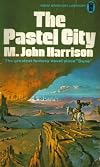
A principios de los 70, M. John Harrison revolucionó la fantasía épica con su serie de Viriconium. Sí, parecía que tras Tolkien había vida. Sin lugar a dudas, muchos de los escritores contemporáneos de fantasía le deben mucho a Harrison, dejando aparte dragonadas y similares. Pero en realidad este libro está más cerca de la ciencia ficción que de la fantasía. Hay caballeros, luchas con espada, reinos que salvar... pero en un futuro lejano, perdido en los anales de la historia, un mundo arrasado y contaminado, cercano a lo medieval, con ciertas zonas en las que no crece nada, un mundo en el que todavía son visibles las huellas de esa civilización desaparecida: ruinas de edificios que sobresalen entre la arena, restos de su show more tecnología, armas de energía...
'La Ciudad Pastel', incluida en España en el libro 'Caballeros de Viriconium', tiene muchas similitudes con otras obras: 'La Tierra Moribunda', de Jack Vance; 'El libro del Sol Nuevo', de Gene Wolfe; pero, sobre todo, la emparentaría con 'El Bastón Rúnico', de Michael Moorcock, en la que también aparecen ciertas armas de energía radiactiva. Además, he de decir que Harrison empezó su carrera como escritor en la revista de aquél, New Worlds.
La historia está protagonizada por lord tegeus-Cromis, que se considera mejor poeta que espadachín, y por el resto de caballeros del Rey Methven, cuyo fallecimiento provocó que éstos se separasen. Pero ahora Viriconium, y con ella La Ciudad Pastel, donde reside la hija de Methven, y ahora reina, están en peligro: Canna Moidart, prima de la reina, quiere el reinar a toda costa, y para ello se ha aliado con los bárbaros del norte, y lo más peligroso, ha resucitado una tecnología que se creía desaparecida. Cromis deberá reunir a sus antiguos compañeros para la lucha: Birkin Grif, contrabandista y pendenciero; Theomeris Glyn, extraordinario espadachín y tramposo a partes iguales; y Sepulcro el enano, experto con el hacha y la fabricación de armas de hierro, cuya mejor obra es un exoesqueleto de energía.
M. John Harrison escribe una historia épica, cargada de lirismo, pesimismo y melancolía, sin por ello renunciar a la aventura, escrita maravillosamente, capaz de crear imágenes memorables. show less
'La Ciudad Pastel', incluida en España en el libro 'Caballeros de Viriconium', tiene muchas similitudes con otras obras: 'La Tierra Moribunda', de Jack Vance; 'El libro del Sol Nuevo', de Gene Wolfe; pero, sobre todo, la emparentaría con 'El Bastón Rúnico', de Michael Moorcock, en la que también aparecen ciertas armas de energía radiactiva. Además, he de decir que Harrison empezó su carrera como escritor en la revista de aquél, New Worlds.
La historia está protagonizada por lord tegeus-Cromis, que se considera mejor poeta que espadachín, y por el resto de caballeros del Rey Methven, cuyo fallecimiento provocó que éstos se separasen. Pero ahora Viriconium, y con ella La Ciudad Pastel, donde reside la hija de Methven, y ahora reina, están en peligro: Canna Moidart, prima de la reina, quiere el reinar a toda costa, y para ello se ha aliado con los bárbaros del norte, y lo más peligroso, ha resucitado una tecnología que se creía desaparecida. Cromis deberá reunir a sus antiguos compañeros para la lucha: Birkin Grif, contrabandista y pendenciero; Theomeris Glyn, extraordinario espadachín y tramposo a partes iguales; y Sepulcro el enano, experto con el hacha y la fabricación de armas de hierro, cuya mejor obra es un exoesqueleto de energía.
M. John Harrison escribe una historia épica, cargada de lirismo, pesimismo y melancolía, sin por ello renunciar a la aventura, escrita maravillosamente, capaz de crear imágenes memorables. show less
The first of four Viriconium books, The Pastel City is a spectacular tale of adventure with philosophical overtones and undertones. Rather than shining the spotlight on the arch of events, here are a batch of notables a reader will encounter along the way:
The Order of Methven: An invasion from the north propels old warrior Lord tegeus-Cromis out of retirement. And to think, he was planning to live his remaining years in his tower as a recluse composing poetry and playing music. Sorry, Cromis! You must strap on your famous sword and ride your horse to gather your Methven friends who once fought ferociously on behalf of Viriconium since impending disaster requires you to defend your young queen and the lands within her domain.
We join show more tall, thin Cromis from the first to last chapter, the ideal main character for M. John Harrison since the aging champion radiates knightly virtue and is a keen observer of beauty both in nature and in art.
The New Earth: Viriconium and the Pastel City arose five hundred years following the collapse of the Afternoon Cultures with their highly technological and scientific achievements, cultures such as our own which left a vast wasteland of rust and decay. In this new age, the transformation of fauna and flora is striking - for example, there are docile giant lizards nearly the size of dinosaurs and great sloth-like beasts fifteen feet tall when standing upright, beasts known as albino megatheria so gentle and friendly the queen keeps one as a house pet.
Mysterious Messenger: A huge vulture approaches Cromis and delivers a message: "go at once to the tower of Cellur on the Girvan Bay." On closer inspection Cromis can see the vulture is made of intricately formed metal and is capable of engaging in dialogue, a creature, he reckons, made with know-how from the Afternoon cultures.
Energy Weapons: Diabolical instruments from the Afternoon Cultures that perhaps electrocute their victims. The author cleverly doesn't elaborate here; rather, he leaves the details of these deadly weapons to the reader's imagination.
Airboats: Yet again another piece of technology from the Afternoon Cultures, crafts frequently equipped with energy cannons. Not surprisingly, Viriconiums judge those Afternoon Cultures as geared toward war and destruction. Quite a statement on our present era.
Dwarf Eleven Feet Tall: One of the most fascinating parts of the novel: Cromis' old fighting friend, ax wielding Tomb the dwarf rigs himself with an immense motorized skeleton contraption with extended arms and legs so he can swing into battle towering above mere men, "a gigantic paradox suspended on the thin line between comedy and horror." Not only is Tomb a fighter and master mechanic, this dwarf spouts one-liners like a first-rate stand-up comic. Thanks, M. John! Every life and death adventure needs a spot of humor.
The Birdmaker: Cellur of Lendalfoot has gathered the wisdom of hundreds of years as he had passed beyond time into a state of exaltation. "He wore a loose, unbelted black robe - quilted in grouped arrangements of lozenges - which was embroidered in gold wire patterns resembling certain geometries cut into the towers of the Pastel City: those queer and uneasy signs that might equally have been the visual art or the language of the mathematics of Time itself."
Jolt of the Weird: Similar to British author Christopher Priest with his expanding of dimensions, such things as time, space, gravity or invisibility, an expansion I term "jolt of the weird," we likewise encounter such a weird jolt in the concluding chapters of The Pastel City.
In this way, Viriconium is NOT in the fantasy tradition of J. R. R. Tolkien. Nope, no fantasy novel for M. John Harrison. There is good reason the author has been called a genre contrarian. Some might even see him as a genre smasher - after all, he has spoken openly about his dissatisfaction with the boundaries and categories set for much genre fiction.
As to how exactly M. John Harrison expands, zigzags, reshapes and otherwise explodes and revitalizes the world of Viriconium, you will have to read for yourself.
British author M. John Harrison, born 1945
"Above him rose the Pastel Towers, tall and gracefully shaped to mathematical curves, tinted pale blue or fuchsia or dove-grey. They reached up for hundreds of feet, cut with quaint and complex designs that some said were the high point of an inimitable art, thought by others to be representations of the actual geometries of Time." - M. John Harrison, The Pastel City show less
This is a short science fiction novel that explores an era in the distant future, after the collapse of industrial - technological civilization, when scavenging ancient scraps of machinery is a large part of how folks get by. The book contemplates the question of whether the power achieved at the pinnacle of technology was such a positive thing. The destruction resulting from that power was not just a by-product like pollution, but also a directly intended product, produced by the use of ever more powerful weapons. In 2011 we seem more worried about climate change. The violence of our worries is ruled more by political chaos than by technological advances. This book was published in 1971, when the technology of war was more the key show more driver of conflict. Who knows, though, what the coming decades might bring, what desperate measures increasing scarcity might trigger.
Harrison sketches some interesting characters here, but what really resonated for me was the landscape. Everything is desolate,. but the flavors of desolation are quite varied. Much is covered by ancient ruins, but there are natural deserts too. The descriptions that were most poetic were of the plants growing in the various locales.
This is a short book which absorbed me from start to finish. It is not a deep book, but it does do a good job of creating a narrative context in which to pose the core question of the value of technology. There are enough twists in the plot to keep one entertained. show less
Harrison sketches some interesting characters here, but what really resonated for me was the landscape. Everything is desolate,. but the flavors of desolation are quite varied. Much is covered by ancient ruins, but there are natural deserts too. The descriptions that were most poetic were of the plants growing in the various locales.
This is a short book which absorbed me from start to finish. It is not a deep book, but it does do a good job of creating a narrative context in which to pose the core question of the value of technology. There are enough twists in the plot to keep one entertained. show less
3.5 stars
ORIGINALLY POSTED AT Fantasy Literature.
Viriconium sits on the ruins of an ancient civilization that nobody remembers. The society that was technologically advanced enough to create crystal airships and lethal energy weapons is dead. These Afternoon Cultures depleted the worldƒ??s metal ores, leaving mounds of inscrutable rusted infrastructure with only a few odds and ends that still work. The current citizens of Viriconium are baffled by what theyÂ??ve dug up, but they have no idea what any of it is for.
tegeus-Cromis, �?who fancies himself a better poet than swordsman,� used to be Viriconium�?s best fighter until he left the Pastel City after King Methven died. But Viriconium is now under threat �? young show more Queen Jane, Methven�?s daughter, is about to lose the empire to her evil cousin. Queen Jane needs the help of the men who once served her father so faithfully, so she sends tegeus-Cromis to find and take command of her army. Along the way, he picks up some of his old comrades and is accosted by a talking metal vulture who insists that Cromis go directly to see a mysterious man who lives in an obsidian tower by the sea. According to the mechanical bird, the future of Viriconium, indeed the whole world, depends on it. As the men travel north, they discover that the Afternoon Cultures left behind a lot more than piles of rusting metal.
The Pastel City, published in 1971, is the first part (only 158 pages) of M. John HarrisonÂ??s science fantasy epic VIRICONIUM which, according to sources, was inspired by Jack VanceÂ??s DYING EARTH and the poetry of T.S. Eliot. Characterization and pacing are sometimes a bit weak, but the scenery in The Pastel City is grand, and I enjoyed the story. In many ways it reminded me of THE LORD OF THE RINGS Â?? a group of comrades (including a dwarf) travel through beautiful and desolate landscapes (across rivers and marshes, through mountain tunnels, etc.) on a quest to destroy something so they can save the world.
A major difference, and what saves the book from being simply another quest fantasy, is the post-apocalyptic vision of an unknown advanced civilization which died out mysteriously, leaving samples of their devastating handiwork behind. Thus, the dwarf arms himself with an 11-foot tall mechanical skeleton and carries some sort of laser. Cromis and his friends ride into one battle on horseback, but leave in a glass blimp. Cool.
I was fascinated by the discoveries that Cromis and his friends made and the hints that the Afternoon Cultures understood the mathematics of the universe. The thought that our heroes may have �?woken something from the Old Science� is a frightening one, especially since they have less idea about how to control it than their dead predecessors did. There�?s a clear message here, but it�?s not heavy-handed. As Queen Jane says:
We have always regarded the Afternoon Cultures as a high point in the history of mankind. Theirs was a state to be striven for, despite the mistakes that marred it. How could they have constructed such things? Why, when they had the stars beneath their hands?
Though IÂ??m reviewing each book in the VIRICONIUM epic separately, IÂ??m actually listening to the audiobook version of the omnibus edition. ItÂ??s recently been produced by Neil Gaiman Presents and is narrated by Simon Vance who is one of the absolute best in the business. This is a high-quality production and highly recommended for anyone who wants to read one of M. John HarrisonÂ??s best-loved works. show less
ORIGINALLY POSTED AT Fantasy Literature.
Viriconium sits on the ruins of an ancient civilization that nobody remembers. The society that was technologically advanced enough to create crystal airships and lethal energy weapons is dead. These Afternoon Cultures depleted the worldƒ??s metal ores, leaving mounds of inscrutable rusted infrastructure with only a few odds and ends that still work. The current citizens of Viriconium are baffled by what theyÂ??ve dug up, but they have no idea what any of it is for.
tegeus-Cromis, �?who fancies himself a better poet than swordsman,� used to be Viriconium�?s best fighter until he left the Pastel City after King Methven died. But Viriconium is now under threat �? young show more Queen Jane, Methven�?s daughter, is about to lose the empire to her evil cousin. Queen Jane needs the help of the men who once served her father so faithfully, so she sends tegeus-Cromis to find and take command of her army. Along the way, he picks up some of his old comrades and is accosted by a talking metal vulture who insists that Cromis go directly to see a mysterious man who lives in an obsidian tower by the sea. According to the mechanical bird, the future of Viriconium, indeed the whole world, depends on it. As the men travel north, they discover that the Afternoon Cultures left behind a lot more than piles of rusting metal.
The Pastel City, published in 1971, is the first part (only 158 pages) of M. John HarrisonÂ??s science fantasy epic VIRICONIUM which, according to sources, was inspired by Jack VanceÂ??s DYING EARTH and the poetry of T.S. Eliot. Characterization and pacing are sometimes a bit weak, but the scenery in The Pastel City is grand, and I enjoyed the story. In many ways it reminded me of THE LORD OF THE RINGS Â?? a group of comrades (including a dwarf) travel through beautiful and desolate landscapes (across rivers and marshes, through mountain tunnels, etc.) on a quest to destroy something so they can save the world.
A major difference, and what saves the book from being simply another quest fantasy, is the post-apocalyptic vision of an unknown advanced civilization which died out mysteriously, leaving samples of their devastating handiwork behind. Thus, the dwarf arms himself with an 11-foot tall mechanical skeleton and carries some sort of laser. Cromis and his friends ride into one battle on horseback, but leave in a glass blimp. Cool.
I was fascinated by the discoveries that Cromis and his friends made and the hints that the Afternoon Cultures understood the mathematics of the universe. The thought that our heroes may have �?woken something from the Old Science� is a frightening one, especially since they have less idea about how to control it than their dead predecessors did. There�?s a clear message here, but it�?s not heavy-handed. As Queen Jane says:
We have always regarded the Afternoon Cultures as a high point in the history of mankind. Theirs was a state to be striven for, despite the mistakes that marred it. How could they have constructed such things? Why, when they had the stars beneath their hands?
Though IÂ??m reviewing each book in the VIRICONIUM epic separately, IÂ??m actually listening to the audiobook version of the omnibus edition. ItÂ??s recently been produced by Neil Gaiman Presents and is narrated by Simon Vance who is one of the absolute best in the business. This is a high-quality production and highly recommended for anyone who wants to read one of M. John HarrisonÂ??s best-loved works. show less
I had heard a lot about the Viriconium books, but never been able to find a copy of either the omnibus or The Pastel City until recently. I have to say I'm a little disappointed, but I'll probably search another few years for the next one. The disappointment: a lot of this book is pretty plodding and uninteresting - while the descriptions of the ruined landscape were probably revolutionary at one time, there are only so many times you can read about stagnant mires and rust deserts before it starts to wear thin. The ending is good, but it feels like the book ends right where it's going to get interesting. In summary: I'm not thrilled by this, but I'm curious enough to go one more.
In the distant future, a medieval system rises from the ruins of a technology that destroyed itself. Armored knights ride their horses across dunes of rust, battling for the honor of the Queen. But the knights find more to menace them than mere swords and lances. A brave quest leads them face to face with the awesome power of a complex, lethal technology that has been erased from the face of the Earth but lives on, underground.
First book in a series. In the very, very far future, Earth has been ravaged by the collapse of multiple galactic civilizations. Society has rebuilt in a vaguely Middle Ages mode, with people riding horses in the shadows of ancient crystal towers, and broken robots, and so on. Two queens are going to war, one of them has powerful weapons from the past, and so the other calls up a party of aging heroes to turn the tide.
Members
- Recently Added By
Lists

Favourite Books
1,820 works; 310 members

Cawthorn and Moorcock's Fantasy: The 100 Best Books
110 works; 7 members

New Weird Fiction
69 works; 12 members

Books Read in 2019
4,052 works; 110 members

Books Read in 2025
4,128 works; 98 members
Author Information

86+ Works 9,843 Members
Some Editions
Awards and Honors
Notable Lists
Series

Belongs to Publisher Series
Work Relationships
Common Knowledge
- Canonical title*
- La cité pastel
- Original title
- The Pastel City
- Original publication date
- 1971-09
- Important places
- Viriconium
- First words*
- Nel Periodo Medio della Terra si formarono diciassette imperi di notevole importanza, che costituirono le cosiddette Civiltà del Pomeriggio.
- Last words*
- (Click to show. Warning: May contain spoilers.)Se gli ordinerete di tenere la bocca chiusa, tornerò.
- Original language
- English
*Some information comes from Common Knowledge in other languages. Click "Edit" for more information.
Classifications
Statistics
- Members
- 624
- Popularity
- 46,893
- Reviews
- 16
- Rating
- (3.70)
- Languages
- 6 — English, Estonian, Finnish, French, German, Italian
- Media
- Paper, Ebook
- ISBNs
- 12
- ASINs
- 5