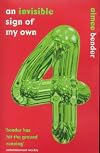
An Invisible Sign of My Own
by Aimee Bender
On This Page
Description
Aimee Bender’s stunning debut collection, The Girl in the Flammable Skirt, proved her to be one of the freshest voices in American fiction. Now, in her first novel, she builds on that early promise. Mona Gray was ten when her father contracted a mysterious illness and she became a quitter, abandoning each of her talents just as pleasure became intense. The only thing she can’t stop doing is math: She knocks on wood, adds her steps, and multiplies people in the park against one another. show more When Mona begins teaching math to second-graders, she finds a ready audience. But the difficult and wonderful facts of life keep intruding. She finds herself drawn to the new science teacher, who has an unnerving way of seeing through her intricately built façade. Bender brilliantly directs her characters, giving them unexpected emotional depth and setting them in a calamitous world, both fancifully surreal and startlingly familiar. show lessTags
Recommendations





























Member Recommendations
Member Reviews
I read this at the same time I listened to The Bell Jar, and they felt cut from similar thematic cloth, even though this wasn’t nearly as harrowing as The Bell Jar and was also surreal and magically realist instead of a lightly fictionalized memoir. It’s mostly just that both books are about young women struggling with depression and having a hard time dealing with adulthood and modern life. This one had a happy ending if only because the author is still alive.
I read a few other reviews where people complained about how unrealistic this story is. I would respond to that with the question, why does it have to be realistic? Yes, Mona becomes a math teacher at the age of 19 with no advanced mathematics or education training, but in the particular time and place in which this story is set maybe that's okay.
I didn't really have a problem with this story in the same way that many other people did, but I'm still giving it three stars because for a short 242 pages this book seemed to take a long time to wade through. It was just... slow. I also found the narration style confusing. I have no problem with experimentation, but when quotation marks are not in use it can be a bit confusing to figure out show more who is speaking, and whether they're speaking out loud or thinking. show less
I didn't really have a problem with this story in the same way that many other people did, but I'm still giving it three stars because for a short 242 pages this book seemed to take a long time to wade through. It was just... slow. I also found the narration style confusing. I have no problem with experimentation, but when quotation marks are not in use it can be a bit confusing to figure out show more who is speaking, and whether they're speaking out loud or thinking. show less
ci sono libri che mi prendono per mano e mi portano in un loro mondo.
questo no... non proprio.
questo libro mi ha prima preso per un dito, poi con l'altra mano mi ha afferrato per il polso, e poi ha cominciato a strattonare... forte! ...finché il mio braccio non si è staccato ed è entrato nel libro.
messo lì, sotto vetro, sotto esame.
vabbe'... questo per dire che c'è una parte di me in questo libro, spiegata, esaminata, in un modo che non mi era ancora capitato mai.
perché questa bender lo sa benissimo com'è quel senso di leggera inquietudine, quell'avere “sempre una parte della periferia della mia mente occupata”.
e quei tic, quelle piccole manie che un po' tutti abbiamo, con cui ci aggrappiamo, e che quasi nessuno nota (ma che show more bello quando qualcuno li nota! ^-^).
eh, sì... la bender lo sa.
ma gli posso concedere solo quel braccio... non di più.
(nonpossofarmiscoprire.) show less
questo no... non proprio.
questo libro mi ha prima preso per un dito, poi con l'altra mano mi ha afferrato per il polso, e poi ha cominciato a strattonare... forte! ...finché il mio braccio non si è staccato ed è entrato nel libro.
messo lì, sotto vetro, sotto esame.
vabbe'... questo per dire che c'è una parte di me in questo libro, spiegata, esaminata, in un modo che non mi era ancora capitato mai.
perché questa bender lo sa benissimo com'è quel senso di leggera inquietudine, quell'avere “sempre una parte della periferia della mia mente occupata”.
e quei tic, quelle piccole manie che un po' tutti abbiamo, con cui ci aggrappiamo, e che quasi nessuno nota (ma che show more bello quando qualcuno li nota! ^-^).
eh, sì... la bender lo sa.
ma gli posso concedere solo quel braccio... non di più.
(nonpossofarmiscoprire.) show less
the writing here is really good, and the story quite creative (while showing us the total ordinariness of life). i don't usually like books that are too weird, and this comes awfully close to that line. but, for me, it doesn't cross it. i guess there are parts that are pretty strange, but all of it makes sense and serves a purpose. everything ties together so well. the way mona tries to balance her life, not get too involved in anything that can be taken from her later, how she pulls herself back and quits whenever she starts to get attached to (or good at) something. how she relates to mr jones and his (literal) wear-his-mood-on-his-chest. how she retreats into numbers, which have their own beauty and order.
i really, really like this. show more this is smart and well done. i look forward to reading more by her. show less
i really, really like this. show more this is smart and well done. i look forward to reading more by her. show less
I couldn't decide if the author is neurodiverse or if she was just writing about a character who is. Mona is obsessed with numbers, and she doesn't quite fit in with other people. Of course, everyone in the whole book is just a little bit off: her father with his hypochondria, Mr Jones wearing mood numbers and pretty much ignoring his customers, the new science teacher with burns on his arms (Mona keeps thinking they are from science experiments, but I think they are self-inflicted). Mona thinks that when a number appears in your yard that will be the age you die, because it happened to be true twice. She doesn't know how to handle her father's illness. He was kind of her role model, getting her to be involved in running. Her mother show more just wants her to be normal, to get excited about birthdays and buy a dress.
Mona buys an ax and brings it to the classroom. This is definitely not something people usually do.
I can't see what other readers think is 'magical realsim' in this novel. Yes, things are off kilter, but that's all in Mona's perception.
The book ends with a crisis, off kilter again, but it allows Mona to break through her worries. show less
Mona buys an ax and brings it to the classroom. This is definitely not something people usually do.
I can't see what other readers think is 'magical realsim' in this novel. Yes, things are off kilter, but that's all in Mona's perception.
The book ends with a crisis, off kilter again, but it allows Mona to break through her worries. show less
Aimee Bender has a way of warping reality into the skewed vision people live in. The setting is vividly depicted by blue shadows from a futuristic hospital and the omen of a story of broken people hangs over the entire cast of characters.
The novel manages to wrap up leaving you wishing for one more page, but also satisfied that the novel stops the way our anecdotes about life do. Mona Gray is still knocking on wood somewhere.
The novel manages to wrap up leaving you wishing for one more page, but also satisfied that the novel stops the way our anecdotes about life do. Mona Gray is still knocking on wood somewhere.
Like in her collection of short stories, The Girl In The Flammable Skirt, Aimee Bender once again gives us a surreal tale of suburban malaise and magical realism. As expected, the protagonist, Mona Gray, is both endearing and eccentric, having had a nearly lifelong love affair with quitting. Mona always seems to be on the verge of mentally imploding (and physically as well, after buying an ax on her 20th birthday) but she keeps her demons at bay by soothing herself with math and numbers, which are solid and dependable and not subject to the random catastrophes that make up a life.
To ward off her father’s impending death from a mysterious and unnamed illness, Mona practices self-denial and cultivates a series of tics. Despite being a show more gifted runner, Mona quits the high school track team, because “winning is lonely;” the reason behind her statement becomes clear when it is revealed that her father, now a shadowy, lonesome figure in her life, used to be a champion runner. When Mona feels any sexual desire, she eats soap, causing herself to vomit soap bubbles. Mona buys an ax on her 20th birthday and contemplates cutting off various parts of her body, a morbid exchange to keep her father alive. She knocks on wood constantly; if there’s no wood available, she will knock on paper or a pencil, reasonable facsimiles as both things were at least born of trees.
The rituals and superstitions that comprise Mona’s life are disrupted when she becomes a second-grade teacher, despite her lack of a degree and/or experience. Although she was initially reticent to take the job, Mona finds that she shines in the classroom; in fact, teaching gives her the appearance of the order she craves. Of course, Mona’s newfound orderliness doesn’t last as such an environment necessitates that she become emotionally involved in her students’ lives; causing further disarray is Benjamin Smith, the mysterious science teacher who can look past her tics. Mona, however, is so fearful of making a connection that she immediately eats a bar of soap when she gets him to come back to her apartment.
An Invisible Sign of My Own is written in a minimalistic but inventive style. There are times when the surrealism feels a bit forced (surely not everyone in town has a cute identifying quirk?) but Ms. Bender quickly regains her footing. The characters were a bit one-note, especially Benjamin Smith, who serves as the love interest and not much more; he helps Mona experience an epiphany but the reader doesn’t learn much about him beyond that. Part of the problem is that Ms. Bender cannot sustain the surreal atmosphere all throughout her novel, although this same surrealism was pitch perfect in her short stories.
Ms. Bender also spends a lot of time on detail, and such is her gift that these long, detailed narratives do not feel like a chore to read. The passage glides along, limpid and wistful, and suddenly Ms. Bender will succinctly snap the reader to attention:
...When you walk down the street, and you happen upon a baby carriage with a baby inside it, and you peer in the blue awning, the scalloped edges, the squirmy flesh inside, there is one simple given: if all goes right, this baby will live in the world longer than you.
It is all about numbers. It is all about sequence. It’s the mathematical logic of being alive. If everything kept to its normal progression, we would live with the sadness – cry and then walk – but what really breaks us cleanest are the losses that happen out of order.
That alone can summarize the central theme of this novel: that of loss, how it’s never really possible to recover from it, and the lengths that we will go to for the people we love. Don’t let the diaphanous quality of Aimee Bender’s writing fool you. Hers is an understated talent, and a great one, for despite the absurdist quality of her work, she manages to find in them a way to eloquently express her own grief.
Originally posted on my Vox and my LJ. show less
To ward off her father’s impending death from a mysterious and unnamed illness, Mona practices self-denial and cultivates a series of tics. Despite being a show more gifted runner, Mona quits the high school track team, because “winning is lonely;” the reason behind her statement becomes clear when it is revealed that her father, now a shadowy, lonesome figure in her life, used to be a champion runner. When Mona feels any sexual desire, she eats soap, causing herself to vomit soap bubbles. Mona buys an ax on her 20th birthday and contemplates cutting off various parts of her body, a morbid exchange to keep her father alive. She knocks on wood constantly; if there’s no wood available, she will knock on paper or a pencil, reasonable facsimiles as both things were at least born of trees.
The rituals and superstitions that comprise Mona’s life are disrupted when she becomes a second-grade teacher, despite her lack of a degree and/or experience. Although she was initially reticent to take the job, Mona finds that she shines in the classroom; in fact, teaching gives her the appearance of the order she craves. Of course, Mona’s newfound orderliness doesn’t last as such an environment necessitates that she become emotionally involved in her students’ lives; causing further disarray is Benjamin Smith, the mysterious science teacher who can look past her tics. Mona, however, is so fearful of making a connection that she immediately eats a bar of soap when she gets him to come back to her apartment.
An Invisible Sign of My Own is written in a minimalistic but inventive style. There are times when the surrealism feels a bit forced (surely not everyone in town has a cute identifying quirk?) but Ms. Bender quickly regains her footing. The characters were a bit one-note, especially Benjamin Smith, who serves as the love interest and not much more; he helps Mona experience an epiphany but the reader doesn’t learn much about him beyond that. Part of the problem is that Ms. Bender cannot sustain the surreal atmosphere all throughout her novel, although this same surrealism was pitch perfect in her short stories.
Ms. Bender also spends a lot of time on detail, and such is her gift that these long, detailed narratives do not feel like a chore to read. The passage glides along, limpid and wistful, and suddenly Ms. Bender will succinctly snap the reader to attention:
...When you walk down the street, and you happen upon a baby carriage with a baby inside it, and you peer in the blue awning, the scalloped edges, the squirmy flesh inside, there is one simple given: if all goes right, this baby will live in the world longer than you.
It is all about numbers. It is all about sequence. It’s the mathematical logic of being alive. If everything kept to its normal progression, we would live with the sadness – cry and then walk – but what really breaks us cleanest are the losses that happen out of order.
That alone can summarize the central theme of this novel: that of loss, how it’s never really possible to recover from it, and the lengths that we will go to for the people we love. Don’t let the diaphanous quality of Aimee Bender’s writing fool you. Hers is an understated talent, and a great one, for despite the absurdist quality of her work, she manages to find in them a way to eloquently express her own grief.
Originally posted on my Vox and my LJ. show less
Members
- Recently Added By
Lists

Magic Realism
371 works; 52 members
Author Information

27+ Works 7,000 Members
As a child, Aimee Bender enjoyed reading fairy tales, particularly the stories of Hans Christian Andersen. She began creating her own stories, and later, as an elementary school teacher, she enjoyed telling her students both traditional fairy tales and stories she had made up herself. Eventually, she began writing short stories, which have been show more published in a variety of magazines, including Granta, GQ, Story, and The Antioch Review. Her first book, The Girl in the Flammable Skirt, a collection of her stories, was published in 1998. Bender's work is intended for adults rather than children, but many of her short stories could be described as contemporary fairy tales. Bender's stories often include some of the same elements that she enjoyed encountering in fairy tales, such as of magic, fantasy, surprise, humor, and absurdity. Although she has found success as a writer, Bender continues to teach because she enjoys the interaction with others and feels she needs that contact to balance the solitude that is required for her writing. In addition to teaching elementary school, she has taught in the UCLA Extension Writers' Program and in the writing program at the University of California at Irvine, where she received her M.F.A. Bender lives in Los Angeles. (Bowker Author Biography) show less
Some Editions
Common Knowledge
- Canonical title
- An Invisible Sign of My Own
- Original publication date
- 2000
- Epigraph
- Numbers are friends for me, more or less. It doesn't mean the same to you, does it--3,844? For you it's just a three and an eight and a four and a four. But I say, "Hi! 62 squared."
-Mathematician Wim Klein - Dedication
- for suzanne and karen
- First words
- So. There was this kingdom once where everybody lived for ever. -Prologue
On my twentieth birthday, I bought myself an ax. - Quotations
- Some worries sit in the stomach like old bad food. Most of the time, they are so quiet and dormant you can’t feel them at all. Oh good, you think. They’re gone.
- Last words
- (Click to show. Warning: May contain spoilers.)The viewers watched on their tiptoes, twenty feet high, as the departing group walked straight into death, and they watched as long as they could, her knees, her waist, her shoulders, the to pof her head, but in minutes the path had sloped down again and even the people on the gallows could see nothing more than an empty yellow hill rolling out in front of them like a carpet of sunlit water.
- Blurbers
- Duncan, David James; Dixon, Stephen
Classifications
Statistics
- Members
- 786
- Popularity
- 35,681
- Reviews
- 28
- Rating
- (3.74)
- Languages
- 5 — Dutch, English, Italian, Korean, Turkish
- Media
- Paper, Audiobook, Ebook
- ISBNs
- 16
- ASINs
- 4