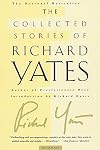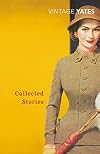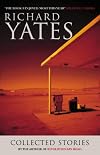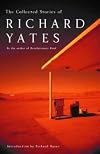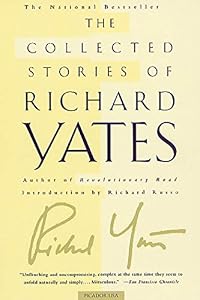
The Collected Stories of Richard Yates
by Richard Yates
On This Page
Description
A literary event of the highest order, The Collected Stories of Richard Yates brings together Yates's peerless short fiction in a single volume for the first time. Richard Yates was acclaimed as one of the most powerful, compassionate, and technically accomplished writers of America's postwar generation, and his work has inspired such diverse talents as Richard Ford, Ann Beattie, André Dubus, Robert Stone, and Kurt Vonnegut Jr. This collection, as powerful as Yate's beloved Revolutionary show more Road, contains the stories of his classic works Eleven Kinds of Loneliness (a book The New York Times Book Review hailed as "the New York equivalent of Dubliners") and Liars in Love; it also features nine new stories, seven of which have never been published. Whether addressing the smothered desire of suburban housewives, the white-collar despair of Manhattan office workers, the grim humor that attends life on a tuberculosis ward, or the moments of terrified peace experienced by American soldiers in World War II, Yates examines every frayed corner of the American dream. His stories, as empathetic as they are unforgiving, are like no others in our nation's literature. Published with a moving introduction by the novelist Richard Russo, this collection will stand as its author's final masterpiece. show lessTags
Recommendations







Member Recommendations


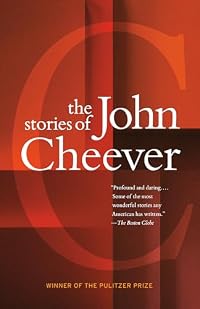
jordsly O'Hara and Yates occupied a similar New York. This comes through and gives one a solid impression of both city and suburban life.
Member Reviews
Yates short stories are the only length of Yates Depression™ that I can take nowadays. After actually reading a couple of his novels cover to cover, I found that I just couldn't take his melancholic macho angst anymore. So it was with some trepidation that I picked up this collection of his short stories.
The usual common themes continue here, false machismo fronts, that post-war, supposed-to-be-flourishing, middle-American façade hiding all the trauma and scars, the wish to appear shiny and full of swagger.
Each story was simultaneously a pleasure to read and a relief to have finished.
The usual common themes continue here, false machismo fronts, that post-war, supposed-to-be-flourishing, middle-American façade hiding all the trauma and scars, the wish to appear shiny and full of swagger.
Each story was simultaneously a pleasure to read and a relief to have finished.
No one I've read "does" loneliness better than Yates (one of the collections contained here is aptly titled "Eleven Kinds of Loneliness"). He knows his characters; his style is sure; though hard sometimes for the reader to hold the sadness in his tales, I am also saddened by having reached the point where I have read (I believe) his complete published works. The ray of hope that ends this collection is hard-won and real.
'Collected Stories' includes two published collections ['Eleven Kinds of Loneliness' (1962) and 'Liars in Love' (1981)] alongside seven stories that had not appeared in print before and two more (quite lightweight) that appeared only in the prestigious 'Ploughshares' magazine in the mid-1970s.
I left this collection with mixed feelings. Yates is rightly positioned as an articulate literary 'spokesman' for male anxieties in the conformist post-war world. From that perspective, the 1962 collection is superb. It is a snapshot of a felt reality from a very sensitive young writer.
On the other hand, I am not sure Yates is well served by the full collection because what it tends to suggest is that his range was limited and his approach show more psychotherapeutic, unloading personal anxieties in a way that over time shows little progression.
If you read his biography and then review his stories you can see him plundering his own experiences, re-telling them through fictional scenarios where the tendency seems to be to mask himself somewhere between memoire and imagination.
His childhood is replayed. His personal insecurities are clearly in evidence in a remarkably self-deprecatory way. The war experience and time in a tuberculosis hospital return repeatedly as do trips to Europe. There is one story revisiting his time as a Hollywood scriptwriter.
The mixed feelings come from a sense of a considerable talent losing itself in an introspection that was being deprived of its social meaning as the world moved on from his childhood, wartime and marital demons. Yet often (earlier rather than later) he hits that sweet spot of revelation.
For example, he captures how the behaviour of the relatively young post-war American generation would act in a way reflecting Hollywood gestures and language. The tension between a rather grey reality and the dream factory is not overtly stated but it is present.
What is most moving perhaps is his ability to conjure up what it must have been like for very young conscripts in the last year of the war, thrown into danger with very little idea of what was happening or perhaps even why.
Whether he was actually in danger on the front or in a TB hospital cannot be judged from the tales. The internal evidence of the stories could be read as him imagining from his own experience or from that of people he knew but he is imagining situations in which he lived as observer or as participant.
The early stories are most insightful on what we now call 'gender relations'. Even if we discount what might be attributed to personal neurosis, the dynamic between the sexes is not quite what later feminism from its self-interested perspective might want us to accept.
The young American males of the 1950s had a very limited and unhealthy sexual education, bonded in an uncertain and contingent camaraderie in a war that then threw them back into a world defined by conservative cultural mores amidst women wholly uncomprehending of their trauma.
Women are presented as fulfilling their roles much as men did - home and children on the one side and another uncertain and mutually cautious camaraderie of desk discipline on the other. Both roles were under an economic cosh where the line between prosperity and poverty remained very fine.
The tone of Yates' stories is both accepting and mildly depressive. There is little resistance to conditions and puzzlement at the next set of young who, as beatniks first or hippies, decided not to accept conformity. Perhaps women broke free and men just remained puzzled over the coming years.
The two genders may as well have been two collusive, symbiotic but different species in this post-war world with little mutual comprehension. Indeed, Yates's portrayal of 'how women think' is more stereotypical than not, observed from outside in the hope of understanding.
More than once, women prove apparently 'intractable' and men to be in awe or fear of them even if expressed in petulant anger. Neither side really talks to each other. Both sides often engage in petty deceptions that seem necessary just to survive psychically in one piece.
Having survived war as both near-death experience and unutterable boredom, very young males returned in often early marriage to people they only think they know through the smoky glass of love (actually just desire) and then spend the rest of their lives 'coping' until something snaps.
Yates explores a wide range of largely male responses to their situation. It is no surprise to find a potential equivalent of Kesey's Nurse Ratched emerging in one of the TB hospital stories. If there is anxiety about women (more than about sex), it is not, however, truly misogynistic.
Women are clearly just 'the other' in these stories. Conformity is a contract between two 'othering' communities to maintain the world as it should be. Politics is not very present in the stories but we might find it curious that this is regarded as 'freedom' in contrast to communism.
Children appear as that which binds but also as selfish and demanding while Yates' childhood alter egos are insecure, overawed by stronger wilful females. Yates' own mother lurks in the wings periodically as a psychological issue that we will have to leave to the professionals to assess.
My recommendation is to make a real effort to read the initial 1962 collection and only the rest as footnotes to the stories although it will not be time wasted. There are certainly a few gems in the full collection - notably 'The Canal' which captures different soldierly reactions to the same incident.
Yates has a strong reputation amongst literary types. We can see why. He is a master of the craft of writing. He knows how to fictionalise experience and to bring human tensions into the open although not with any resolution (for often there is no resolution).
Perhaps the lack of 'success' for him later in life was because (if his short stories are anything to go by) he could not stop rehearsing issues that he never resolved but which had ceased to be of interest as society moved on. As a snapshot of a generation from one gender's point of view, his work excels. show less
I left this collection with mixed feelings. Yates is rightly positioned as an articulate literary 'spokesman' for male anxieties in the conformist post-war world. From that perspective, the 1962 collection is superb. It is a snapshot of a felt reality from a very sensitive young writer.
On the other hand, I am not sure Yates is well served by the full collection because what it tends to suggest is that his range was limited and his approach show more psychotherapeutic, unloading personal anxieties in a way that over time shows little progression.
If you read his biography and then review his stories you can see him plundering his own experiences, re-telling them through fictional scenarios where the tendency seems to be to mask himself somewhere between memoire and imagination.
His childhood is replayed. His personal insecurities are clearly in evidence in a remarkably self-deprecatory way. The war experience and time in a tuberculosis hospital return repeatedly as do trips to Europe. There is one story revisiting his time as a Hollywood scriptwriter.
The mixed feelings come from a sense of a considerable talent losing itself in an introspection that was being deprived of its social meaning as the world moved on from his childhood, wartime and marital demons. Yet often (earlier rather than later) he hits that sweet spot of revelation.
For example, he captures how the behaviour of the relatively young post-war American generation would act in a way reflecting Hollywood gestures and language. The tension between a rather grey reality and the dream factory is not overtly stated but it is present.
What is most moving perhaps is his ability to conjure up what it must have been like for very young conscripts in the last year of the war, thrown into danger with very little idea of what was happening or perhaps even why.
Whether he was actually in danger on the front or in a TB hospital cannot be judged from the tales. The internal evidence of the stories could be read as him imagining from his own experience or from that of people he knew but he is imagining situations in which he lived as observer or as participant.
The early stories are most insightful on what we now call 'gender relations'. Even if we discount what might be attributed to personal neurosis, the dynamic between the sexes is not quite what later feminism from its self-interested perspective might want us to accept.
The young American males of the 1950s had a very limited and unhealthy sexual education, bonded in an uncertain and contingent camaraderie in a war that then threw them back into a world defined by conservative cultural mores amidst women wholly uncomprehending of their trauma.
Women are presented as fulfilling their roles much as men did - home and children on the one side and another uncertain and mutually cautious camaraderie of desk discipline on the other. Both roles were under an economic cosh where the line between prosperity and poverty remained very fine.
The tone of Yates' stories is both accepting and mildly depressive. There is little resistance to conditions and puzzlement at the next set of young who, as beatniks first or hippies, decided not to accept conformity. Perhaps women broke free and men just remained puzzled over the coming years.
The two genders may as well have been two collusive, symbiotic but different species in this post-war world with little mutual comprehension. Indeed, Yates's portrayal of 'how women think' is more stereotypical than not, observed from outside in the hope of understanding.
More than once, women prove apparently 'intractable' and men to be in awe or fear of them even if expressed in petulant anger. Neither side really talks to each other. Both sides often engage in petty deceptions that seem necessary just to survive psychically in one piece.
Having survived war as both near-death experience and unutterable boredom, very young males returned in often early marriage to people they only think they know through the smoky glass of love (actually just desire) and then spend the rest of their lives 'coping' until something snaps.
Yates explores a wide range of largely male responses to their situation. It is no surprise to find a potential equivalent of Kesey's Nurse Ratched emerging in one of the TB hospital stories. If there is anxiety about women (more than about sex), it is not, however, truly misogynistic.
Women are clearly just 'the other' in these stories. Conformity is a contract between two 'othering' communities to maintain the world as it should be. Politics is not very present in the stories but we might find it curious that this is regarded as 'freedom' in contrast to communism.
Children appear as that which binds but also as selfish and demanding while Yates' childhood alter egos are insecure, overawed by stronger wilful females. Yates' own mother lurks in the wings periodically as a psychological issue that we will have to leave to the professionals to assess.
My recommendation is to make a real effort to read the initial 1962 collection and only the rest as footnotes to the stories although it will not be time wasted. There are certainly a few gems in the full collection - notably 'The Canal' which captures different soldierly reactions to the same incident.
Yates has a strong reputation amongst literary types. We can see why. He is a master of the craft of writing. He knows how to fictionalise experience and to bring human tensions into the open although not with any resolution (for often there is no resolution).
Perhaps the lack of 'success' for him later in life was because (if his short stories are anything to go by) he could not stop rehearsing issues that he never resolved but which had ceased to be of interest as society moved on. As a snapshot of a generation from one gender's point of view, his work excels. show less
This collection of stories illustrates the vibrant and vivid writings of Yates perfectly. One story in particular, "Doctor Jack-o'-Lantern," had me weeping for both the nostalgia of childhood, and the pain of remembering those tough school-yard days of loneliness and solitude (which I believe is the actual meaning of the word nostalgia; a remembrance of pain). The story mentioned above is about a child who is transplanted from his Brooklyn home into a middle-to-upper class suburb wherein his accent and his background separate him from the other students. As a method of coping with the change, the child adopts a few survival mechanisms in order to make himself seem interesting and tough. As a child who was moved around the country quite show more a bit, one relates to the fear of recess and lunch hour, and trying to find small spaces in which to hide and be alone. One also relates to the urge to create an image of toughness and otherness in order to impress the locals.
Yates so clearly shapes his characters that it is almost impossible not to feel their emotions. There is such reality in his writing that he not only paints a picture, he recreates a picture from within your own mind.
I suppose that his writing is not for everybody. It can be dry at points, and some of the stories can go on a bit. I have also read that people from outside the US have difficulty understanding many of his references, and the experiences he describes. To my mind, he writes like a period piece, these stories are a snapshot of mid-century America, warts and all. show less
Yates so clearly shapes his characters that it is almost impossible not to feel their emotions. There is such reality in his writing that he not only paints a picture, he recreates a picture from within your own mind.
I suppose that his writing is not for everybody. It can be dry at points, and some of the stories can go on a bit. I have also read that people from outside the US have difficulty understanding many of his references, and the experiences he describes. To my mind, he writes like a period piece, these stories are a snapshot of mid-century America, warts and all. show less
Story: This book brings together stories that were published in Eleven Kinds of Loneliness and Liars in Love, as well as several previously unpublished stories. Almost without an exception, each of these stories features one of the following: struggling writers, tuberculosis, the army, siblings, and cheating husbands and wives.
Opinion: I find it hard to say anything meaningful about Yates, because anything I do say will never live up to what this man has written. If you’ve read Revolutionary Road (and if you haven’t, you should be right now) you know what’s in store for you: sadness, stories that betray your sense of hope, characters who will break your heart.
From my plot description you probably get the impression that the show more settings and characters are repetitive, but that’s where the magic lies. Even though several stories take place in a TB ward full of sick men, they all paint a different picture. The only thing they have in common is how incredibly depressing they are, and when a book can evoke that much emotion, it’s golden. show less
Opinion: I find it hard to say anything meaningful about Yates, because anything I do say will never live up to what this man has written. If you’ve read Revolutionary Road (and if you haven’t, you should be right now) you know what’s in store for you: sadness, stories that betray your sense of hope, characters who will break your heart.
From my plot description you probably get the impression that the show more settings and characters are repetitive, but that’s where the magic lies. Even though several stories take place in a TB ward full of sick men, they all paint a different picture. The only thing they have in common is how incredibly depressing they are, and when a book can evoke that much emotion, it’s golden. show less
One of the best writers and among my favorite American authors, Yates is a master of the short story as well as the novel (Revolutionary Road). Brilliant and unsettling, these stories are, above all, a delight to read.
I haven't read the entire book yet, but I purchased this because of the extraordinary story "Oh Joseph I'm so tired," originally published in The Atlantic. It's about a boy and his mother living in Greenwich Village near Christmas time, and it's exquisite.
Members
- Recently Added By
Lists

Best 21st Century Books (So Far)
670 works; 86 members

Favourite Books
1,817 works; 316 members

Five star books
1,755 works; 107 members
Author Information

46+ Works 12,600 Members
Richard Yates is the author of the novels "Revolutionary Road", "A Special Providence", "Disturbing the Peace", "The Easter Parade", "A Good School", "Young Hearts Crying", & "Cold Spring Harbor". He died in 1992. (Bowker Author Biography) Richard Yates was born in Yonkers, New York in 1926. Yates was a well-known American novelist and short-story show more writer. Yates first became interested in writing and journalism while attending Avon Old Farms School in Avon, Connecticut. After Yates' return from France and Germany after serving in the army, he worked as a journalist, publicity writer, and freelance ghost writer. It was not until 1961 that his career as a novelist was officially launched with the publication of his first novel, Revolutionary Road. Revolutionary Road was a finalist for the National Book Award and was subsequently made into a movie in 2008. Yates also taught writing at several universities and institutions including Columbia University, Boston University, Wichita State University, and the University of Southern California Master of Professional Writing Program. Yates was divorced twice and has three daughters: Sharon, Monica, and Gina. He died in 1992 in Birmingham, Alabama of emphysema and complications from a minor surgery. show less
All Editions
Work Relationships
Contains
Common Knowledge
- Original publication date
- 2001; 2004 (UK) (UK)
- Blurbers
- Chabon, Michael; O'Nan, Stewart; Spencer, Scott; Stone, Robert
Classifications
Statistics
- Members
- 675
- Popularity
- 42,360
- Reviews
- 8
- Rating
- (4.38)
- Languages
- English
- Media
- Paper, Ebook
- ISBNs
- 8
- ASINs
- 5