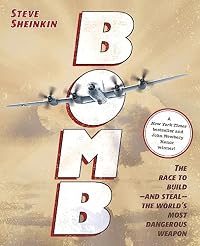
Bomb: The Race to Build - and Steal - the World's Most Dangerous Weapon
by Steve Sheinkin
On This Page
Description
Recounts the scientific discoveries that enabled atom splitting, the military intelligence operations that occurred in rival countries, and the work of brilliant scientists hidden at Los Alamos.Tags
Recommendations









Member Reviews
In December 1938, physicists Lise Meitner and Otto Frisch made a startling discovery: that atoms could actually be split. With the awareness that atomic fission could result in the creation of powerful bombs, three countries raced to develop that technology: Germany, the USSR, and the United States. The sense of urgency increased with the outbreak of World War II. Sheinkin summarizes the events that led to the development of America’s atomic bomb in this award-winning book for young adult readers.
The subject matter is complex, necessitating at least a brief explanation of the physics behind the bomb, but Sheinkin does a great job. He not only provides the basics in a remarkably simple way, but makes it as secondary to the story as show more possible. As a result, the book will not challenge readers without any background in science. In any event, most of the story reads like an action-packed spy thriller, and indeed, that is precisely how events unfolded in that era.
The U.S. effort was concentrated in Los Alamos, New Mexico, where the best scientists from around the world assembled to work on the top-secret “Manhattan Project” as it was known. But it was far from the only center of action. Sheinkin devotes a few chapters to the dramatic developments in Norway to deprive the Germans of a supply of “heavy water,” which is useful in the production of nuclear weapons. Fission bombs mainly rely on enriched uranium, which is expensive and time-consuming to make. But reactors that use heavy water not only can use unrefined uranium as a fuel, but will produce plutonium as a waste product that can also be used in weapons. (In addition to Los Alamos, where the theoretical aspects of the bomb were worked out, the U.S. also constructed secret installations in in Oak Ridge, Tennessee for uranium separation, and in Handford, Washington, for the production of plutonium.)
The endeavor by the allies to sabotage the Vemork heavy water plant in Norway is one of the most exciting stories of WWII, but Sheinkin can only provide a taste of it in this book, which is much broader in scope. (In an interview Sheinkin compared the Norway enterprise to “Indiana Jones on skis,” and that description seems quite apt. Readers who want to know more should read Assault in Norway: Sabotaging the Nazi Nuclear Program by Thomas Gallagher. Although it is non-fiction, it is one of the most exciting books I’ve ever read!)
Much of Sheinkin’s story follows the spies who endeavored to give the secrets of making the bomb to the Soviet Union. Ted Hall, for example, one of these spies, was the youngest scientist at Los Alamos. He had graduated high school at age 13, and was studying physics at Harvard in 1944 (age 18) when he was recruited to join the Manhattan Project. He feared that the U.S. would be more likely to use atomic bombs if no other country had them, and in any event, the Soviets were purportedly allies of the U.S. He contacted the Soviets on his own initiative. Other spies were recruited by the Soviets, who wanted to develop the bomb as quickly as possible; finding out the results of American efforts would greatly expedite the process.
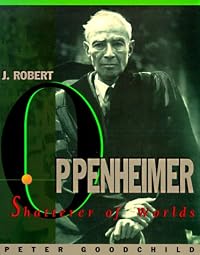
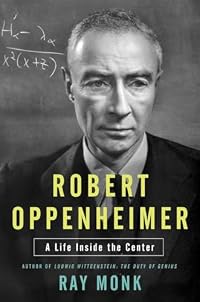
One of those the Soviets attempted to recruit, unsuccessfully, was J. Robert Oppenheimer, who was in charge of the Manhattan Project. But the very fact of the attempt, coupled with Oppenheimer’s opposition to further use of the bomb after he saw the effects of its use in Japan, led to the end of his career. In the anti-Communist paranoia of the post-war period, hawks in the government were able to have Oppenheimer’s security clearance removed. Thus this true patriot, whose contributions were considered to have been essential to the development of the bomb, was now reviled as a traitor, with his career ruined and his spirit broken. Ted Hall, by contrast, was known to the FBI but never convicted, and he moved to Britain to work in a lab at Cambridge University. (Oppenheimer not only had more public visibility than Hall, but powerful political enemies.)
In an epilogue, the author discusses the dangers of nuclear weapons, including the threat of their use by terrorist groups or crazy rulers. Or what if, he asks, there is a nuclear confrontation between two countries that don’t involve the U.S.? He writes:
“And if you think atomic explosions in Asia wouldn’t affect Americans, consider this. A study published in Scientific American in 2010 looked at the probable impact of a ‘small’ nuclear war, one in which India and Pakistan each dropped fifty atomic bombs. The scientists concluded that the explosions would ignite massive firestorms, sending enormous amounts of dust and smoke into the atmosphere. This would block some of the sun’s light from reaching the earth, making the planet colder an darker - for about ten years. Farming would collapse, and people all over the globe would starve to death. And that’s if only half of one percent of all the atomic bombs on earth were used.”
Sheinkin concludes:
“In the end, this is a difficult story to sum up. The making of the atomic bomb is one of history’s most amazing examples of teamwork and genius and poise under pressure. But it’s also the story of how humans created a weapon capable of wiping our species off the planet. It’s a story with no end in sight. And, like it or not, you’re in it.”
Evaluation:. Sheinkin is an excellent distiller of historical events for teens and older. With the danger now posed in the Korean Peninsula, inter alia, the story is more relevant than ever.
Note: This book is a great place to start in reading about the development of the atomic bomb, but it is necessarily very sketchy in its coverage of a huge, multi-faceted story. For further reading on this subject, I highly recommend these books:
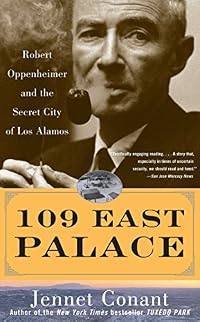
109 East Palace: Robert Oppenheimer and the Secret City of Los Alamos by Jennet Conant
Assault in Norway: Sabotaging the Nazi Nuclear Program by Thomas Gallagher
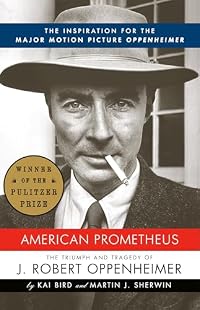
American Prometheus: The Triumph and Tragedy of J. Robert Oppenheimer by Kai Bird
The Making of the Atomic Bomb by Richard Rhodes (a bit more technical than the others cited herein) show less
The subject matter is complex, necessitating at least a brief explanation of the physics behind the bomb, but Sheinkin does a great job. He not only provides the basics in a remarkably simple way, but makes it as secondary to the story as show more possible. As a result, the book will not challenge readers without any background in science. In any event, most of the story reads like an action-packed spy thriller, and indeed, that is precisely how events unfolded in that era.
The U.S. effort was concentrated in Los Alamos, New Mexico, where the best scientists from around the world assembled to work on the top-secret “Manhattan Project” as it was known. But it was far from the only center of action. Sheinkin devotes a few chapters to the dramatic developments in Norway to deprive the Germans of a supply of “heavy water,” which is useful in the production of nuclear weapons. Fission bombs mainly rely on enriched uranium, which is expensive and time-consuming to make. But reactors that use heavy water not only can use unrefined uranium as a fuel, but will produce plutonium as a waste product that can also be used in weapons. (In addition to Los Alamos, where the theoretical aspects of the bomb were worked out, the U.S. also constructed secret installations in in Oak Ridge, Tennessee for uranium separation, and in Handford, Washington, for the production of plutonium.)
The endeavor by the allies to sabotage the Vemork heavy water plant in Norway is one of the most exciting stories of WWII, but Sheinkin can only provide a taste of it in this book, which is much broader in scope. (In an interview Sheinkin compared the Norway enterprise to “Indiana Jones on skis,” and that description seems quite apt. Readers who want to know more should read Assault in Norway: Sabotaging the Nazi Nuclear Program by Thomas Gallagher. Although it is non-fiction, it is one of the most exciting books I’ve ever read!)
Much of Sheinkin’s story follows the spies who endeavored to give the secrets of making the bomb to the Soviet Union. Ted Hall, for example, one of these spies, was the youngest scientist at Los Alamos. He had graduated high school at age 13, and was studying physics at Harvard in 1944 (age 18) when he was recruited to join the Manhattan Project. He feared that the U.S. would be more likely to use atomic bombs if no other country had them, and in any event, the Soviets were purportedly allies of the U.S. He contacted the Soviets on his own initiative. Other spies were recruited by the Soviets, who wanted to develop the bomb as quickly as possible; finding out the results of American efforts would greatly expedite the process.
One of those the Soviets attempted to recruit, unsuccessfully, was J. Robert Oppenheimer, who was in charge of the Manhattan Project. But the very fact of the attempt, coupled with Oppenheimer’s opposition to further use of the bomb after he saw the effects of its use in Japan, led to the end of his career. In the anti-Communist paranoia of the post-war period, hawks in the government were able to have Oppenheimer’s security clearance removed. Thus this true patriot, whose contributions were considered to have been essential to the development of the bomb, was now reviled as a traitor, with his career ruined and his spirit broken. Ted Hall, by contrast, was known to the FBI but never convicted, and he moved to Britain to work in a lab at Cambridge University. (Oppenheimer not only had more public visibility than Hall, but powerful political enemies.)
In an epilogue, the author discusses the dangers of nuclear weapons, including the threat of their use by terrorist groups or crazy rulers. Or what if, he asks, there is a nuclear confrontation between two countries that don’t involve the U.S.? He writes:
“And if you think atomic explosions in Asia wouldn’t affect Americans, consider this. A study published in Scientific American in 2010 looked at the probable impact of a ‘small’ nuclear war, one in which India and Pakistan each dropped fifty atomic bombs. The scientists concluded that the explosions would ignite massive firestorms, sending enormous amounts of dust and smoke into the atmosphere. This would block some of the sun’s light from reaching the earth, making the planet colder an darker - for about ten years. Farming would collapse, and people all over the globe would starve to death. And that’s if only half of one percent of all the atomic bombs on earth were used.”
Sheinkin concludes:
“In the end, this is a difficult story to sum up. The making of the atomic bomb is one of history’s most amazing examples of teamwork and genius and poise under pressure. But it’s also the story of how humans created a weapon capable of wiping our species off the planet. It’s a story with no end in sight. And, like it or not, you’re in it.”
Evaluation:. Sheinkin is an excellent distiller of historical events for teens and older. With the danger now posed in the Korean Peninsula, inter alia, the story is more relevant than ever.
Note: This book is a great place to start in reading about the development of the atomic bomb, but it is necessarily very sketchy in its coverage of a huge, multi-faceted story. For further reading on this subject, I highly recommend these books:
109 East Palace: Robert Oppenheimer and the Secret City of Los Alamos by Jennet Conant
Assault in Norway: Sabotaging the Nazi Nuclear Program by Thomas Gallagher
American Prometheus: The Triumph and Tragedy of J. Robert Oppenheimer by Kai Bird
The Making of the Atomic Bomb by Richard Rhodes (a bit more technical than the others cited herein) show less
It is far more difficult than I anticipated to find compelling, well-researched narrative nonfiction for young readers. I have an eight-year-old who is an advanced reader and this book came recommended by his teacher, who listened to the book on audiotape (audio cd?) with her children. My son could not put this book down. I flipped through the first pages when he finished and fell into the same trap. Sheinkin is a wonderfully engaging writer, whose storytelling gifts are second to none, and who has a great eye for the kind of narrative shape that will engage young readers. At the same time, I found that the research was solid. He was able to draw out the human stories behind this great and terrible human achievement (the bomb itself), show more as well as the complex morality of the bombings of Hiroshima and Nagasaki. In addition, there are photos integrated into a very cool interior design. There were a couple annoying typos in the text (principal/principle) that are merely copyediting issues, but otherwise I found this to be a very solid read. I have sought out Sheinkin's other works of narrative nonfiction for my son and look forward to reading more. show less
The best explanation of the world politics of WWII I've ever read. The clearest most detailed description of the effort behind the Manhattan Project I've ever seen and I lived in Los Alamos! We live with so many consequences of the nuclear weapon quest. It was hurried and desperate and short sighted and amazing.
Steve Sheinkin is a master at writing engaging non-fiction. Although many of his books are published and promoted for the Young Adult market, they are perfect choices for adults who enjoy a narrative approach rather than an academic approach to non-fiction.
In Bomb: The Race to Build and Steal the World's Most Dangerous Weapon, Sheinkin weaves three storylines together. After the discovery of nuclear fission in the 1930s, physicists became aware that weapons of immense destruction could be built. As World War II heated up, the race to build an atomic bomb took on new importance to both Germany and the Allies, with both sides realizing the danger of letting the enemy complete production first. The Americans, working in cooperation with show more the British, assembled working groups of leading scientists and also sent teams of saboteurs deep into Norway to slow Germany's production efforts. Although allied with the Soviet Union, Roosevelt and Churchill refuse to share information on the bomb with Stalin, leading to extensive, and ultimately successful, efforts to steal the technical details of the bomb.
All three threads kept me eager to turn the page. The science was fascinating, rather than overwhelming. Although the intense work of the Manhattan Project scientists is to be admired, the book does not glorify the use of atomic weapons, but ends with sobering thoughts on how their work affected them personally as well as the next several decades of U.S. history. show less
In Bomb: The Race to Build and Steal the World's Most Dangerous Weapon, Sheinkin weaves three storylines together. After the discovery of nuclear fission in the 1930s, physicists became aware that weapons of immense destruction could be built. As World War II heated up, the race to build an atomic bomb took on new importance to both Germany and the Allies, with both sides realizing the danger of letting the enemy complete production first. The Americans, working in cooperation with show more the British, assembled working groups of leading scientists and also sent teams of saboteurs deep into Norway to slow Germany's production efforts. Although allied with the Soviet Union, Roosevelt and Churchill refuse to share information on the bomb with Stalin, leading to extensive, and ultimately successful, efforts to steal the technical details of the bomb.
All three threads kept me eager to turn the page. The science was fascinating, rather than overwhelming. Although the intense work of the Manhattan Project scientists is to be admired, the book does not glorify the use of atomic weapons, but ends with sobering thoughts on how their work affected them personally as well as the next several decades of U.S. history. show less
It is less fashionable these days than it used to be to lie awake at night and worry about the destruction of life on earth by means of atomic weapons. For one thing, global climate change seems to be a much more certain fate, about which it is much harder to come to agreement. We may still have the nuclear weapons, but nobody thinks that the big powers, the ones who could really destroy the planet, want to use them. The nuclear wars we worry about these days would involve India, Pakistan, Israel or, coming soon to a Middle East near you, Iran.
Nonetheless, the story of how these death machines were invented is still worth reading. Sheinkin's "Bomb" is tertiary history, written for a high school audience, or for a complete novice to the show more history of the nuclear weapons program in the US. It's a first rate retelling of a story that is familiar to us old timers - familiar from biographies of key participants, from full academic histories written from specific perspectives, and if you are of my parent's generation, from newspaper reporting. There is nothing new here to a student of Cold War history, except the package itself. But what we do get here is a very nice package, a good historical polishing and finishing, a weaving together of the Soviet spy story, the Norwegian saboteur story, the Einstein story, the Truman story, the Oppenheimer story, the German scientists' story, and on and on. Each of these facets are animated and put on stage together and made to speak to each other.
The cast of familiar characters is vast, from Richard Feynmen to Moe Berg to the Rosenberg's - you've heard all these names before, and you've probably read about their roles in great detail. To read this book is to sit down in front of the TV and have NOVA narrate it all, although in considerably more detail than a TV show. You might say that this is a television documentary of a history book, in the very best sense. It can be finished in a few hours.
This is the form in which history enters consciousness, enters the minds of young people, becomes part of the narrative of popular culture. You could say that this is what history is reduced to, but history must be reduced to some form if it is to have relevance to culture. This story, as told here, is three, four and five steps removed from the reality, but it is very well presented. If you knew nothing about how the atomic bomb came to exist on planet Earth, or about the era and the people that created it, you would be well served and well educated by this history.
The footnoting style is notable: Each chapter relies extensively on secondary sources, and rather than using numbered footnotes, each reference is cited by chapter, and then by the first words of the quoted text. It's very clean and easy to work with.
The illustrations are familiar, but useful and interesting. The 1940s typewriter typeface used for the illustrations nicely captures the graphical feel of the time.
This is "the good parts" story of the development of the atomic bomb. All the boring stuff is left out, all the historical highlights (intrigue, ecstasy and agony) are there. It is short and sweet and to the point, with some satisfying "whatever happened to..." follow-ups in the epilogue that take us into the late 1990s. I found myself pulled along by the clear writing and the pleasure of reviewing a familiar technological horror story, a history of the birth of the end of the world. show less
Nonetheless, the story of how these death machines were invented is still worth reading. Sheinkin's "Bomb" is tertiary history, written for a high school audience, or for a complete novice to the show more history of the nuclear weapons program in the US. It's a first rate retelling of a story that is familiar to us old timers - familiar from biographies of key participants, from full academic histories written from specific perspectives, and if you are of my parent's generation, from newspaper reporting. There is nothing new here to a student of Cold War history, except the package itself. But what we do get here is a very nice package, a good historical polishing and finishing, a weaving together of the Soviet spy story, the Norwegian saboteur story, the Einstein story, the Truman story, the Oppenheimer story, the German scientists' story, and on and on. Each of these facets are animated and put on stage together and made to speak to each other.
The cast of familiar characters is vast, from Richard Feynmen to Moe Berg to the Rosenberg's - you've heard all these names before, and you've probably read about their roles in great detail. To read this book is to sit down in front of the TV and have NOVA narrate it all, although in considerably more detail than a TV show. You might say that this is a television documentary of a history book, in the very best sense. It can be finished in a few hours.
This is the form in which history enters consciousness, enters the minds of young people, becomes part of the narrative of popular culture. You could say that this is what history is reduced to, but history must be reduced to some form if it is to have relevance to culture. This story, as told here, is three, four and five steps removed from the reality, but it is very well presented. If you knew nothing about how the atomic bomb came to exist on planet Earth, or about the era and the people that created it, you would be well served and well educated by this history.
The footnoting style is notable: Each chapter relies extensively on secondary sources, and rather than using numbered footnotes, each reference is cited by chapter, and then by the first words of the quoted text. It's very clean and easy to work with.
The illustrations are familiar, but useful and interesting. The 1940s typewriter typeface used for the illustrations nicely captures the graphical feel of the time.
This is "the good parts" story of the development of the atomic bomb. All the boring stuff is left out, all the historical highlights (intrigue, ecstasy and agony) are there. It is short and sweet and to the point, with some satisfying "whatever happened to..." follow-ups in the epilogue that take us into the late 1990s. I found myself pulled along by the clear writing and the pleasure of reviewing a familiar technological horror story, a history of the birth of the end of the world. show less
During World War II, one of the most decisive battles was fought, not on a battlefield, but in a laboratory. The race to build the atomic bomb was on, and pretty much all of the world's top physicists were working on the problem in one way or another, for one major power or another. In Los Alamos, New Mexico, scientists from the Manhattan Project, headed up by Robert Oppenheimer, worked tirelessly to build and test the American bomb -- but a few of them were also leaking secrets to the Soviet Union. Meanwhile, American spies worked hard to sabotage Germany's nuclear efforts, despite not knowing exactly what German scientists knew, or even where they were.
This is an amazingly gripping and readable work of nonfiction. The pacing is show more excellent as the author switches from one story to another, and he does a great job of making the historical figures come alive without sacrificing historical accuracy. And his brief summation of the Cold War and the development of more powerful weapons at the end of the book is quite chilling. I listened to the audiobook and found myself completely captivated by it. I'd recommend this title for its intended audience (ages 9-14), but also for adults like myself, with an interest but not a lot of knowledge on the topic of the Manhattan Project and the creation of the first nuclear weapons. show less
This is an amazingly gripping and readable work of nonfiction. The pacing is show more excellent as the author switches from one story to another, and he does a great job of making the historical figures come alive without sacrificing historical accuracy. And his brief summation of the Cold War and the development of more powerful weapons at the end of the book is quite chilling. I listened to the audiobook and found myself completely captivated by it. I'd recommend this title for its intended audience (ages 9-14), but also for adults like myself, with an interest but not a lot of knowledge on the topic of the Manhattan Project and the creation of the first nuclear weapons. show less
Although it was a bit slow, I enjoyed this book on several levels. I learned a lot about the science behind the bombs - the chemistry and physics which I didn't know much about. It was interesting to follow the process and the scientists to see how it all came about.
Plus, there were the stories about the spies, and why they gave information to the Russians. It wasn't the money, as you might think. I believe they thought they were doing the right thing, either because they sympathized with the Communists or because they felt the technology was too powerful for a single country to have, and it needed to be balanced to prevent world domination.
I also understand some of the sympathy for the Russians, who suffered greatly by being the ones show more directly fighting in the harsh conditions without resources while the people in the US sat back and waited to see what happened. But then they had Stalin, who was pretty ruthless, so giving them access to nuclear technology at that particular time was perhaps not a great idea. show less
Plus, there were the stories about the spies, and why they gave information to the Russians. It wasn't the money, as you might think. I believe they thought they were doing the right thing, either because they sympathized with the Communists or because they felt the technology was too powerful for a single country to have, and it needed to be balanced to prevent world domination.
I also understand some of the sympathy for the Russians, who suffered greatly by being the ones show more directly fighting in the harsh conditions without resources while the people in the US sat back and waited to see what happened. But then they had Stalin, who was pretty ruthless, so giving them access to nuclear technology at that particular time was perhaps not a great idea. show less
Members
- Recently Added By
Lists

NPRs Ultimate Backseat Bookshelf: 100 Must-Reads for kids 9-14
222 works; 30 members

Books Read in 2014
2,342 works; 89 members

Books Read in 2021
5,361 works; 113 members

Newbery Honor Books By year - II - 1981-2035
143 works; 4 members

Books Read in 2023
5,547 works; 145 members

Robert F. Sibert Informational Book Medal
102 works; 1 member

Youth: War & Terrorism
47 works; 1 member
Author Information

30+ Works 8,479 Members
Some Editions
Awards and Honors
Awards
Distinctions
Notable Lists
Work Relationships
Common Knowledge
- Canonical title
- Bomb: The Race to Build - and Steal - the World's Most Dangerous Weapon
- Original publication date
- 2012
- Important places
- Los Alamos, New Mexico, USA
- Important events
- World War II (1939 | 1945); Manhattan Project
- First words
- HARRY GOLD WAS RIGHT: This is a big story. It's the story of the creation - and theft - of the deadliest weapon ever invented.
Classifications
Statistics
- Members
- 2,024
- Popularity
- 10,284
- Reviews
- 172
- Rating
- (4.31)
- Languages
- Old English, English, Japanese
- Media
- Paper, Audiobook, Ebook
- ISBNs
- 22
- ASINs
- 8