On This Page
Description
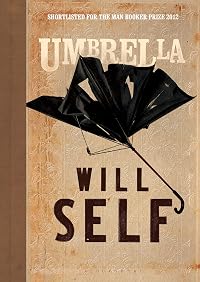
A brother is as easily forgotten as an umbrella. James Joyce, Ulysses Recently having abandoned his RD Laing-influenced experiment in running a therapeutic community - the so-called Concept House in Willesden - maverick psychiatrist Zack Busner arrives at Friern Hospital, a vast Victorian mental asylum in North London, under a professional and a marital cloud. He has every intention of avoiding controversy, but then he encounters Audrey Dearth, a working-class girl from Fulham born in 1890 show more who has been immured in Friern for decades. A socialist, a feminist and a munitions worker at the Woolwich Arsenal, Audrey fell victim to the encephalitis lethargica sleeping sickness epidemic at the end of the First World War and, like one of the subjects in Oliver Sacks' Awakenings, has been in a coma ever since. Realising that Audrey is just one of a number of post-encephalitics scattered throughout the asylum, Busner becomes involved in an attempt to bring them back to life - with wholly unforeseen consequences. show lessTags
Recommendations





















Member Reviews
This is not an easy book to read. Paragraphs go on for page after page, so few are the breaks between them that on first sight it seems that there are no paragraphs at all. Streams of consiousnesses flow as the boundaries between the four main characters and three main time periods are endlessly blurred. A sentence will start out at the beginning of the twentieth century and transform seamlessly somewhere in the middle to the thoughts of character nearly a hundred years later. Snippets of songs, and random thoughts force their way into the narrative; a sizeable portion of the text is printed in italics for reasons that are not completely obvious. Looking at the first few pages I very nearly made the decision not to read the book at all, show more it seemed so obviously to be hard work. But when I started reading, I found that it wasn't the uphill struggle that it had seemed to be. While I certainly couldn't understand everything that was written, or all or even most of the references, by letting it just flow over me I found that I was very engaged with the book, interested in the characters and didn't for a moment think of putting it to one side. In particular I loved the lack of boundaries: the way a Victorian pocket watch transforms within a single sentence to become a digital wrist watch, and the reader suddenly realises that the narrative has changed character and moved forward seventy years.
Audrey Death, (or De'Ath, or Deer as her name endlessly mutates) is a long-term patient in the Frien Barnet mental hospital of 1971 Britain. She is one of a number of patients who are believed to be suffering from encephalitis lethargica, a disease which spread throughout Europe in the aftermath of World War I, leaving a third of its sufferers dead and another third completely unable to interact with the world around them, while at the same time suffering from compulsive repetive tics performed at astonishing speed. Dr Zachary Busner, a psychiatrist at the hospital recognises a similarity between certain of their symptoms and those of Parkinson's disease, for which the drug L-DOPA has had positive results. Deciding to treat the sufferers with this drug in a somewhat unorthodox trial, he discovers that the drug has dramatic effects, and the somnambulant patients wake. Interwoven with this narrative is one of Britain during and immediately after the First World War: Audrey's life as an intelligent and politically active young woman working at the Arsenal munitions factory in London; her younger brother Stanley who is obsessed with the mechanical progress that the new century offers; and her older brother Albert whose astonishing calculating power propels him out of the reach of his working class family. The third and final narrative strand is that of the older Dr Busner, retired and looking back on his life and in particular the summer when he awoke the encephalitic patients.
I found this to be a very rewarding read, and, apart from The Garden of Evening Mists, the most thought-provoking of my Booker short-list reads. I found the awakening of the patients particularly interesting as it is loosely based on a true story, detailed in Oliver Sacks' book Awakenings and also the subject of the film of the same name with Robin Williams and Robert de Niro (neither of which I had come across before reading this book). But I also enjoyed the characters that Will Self had created against this backdrop and I enjoyed the blurring of time and consciousness that he employs. So while this is not a book for everyone, and requires quite slow and careful reading, I'd encourage people to read at least the first forty of fifty pages before deciding it's not for them. show less
Audrey Death, (or De'Ath, or Deer as her name endlessly mutates) is a long-term patient in the Frien Barnet mental hospital of 1971 Britain. She is one of a number of patients who are believed to be suffering from encephalitis lethargica, a disease which spread throughout Europe in the aftermath of World War I, leaving a third of its sufferers dead and another third completely unable to interact with the world around them, while at the same time suffering from compulsive repetive tics performed at astonishing speed. Dr Zachary Busner, a psychiatrist at the hospital recognises a similarity between certain of their symptoms and those of Parkinson's disease, for which the drug L-DOPA has had positive results. Deciding to treat the sufferers with this drug in a somewhat unorthodox trial, he discovers that the drug has dramatic effects, and the somnambulant patients wake. Interwoven with this narrative is one of Britain during and immediately after the First World War: Audrey's life as an intelligent and politically active young woman working at the Arsenal munitions factory in London; her younger brother Stanley who is obsessed with the mechanical progress that the new century offers; and her older brother Albert whose astonishing calculating power propels him out of the reach of his working class family. The third and final narrative strand is that of the older Dr Busner, retired and looking back on his life and in particular the summer when he awoke the encephalitic patients.
I found this to be a very rewarding read, and, apart from The Garden of Evening Mists, the most thought-provoking of my Booker short-list reads. I found the awakening of the patients particularly interesting as it is loosely based on a true story, detailed in Oliver Sacks' book Awakenings and also the subject of the film of the same name with Robin Williams and Robert de Niro (neither of which I had come across before reading this book). But I also enjoyed the characters that Will Self had created against this backdrop and I enjoyed the blurring of time and consciousness that he employs. So while this is not a book for everyone, and requires quite slow and careful reading, I'd encourage people to read at least the first forty of fifty pages before deciding it's not for them. show less
This book is not accessible at all. It’s like reading a different language.
It’s annoying because I love the way he paints a picture, but it’s so difficult to read. No chapters or paragraphs, switching between narrative and thoughts of different people and time periods in one sentence. You don’t know where one starts and another begins. It’s incredibly hard work.
I think sometimes he deliberately tries to be impenetrable, like he's challenging the reader to keep up with him. Which isn’t good story telling. It’s a way of saying ‘I’m cleverer than you, if you can crack this book you might enjoy it, but you have to decode it first’.
I stuck with it because I always finish a book, but the first half was painful to read, the show more second half once I grasped how he wrote, was VERY SLIGHTLY easier. It just seems like he’s trying to prove a point that he’s cleverer than us, like he’s used thesaurus on every word and it’s stopped making sense. I don’t think he writes for us, I think he writes to show off to other writers.
I’m sure if it made sense with correct punctuation it would be a great book. I understood about 60% of it. I only gave it more than one star because what I actually understood, could have been a great emotive story. Though the confusion of the writing took from that. show less
It’s annoying because I love the way he paints a picture, but it’s so difficult to read. No chapters or paragraphs, switching between narrative and thoughts of different people and time periods in one sentence. You don’t know where one starts and another begins. It’s incredibly hard work.
I think sometimes he deliberately tries to be impenetrable, like he's challenging the reader to keep up with him. Which isn’t good story telling. It’s a way of saying ‘I’m cleverer than you, if you can crack this book you might enjoy it, but you have to decode it first’.
I stuck with it because I always finish a book, but the first half was painful to read, the show more second half once I grasped how he wrote, was VERY SLIGHTLY easier. It just seems like he’s trying to prove a point that he’s cleverer than us, like he’s used thesaurus on every word and it’s stopped making sense. I don’t think he writes for us, I think he writes to show off to other writers.
I’m sure if it made sense with correct punctuation it would be a great book. I understood about 60% of it. I only gave it more than one star because what I actually understood, could have been a great emotive story. Though the confusion of the writing took from that. show less
Some thoughts on my first reading.
Last winter I happened to read Oliver Sacks’s [b:Awakenings|14456|Awakenings|Oliver Sacks|https://d.gr-assets.com/books/1388274053s/14456.jpg|2755549] (see review), which is the urtext for Will Self’s new novel Umbrella. In the mid-60s Dr. Sacks famously gave L-DOPA, a relatively new drug mimicking the neurotransmitter dopamine, to dozens of post-encephalytic patients under his care at Beth Abraham Hospital in the Bronx, New York. These patients had been infected in 1918 by theencephalitis lethargica virus, or "sleepy sickness" (not to be confused with the Spanish Influenza of the same year). In Umbrella even where references to Sacks’s book do not appear — such as the World War I and show more present-day sections — it's clear the good doctor's classic collection of case studies serves as the novel's inspration.
Those patients who survived the virus were able afterwards to lead normal lives for many years, sometimes decades, until they were stricken with symptoms similar to Parkinson’s disease: locked postures that turned them into living statuary (akinesia), hurrying gait (festination), frozen skewed gaze (oculogyyric crises) and so on. These patients did not have Parkinson's proper, but since the virus reduced dopamine in their brains to about 10 or 15% of healthy levels, they experienced identical if somewhat more severe symptoms than actual Parkinson's patients. The only difference being that Parkinson’s is ultimately fatal, while post-encephalitics (“enkies,” affectionately) might live for the rest of their natural span with the symptoms. Such is the experience of Audrey Death, a main character here.
Self takes much from Awakenings that echoes the trials and tribulations of Dr. Sacks’s enkies--and Sacks himself--and inflates it into a grand fiction resembling the inspirational text very little. Here, the doctor, Zachary Busner, a psychiatrist of Jewish birth, is adrift in a vast English hospital called the Friern, known for its ½ mile or so of monotonous corridors. Many of the problems Sacks had in the 1960s — like pulling all the patients into a single ward, studying their hyper-slow movements via speeded up film, dealing with a highly political hospital administration, and other details — are dramatized here.
There are also large sections of entirely new invention in Umbrella. In one, we follow Audrey Death in her pre-war family life and war-time work as as a “munitionette,” preparing shells for the British army. We also follow two of her brothers: Stanley Death, a trench soldier, and the soi disant Albert De'Ath, who becomes a big-time government honcho. Stanley has an aristocratic lover, Adeline, who he must leave to fight in the endless and pointless war. One day he is brought to live amid a society of bisexual soldiers from both sides deep under that gap between the trenches known as No Man's Land. I suspect this subterranean world of tunnelers was in part inspired by Alasdair Gray's dystopic [b:Lanark|161037|Lanark|Alasdair Gray|https://d.gr-assets.com/books/1327948704s/161037.jpg|958496] (see review). Audrey's other brother, Albert, has Asperger's, and is a savant of Rain Man-like propensities, though much higher functioning. Audrey, during her pre-encephalytic days, was a staunch socialist while Albert was a conservative. These divergent political views lead to much conflict between them.
Will Self is an acquired taste. In the past he has regularly made fun of death and unspeakable cruelty with an almost hysterical glee. His talent is certainly great. It has, however, to my mind, at times been exceeded by his ambition. So that no matter how good his books are, and the ones I’ve read are outstanding, he nonetheless always seems to outstrip it (his talent) by way of a stridency of tone (ambition). Subtlety of tone is not in Self's gift. His is always a full throttle, no-holds-barred kind of narrative propulsion. He doesn't dance elliptically around a subject, but always seems to bore to its very heart. This style leaves us with some very naked prose, a prose that doesn’t skirt its limitations, but is on the contrary quite open about them. I know readers who can't abide Self's deeply cynical trickster prose. So I'm happy to report that the cackling satire of Self's earlier work seems in abeyance here, in favor of something softer, something less shrill, more compassionate.
The story is rendered in an almost pitch-perfect Modernist style. I found this astonishing. How does Self pick up Literary Modernism and its attributes (stream of consciousness, abrupt transitions, multiple unidentified intersecting voices, etc.) and don it like a hat? The choice of style strikes me as perfect. I note in my review of [b:Awakenings|14456|Awakenings|Oliver Sacks|https://d.gr-assets.com/books/1388274053s/14456.jpg|2755549] how Sacks’s, by flipping from main text to footnote and back again, actually introduces a kind of novelistic discursiveness into his text that would not be obvious to those reading his book without the footnotes. It's an almost [b:Moby-Dick or The Whale|153747|Moby-Dick; or, The Whale|Herman Melville|https://d.gr-assets.com/books/1327940656s/153747.jpg|2409320]-like discursiveness. And I can’t help wondering if Sacks's discursiveness did not in part suggest to Self his neo-Modernist approach.
This is a complex book and a single reading will not satisfy those who wish to know it. On first reading I found some 20% of it utterly ambiguous. So I look forward to rereading it soon, though that will probably not render it more "coherent." A stunner and very highly recommended, especially for those who enjoy challenging texts. show less
Last winter I happened to read Oliver Sacks’s [b:Awakenings|14456|Awakenings|Oliver Sacks|https://d.gr-assets.com/books/1388274053s/14456.jpg|2755549] (see review), which is the urtext for Will Self’s new novel Umbrella. In the mid-60s Dr. Sacks famously gave L-DOPA, a relatively new drug mimicking the neurotransmitter dopamine, to dozens of post-encephalytic patients under his care at Beth Abraham Hospital in the Bronx, New York. These patients had been infected in 1918 by theencephalitis lethargica virus, or "sleepy sickness" (not to be confused with the Spanish Influenza of the same year). In Umbrella even where references to Sacks’s book do not appear — such as the World War I and show more present-day sections — it's clear the good doctor's classic collection of case studies serves as the novel's inspration.
Those patients who survived the virus were able afterwards to lead normal lives for many years, sometimes decades, until they were stricken with symptoms similar to Parkinson’s disease: locked postures that turned them into living statuary (akinesia), hurrying gait (festination), frozen skewed gaze (oculogyyric crises) and so on. These patients did not have Parkinson's proper, but since the virus reduced dopamine in their brains to about 10 or 15% of healthy levels, they experienced identical if somewhat more severe symptoms than actual Parkinson's patients. The only difference being that Parkinson’s is ultimately fatal, while post-encephalitics (“enkies,” affectionately) might live for the rest of their natural span with the symptoms. Such is the experience of Audrey Death, a main character here.
Self takes much from Awakenings that echoes the trials and tribulations of Dr. Sacks’s enkies--and Sacks himself--and inflates it into a grand fiction resembling the inspirational text very little. Here, the doctor, Zachary Busner, a psychiatrist of Jewish birth, is adrift in a vast English hospital called the Friern, known for its ½ mile or so of monotonous corridors. Many of the problems Sacks had in the 1960s — like pulling all the patients into a single ward, studying their hyper-slow movements via speeded up film, dealing with a highly political hospital administration, and other details — are dramatized here.
There are also large sections of entirely new invention in Umbrella. In one, we follow Audrey Death in her pre-war family life and war-time work as as a “munitionette,” preparing shells for the British army. We also follow two of her brothers: Stanley Death, a trench soldier, and the soi disant Albert De'Ath, who becomes a big-time government honcho. Stanley has an aristocratic lover, Adeline, who he must leave to fight in the endless and pointless war. One day he is brought to live amid a society of bisexual soldiers from both sides deep under that gap between the trenches known as No Man's Land. I suspect this subterranean world of tunnelers was in part inspired by Alasdair Gray's dystopic [b:Lanark|161037|Lanark|Alasdair Gray|https://d.gr-assets.com/books/1327948704s/161037.jpg|958496] (see review). Audrey's other brother, Albert, has Asperger's, and is a savant of Rain Man-like propensities, though much higher functioning. Audrey, during her pre-encephalytic days, was a staunch socialist while Albert was a conservative. These divergent political views lead to much conflict between them.
Will Self is an acquired taste. In the past he has regularly made fun of death and unspeakable cruelty with an almost hysterical glee. His talent is certainly great. It has, however, to my mind, at times been exceeded by his ambition. So that no matter how good his books are, and the ones I’ve read are outstanding, he nonetheless always seems to outstrip it (his talent) by way of a stridency of tone (ambition). Subtlety of tone is not in Self's gift. His is always a full throttle, no-holds-barred kind of narrative propulsion. He doesn't dance elliptically around a subject, but always seems to bore to its very heart. This style leaves us with some very naked prose, a prose that doesn’t skirt its limitations, but is on the contrary quite open about them. I know readers who can't abide Self's deeply cynical trickster prose. So I'm happy to report that the cackling satire of Self's earlier work seems in abeyance here, in favor of something softer, something less shrill, more compassionate.
The story is rendered in an almost pitch-perfect Modernist style. I found this astonishing. How does Self pick up Literary Modernism and its attributes (stream of consciousness, abrupt transitions, multiple unidentified intersecting voices, etc.) and don it like a hat? The choice of style strikes me as perfect. I note in my review of [b:Awakenings|14456|Awakenings|Oliver Sacks|https://d.gr-assets.com/books/1388274053s/14456.jpg|2755549] how Sacks’s, by flipping from main text to footnote and back again, actually introduces a kind of novelistic discursiveness into his text that would not be obvious to those reading his book without the footnotes. It's an almost [b:Moby-Dick or The Whale|153747|Moby-Dick; or, The Whale|Herman Melville|https://d.gr-assets.com/books/1327940656s/153747.jpg|2409320]-like discursiveness. And I can’t help wondering if Sacks's discursiveness did not in part suggest to Self his neo-Modernist approach.
This is a complex book and a single reading will not satisfy those who wish to know it. On first reading I found some 20% of it utterly ambiguous. So I look forward to rereading it soon, though that will probably not render it more "coherent." A stunner and very highly recommended, especially for those who enjoy challenging texts. show less
This book was about mental illness and how it has been treated through WWI through 1977 in Britain. It focuses primarily on Audrey Death - a misdiagnosed patient in a mental hospital and her modern day psychiatrist by the name of Dr. Zachary Busner. She has been catatonic since 1918 and institutionalized until Dr. Busner finds her. In her mind, she is living out different scenes from her past. Through the book, we learn of her father and brothers, her work at the munitions factory, as well as her political leanings as a socialist and sufferagette. The effects of WWI and the industrial revolution run throughout the book. The theme of umbrellas runs through the book as well - whether Audrey was a typist at the Paragon Parasol factory, or show more Zach was musing about the disposable umbrella of today, they weave throughout the prose.
The interesting part of the novel is that as Dr. Busner increasingly recognizes the signs of mental illness in himself, his family, and the general population as a whole, while he finds a solution physical for Audrey and patients similar to her which he gathers in Ward 20. He stages an intervention and an awakening which for some has been 60 years long. The novel weaves together the storylines from the brothers, Audrey, Busner, a former doctor at the hospital, Audrey's father, and one brother's mistress into a complete tapestry - an oroborous that comes full circle by the close of the novel.
The book is a clear testament to the lackadaisical attitude that many doctors take to pushing pharmaceuticals down patients throats along with a refill and repeat behaviour. Having been on the receiving of this treatment, I don't find it very amusing, so for me, that facet of the story struck home and was very personal in a negative way, but Dr. Busner bucks this system to do the right thing for his patients even though he gets trouble from the administration and the orderlies.
To do the book justice, you either need to have the appropriate psychiatric reference material, or get the ebook version so you have access to the dictionary for all the uncommon medical terminology. Without these definitions, the book is incomplete.
As a slice of history prior to WWI and during the war as well as during the industrial revolution, this book is like slices in time for extremely complex characters. Life was different then, and yet in many ways the same. The imagery is quite stunning and fully accessible for each character - whether in the trenches in France, having tea in an upper class parlor, on a golf course, or at the munitions factory, every scene was beautifully described in both words and sounds. Sounds and songs play a consistent role throughout the prose. This novel is complex. It is weighty and well written with serious messages about quality of life, the medical establishment,technology and progress - or not.
Mr. Self has created what I would consider a piece of literature that should stand the test of time. show less
The interesting part of the novel is that as Dr. Busner increasingly recognizes the signs of mental illness in himself, his family, and the general population as a whole, while he finds a solution physical for Audrey and patients similar to her which he gathers in Ward 20. He stages an intervention and an awakening which for some has been 60 years long. The novel weaves together the storylines from the brothers, Audrey, Busner, a former doctor at the hospital, Audrey's father, and one brother's mistress into a complete tapestry - an oroborous that comes full circle by the close of the novel.
The book is a clear testament to the lackadaisical attitude that many doctors take to pushing pharmaceuticals down patients throats along with a refill and repeat behaviour. Having been on the receiving of this treatment, I don't find it very amusing, so for me, that facet of the story struck home and was very personal in a negative way, but Dr. Busner bucks this system to do the right thing for his patients even though he gets trouble from the administration and the orderlies.
To do the book justice, you either need to have the appropriate psychiatric reference material, or get the ebook version so you have access to the dictionary for all the uncommon medical terminology. Without these definitions, the book is incomplete.
As a slice of history prior to WWI and during the war as well as during the industrial revolution, this book is like slices in time for extremely complex characters. Life was different then, and yet in many ways the same. The imagery is quite stunning and fully accessible for each character - whether in the trenches in France, having tea in an upper class parlor, on a golf course, or at the munitions factory, every scene was beautifully described in both words and sounds. Sounds and songs play a consistent role throughout the prose. This novel is complex. It is weighty and well written with serious messages about quality of life, the medical establishment,technology and progress - or not.
Mr. Self has created what I would consider a piece of literature that should stand the test of time. show less
A brother is as easily forgotten as an umbrella. James Joyce, Ulysses
Surely the phrase “it’s worth the struggle” when applied to a book one is about to read is a phrase to strike fear into the heart of any reader. Yet that is one phrase that seemed to come out of several reviews that I read about this Booker shortlisted novel. Irritatingly it might actually be true. I have to say that a modernist, stream of consciousness is not my idea of a literary good time. It is in fact the kind of writing I generally avoid. There were times when reading this novel – that I lost my way a bit – there were moments when I found myself thinking “what the ..” however I didn’t hate it – I actually rather liked it. It is a challenge – show more and I do think that the novel will carry on dividing opinion – and it may also, I’m afraid, disengage many readers who feel life is just too short.
“Umbrellas are never contracted for, only mysteriously acquired, to be fleetingly useful, then annoying and cumbersome before eventually being lost.”
The story – don’t worry there is a story, and a good one – concerns Dr Zack Busner and his work in the 1970’s with a group of patients at the Friern hospital in London. The patients are those suffering from encephalitis lethargica – contracted around the time of the First World War. One patient in particular interests Busner – Audrey Death. The story of Dr Busner’s work with his trusty side kick psychiatric nurse Mboya is woven into the story of Audrey’s life and that of her two brothers during the First World War. Audrey, a working class girl born in 1890, becomes a feminist and a munitions worker, at the London Arsenal where her bother Albert launches his career, ending up in charge of the place itself. When Audrey contracts the sleeping sickness that swept the world at this time, her brother Stanley is missing, while Albert is coming up in the world. Busner’s relationship with Mboya and his patients is what really engaged me. The world of the huge Victorian asylums that by the 1970s were coming to an end is a horrifying one, the image of catatonic human beings left for decades to merely exist with little if any intervention is one to make anyone shudder. In 2010 an ageing Busner, returns to where the Friern hospital was, to contemplate his work.
“Nostalgia, he thinks, more and more of it will be needed to tranquillise the collective psychosis of a steadily ageing population. And he would have reached for an appropriate Biro were he not having such a bad day.”
The non-linear structure of this novel makes it hard work at times. There are very long sentences – paragraphs which go for pages – no chapters, and the different story strands weave in and out of one another. There are times when decades pass in the middle of a sentence, so the reader really needs to keep their wits about them, and so it is certainly not a quick read.
As regards the Booker Prize, I wouldn’t be surprised to see it win, it wouldn’t be my choice as winner – but it is clever and the prose is really very good. However I don’t think a book that so many people will be put off reading – or that will start and give up on – should win. For me the prize should be about celebrating books that are beautifully written, certainly, but also that people want to read and engage with, I’m not sure Umbrella is that book. show less
Surely the phrase “it’s worth the struggle” when applied to a book one is about to read is a phrase to strike fear into the heart of any reader. Yet that is one phrase that seemed to come out of several reviews that I read about this Booker shortlisted novel. Irritatingly it might actually be true. I have to say that a modernist, stream of consciousness is not my idea of a literary good time. It is in fact the kind of writing I generally avoid. There were times when reading this novel – that I lost my way a bit – there were moments when I found myself thinking “what the ..” however I didn’t hate it – I actually rather liked it. It is a challenge – show more and I do think that the novel will carry on dividing opinion – and it may also, I’m afraid, disengage many readers who feel life is just too short.
“Umbrellas are never contracted for, only mysteriously acquired, to be fleetingly useful, then annoying and cumbersome before eventually being lost.”
The story – don’t worry there is a story, and a good one – concerns Dr Zack Busner and his work in the 1970’s with a group of patients at the Friern hospital in London. The patients are those suffering from encephalitis lethargica – contracted around the time of the First World War. One patient in particular interests Busner – Audrey Death. The story of Dr Busner’s work with his trusty side kick psychiatric nurse Mboya is woven into the story of Audrey’s life and that of her two brothers during the First World War. Audrey, a working class girl born in 1890, becomes a feminist and a munitions worker, at the London Arsenal where her bother Albert launches his career, ending up in charge of the place itself. When Audrey contracts the sleeping sickness that swept the world at this time, her brother Stanley is missing, while Albert is coming up in the world. Busner’s relationship with Mboya and his patients is what really engaged me. The world of the huge Victorian asylums that by the 1970s were coming to an end is a horrifying one, the image of catatonic human beings left for decades to merely exist with little if any intervention is one to make anyone shudder. In 2010 an ageing Busner, returns to where the Friern hospital was, to contemplate his work.
“Nostalgia, he thinks, more and more of it will be needed to tranquillise the collective psychosis of a steadily ageing population. And he would have reached for an appropriate Biro were he not having such a bad day.”
The non-linear structure of this novel makes it hard work at times. There are very long sentences – paragraphs which go for pages – no chapters, and the different story strands weave in and out of one another. There are times when decades pass in the middle of a sentence, so the reader really needs to keep their wits about them, and so it is certainly not a quick read.
As regards the Booker Prize, I wouldn’t be surprised to see it win, it wouldn’t be my choice as winner – but it is clever and the prose is really very good. However I don’t think a book that so many people will be put off reading – or that will start and give up on – should win. For me the prize should be about celebrating books that are beautifully written, certainly, but also that people want to read and engage with, I’m not sure Umbrella is that book. show less
Almost every time I picked up this book to read it, I fell asleep. Now that may be a coincidence, but it's certainly not an endorsement.
Umbrella tells the story of Audrey Death, a munitions worker during the Great War, who contracts a brain disease and is confined to a lunatic asylum in a state of catatonia. The other key character is Dr Zack Busner, the psychotherapist who is treating her decades later.
The book is written as one continuous stream; there are no chapters and few paragraph breaks. Self frequently shifts his narrative to a different time, setting and protagonist in the middle of a sentence. I often found myself re-reading a page a couple of times to figure out what he was on about now. This is made worse by his repeatedly show more chucking in italicised words and phrases to no discernable purpose.
I suppose this is all supposed to represent the chaos going on inside Audrey's diseased mind but it is really irritating. The book is almost 400pp already; it doesn't need to be made any more verbose. Self's narrative is simply not interesting enough to put up with these mannerisms.
There is the germ of a good story here, but this Self-indulgent writing style has turned it into a snooze-fest - in my case literally. show less
Umbrella tells the story of Audrey Death, a munitions worker during the Great War, who contracts a brain disease and is confined to a lunatic asylum in a state of catatonia. The other key character is Dr Zack Busner, the psychotherapist who is treating her decades later.
The book is written as one continuous stream; there are no chapters and few paragraph breaks. Self frequently shifts his narrative to a different time, setting and protagonist in the middle of a sentence. I often found myself re-reading a page a couple of times to figure out what he was on about now. This is made worse by his repeatedly show more chucking in italicised words and phrases to no discernable purpose.
I suppose this is all supposed to represent the chaos going on inside Audrey's diseased mind but it is really irritating. The book is almost 400pp already; it doesn't need to be made any more verbose. Self's narrative is simply not interesting enough to put up with these mannerisms.
There is the germ of a good story here, but this Self-indulgent writing style has turned it into a snooze-fest - in my case literally. show less
Will Self’s Umbrella darts back and forth over decades, over characters, over emotions, and over topics. But at its affecting and surprisingly accessible core, Umbrella tells the heartbreaking stories of Audrey Death—working girl, munitionette during World War One, progressive—and her renegade psychiatrist, Dr. Zachary Busner. Already scarred by neurological damage brought on by packing and assembling shells for the front, Miss Death becomes one of the many post-War victims of the encephalitis lethargica epidemic. Decades later, Dr. Busner, consigned to working in the cavernous Friern Mental Hospital after a failed research career at another hospital, recognizes the complex rationales and patterns inherent in the seemingly random show more tics of the post-encephalitic “enkies.” Against the advice of his bureaucratic superiors but with the help and encouragement of Mboya, an undervalued Anglo-African aide, Dr. Busner experiments with administering L-Dopa to the enkies, “awakening” them from their catatonia.
Will Self populates Umbrella with a rich cast surrounding Miss Death: her lover; her beloved brother Stanley, who dies during the War; her human computer brother, who emerges as Sir Albert De’Ath; her father; and her friend and roommate during the War. Dr. Busner, sad and pathetic, is surrounded by a failing marriage and distant children; remote and critical bureaucratic superiors and staff; and the artfully drawn Mboya.
Umbrella demands patience and attention from the reader. Chapters are non-existent, paragraphs extend for multiple pages, and sentences are long. Umbrella includes popular culture and some literary references from twentieth century England, which may enrich reading Umbrella but are not essential to understanding and enjoying it. The often dream-like stream of consciousness in Umbrella likely reflects the thoughts and emotions of the seemingly catatonic enkies. Topics and references scattered throughout Umbrella may send the reader off on hunts for explanations, with certainly a first stop at Oliver Sacks’ Awakenings.
With patience and attention, Umbrella provides the reader with memorable and fascinating insights into characters, times, and events that are best not forgotten. Umbrella also stands as a remarkably innovative historical novel. Having just completed my first reading of Umbrella, I already look forward to rereading it. show less
Will Self populates Umbrella with a rich cast surrounding Miss Death: her lover; her beloved brother Stanley, who dies during the War; her human computer brother, who emerges as Sir Albert De’Ath; her father; and her friend and roommate during the War. Dr. Busner, sad and pathetic, is surrounded by a failing marriage and distant children; remote and critical bureaucratic superiors and staff; and the artfully drawn Mboya.
Umbrella demands patience and attention from the reader. Chapters are non-existent, paragraphs extend for multiple pages, and sentences are long. Umbrella includes popular culture and some literary references from twentieth century England, which may enrich reading Umbrella but are not essential to understanding and enjoying it. The often dream-like stream of consciousness in Umbrella likely reflects the thoughts and emotions of the seemingly catatonic enkies. Topics and references scattered throughout Umbrella may send the reader off on hunts for explanations, with certainly a first stop at Oliver Sacks’ Awakenings.
With patience and attention, Umbrella provides the reader with memorable and fascinating insights into characters, times, and events that are best not forgotten. Umbrella also stands as a remarkably innovative historical novel. Having just completed my first reading of Umbrella, I already look forward to rereading it. show less
Members
- Recently Added By
Published Reviews
ThingScore 88
Die Europäische Schlafkrankheit und ihre Symptome erscheinen so grausam wie die Erfindung aus einem Endzeitroman, doch tatsächlich erkrankten während der Pandemie zwischen 1917 und 1927 rund 5 Millionen Menschen daran. Ein Drittel der Erkrankten starb im direkten Zusammenhang mit der Entzündung ihres Gehirns. Bereits 1973 hat Oliver Sacks mit Awakenings ein Buch über diese Kranken und show more ihren Arzt geschrieben. Wo Sacks den Leser mit Fakten und Fotos absetzt, holt Will Selfs Regenschirm ihn ab – und lässt ihn verstört und nachdenklich zurück. show less
added by tigerelfe
The influence of Joyce’s Ulysses is everywhere, from a housekeeper’s apron printed with pictures of Georgian Dublin to the seamless fragmentation of the prose. An era, a scene, a character’s age can all change in the course of a sentence.
Every experience is filtered through another, or infiltrated by it. At times, this Self-imposed exile from any “fixed regard”, threatens the show more narrative’s sanity, and its readability, but that is the point. Whether Umbrella takes experimental fiction beyond the magnificent cul-de-sac into which Joyce steered it is doubtful. But this fresh reminder of the potential of finding new selves – to be and to write with – is extraordinary. show less
added by vancouverdeb
Lists

Mental health fiction
55 works; 18 members

Booker Prize
491 works; 62 members

Man Booker Prize Longlist 2012
12 works; 2 members

Booker Prize Shortlist: Titles Not Yet Read
161 works; 4 members

IMPAC Dublin Literary Award 2014 longlist
150 works; 3 members
Talk Discussions
Past Discussions
Umbrella by Will Self in Booker Prize (October 2012)
Author Information

66+ Works 10,316 Members
William Woodard "Will" Self was born on September 26, 1961. He is a British author, journalist and political commentator. He wrote ten novels, five collections of short fiction, three novellas and five collections of non-fiction writing. His novel Umbrella was shortlisted for the Man Booker Prize. His subject matter often includes mental illness, show more illegal drugs and psychiatry. Self is a regular contributor to publications including Playboy, The Guardian, Harpers, The New York Times and the London Review of Books. He also writes a column for New Statesman, and over the years he has been a columnist for The Observer, The Times and the Evening Standard. His columns for Building Design on the built environment, and for the Independent Magazine on the psychology of place brought him to prominence as a thinker concerned with the politics of urbanism. Will Self will deliver the closing address at the 2015 Melbourne Writers Festival (MWF) 2015. (Bowker Author Biography) show less
Awards and Honors
Awards
Notable Lists
Series

Common Knowledge
- Original title
- Umbrella
- Original publication date
- 2012
- People/Characters
- Dr Zachary Busner; Agnes Death; Audrey Dearth (Death | Deeth | Deerth | De'Ath); Stanley Death; Albert Death
- Important places
- Friern Hospital; London, England, UK
- Epigraph
- A brother is as easily forgotten as an umbrella.
- James Joyce - Dedication
- For Deborah
- First words
- I'm an ape-man, I'm an ape-man...
Classifications
Statistics
- Members
- 585
- Popularity
- 50,271
- Reviews
- 21
- Rating
- (3.22)
- Languages
- 8 — Czech, English, Estonian, French, German, Italian, Spanish, Turkish
- Media
- Paper, Audiobook, Ebook
- ISBNs
- 24
- ASINs
- 6