Alexis
by Marguerite Yourcenar
On This Page
Description
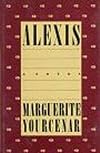
"It was with Alexis that, in 1929, Marguerite Yourcenar began her career as a novelist. Few literary debuts in this century are quite as astonishing; for this profound analysis of a man's homosexuality was written by a young woman of twenty-four. The novel takes the form of a letter from the protagonist, Alexis, to his wife, Monique. His letter declares that he can no longer continue in the marriage, that he must obey the demands of his own sexuality, against which he has struggled in vain, show more to achieve a freedom without which he cannot live"--Back cover show lessTags
Recommendations



































Member Recommendations

Member Reviews
This novel, originally published in 1929, takes the form of a letter from Alexis, a young musician, to his wife, Monique. She has just given birth to their son, yet, in his letter, he declares that he can no longer continue in his marriage, but must yield to the demands of his own sexuality, against which he had striven for some time. Yourcenar herself commented, "A shocking topic at the time and from the pen of a young woman," (Yourcenar was only twenty-four at the time).
Told in a Youcenar's signature classical prose style, it reminiscent of the sort of novel written by Gide as well. In fact many critics have noted Gide's influence as being predominant, yet this is a very personal work that foreshadows her later work. She effectively show more explores the sense of fate driving Alexis in a world that, even now, is often less than welcoming to the searching of a man like Alexis. There are passages that highlight the lack of understanding among the general populace. However, what many might find scandalous is in this short novel handled with delicacy and decency. Seldom have I read any literature that shares so tactfully the internal feelings and yearnings of one man. The result is a gentle book, sharing honestly one life in a way that stands as a preface for the many lives that Marguerite Yourcenar would create in her subsequent novels. show less
Told in a Youcenar's signature classical prose style, it reminiscent of the sort of novel written by Gide as well. In fact many critics have noted Gide's influence as being predominant, yet this is a very personal work that foreshadows her later work. She effectively show more explores the sense of fate driving Alexis in a world that, even now, is often less than welcoming to the searching of a man like Alexis. There are passages that highlight the lack of understanding among the general populace. However, what many might find scandalous is in this short novel handled with delicacy and decency. Seldom have I read any literature that shares so tactfully the internal feelings and yearnings of one man. The result is a gentle book, sharing honestly one life in a way that stands as a preface for the many lives that Marguerite Yourcenar would create in her subsequent novels. show less
A chave de leitura desse texto está no subtítulo. O romance é uma carta escrita por Alexis para explicar para a esposa porque a está abandonando. Entre divagações e devaneios, momentos poéticos e dramáticos a carta vai encurralando o autor e o leitor até seu desfecho. Pensar que foi escrito pela jovem Marguerite com apenas 24 anos também vai surpreender o leitor.
This was Yourcenar's first book and what a debut it must have been. A 26 year old well-to-do young woman writing about a gay man who has lived most of his life in conflict with his sexuality and leaves his wife. This short novel, and like that magnificent ouvre [b:Memoirs of Hadrian|12172|Memoirs of Hadrian|Marguerite Yourcenar|https://i.gr-assets.com/images/S/compressed.photo.goodreads.com/books/1416448158l/12172._SX50_.jpg|1064574] by the same author, is written in epistolary form. There is that distinct voice and style too but it is not as developed as it is in the later book.
There were few gay novels when this book was written in the 1920s. [a:E.M. Forster|86404|E.M. show more Forster|https://images.gr-assets.com/authors/1402057803p2/86404.jpg] had written [b:Maurice|3103|Maurice|E.M. Forster|https://i.gr-assets.com/images/S/compressed.photo.goodreads.com/books/1361934128l/3103._SX50_.jpg|2394184] fifteen years before this novel and the book wouldn't get published until 1971 after Forster's death, [a:Richard Bruce Nugent|495162|Richard Bruce Nugent|https://images.gr-assets.com/authors/1420653498p2/495162.jpg] had written the wonderful short story "Smoke, Lilies and Jade" three years prior which unfortunately is not as remembered as it should be. Gide, Proust and Mann had written books with homosexual male characters and storylines, but their books had more to do with longing for lovers than the inner-conflict suffered by those that are gay, which Yourcenar writes about. This was before Baldwin, Capote, Vidal and the other gay writers after the 1940s and so this book must have been a bold publication.
Alexis who is the protagonist and the writer of the letter paints a picture of his life, his childhood and the unhappiness he suffers. Homosexuality is more alluded than mentioned outright, but Yourcenar manages to write well enough about the disgust and fear one feels in those frightful years of uncertainty and self-loathing, which I don't believe she would have done so well if she had not been bisexual herself. However as mentioned in another review by David here: https://www.goodreads.com/review/show/1138331180?book_show_action=true&from_..., many of the things Alexis says are not believable as the poor boy and later young man that he was, among them something about the worst thing about poverty not being the deprivations but the promiscuity. A statement made undoubtedly from the ignorance of that state as Yourcenar was from a wealthy family herself. So although this book is good, it is clearly one from a writer whose powers, knowledge and talent have not ripened. show less
There were few gay novels when this book was written in the 1920s. [a:E.M. Forster|86404|E.M. show more Forster|https://images.gr-assets.com/authors/1402057803p2/86404.jpg] had written [b:Maurice|3103|Maurice|E.M. Forster|https://i.gr-assets.com/images/S/compressed.photo.goodreads.com/books/1361934128l/3103._SX50_.jpg|2394184] fifteen years before this novel and the book wouldn't get published until 1971 after Forster's death, [a:Richard Bruce Nugent|495162|Richard Bruce Nugent|https://images.gr-assets.com/authors/1420653498p2/495162.jpg] had written the wonderful short story "Smoke, Lilies and Jade" three years prior which unfortunately is not as remembered as it should be. Gide, Proust and Mann had written books with homosexual male characters and storylines, but their books had more to do with longing for lovers than the inner-conflict suffered by those that are gay, which Yourcenar writes about. This was before Baldwin, Capote, Vidal and the other gay writers after the 1940s and so this book must have been a bold publication.
Alexis who is the protagonist and the writer of the letter paints a picture of his life, his childhood and the unhappiness he suffers. Homosexuality is more alluded than mentioned outright, but Yourcenar manages to write well enough about the disgust and fear one feels in those frightful years of uncertainty and self-loathing, which I don't believe she would have done so well if she had not been bisexual herself. However as mentioned in another review by David here: https://www.goodreads.com/review/show/1138331180?book_show_action=true&from_..., many of the things Alexis says are not believable as the poor boy and later young man that he was, among them something about the worst thing about poverty not being the deprivations but the promiscuity. A statement made undoubtedly from the ignorance of that state as Yourcenar was from a wealthy family herself. So although this book is good, it is clearly one from a writer whose powers, knowledge and talent have not ripened. show less
In the early 20th century, a homosexual husband, a gifted and young musician from Central Europe, writes a long passionate letter to his heterosexual wife explaining his true sexual orientation and why he must leave her to be true to himself.
Pioneering French novel by a young Marguerite Yourcenar, written in the late 1920s when she was only 24! Dated, but historically (and psychologically) interesting. Exquisite sentences.
Pioneering French novel by a young Marguerite Yourcenar, written in the late 1920s when she was only 24! Dated, but historically (and psychologically) interesting. Exquisite sentences.
A good early novel from Yourcenar. She described it as the 'portrait of a voice,' and that seems an apt description. The novel is plotless, but the tension builds up inexorably in the protagonist's mind as he makes the superhuman effort to take what he wants, in terms of love. It seems a little outdated, though - the themes it explores have since been examined with more honesty and grace, though Yourcenar's gentle precision makes this worthwhile for her fans.
Uma carta do jovem músico Alexis para sua esposa, Monique, que acaba de ter um filho. Escrito no estilo que consagrou Yourcenar. E baseado em um casal real, Egon e Jeanne, ela, o amor da vida de Michel de Crayencour, como contado em Quoi? L´eternité. Uma boa leitura.
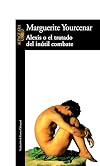
Alexis o el tratado del inútil combate es, en opinión de la crítica más cualificada, una obra mayor, aunque de breve extensión. La larga carta que Alexis dirige a su esposa, desmenuzando dolorosamente el inútil combate sostenido entre sus inclinaciones y su vocación, constituye la totalidad de estas páginas. Y a través de ella asistimos al retrato de una voz, como lo ha llamado la misma Marguerite Yourcenar, pero también a la exposición de un tema del que pocos se atrevían a hablar en 1927, fecha en que fue publicado el libro. En un país hoy desaparecido, en un momento en que las circunstancias históricas transforman toda Europa, finalizando con un mundo y una manera de vivir, Alexis se detiene para rendir cuenta de esas show more mismas transformaciones en carne propia, para finalizar con un engaño y para intentar iniciar un nuevo modo de vida entre millones de seres que, a su vez, también lo inician. show less
Mar 5, 2023Spanish
Members
- Recently Added By
Lists

Pre-1969 LGBTQ Literature
182 works; 69 members
Author Information

112+ Works 14,501 Members
A French novelist, playwright, and essayist born in Belgium, Marguerite Yourcenar was a resident of the United States for many years, living in isolation on a small island off the coast of Maine. Educated at home by wealthy and cultured parents, she had a strong humanistic background, translating the ancient Greek poet Pindar and the poems of the show more modern Greek Constantine Cavafy. She has translated American Negro spirituals and works of Virginia Woolf (see Vol. 1) and Henry James (see Vol. 1). Her novels include Alexis (1929) and Coup de Grace (1939). A collection of poems, Fires, was published in 1936. Yourcenar is particularly known for Hadrian's Memoirs (1951), a philosophical meditation in the form of a fictional autobiography of the second-century Roman emperor. In Germaine Bree's judgment, "With great erudition and great psychological insight, Marguerite Yourcenar constructed a body of work that is a meditation on the destiny of mankind." In 1981, she became the first woman ever elected to the French Academy. (Bowker Author Biography) show less
Some Editions
Series
Belongs to Publisher Series
RBA Narrativa Actual (88)
Harvill (139)
Work Relationships
Is contained in
Common Knowledge
- Canonical title*
- Alexis o Il trattato della lotta vana
- Original title
- Alexis ou le traité du vain combat
- Original publication date
- 1928 (1e édition originale française ∙ Au Sans Pareil ∙ Paris) (1e édition originale française ∙ Au Sans Pareil ∙ Paris); 1952 (Nouvelle édition révisée française ∙ Plon) (Nouvelle édition révisée française ∙ Plon)
- People/Characters*
- Alexis; Monique
- Important places
- Viena, Austria
- First words
- Questa lettera, amica mia, sarà lunghissima.
Esta carta, amiga mía, será muy larga. - Last words
- (Click to show. Warning: May contain spoilers.)Avevo assunto nei tuoi riguardi impegni imprudenti che la vita avrebbe disdetto: ti chiedo scusa, il più umilmente possibile, non tanto di lasciarti, quanto di essere rimasto così a lungo.
(Click to show. Warning: May contain spoilers.)Había contraído contigo compromisos imprudentes y la vida se encargó de protestar: te pido perdón, lo más humildemente posible, no por dejarte, sino por haberme quedado tanto tiempo. - Original language
- Francés
*Some information comes from Common Knowledge in other languages. Click "Edit" for more information.
Classifications
- Genres
- Fiction and Literature, General Fiction, LGBTQ+
- DDC/MDS
- 843.912 — Literature & rhetoric French & related literatures French fiction 1900- 20th Century 1900-1945
- LCC
- PQ2649 .O8 .A7513 — Language and Literature French, Italian, Spanish and Portuguese literatures French literature Modern literature 1900-1960
- BISAC
Statistics
- Members
- 418
- Popularity
- 73,579
- Reviews
- 17
- Rating
- (3.71)
- Languages
- 13 — Basque, Catalan, Dutch, English, Finnish, French, German, Greek, Italian, Portuguese, Spanish, Swedish, Turkish
- Media
- Paper, Audiobook, Ebook
- ISBNs
- 34
- ASINs
- 6