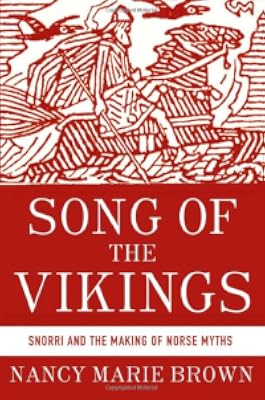
Song of the Vikings: Snorri and the Making of Norse Myths
by Nancy Marie Brown
On This Page
Description
"Much like Greek and Roman mythology, Norse myths are read, reread, and treasured. Famous storytellers such as JRR Tolkien and Neil Gaiman have drawn their inspiration from the long-haired, mead-drinking, marauding and pillaging Vikings. The author who gave us Nordic mythology is a twelfth-century Icelandic chieftain by the name of Snorri Sturluson. Like Homer, Snorri was a bard, writing down and embellishing the folklore and pagan legends of medieval Scandinavia. While his stories make show more great reading for children, the amazing world of medieval Scandinavia has been omitted from narrative history. In Song of the Vikings, award-winning author Nancy Marie Brown brings to life the intrigue and power struggles at the court of medieval Reykjav'k that Snorri inhabited. Drawing on new and original research, her deep knowledge of Icelandic history, and first-hand reading of the original medieval sources, Brown produces a richly textured narrative of a world that continues to fascinate. "-- show lessTags
Recommendations




Member Reviews
I confess, I don't know much about Norse mythology, but Nancy Marie Brown's Song of the Vikings makes me want to go out and read as much about them as I possibly can. Brown's book is partly a history of the Icelandic sagas themselves: where they came from, how they've been passed down over the centuries, and how they've been used (and misused) in literature and politics. But it's mostly the story of one man, Snorri Sturluson, who is largely responsible for the fact that we know much about these Icelandic sagas at all. Some of them he recorded, others of them he seems to have come up with himself.
Brown tells Snorri's story to the extent it's possible to do so, weaving his complex biography into the story of his writings and the stories show more which inspired them. It's quite a tale, worthy of the sagas!
The final chapter traces the long life of Snorri's stories as they were told and retold, translated and published, read and understood and put to use by later writers, from Tolkien to Wagner to Gaiman. The book would be worth it for that single chapter alone, but the rest is also well worth a read. Fascinating stuff. show less
Brown tells Snorri's story to the extent it's possible to do so, weaving his complex biography into the story of his writings and the stories show more which inspired them. It's quite a tale, worthy of the sagas!
The final chapter traces the long life of Snorri's stories as they were told and retold, translated and published, read and understood and put to use by later writers, from Tolkien to Wagner to Gaiman. The book would be worth it for that single chapter alone, but the rest is also well worth a read. Fascinating stuff. show less
Six-word review: Icelandic sagas permeate contemporary Western culture.
Extended review:
Snorri Sturluson was a thirteenth-century Icelandic poet who assumed the task of writing down many of the myths and heroic tales of his people. He assembled a great number of those verses, enhancing them by his own invention, in a medieval masterwork known as the Prose Edda. He also codified the rules and elements of verse composition in old Icelandic, an art so highly prized in the Nordic lands of the Middle Ages that kings, warriors, and common folk alike revered its finest practitioners.
No warrior himself, Snorri was crafty, duplicitous, and relentless in pursuit of his supreme political ambitions. And he used his powers of the spoken and written show more word as much for self-aggrandizement as to glorify the valiant deeds of others--and to heap scorn on the losers.
In a society that crowned no kings of its own and guarded the independence of its barren volcanic island with the famous Viking ferocity, the mighty heroes of sword and shield depended on the poets and songcrafters in chieftains' halls to enshrine them in legend. For them, a record in memorable verse was the surest path to immortality--an immortality that the gods themselves did not share. For the destiny of the elder gods was to end with the cataclysm of Ragnarok and the bloody birth of a new world order.
Author Brown recounts Snorri's own story in lively, engaging prose, striking a sometimes difficult balance between readability and sound documentation. Like the ancient sagas of gods and heroes themselves, the world of medieval Iceland is alive with family rivalries, alliances and betrayals, politics and intrigue, and blood-drenched warfare. The line between fiction and fact is often unclear; indeed, the relative meanings of "fiction" and "fact" are unclear. Along the way Brown recounts numerous tales from Snorri's Edda and other Icelandic sagas, sometimes revealing their possible roots in history and more often showing how they themselves entered into history and shaped it.
The final chapter, "The Ring," brilliantly traces the descendants of the Edda right down to the present day, illuminating relationships among works that have framed and colored our perception of ourselves and our place in the world. As Brown writes in the opening pages:
=====(Excerpt begins)
(I)n the early 1600s Snorri was resurrected. Translations from Old Norse appeared throughout Europe. The craze led in one direction to the gothic novel and ultimately to modern heroic fantasy. Snorri influenced writers as various as Thomas Gray, William Blake, Sir Walter Scott, the Brothers Grimm, Thomas Carlyle, Henry Wadsworth Longfellow, Alfred Lord Tennyson, Robert Browning, Richard Wagner, Matthew Arnold, Henrik Ibsen, William Morris, Thomas Hardy, J. R. R. Tolkien, Hugh MacDiarmid, Jorge Luis Borges, W. H. Auden, Poul Anderson, Günther Grass, Gabriel García Márquez, Ursula K. LeGuin, A. S. Byatt, Seamus Heaney, Jane Smiley, Neil Gaiman, and Michael Chabon.
In another direction the rediscovery of Snorri's works led to Hitler's master race.
Snorri may be the most influential writer of the Middle Ages. His Edda, according to the 1909 translator, is "the deep and ancient wellspring of Western culture."
(Introduction, page 6)
=====(Excerpt ends)
Following the 206 pages of text are 38 pages of backmatter, including notes on sources, a list of further reading, and a detailed index in small print. Song of the Vikings is not just an entertaining and enlightening read, furnishing background and context for some of our most popular contemporary literature. It also shows us the depths of our own largely forgotten roots, flourishing even today in our classrooms, libraries, e-readers, and movie theaters.
To me, the hallmark of an exceptional work in any medium is that it alters my perceptions. It is no exaggeration to say that I am viewing the world and the words of its literary interpreters differently today, having read this book. This one will remain on my shelf as a resource and touchstone for future reading. show less
Extended review:
Snorri Sturluson was a thirteenth-century Icelandic poet who assumed the task of writing down many of the myths and heroic tales of his people. He assembled a great number of those verses, enhancing them by his own invention, in a medieval masterwork known as the Prose Edda. He also codified the rules and elements of verse composition in old Icelandic, an art so highly prized in the Nordic lands of the Middle Ages that kings, warriors, and common folk alike revered its finest practitioners.
No warrior himself, Snorri was crafty, duplicitous, and relentless in pursuit of his supreme political ambitions. And he used his powers of the spoken and written show more word as much for self-aggrandizement as to glorify the valiant deeds of others--and to heap scorn on the losers.
In a society that crowned no kings of its own and guarded the independence of its barren volcanic island with the famous Viking ferocity, the mighty heroes of sword and shield depended on the poets and songcrafters in chieftains' halls to enshrine them in legend. For them, a record in memorable verse was the surest path to immortality--an immortality that the gods themselves did not share. For the destiny of the elder gods was to end with the cataclysm of Ragnarok and the bloody birth of a new world order.
Author Brown recounts Snorri's own story in lively, engaging prose, striking a sometimes difficult balance between readability and sound documentation. Like the ancient sagas of gods and heroes themselves, the world of medieval Iceland is alive with family rivalries, alliances and betrayals, politics and intrigue, and blood-drenched warfare. The line between fiction and fact is often unclear; indeed, the relative meanings of "fiction" and "fact" are unclear. Along the way Brown recounts numerous tales from Snorri's Edda and other Icelandic sagas, sometimes revealing their possible roots in history and more often showing how they themselves entered into history and shaped it.
The final chapter, "The Ring," brilliantly traces the descendants of the Edda right down to the present day, illuminating relationships among works that have framed and colored our perception of ourselves and our place in the world. As Brown writes in the opening pages:
=====(Excerpt begins)
(I)n the early 1600s Snorri was resurrected. Translations from Old Norse appeared throughout Europe. The craze led in one direction to the gothic novel and ultimately to modern heroic fantasy. Snorri influenced writers as various as Thomas Gray, William Blake, Sir Walter Scott, the Brothers Grimm, Thomas Carlyle, Henry Wadsworth Longfellow, Alfred Lord Tennyson, Robert Browning, Richard Wagner, Matthew Arnold, Henrik Ibsen, William Morris, Thomas Hardy, J. R. R. Tolkien, Hugh MacDiarmid, Jorge Luis Borges, W. H. Auden, Poul Anderson, Günther Grass, Gabriel García Márquez, Ursula K. LeGuin, A. S. Byatt, Seamus Heaney, Jane Smiley, Neil Gaiman, and Michael Chabon.
In another direction the rediscovery of Snorri's works led to Hitler's master race.
Snorri may be the most influential writer of the Middle Ages. His Edda, according to the 1909 translator, is "the deep and ancient wellspring of Western culture."
(Introduction, page 6)
=====(Excerpt ends)
Following the 206 pages of text are 38 pages of backmatter, including notes on sources, a list of further reading, and a detailed index in small print. Song of the Vikings is not just an entertaining and enlightening read, furnishing background and context for some of our most popular contemporary literature. It also shows us the depths of our own largely forgotten roots, flourishing even today in our classrooms, libraries, e-readers, and movie theaters.
To me, the hallmark of an exceptional work in any medium is that it alters my perceptions. It is no exaggeration to say that I am viewing the world and the words of its literary interpreters differently today, having read this book. This one will remain on my shelf as a resource and touchstone for future reading. show less
This engaging biography describes the life of Snorri Sturluson, a powerful 12th-century Icelandic chieftain and the author of the poetic Edda - one of the oldest surviving documents of Norse mythology. As a novice of Viking history, I found this book fascinating and informative - though I suspect that there is much speculation and Brown isn't always clear when she is speculating and when she has hard evidence for her claims. As such, I think this biography would be enjoyed by people who are interested in learning a bit about the Vikings, but not experts on the subject.
Brown started each chapter out with a legend out of Snorri's Edda. Often, she told how this legend differs from other known versions and/or how it has affected modern show more culture. The rest of the book describes Snorri's life - his youth in the household of "the uncrowned King of Iceland," his marriage, his rise to political power, and his downfall. She seemed to get most of her hard evidence from a few primary documents and an outwardly biased biography written by Snorri's nephew, so often she had to fill in the gaps by saying "it's possible it happened more like this, since his nephew's story doesn't really jive with Snorri's personality." Of course, that makes me wonder if she had just as much positive bias towards Snorri as his nephew had negative bias. Overall, though, I'd say this biography was a success. When there is so little information available, and when the book is intended for a popular crowd rather than an academic one, such speculation is necessary - it makes the book more fun. show less
Brown started each chapter out with a legend out of Snorri's Edda. Often, she told how this legend differs from other known versions and/or how it has affected modern show more culture. The rest of the book describes Snorri's life - his youth in the household of "the uncrowned King of Iceland," his marriage, his rise to political power, and his downfall. She seemed to get most of her hard evidence from a few primary documents and an outwardly biased biography written by Snorri's nephew, so often she had to fill in the gaps by saying "it's possible it happened more like this, since his nephew's story doesn't really jive with Snorri's personality." Of course, that makes me wonder if she had just as much positive bias towards Snorri as his nephew had negative bias. Overall, though, I'd say this biography was a success. When there is so little information available, and when the book is intended for a popular crowd rather than an academic one, such speculation is necessary - it makes the book more fun. show less
 This review was written for LibraryThing Early Reviewers.
You can also read and comment on this review on my blog: http://digitalmanticore.com/?p=114
So, a few weeks ago we saw the new Loki movie—excuse me—Thor movie and I was like, by Odin’s beard! It has been too long since I read up on Norse mythology (which according to my records was in 2011)! I came home, hopped on to the website for my local library and found this book.
Song of the Vikings is an interesting read because it links a few different vectors of Norse mythology. There is a little bit of the myths themselves (we learn about the time Loki got down with a horse, for example, and why gold is otter’s ransom), but more than the myths, Brown lays down the saga of Snorri Sturluson and how the myths came down from the Vikings to show more the present. In many ways, this is more instructive than the actual content of the myths.
Snorri Sturluson is one of the most influential dudes you have (probably) never heard of. He is the author of several works: The Prose Edda, Heimskringla, and Egil’s Saga. The Edda is perhaps the most well-known of his works, even though no one knows what an “edda” actually is. Some think it might be “the book of Oddi,” (Oddi being the name of a place Snorri lived), or maybe something like “the art of poetry.” It could possibly even be given the cheeky translation of “the art of great-grandmother’s old-fashioned songs.” The Prose Edda (yes, this is in contrast to another author’s Poetic Edda) is the primary compendium of the stories we recognize as Norse mythology. Not only is this mythology awesome, but it has been called “the deep an ancient wellspring of Western culture.” So, if you are not an uncultured lout, you should listen up and learn yourself some Norse business.
Snorri lived in Iceland during the late 12th and early 13th century. Iceland at this time was kind of the way you might imagine it to be. People then and there had plots of land where they might graze cows or goats. There was, of course, a lot of fishing, and exceptionally well-situated landowners might have access to a hot spring. Families were brought together under chieftains, who were not exactly elected, but who could not govern if they did not have the confidence and might of the people behind them. Positions of power were typically cemented through family ties, but people were also respected for being well-versed in the law or for being great poets. Another cultural force at this time was Christianity, which was a surprise to me. There were churches in Iceland during this period and the church was gradually becoming more influential among the people.
In this climate we have Snorri. He was born to a fairly influential family and was a foster son to Jon Loftsson of Oddi, the “uncrowned king of Iceland.” Snorri became educated and grew up to be influential in his own right. He was the chief over some choice chieftaincies and he even became the lawspeaker at the allthing—essentially the most law-knowing and well-versed guy at the annual Icelandic assembly. He was also a great poet and he loved writing about the gods, especially Odin, who was, in Snorri’s opinion, the best god. While most people at the time favored Thor, Snorri seems to have considered him a dumb meat-head, eschewing Thor for Odin and his cleverness and skill in poetry. It should be noted that poetry was not then, as it is today, seen as a sign of femininity. Manly men went on raids and also traded verses to exhibit their keen wit. Vikings love poetry; it is manly business.
an image of Snorri Stuluson
Although Iceland was, at this time, an independent commonwealth, the Norwegian king had designs on the land. Snorri, in his quest for more power and influence, spent several seasons at the Norwegian court getting to know the young king and apparently glad-handing with everyone there. Snorri was also semi-obsessed with the concept of kingliness and what it meant to be a king. His first visit to Norway inspired his work Heimskringla, which is a saga about Norwegian kings. Snorri was concerned the Norway’s young king (then 16) was missing out on vital information. He worried that kids these days were losing the ability to understand poetry—that most influential of arts. Heimskringla goes a long way to explain the old stories of the gods; understanding these stories is the key to understanding poetry, and as such, all the important literature of the time. Nordic poetry was fond of kennings, which is basically referring to something by calling it something else. Brown includes this example to illustrate the importance of knowing one’s stories:
“The noble hater of the fire of the sea defends the woman-friend of the enemy of the wolf; prows are set before the step brow of the confidante of the friend of Mimir. The noble, all-powerful one knows how to protect the mother of the attacker of the work; enjoy, enemy of neck-rings, the mother of the troll-wife’s enemy until old age.”
Brown comments “As the translator of this stanza notes, the audience needs to know five myths and the family trees of two gods or it’s nonsense.” The majority of verses were similarly oblique (if the poet had any level of skill).
The main concept I got from Song of the Vikings is that almost everything we know of Norse myth came from one guy: Snorri Sturluson. It seems obvious that Snorri’s personal biases would have been woven into the myth, but I wonder how much? One thing that comes to mind is the duality of fire and ice, which runs through a lot of the myths (the creation myth, for one). Iceland would have been a place where snow and lava clash, but that would not be true of Norway and Sweden, where the myths originated. Did Snorri come up with this imagery himself because he was a storyteller or was this idea already part of the world of myth? I wonder how the myths would be different if not told by Snorri? We know that he was a big fan of Odin. Would we know that Odin traded an eye for wisdom?
The last chapter of the book deals with how Norse mythology became a part of our present culture. For a long time, the stories were essentially lost. After Snorri’s death, Iceland was annexed into Norway, Christianity became more prominent and, you know, paganism was not really on the rise. The church even tried to change the names of the weekdays to silly things like Third Day and Midweek Day (instead of Tyr’s Day and Odin’s Day, also known as Tuesday and Wednesday). I thought it was interesting that the Germans later (by later I mean 1700-1800s) reclaimed Norse mythology as their heritage. They took it up so fiercely that it essentially inspired modern German nationalism. During the early 20th century, any non-Germans who were interested in Norse myth were suspected to by Nazi sympathizers. Yes, this includes J. R. R. Tolkien, who was hugely influenced by Norse mythology.
Tolkien has probably done more to propel Norse myth into modern Western (American and English, at least) consciousness than anyone. As a professor of English, he started a club to focus on Nordic literature and he fought to get Norse myth into the syllabus. He felt that the Norse mythology was of great import to the English canon than Shakespeare, which is quite the claim.
Now, of course, the Norse gods are very much in pop culture, especially with movies like The Avengers and comics and the rest of it. Although, I think mythology is general is having quite the renaissance. Greek and Roman myth is getting treatment in things like Rick Riordan’s Percy Jackson and Camp Halfblood series, as well. I would be interested in see an analysis regarding what draws us to mythology. Is it just that it makes for great storytelling? Is it something more?
I’ll conclude with a quotation from Snorri. He states in the Edda, “But these things [lore] have now to be told to young poets … but these stories are not to be consigned to oblivion.” Thankfully, they were not and it seems like they will not be consigned to oblivion any time too soon.
If you are interested in Norse mythology, here are some suggestions for further reading:
Loki by Mike Vasich is a fantasy novel that retells some of the Norse mythology with a focus on my personal favorite aesir, Loki.
From Asgard to Valhalla: The Remarkable History of the Norse Myths by Heather O’Donoghue is a non-fiction work that focuses on how Norse myth has played out in popular culture over the last several centuries.
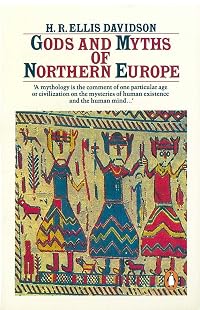
Gods and Myths of Northern Europe by H.R. Ellis Davidson is an academic treatment about the Norse gods, what we know about them, etc. show less
So, a few weeks ago we saw the new Loki movie—excuse me—Thor movie and I was like, by Odin’s beard! It has been too long since I read up on Norse mythology (which according to my records was in 2011)! I came home, hopped on to the website for my local library and found this book.
Song of the Vikings is an interesting read because it links a few different vectors of Norse mythology. There is a little bit of the myths themselves (we learn about the time Loki got down with a horse, for example, and why gold is otter’s ransom), but more than the myths, Brown lays down the saga of Snorri Sturluson and how the myths came down from the Vikings to show more the present. In many ways, this is more instructive than the actual content of the myths.
Snorri Sturluson is one of the most influential dudes you have (probably) never heard of. He is the author of several works: The Prose Edda, Heimskringla, and Egil’s Saga. The Edda is perhaps the most well-known of his works, even though no one knows what an “edda” actually is. Some think it might be “the book of Oddi,” (Oddi being the name of a place Snorri lived), or maybe something like “the art of poetry.” It could possibly even be given the cheeky translation of “the art of great-grandmother’s old-fashioned songs.” The Prose Edda (yes, this is in contrast to another author’s Poetic Edda) is the primary compendium of the stories we recognize as Norse mythology. Not only is this mythology awesome, but it has been called “the deep an ancient wellspring of Western culture.” So, if you are not an uncultured lout, you should listen up and learn yourself some Norse business.
Snorri lived in Iceland during the late 12th and early 13th century. Iceland at this time was kind of the way you might imagine it to be. People then and there had plots of land where they might graze cows or goats. There was, of course, a lot of fishing, and exceptionally well-situated landowners might have access to a hot spring. Families were brought together under chieftains, who were not exactly elected, but who could not govern if they did not have the confidence and might of the people behind them. Positions of power were typically cemented through family ties, but people were also respected for being well-versed in the law or for being great poets. Another cultural force at this time was Christianity, which was a surprise to me. There were churches in Iceland during this period and the church was gradually becoming more influential among the people.
In this climate we have Snorri. He was born to a fairly influential family and was a foster son to Jon Loftsson of Oddi, the “uncrowned king of Iceland.” Snorri became educated and grew up to be influential in his own right. He was the chief over some choice chieftaincies and he even became the lawspeaker at the allthing—essentially the most law-knowing and well-versed guy at the annual Icelandic assembly. He was also a great poet and he loved writing about the gods, especially Odin, who was, in Snorri’s opinion, the best god. While most people at the time favored Thor, Snorri seems to have considered him a dumb meat-head, eschewing Thor for Odin and his cleverness and skill in poetry. It should be noted that poetry was not then, as it is today, seen as a sign of femininity. Manly men went on raids and also traded verses to exhibit their keen wit. Vikings love poetry; it is manly business.
an image of Snorri Stuluson
Although Iceland was, at this time, an independent commonwealth, the Norwegian king had designs on the land. Snorri, in his quest for more power and influence, spent several seasons at the Norwegian court getting to know the young king and apparently glad-handing with everyone there. Snorri was also semi-obsessed with the concept of kingliness and what it meant to be a king. His first visit to Norway inspired his work Heimskringla, which is a saga about Norwegian kings. Snorri was concerned the Norway’s young king (then 16) was missing out on vital information. He worried that kids these days were losing the ability to understand poetry—that most influential of arts. Heimskringla goes a long way to explain the old stories of the gods; understanding these stories is the key to understanding poetry, and as such, all the important literature of the time. Nordic poetry was fond of kennings, which is basically referring to something by calling it something else. Brown includes this example to illustrate the importance of knowing one’s stories:
“The noble hater of the fire of the sea defends the woman-friend of the enemy of the wolf; prows are set before the step brow of the confidante of the friend of Mimir. The noble, all-powerful one knows how to protect the mother of the attacker of the work; enjoy, enemy of neck-rings, the mother of the troll-wife’s enemy until old age.”
Brown comments “As the translator of this stanza notes, the audience needs to know five myths and the family trees of two gods or it’s nonsense.” The majority of verses were similarly oblique (if the poet had any level of skill).
The main concept I got from Song of the Vikings is that almost everything we know of Norse myth came from one guy: Snorri Sturluson. It seems obvious that Snorri’s personal biases would have been woven into the myth, but I wonder how much? One thing that comes to mind is the duality of fire and ice, which runs through a lot of the myths (the creation myth, for one). Iceland would have been a place where snow and lava clash, but that would not be true of Norway and Sweden, where the myths originated. Did Snorri come up with this imagery himself because he was a storyteller or was this idea already part of the world of myth? I wonder how the myths would be different if not told by Snorri? We know that he was a big fan of Odin. Would we know that Odin traded an eye for wisdom?
The last chapter of the book deals with how Norse mythology became a part of our present culture. For a long time, the stories were essentially lost. After Snorri’s death, Iceland was annexed into Norway, Christianity became more prominent and, you know, paganism was not really on the rise. The church even tried to change the names of the weekdays to silly things like Third Day and Midweek Day (instead of Tyr’s Day and Odin’s Day, also known as Tuesday and Wednesday). I thought it was interesting that the Germans later (by later I mean 1700-1800s) reclaimed Norse mythology as their heritage. They took it up so fiercely that it essentially inspired modern German nationalism. During the early 20th century, any non-Germans who were interested in Norse myth were suspected to by Nazi sympathizers. Yes, this includes J. R. R. Tolkien, who was hugely influenced by Norse mythology.
Tolkien has probably done more to propel Norse myth into modern Western (American and English, at least) consciousness than anyone. As a professor of English, he started a club to focus on Nordic literature and he fought to get Norse myth into the syllabus. He felt that the Norse mythology was of great import to the English canon than Shakespeare, which is quite the claim.
Now, of course, the Norse gods are very much in pop culture, especially with movies like The Avengers and comics and the rest of it. Although, I think mythology is general is having quite the renaissance. Greek and Roman myth is getting treatment in things like Rick Riordan’s Percy Jackson and Camp Halfblood series, as well. I would be interested in see an analysis regarding what draws us to mythology. Is it just that it makes for great storytelling? Is it something more?
I’ll conclude with a quotation from Snorri. He states in the Edda, “But these things [lore] have now to be told to young poets … but these stories are not to be consigned to oblivion.” Thankfully, they were not and it seems like they will not be consigned to oblivion any time too soon.
If you are interested in Norse mythology, here are some suggestions for further reading:
Loki by Mike Vasich is a fantasy novel that retells some of the Norse mythology with a focus on my personal favorite aesir, Loki.
From Asgard to Valhalla: The Remarkable History of the Norse Myths by Heather O’Donoghue is a non-fiction work that focuses on how Norse myth has played out in popular culture over the last several centuries.
Gods and Myths of Northern Europe by H.R. Ellis Davidson is an academic treatment about the Norse gods, what we know about them, etc. show less
Sometimes, it may be better to begin in the middle.
Nancy Marie Brown in this volume takes on an interesting challenge: The task of explaining the career and writings of Snorri Sturluson, who was both an important writer (he produced the Prose Edda, one of the leading sources of Norse myth) and an important figure in the history of Iceland.
Brown tries to do things "right," tackling Snorri's story from the beginning. The problem is, that's extremely confusing. The population of Iceland was so small that everyone was related to everyone else, and they all had different marriage alliances, and they used a very limited collection of names (e.g. Snorri was the son, and twice the cousin, of people named Sturla, all of whom are important). I show more frankly was getting constantly lost trying to figure out who was doing what at any particular time.
And it's debatable how much we care. Icelandic history didn't have much effect on the wider world. We want to know about Snorri because of his Edda. And Brown eventually describes it, and retells a few of the stories found in it. But it takes half the book to get to that point. And while we have been repeatedly told, by then, that Snorri's ending won't be happy, we don't really have much idea why. I really think this story would have been better being told as a series of flashbacks, or using the mythology as a backbone.
Also, Brown tries to give Snorri more credit than he probably deserves. Snorri's Edda gives the most coherent accounting of Norse myth -- but it isn't the only source. The so-called Elder Edda, found in the Codex Regius, contains many stories that predate Snorri, and they contain much material that he does not offer. Snorri is only half the story, but to read Brown, you'd think he was about 80% of it.
It's harder to tell if she has played such games with the history -- but there is one very worrisome indication. The notes. The unmarked notes. Bad enough that the book uses endnotes rather than footnotes. But it uses un-numbered endnotes. There is no way to tell, in the body of the text, whether a particular statement is documented or not. All you can do is decide that you really need to know the source for a particularly egregious statement, then go to the notes at the back, painfully look through all the quotes at the end (the headings to the notes pages don't even say which part of the book they refer to), and see if the relevant part of the text is documented. This is not documentation. I knocked a half star off my review score just for that, because I have no idea whether I can trust anything that is said here. Much of it is clear speculation. How much? I don't know. C'mon, publishers, if you insist on endnotes rather than footnotes, at least number the endnotes!
I have to enter one other objection, although it is minor. This is Brown's handling of the works of J. R. R. Tolkien. I'm not blaming her for using Tolkien as a lure to bring in readers -- I did it myself in a paper on Chaucer. But I really don't think she understands Tolkien, or his relationship with his sources, or the "Theory of Courage." Or the fact that one of Tolkien's great accomplishments was to take epic (which is the highest genre to which the Norse sagas aspire) and turn it to romance. This is truly minor -- it isn't what Brown's book is about -- but it's a warning: Don't read this book for information about Tolkien. Read it for information about Snorri.
I don't want to be too negative. Snorri certainly deserves a good English-language biography, and I am amazed at how much information Brown managed to turn up about him. It's a rare medieval figure who is so well documented. But we need to be clear what this is not: It is not a collection of, or retelling of, or documentation of the Norse myths. It is a biography of Snorri Sturluson. And it is a biography that can be very confusing. show less
Nancy Marie Brown in this volume takes on an interesting challenge: The task of explaining the career and writings of Snorri Sturluson, who was both an important writer (he produced the Prose Edda, one of the leading sources of Norse myth) and an important figure in the history of Iceland.
Brown tries to do things "right," tackling Snorri's story from the beginning. The problem is, that's extremely confusing. The population of Iceland was so small that everyone was related to everyone else, and they all had different marriage alliances, and they used a very limited collection of names (e.g. Snorri was the son, and twice the cousin, of people named Sturla, all of whom are important). I show more frankly was getting constantly lost trying to figure out who was doing what at any particular time.
And it's debatable how much we care. Icelandic history didn't have much effect on the wider world. We want to know about Snorri because of his Edda. And Brown eventually describes it, and retells a few of the stories found in it. But it takes half the book to get to that point. And while we have been repeatedly told, by then, that Snorri's ending won't be happy, we don't really have much idea why. I really think this story would have been better being told as a series of flashbacks, or using the mythology as a backbone.
Also, Brown tries to give Snorri more credit than he probably deserves. Snorri's Edda gives the most coherent accounting of Norse myth -- but it isn't the only source. The so-called Elder Edda, found in the Codex Regius, contains many stories that predate Snorri, and they contain much material that he does not offer. Snorri is only half the story, but to read Brown, you'd think he was about 80% of it.
It's harder to tell if she has played such games with the history -- but there is one very worrisome indication. The notes. The unmarked notes. Bad enough that the book uses endnotes rather than footnotes. But it uses un-numbered endnotes. There is no way to tell, in the body of the text, whether a particular statement is documented or not. All you can do is decide that you really need to know the source for a particularly egregious statement, then go to the notes at the back, painfully look through all the quotes at the end (the headings to the notes pages don't even say which part of the book they refer to), and see if the relevant part of the text is documented. This is not documentation. I knocked a half star off my review score just for that, because I have no idea whether I can trust anything that is said here. Much of it is clear speculation. How much? I don't know. C'mon, publishers, if you insist on endnotes rather than footnotes, at least number the endnotes!
I have to enter one other objection, although it is minor. This is Brown's handling of the works of J. R. R. Tolkien. I'm not blaming her for using Tolkien as a lure to bring in readers -- I did it myself in a paper on Chaucer. But I really don't think she understands Tolkien, or his relationship with his sources, or the "Theory of Courage." Or the fact that one of Tolkien's great accomplishments was to take epic (which is the highest genre to which the Norse sagas aspire) and turn it to romance. This is truly minor -- it isn't what Brown's book is about -- but it's a warning: Don't read this book for information about Tolkien. Read it for information about Snorri.
I don't want to be too negative. Snorri certainly deserves a good English-language biography, and I am amazed at how much information Brown managed to turn up about him. It's a rare medieval figure who is so well documented. But we need to be clear what this is not: It is not a collection of, or retelling of, or documentation of the Norse myths. It is a biography of Snorri Sturluson. And it is a biography that can be very confusing. show less
This review was written for LibraryThing Early Reviewers.Brown gives us an easily readable, enjoyable story of the life of Snorri, a clever man, greedy and sometimes generous, ambitious, and hugely influential. In the process we get a glimpse of life in thirteenth-century Iceland, including the importance of genealogy and their interesting methods for solving legal problems.
Brown interweaves stories from Norse myths with Storri's life. It seems that she tries to walk a line between pop culture and scholarship. Her prologue is entitled "Gandalf" and links Snorri to Tolkien and other modern favorites, and she emphasizes these connections again during the book. There are several pages of endnotes, but no indicators or links within the text, which might have given it a more academic feel.
I would show more have liked to see more emphasis on the links between Snorri's work and later literature, especially works from before LOTR. However, what we get is educational and mostly entertaining information about a subject with which I had only a passing familiarity. show less
Brown interweaves stories from Norse myths with Storri's life. It seems that she tries to walk a line between pop culture and scholarship. Her prologue is entitled "Gandalf" and links Snorri to Tolkien and other modern favorites, and she emphasizes these connections again during the book. There are several pages of endnotes, but no indicators or links within the text, which might have given it a more academic feel.
I would show more have liked to see more emphasis on the links between Snorri's work and later literature, especially works from before LOTR. However, what we get is educational and mostly entertaining information about a subject with which I had only a passing familiarity. show less
This review was written for LibraryThing Early Reviewers.I am giving this Early Review 4****, though this is perhaps generous and 3-3½*** may be more my personal feeling. Most readers, though, assuming they are interested in the subject of the book, will probably find it a 4****-read.
My main quarrel with this book is that it has a little too much of a "pop culture" feel to it, with particularly prolonged discussion of the influence of Norse myth on J.R.R. Tolkien. Additionally, the book's single map of Iceland is hand-drawn in a slightly cartoonish fashion that one might associate more with The Hobbit than with a more serious academic work. On the other hand, though, considering the author's other works and that she is not an expressly academic writer, this criticism might be a bit harsh and show more many readers might find the book attractive for its somewhat "pop culture" style.
This book is a combined treatment of Norse myth, a biography of Snorri Sturluson the writer and political conniver in early 13th-century Iceland, and of the influence of Norse myth on later European culture -- William Morris, Richard Wagner, and others, particularly the all-too-present Tolkien. It gives the impression sometimes that the author did not know entirely what she intended to do with this book, but still, hers may be a generalist approach which will appeal to most readers.
I do think, though, that Brown places a bit too much emphasis on the significance of Snorri as a political figure in early 13th-century Iceland. Granted that he was for a time the most powerful chieftain of his era, I doubt that it was his actions alone which were responsible for the collapse of the Icelandic "democracy" (more a feudal aristocracy of powerful chieftains) and its absorption into the Norwegian monarchy. This is not to deny the "great man" theory of history in all cases (think, for example, of Macaulay's "great prince of Orange"), only to say that Snorri himself often seems a rather pitiable character moved more by events than moving them; and the splintered chieftainships of early 13th-century Iceland may have simply been inviting a Norwegian monarchical takeover.
Also, I would definitely like to have seen a greater discussion of the influence of Christianity on pagan Norse myths. By Snorri's era, Norse society had been substantially Christianized, with priests and bishops wielding substantial secular power. There would have been substantial interaction between pagan and churchman among the pre-Christianized Norse, and some more substantial discussion of this for its effect on the final forms of the Eddas and Sagas would have been useful, even though it could have extended the book's discussion to earlier than Snorri's own lifetime and perhaps even to the Norse culture of pre-Icelandic settlement.
My own inclination toward this book is 3-3½***, but I'm giving it 4**** in recognition of my own bias in favor of a more academic treatment. It's not fair of me to insist on a book that I would prefer rather than the book that the author herself wrote, and I think the general reader may well find this a 4****-read despite some of its flaws and its tendency toward "pop culture." show less
My main quarrel with this book is that it has a little too much of a "pop culture" feel to it, with particularly prolonged discussion of the influence of Norse myth on J.R.R. Tolkien. Additionally, the book's single map of Iceland is hand-drawn in a slightly cartoonish fashion that one might associate more with The Hobbit than with a more serious academic work. On the other hand, though, considering the author's other works and that she is not an expressly academic writer, this criticism might be a bit harsh and show more many readers might find the book attractive for its somewhat "pop culture" style.
This book is a combined treatment of Norse myth, a biography of Snorri Sturluson the writer and political conniver in early 13th-century Iceland, and of the influence of Norse myth on later European culture -- William Morris, Richard Wagner, and others, particularly the all-too-present Tolkien. It gives the impression sometimes that the author did not know entirely what she intended to do with this book, but still, hers may be a generalist approach which will appeal to most readers.
I do think, though, that Brown places a bit too much emphasis on the significance of Snorri as a political figure in early 13th-century Iceland. Granted that he was for a time the most powerful chieftain of his era, I doubt that it was his actions alone which were responsible for the collapse of the Icelandic "democracy" (more a feudal aristocracy of powerful chieftains) and its absorption into the Norwegian monarchy. This is not to deny the "great man" theory of history in all cases (think, for example, of Macaulay's "great prince of Orange"), only to say that Snorri himself often seems a rather pitiable character moved more by events than moving them; and the splintered chieftainships of early 13th-century Iceland may have simply been inviting a Norwegian monarchical takeover.
Also, I would definitely like to have seen a greater discussion of the influence of Christianity on pagan Norse myths. By Snorri's era, Norse society had been substantially Christianized, with priests and bishops wielding substantial secular power. There would have been substantial interaction between pagan and churchman among the pre-Christianized Norse, and some more substantial discussion of this for its effect on the final forms of the Eddas and Sagas would have been useful, even though it could have extended the book's discussion to earlier than Snorri's own lifetime and perhaps even to the Norse culture of pre-Icelandic settlement.
My own inclination toward this book is 3-3½***, but I'm giving it 4**** in recognition of my own bias in favor of a more academic treatment. It's not fair of me to insist on a book that I would prefer rather than the book that the author herself wrote, and I think the general reader may well find this a 4****-read despite some of its flaws and its tendency toward "pop culture." show less
This review was written for LibraryThing Early Reviewers.Members
- Recently Added By
Lists

al.vick-wishlist-history
70 works; 2 members

My Wishlist
40 works; 1 member

Books Read in 2014
2,343 works; 89 members
Author Information

10 Works 1,732 Members
Some Editions
Awards and Honors
Awards
Common Knowledge
- Original publication date
- 2012-10-30
- People/Characters
- Snorri Sturluson; Egil Skalla-Grimson; Gudmund the Good (Bishop); Jon Loftsson of Oddi; Loki; Oddi (show all 10); Odin; Olaf the Stout, King of Norway; Sturla Thortharson (nephew of Snorri Sturluson); Thor
- Important places
- Iceland; Reykholt, Iceland; Norway; Bergen, Norway
- Important events
- Ragnarok
- Dedication
- For
S. Leonard Rubenstein,
Samuel P. Bayard, and Ernst Ebbinghaus - First words
- Preface
GANDALF
What troubles the gods? What troubles the elves? ... Would you know more, or not?
--Snorri, Edda
In the late 1920s J.R.R. Tolkien provoked an argument.
Introduction
THE WIZARD OF
THE NORTH
Odin was the cleverest of all.... He talked so glibly and shrewdly that all who heard him must need take his tale to be wholly true.
--Snorri, Heimskringla
In the ... (show all)year 1220 Snorri Sturluson sailed home from Norway. - Last words
- (Click to show. Warning: May contain spoilers.)"And now," wrote Snorri, in the voice of Odin, "if you have anything more to ask, I can't think how you can manage it, for I've never heard anyone tell more of the story of the world. Make what use of it you can."
- Blurbers
- Yalom, Marilyn; Sypeck, Jeff; Weidensaul, Scott; Shippey, Thomas
- Original language
- English
Classifications
- Genres
- Nonfiction, Literature Studies and Criticism, History, Biography & Memoir
- DDC/MDS
- 839.63 — Literature & rhetoric German & related literatures Other Germanic literatures Old Norse, Old Icelandic, Icelandic, Faroese literatures Old Norse fiction
- LCC
- PT7335 .Z5 .B76 — Language and Literature German, Dutch and Scandinavian literatures Old Norse literature: Old Icelandic and Old Norwegian Individual authors or works before 1540
- BISAC
Statistics
- Members
- 327
- Popularity
- 97,022
- Reviews
- 27
- Rating
- (3.67)
- Languages
- English
- Media
- Paper, Ebook
- ISBNs
- 4
- ASINs
- 2