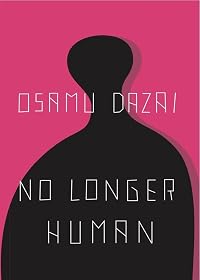
No Longer Human
by Osamu Dazai
On This Page
Description
Portraying himself as a failure, the protagonist of Osamu Dazai's No Longer Human narrates a seemingly normal life even while he feels himself incapable of understanding human beings. His attempts to reconcile himself to the world around him begin in early childhood, continue through high school, where he becomes a "clown" to mask his alienation, and eventually lead to a failed suicide attempt as an adult. Without sentimentality, he records the casual cruelties of life and its fleeting show more moments of human connection and tenderness. show lessTags
Recommendations


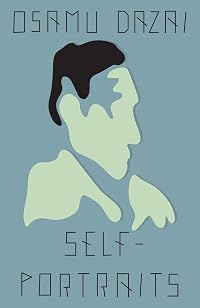


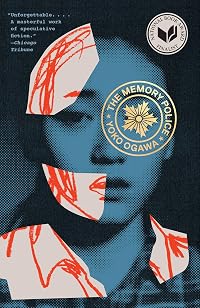
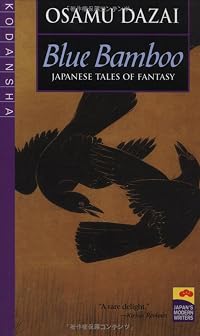
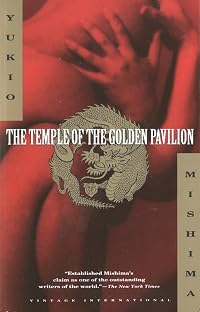
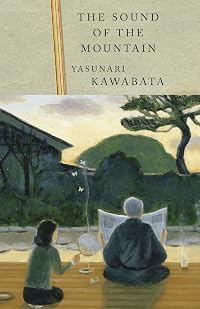



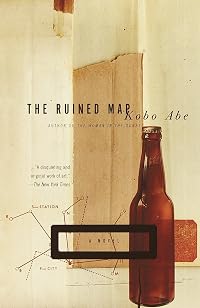

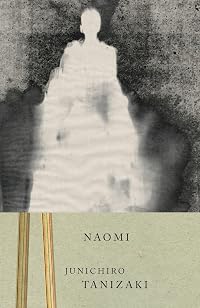

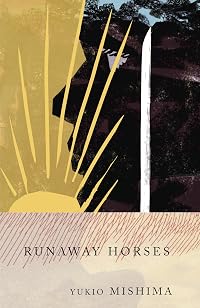
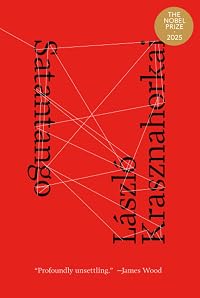




Member Recommendations
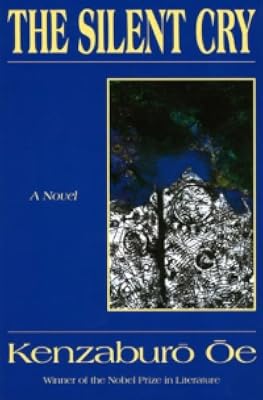
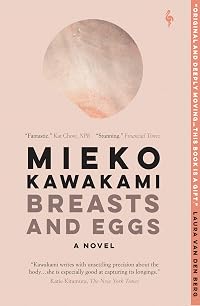
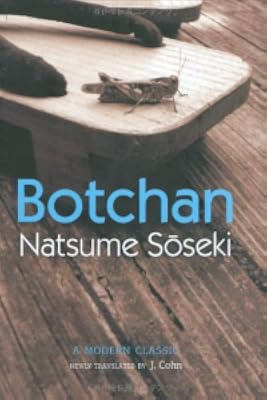
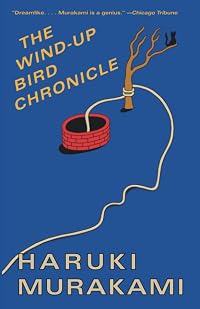
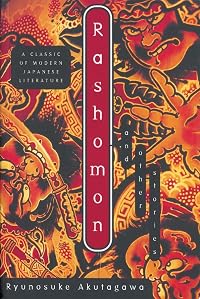
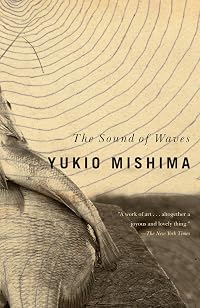
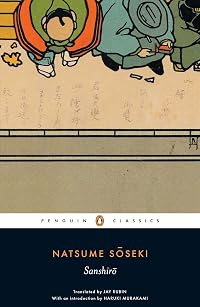
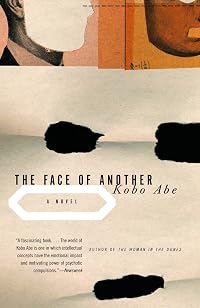
drnqs More autobiographical stories from Dazai.
Member Reviews
I was surprised to read that this remains one of the best selling novels in Japan. I guess it’s hard to know what will resonate with something from a different culture, especially when reading that work in translation. About a year ago I guess, i read George
Scialabba’s How To Be Depressed and William Styron’s Darkness Visible in succession - this book here would make a fitting triumvirate of depression literature. I might have mentioned this in one of the reviews I wrote for those books, but it seems to me that depression is a horribly narcissistic disease - the depressive episode makes all the world bend inward towards the black void swirling inside you. Everything seems designed to stab and poke at you in particular, and every show more perceived slight on the part of others is taken to be a sweeping criticism of your who existence. Perhaps this book’s greatest contribution is it’s title, whose English translation doesn’t seem to capture the feeling it has in the Chinese characters that constitute its original Japanese title 人間失格, approximately disqualified from humanity. It’s a great way, if a bit untranslatable, to describe the truly depressed person’s way of interfacing with the world. The fact that this act of disqualification is carried out and enforced by the depressive himself is an irony not lost on Osamu Dazai. The final lines of the book, where the narrator Yozo is described by one of the many women he was involved in over the course of the story as “a good boy, an angel,” far from the depiction Yozo himself gives as an alcoholic, alienated, good for nothing loser. It can often be bewildering for those around the depressed person, who they might see as a fine (qualified?) person, spiral into self destruction. If they could only just be happy like a normal person, they might say. Despite the criticism this kind of statement would get in the current climate of “accepting” mental illness, it’s actually true, and I think most depressed people would agree. I also think most depressed people are fighting every second of every day to be happy, and it’s only when they become too exhausted to fight anymore that depression wins.
All that being said, Yozo has really serious case of Main Character Syndrome. You may say, well sure, he’s the fucking main character of the book. What I mean is, we are presented with the unbroken ramblings of someone who is clearly self obsessed, with his good points (we hear a lot about his spectacular good looks and sense of humor) and his bad points. He only has to walk into a room for women to be falling all over him, and his emotion instability seems to spread like fire to anyone who draws near him. While this is a very accurate depiction of the depressed mindset, it can also be frustrating to spend a book’s length listening to someone like that ramble on. It makes you want to reach out and shake the bitch, saying shut up! You are so up your own ass that you can realize the great gift it is to be alive! You are small and insignificant in a way you can hardly imagine, and that is actually the most liberating realization you can have in life! Of course, Yozo can’t hear you; he’s a character in a book by an author who died long ago. But if you are depressed sometimes too (and I would venture most people who come to this book are) the things you might say to Yozo could equally be said to yourself. Don’t expect to come away from this with some transcendent knowledge about how to continue living in the face of the yawning void of melancholy - if anything, this is more a paean to desolation, a manifesto of someone too tired to keep fighting. But maybe you can think of this book as mirror for all the bad habits and cycles of thinking that keep you trapped, and next time you feel the black void opening again, do everything in your power not to be like Yozo. show less
Scialabba’s How To Be Depressed and William Styron’s Darkness Visible in succession - this book here would make a fitting triumvirate of depression literature. I might have mentioned this in one of the reviews I wrote for those books, but it seems to me that depression is a horribly narcissistic disease - the depressive episode makes all the world bend inward towards the black void swirling inside you. Everything seems designed to stab and poke at you in particular, and every show more perceived slight on the part of others is taken to be a sweeping criticism of your who existence. Perhaps this book’s greatest contribution is it’s title, whose English translation doesn’t seem to capture the feeling it has in the Chinese characters that constitute its original Japanese title 人間失格, approximately disqualified from humanity. It’s a great way, if a bit untranslatable, to describe the truly depressed person’s way of interfacing with the world. The fact that this act of disqualification is carried out and enforced by the depressive himself is an irony not lost on Osamu Dazai. The final lines of the book, where the narrator Yozo is described by one of the many women he was involved in over the course of the story as “a good boy, an angel,” far from the depiction Yozo himself gives as an alcoholic, alienated, good for nothing loser. It can often be bewildering for those around the depressed person, who they might see as a fine (qualified?) person, spiral into self destruction. If they could only just be happy like a normal person, they might say. Despite the criticism this kind of statement would get in the current climate of “accepting” mental illness, it’s actually true, and I think most depressed people would agree. I also think most depressed people are fighting every second of every day to be happy, and it’s only when they become too exhausted to fight anymore that depression wins.
All that being said, Yozo has really serious case of Main Character Syndrome. You may say, well sure, he’s the fucking main character of the book. What I mean is, we are presented with the unbroken ramblings of someone who is clearly self obsessed, with his good points (we hear a lot about his spectacular good looks and sense of humor) and his bad points. He only has to walk into a room for women to be falling all over him, and his emotion instability seems to spread like fire to anyone who draws near him. While this is a very accurate depiction of the depressed mindset, it can also be frustrating to spend a book’s length listening to someone like that ramble on. It makes you want to reach out and shake the bitch, saying shut up! You are so up your own ass that you can realize the great gift it is to be alive! You are small and insignificant in a way you can hardly imagine, and that is actually the most liberating realization you can have in life! Of course, Yozo can’t hear you; he’s a character in a book by an author who died long ago. But if you are depressed sometimes too (and I would venture most people who come to this book are) the things you might say to Yozo could equally be said to yourself. Don’t expect to come away from this with some transcendent knowledge about how to continue living in the face of the yawning void of melancholy - if anything, this is more a paean to desolation, a manifesto of someone too tired to keep fighting. But maybe you can think of this book as mirror for all the bad habits and cycles of thinking that keep you trapped, and next time you feel the black void opening again, do everything in your power not to be like Yozo. show less
What if Patrick Bateman was less psychopathic coke fiend, and more westaboo japanese alcoholic? The narrative dissonance between what the protagonist thinks is happening, and what a critical eye to what's presented is saying is similar to what creates the humorous satire in American Psycho. Though this is further removed in time and culture, I find it hard not to read a similar over-the-top take on the depressed outsider verging on comedic, though clearly most readers are taking the story 'straight' as it were. It's certainly played much closer to the chest, but the incongruence of his love affairs in the face of his self loathing, and the mirror image friend he normalizes sure suggest a satirical read.
"Despising ourselves as we did, we were always together."
Yozo searches for human connection, to cross the line between shameful disaster to acceptable member of society. He cannot control his impulses, both his impulse towards self-destruction and his impulse to push himself away from other humans.
"Is trustfulness a sin?" Yozo asks, and it seems a fatal flaw. Yozo can't trust, can't believe, can't connect. As the darkness of this little novel spirals further down Yozo embodies his entire country, as he vomits the rising sun in blood into the snow.
Yozo searches for human connection, to cross the line between shameful disaster to acceptable member of society. He cannot control his impulses, both his impulse towards self-destruction and his impulse to push himself away from other humans.
"Is trustfulness a sin?" Yozo asks, and it seems a fatal flaw. Yozo can't trust, can't believe, can't connect. As the darkness of this little novel spirals further down Yozo embodies his entire country, as he vomits the rising sun in blood into the snow.
Stupidly absorbing. A 20th-century Notes from the Underground and everything Diary of an Oxygen Thief wanted to be but couldn't muster. An intimate portrayal of the heaviness of depression, isolation, and addiction. Amazing narrative framing, adroit prose, and meaningful structural irony. I can't wait to read more of Dazai's work.
No Longer Human by Osamu Dazai ⭐⭐⭐⭐¼
"Mine has been a life of much shame. I can't even guess myself what it must be to live the life of a human being."
A dark, unsentimental, and unflinching portrayal of alienation. Yozo masks his pain by clowning around, never forming genuine connections, always struggling to relate to society. Relatable in a way I never expected—watching him spiral, you might argue he could "just think otherwise," but how easy is it to heave yourself out of a rabbit hole once you're trapped?
He might be pathetic, yes, but he's also, ironically, deeply human in a way he never thought himself to be. There must be childhood trauma lurking in the background, never explicitly told, only implied. All we see is his show more current debased form, spiraling ever downward.
I watched the anime adaptation (Aoi Bungaku) before reading the novel. While the anime leans toward surrealism, the novel is more grounded and realistic. Some minor changes, but the anime enhanced my reading experience, giving me visual metaphors for Yozo's internal nightmare.
Sad. Loved it. ⭐⭐⭐⭐¼ show less
"Mine has been a life of much shame. I can't even guess myself what it must be to live the life of a human being."
A dark, unsentimental, and unflinching portrayal of alienation. Yozo masks his pain by clowning around, never forming genuine connections, always struggling to relate to society. Relatable in a way I never expected—watching him spiral, you might argue he could "just think otherwise," but how easy is it to heave yourself out of a rabbit hole once you're trapped?
He might be pathetic, yes, but he's also, ironically, deeply human in a way he never thought himself to be. There must be childhood trauma lurking in the background, never explicitly told, only implied. All we see is his show more current debased form, spiraling ever downward.
I watched the anime adaptation (Aoi Bungaku) before reading the novel. While the anime leans toward surrealism, the novel is more grounded and realistic. Some minor changes, but the anime enhanced my reading experience, giving me visual metaphors for Yozo's internal nightmare.
Sad. Loved it. ⭐⭐⭐⭐¼ show less
I find it difficult to empathize with self-destructiveness and to bear description of the special heartless and apathetic social destructiveness that seems reserved for addicts, alcoholics, and other marginalized people of the world. I'm sure that's all part of the point of this novel, as our humanity is chipped or dissolved away from the inside until what's left is institutionalized and stashed away, out of sight in prisons or hospitals or other real and allegorical ghettos. I'm convinced that because those perspectives are hidden that is why it is important to engage with them, but it's challenging. We won't always like what we find.
A semi-autobiographical look into the saddest boy in 1930’s Tokyo - Yozo Oba. Visceral to read - the MC (who acts as a reflection of Dazai) laments through life and is never really able to connect with others - causing horrible treatment of caring friends and strangers to self destruction in varied forms. You never can root for Yozo Oba (misogynistic, selfish, unempathetic, etc.), but you can roughly understand how traumatic childhood events and expectations cascaded into prophetic lifelong torment.
Members
- Recently Added By
Lists

Japanese Literature
230 works; 37 members

Best Japanese Fiction
41 works; 10 members

Books Read in 2023
5,547 works; 145 members

Maybe This Year? Books to Look Forward To
409 works; 9 members

Overdue Podcast
806 works; 9 members

Cooper
79 works; 1 member

Schwob Nederland
207 works; 2 members

Booktok Books
69 works; 8 members

sad girl books
51 works; 3 members

Clã Ishida - 2024
3 works; 1 member

Favorite Books in Translation
320 works; 133 members

Books Read in 2025
4,091 works; 97 members

Widely acclaimed, one book per year
105 works; 3 members

Top Five Books of 2025
954 works; 303 members

Five star books
1,755 works; 108 members
Author Information

142+ Works 7,834 Members
Born into a near-aristocratic family whose declining world he depicts in The Setting Sun (1947), Dazai had the means to become an accomplished dilettante and rake. Around 1933 he began to think seriously about writing, but his life was complicated by drug addiction, a string of affairs, and two attempts at suicide. The end of the war brought a show more change in Dazai, and he produced his finest works, even though his own life was ending because of alcoholism and tuberculosis. The darkness of his works reveals his tortured existence, which he ended by suicide. (Bowker Author Biography) show less
Some Editions
Awards and Honors
Series
Belongs to Publisher Series
Work Relationships
Is contained in
Has the adaptation
Inspired
Common Knowledge
- Canonical title
- No Longer Human
- Original title
- 人間失格
- Alternate titles
- Ningen shikkaku; A Shameful Life
- Original publication date
- 1948
- People/Characters
- Ōba Yōzō
- Important places
- Japan
- First words
- Mine has been a life of much shame.
- Last words
- (Click to show. Warning: May contain spoilers.)The Yozo we knew was so easy-going and amusing, and if only he hadn't drunk--no, even though he did drink--he was a good boy, an angel.
- Original language
- Japanese
Classifications
- Genres
- Fiction and Literature, General Fiction
- DDC/MDS
- 895.635 — Literature & rhetoric Literatures of other languages Literatures of East and Southeast Asia Japanese Japanese fiction 1945–2000
- LCC
- PL825 .A8 .N53 — Language and Literature Languages and literatures of Eastern Asia, Africa, Oceania Languages of Eastern Asia, Africa, Oceania Japanese language and literature Japanese literature Individual authors and works
- BISAC
Statistics
- Members
- 4,303
- Popularity
- 3,494
- Reviews
- 79
- Rating
- (3.87)
- Languages
- 23 — Catalan, Chinese, Czech, Danish, Dutch, English, Estonian, Finnish, French, German, Greek, Hebrew, Hungarian, Italian, Japanese, Korean, Polish, Portuguese, Russian, Serbian, Spanish, Swedish, Turkish
- Media
- Paper, Audiobook, Ebook
- ISBNs
- 88
- ASINs
- 30