

How Did We Find Out About Atoms? (First Fact Book)
by Isaac Asimov
How did we find out: Isaac Asimov (9)
On This Page
Description
Discusses the concept of atoms and evidence of their existence accumulated since the time of the Greeks.Tags
Recommendations




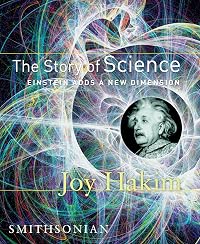


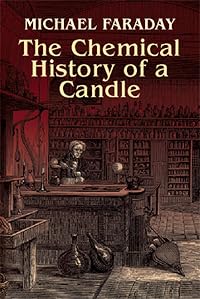
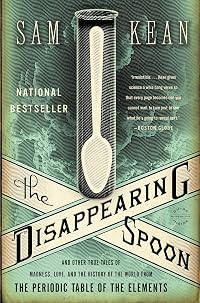
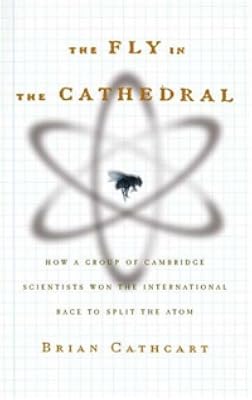













Member Recommendations
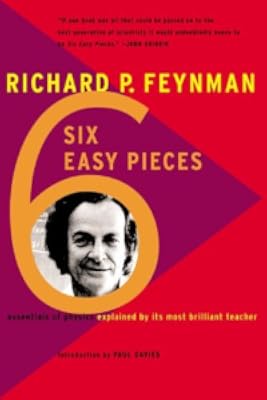
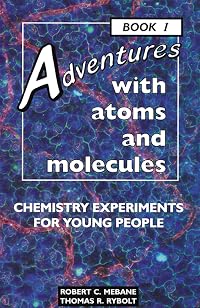
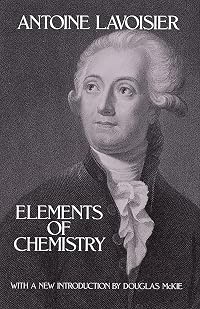
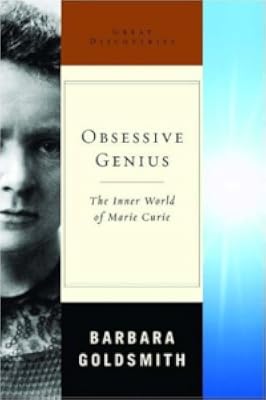
themulhern In all these books, Asimov teaches science through the history of the discoveries about a certain subject. Surely Postman would have approved.

themulhern Small concise books, related subjects, good authors. Hatcher's is more modern and less historical.
Member Reviews
The first chapter covers thoughts about atoms, from the ancient Greeks to Robert Boyle's demonstrating that air is compressed. The second chapter discusses early experiments about the ways atoms combined w/ other atoms to form molecules. These experiments were all done by considering mass, and lead to some incorrect and some correct conclusions about the relative weights of the atoms. The third chapter discusses more work on figuring out the relative weights of atoms, taking into account Avogadro's observations about volumes of gases. The fourth chapter discusses how bonds are formed between atoms and the notion of isomers. The fifth chapter discusses proofs that atoms actually exist and therefore aren't just a useful construct for show more understanding chemical behavior. Special reference is made to Brownian motion and the fact that Einstein's equations made it possible to determine the size of a water molecule. show less
Ratings
Members
- Recently Added By
Lists

Children's Books About Science and Math
461 works; 11 members
Author Information

2,396+ Works 292,727 Members
Isaac Asimov was born in Petrovichi, Russia, on January 2, 1920. His family emigrated to the United States in 1923 and settled in Brooklyn, New York, where they owned and operated a candy store. Asimov became a naturalized U.S. citizen at the age of eight. As a youngster he discovered his talent for writing, producing his first original fiction at show more the age of eleven. He went on to become one of the world's most prolific writers, publishing nearly 500 books in his lifetime. Asimov was not only a writer; he also was a biochemist and an educator. He studied chemistry at Columbia University, earning a B.S., M.A. and Ph.D. In 1951, Asimov accepted a position as an instructor of biochemistry at Boston University's School of Medicine even though he had no practical experience in the field. His exceptional intelligence enabled him to master new systems rapidly, and he soon became a successful and distinguished professor at Columbia and even co-authored a biochemistry textbook within a few years. Asimov won numerous awards and honors for his books and stories, and he is considered to be a leading writer of the Golden Age of science fiction. While he did not invent science fiction, he helped to legitimize it by adding the narrative structure that had been missing from the traditional science fiction books of the period. He also introduced several innovative concepts, including the thematic concern for technological progress and its impact on humanity. Asimov is probably best known for his Foundation series, which includes Foundation, Foundation and Empire, and Second Foundation. In 1966, this trilogy won the Hugo award for best all-time science fiction series. In 1983, Asimov wrote an additional Foundation novel, Foundation's Edge, which won the Hugo for best novel of that year. Asimov also wrote a series of robot books that included I, Robot, and eventually he tied the two series together. He won three additional Hugos, including one awarded posthumously for the best non-fiction book of 1995, I. Asimov. "Nightfall" was chosen the best science fiction story of all time by the Science Fiction Writers of America. In 1979, Asimov wrote his autobiography, In Memory Yet Green. He continued writing until just a few years before his death from heart and kidney failure on April 6, 1992. (Bowker Author Biography) show less
Series

Classifications
Statistics
- Members
- 57
- Popularity
- 537,195
- Reviews
- 1
- Rating
- (4.50)
- Languages
- English, Spanish
- Media
- Paper
- ISBNs
- 5


