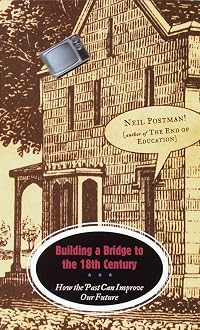
Building a Bridge to the 18th Century: How the Past Can Improve Our Future
by Neil Postman
On This Page
Description
"In Building a Bridge to the Eighteenth Century Neil Postman revisits the Enlightenment, that great flowering of ideas that provided a humane direction for the future - ideas that formed our nation and that we would do well to embrace anew." "He turns our attention to Goethe, Voltaire, Rousseau, Diderot, Kant, Edward Gibbon, Adam Smith, Thomas Paine, Jefferson, and Franklin, and to their then-radical thinking about inductive science, religious and political freedom, popular education, show more rational commerce, the nation-state, progress, and happiness." "Postman calls for a future connected to traditions that provide sane authority and meaningful purpose - as opposed to an overreliance on technology and an increasing disregard for the lessons of history. And he argues passionately for specific new guidelines in the education of our children, with renewed emphasis on developing the intellect as successfully as we are developing a computer-driven world."--Jacket. show lessTags
Recommendations


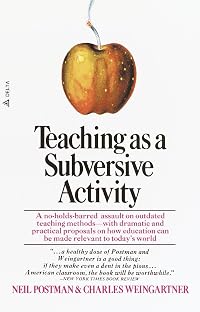
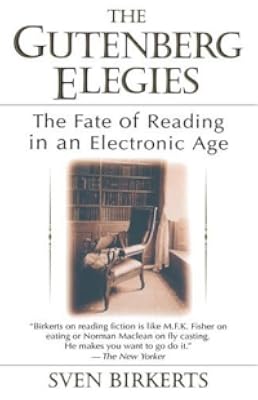
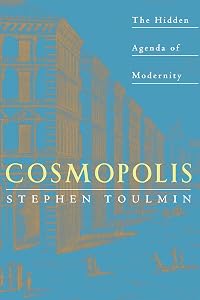
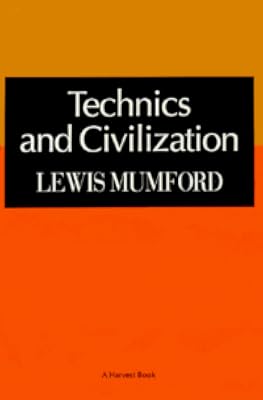
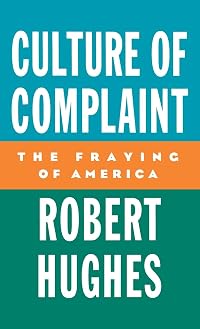
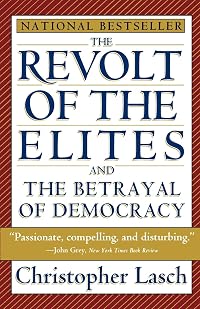
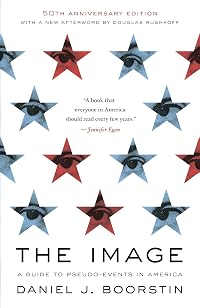

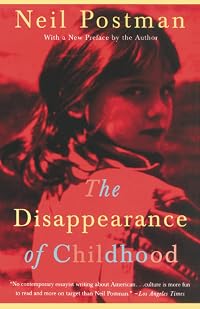






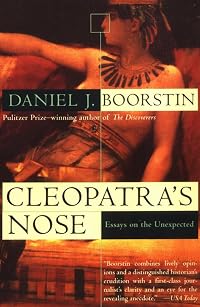


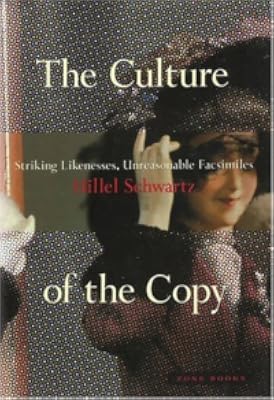

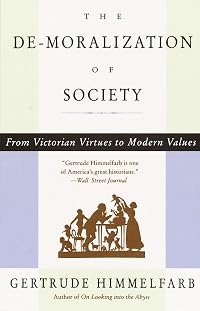
Member Recommendations

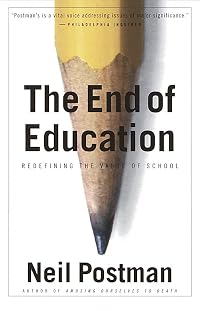
themulhern In all these books, Asimov teaches science through the history of the discoveries about a certain subject. Surely Postman would have approved.
Member Reviews
The essays and their titles provide a good overview of Neil Postman's interest and research (perhaps a chapter called media or TV is missing): progress, technology, language, information, narratives,children, democracy, education. A pleasant and light read about the value of education and thinking and the dangers of technology.
Neil Postman lived in an era of change where the print media were losing their primacy while the internet media were only emerging. His critique of technology is marred by his unwillingness to engage and use new technologies. He was already an elderly gentleman when he wrote this in 1999 but fax should not have been the last technology he actively used. How can he write about technology and refuse to use email, a show more computer or the internet? The result is a predictable pessimism and an unwarranted faith into past solutions (especially newspapers). I think he would be horrified in the decline of US print journalism.
His views on education are welcome but suffer from the US blindness towards inequality and class. While every child deserves the care Postman advocates, the enormous differences in school funding and parental resources and wealth lead to a stratefied society where the success of the few (Barrack Obama although both his parents were already university graduates) serves as a cover for the failure of the many. The same problem hampers his discussion of democracy where the real question is not elite vs. mob rule but the (structural and self-inflicted) disenfrachisement of a large part of the population from democratic decisions.
Overall a good introduction into the thinking of an American optimistic pessimist. While I think he arrives at wrong answers, his style and erudition are always enlightening and entertaining. Perhaps the medium is the message. show less
Neil Postman lived in an era of change where the print media were losing their primacy while the internet media were only emerging. His critique of technology is marred by his unwillingness to engage and use new technologies. He was already an elderly gentleman when he wrote this in 1999 but fax should not have been the last technology he actively used. How can he write about technology and refuse to use email, a show more computer or the internet? The result is a predictable pessimism and an unwarranted faith into past solutions (especially newspapers). I think he would be horrified in the decline of US print journalism.
His views on education are welcome but suffer from the US blindness towards inequality and class. While every child deserves the care Postman advocates, the enormous differences in school funding and parental resources and wealth lead to a stratefied society where the success of the few (Barrack Obama although both his parents were already university graduates) serves as a cover for the failure of the many. The same problem hampers his discussion of democracy where the real question is not elite vs. mob rule but the (structural and self-inflicted) disenfrachisement of a large part of the population from democratic decisions.
Overall a good introduction into the thinking of an American optimistic pessimist. While I think he arrives at wrong answers, his style and erudition are always enlightening and entertaining. Perhaps the medium is the message. show less
The premise of this book is that the Enlightenment guys, the post-modernists notwithstanding, got it mostly right: about children, language, education, narrative and democracy. The Enlightenment can provide a roadmap or guide to helping build a rational society for the 21th century. A FaceBook review is not the place to a length critique, but allow me to say that I mostly like what he has to say, with the following caveats. I agree with him about post-modernism: it is a belief system that is adrift without a compass on just about every subject it addresses. I was amused to see that, while he distanced himself from any religious belief, he feels strongly that comparative religion needs to be taught in our schools and that faith should be show more part of our national "narrative" *as if* it were true!? He even cites C. S. Lewis "Abolition of Man", which presents in part the moral argument for the existence of God: without accountability to God there is no moral standard; might makes right. Postman sees the validity of this, but doesn't want to be seen as giving "religious narrative" any legitimacy. But he admits the necessity for religion's role in creating a consensus for moral judgments. But unless one believes that *in reality* one is accountable to God for one's conduct, how can that "narrative" be at all influence one's actions? The reader who is not familiar with the Enlightenment's great figures and writers will be at somewhat of a loss to follow the arguments. By necessity he must pass over them in brief. But overall, Postman is asking important questions, questions which will be answered by default if not addressed intentionally by our society. The distinction between knowledge and information and the role of the media in a digital age is especially cogent for us today. show less
Neil Postman is always an incredible author. His treatise here on how the 18th Century has a great deal to offer by way of rationality in the 21st was a fascinating, and informative, read.
Neil Postman's various theses in terms of what the 21st Century looks like it will be lacking (i.e. Common Sense, Rationality, a fundamental belief in Reason and Scientific thinking) was truly prophetic of where we find ourselves today. Although we have not yet fully disposed of Childhood (one of the last chapters of his text) we seem to be fast on the way to fulfilling what it was that he preached over 10 years ago.
Postman's text should be a mandatory read for anyone entering the teaching profession. His text was informative without being boring, show more insightful without becoming truly pedagogic. I would recommend this book to anyone with even a passing interest in improving their own life and person. Beyond this, I would recommend it to anyone with a true interest in improving their perspective and that of this country as a whole. Postman should be listened to far more than he actually is. show less
Neil Postman's various theses in terms of what the 21st Century looks like it will be lacking (i.e. Common Sense, Rationality, a fundamental belief in Reason and Scientific thinking) was truly prophetic of where we find ourselves today. Although we have not yet fully disposed of Childhood (one of the last chapters of his text) we seem to be fast on the way to fulfilling what it was that he preached over 10 years ago.
Postman's text should be a mandatory read for anyone entering the teaching profession. His text was informative without being boring, show more insightful without becoming truly pedagogic. I would recommend this book to anyone with even a passing interest in improving their own life and person. Beyond this, I would recommend it to anyone with a true interest in improving their perspective and that of this country as a whole. Postman should be listened to far more than he actually is. show less
This book has had strong reviews, and also some strong criticisms aimed at it. I was intrigued and picked it up in London when we were down visiting Kristan; I read about half of it in the shopping mall waiting for them to finish their shopping tour, and completed it the next morning. I had not heard of Postman before, but discover that he is well-known as a thought-provoking observer of the modern scene, and in particular, what is wrong with it. He has written books on the dismal state of education, about the "disappearance of childhood", and an interesting-sounding one on "Amusing Ourselves to Death". In fact, Building a Bridge feels a bit like a pastiche of various bits and pieces of his writings of thinking, with chapters on show more progress, technology, language, information, narratives, children, democracy, and education. He has been criticized for his pride in being a techno-nerd (he certainly doesn't use a computer and won't even use the crusie control on his car), and for ignoring the dark side of the 18th century with its class-ridden society and the harsh, brutal lives of those on the bottom of the ladder in terms of poverty, filth and disease; I think the first has merit; the second seems to me to miss the point: Postman is not extolling the 18th century in all its aspects as a model for the modern world, but he does have some good points.
For instance, and I think this is his central argument:
The gift of the eighteenth century is to be found in the intelligence and vigor of the questions it raised about progress, a fact that was well understood by the best minds of the century that followed.
Postman is correct when he argues that we have now embraced the idea that progress is synonymous with moral, social, and psychic progress, whereas, according to him, the 19th century carried forward the 18th century skepticism on whether technological progress goes hand-in-hand with moral progress.
I also like Postman's definition of the relationships among information, knowledge, and wisdom: information "consists of statements about the facts of the world"; knowledge is "organized information–information that is embedded in some context; information that has a purpose, that leads one to seek further information in order to understand something about the world"; and wisdom is, "the capacity to know what body of knowledge is relevant to the solution of significant problems". According to Postman, "knowledge cannot judge itself. Knowledge must be judged by other knowledge, and therein lies the essence of wisdom".
I sympathize with many of Postman's other ideas as well, but feel that I need to re-read the book, in a quieter environment, to give it proper consideration, and a proper summary/critique here.
(Nov/99) show less
For instance, and I think this is his central argument:
The gift of the eighteenth century is to be found in the intelligence and vigor of the questions it raised about progress, a fact that was well understood by the best minds of the century that followed.
Postman is correct when he argues that we have now embraced the idea that progress is synonymous with moral, social, and psychic progress, whereas, according to him, the 19th century carried forward the 18th century skepticism on whether technological progress goes hand-in-hand with moral progress.
I also like Postman's definition of the relationships among information, knowledge, and wisdom: information "consists of statements about the facts of the world"; knowledge is "organized information–information that is embedded in some context; information that has a purpose, that leads one to seek further information in order to understand something about the world"; and wisdom is, "the capacity to know what body of knowledge is relevant to the solution of significant problems". According to Postman, "knowledge cannot judge itself. Knowledge must be judged by other knowledge, and therein lies the essence of wisdom".
I sympathize with many of Postman's other ideas as well, but feel that I need to re-read the book, in a quieter environment, to give it proper consideration, and a proper summary/critique here.
(Nov/99) show less
uilding a Bridge to the 18th Century's thesis is pretty self-explanatory. Postman believes that we don't need a new future, but rather, revisit what we learned from the Enlightenment period. He suggests that "the idea of progress is one of the greatest gifts of Enlightenment" (34) and that we no longer believe that the future is moving to a golden age, as many in the past might have. Rather, we know that we are in control of our future and that scares the crap out of us.
It's interesting because this book was published ten-years ago, so some of its discourse is outdated, but others are insightful enough that I found myself saying, "yup, you're right. That time is here." For example, Postman brings up a book by Nicholas Negroponte called show more Being Digital where Negroponte states: "we will find that we are talking as much or more with machines than we are to humans." I think about my every day-to-day interactions and how technology has allowed me to interact with more humans, but, in a less human way. (And what I mean by this isn't so much that my moments aren't authentic when technology is used, but that there are specific aspects of what is 'human' that is lost through mediums such as e-mail, instant messaging, text messaging.) I'm not a fan of talking on the phone and admit that I would much rather text message someone for an hour to catch up than to call them. I also like how I can keep track of people using websites such as Facebook or even blogs, even though I realize that in many ways this form is rather impersonal and superficial. Alternatively, because I (as many) always have the good intentions to keep track of friends who move away and end up not, technology has allowed for the network to stay closer. I'm more or less just dumping my thoughts, because I think that, providing there is balance, it's okay to have these technologies assisting me in my interactions. It's so hard for me to remember what it was like to not have the internet to look up a quick movie quote because I can't think of it rather than in "the olden days" where I would have to call or remember to ask peers and friends when I saw them next.
I have somewhat digressed on the review of Building a Bridge, but what can I say other than there are bits and pieces of social commentary intermingled with quotes from 18th century philosophers. There are moments when I full-heartedly agree with Postman (who even in 99 as a NYU professor boasted that he didn't use e-mail) and other times when I shrug in disagreement. He's an easy read, and not filled with pretentious jargon. show less
It's interesting because this book was published ten-years ago, so some of its discourse is outdated, but others are insightful enough that I found myself saying, "yup, you're right. That time is here." For example, Postman brings up a book by Nicholas Negroponte called show more Being Digital where Negroponte states: "we will find that we are talking as much or more with machines than we are to humans." I think about my every day-to-day interactions and how technology has allowed me to interact with more humans, but, in a less human way. (And what I mean by this isn't so much that my moments aren't authentic when technology is used, but that there are specific aspects of what is 'human' that is lost through mediums such as e-mail, instant messaging, text messaging.) I'm not a fan of talking on the phone and admit that I would much rather text message someone for an hour to catch up than to call them. I also like how I can keep track of people using websites such as Facebook or even blogs, even though I realize that in many ways this form is rather impersonal and superficial. Alternatively, because I (as many) always have the good intentions to keep track of friends who move away and end up not, technology has allowed for the network to stay closer. I'm more or less just dumping my thoughts, because I think that, providing there is balance, it's okay to have these technologies assisting me in my interactions. It's so hard for me to remember what it was like to not have the internet to look up a quick movie quote because I can't think of it rather than in "the olden days" where I would have to call or remember to ask peers and friends when I saw them next.
I have somewhat digressed on the review of Building a Bridge, but what can I say other than there are bits and pieces of social commentary intermingled with quotes from 18th century philosophers. There are moments when I full-heartedly agree with Postman (who even in 99 as a NYU professor boasted that he didn't use e-mail) and other times when I shrug in disagreement. He's an easy read, and not filled with pretentious jargon. show less
Ever noticed how the politicians today are more focused on providing a negative view of the other man, the other party, than they are about talking about ideas and ideals? This is part of what Postman wants to borrow from the 18th century. It was mentally invigorating, like his others. But I feel like more time could have been given to addressing the evils of the 18th century(slavery, child labor, etc) and some of it was repeated from earlier books. Hence the 4 stars.
A rehash of the author's ideas, held together rather loosely and perfunctorily by the conceit of referring back to the Enlightenment as a guide to the future. All of this has been said better, elsewhere, including by Postman.
Members
- Recently Added By
Published Reviews
Es ist alles nicht besonders neu oder revolutionär, was Postman darstellt, kritisiert und zu verbessern fordert. Man sollte jedoch im Auge behalten, dass dies auch nicht Postmans Anspruch ist. Es geht ihm vielmehr darum, zu betrachten, was wir schon haben und besser wieder nutzen sollten: Insofern unternimmt Postman nur einen unspektakulären Versuch, die Aufklärung zu recyceln.
added by Indy133
Author Information

32+ Works 12,841 Members
Born in Brooklyn, New York, and educated at the State University of New York and Columbia University, Neil Postman is a communications theorist, educator, and writer who has been deeply involved with the issue of the impact of the media and advanced communications technology on American culture. In his many books, Postman has strongly opposed the show more idea that technology will "save" humanity. In fact, he has focused on the negative ways in which television and computers alter social behavior. In his book Technopoly, Postman argues that the uncontrolled growth of technology destroys humanity by creating a culture with no moral structure. Thus, technology can be a dangerous enemy as well as a good friend. Postman, who is married and has three children, currently is a professor of media ecology at New York University and editor of Et Cetera, the journal of general semantics. In addition to his books, he has contributed to various magazines and periodicals, including Atlantic and The Nation. He has also appeared on the television program Sunrise Semester. Postman is the holder of the Christian Lindback Award for Excellence in Teaching from New YorkUniversity. (Bowker Author Biography) show less
Awards and Honors
Awards
Common Knowledge
- Canonical title*
- Die zweite Aufklärung : Vom 18. ins 21. Jahrhundert
- Original title
- Building a bridge to the 18th century : how the past can improve our future; Building a bridge to the 18th century : how the past can improve our future (audio book) (audio book)
- Original publication date
- 1999
- Important events*
- Aufklärung
- Dedication
- To Norman Frederick Ross
*Some information comes from Common Knowledge in other languages. Click "Edit" for more information.
Classifications
Statistics
- Members
- 601
- Popularity
- 48,582
- Reviews
- 9
- Rating
- (3.85)
- Languages
- Dutch, English, German, Polish
- Media
- Paper, Audiobook, Ebook
- ISBNs
- 15
- ASINs
- 6