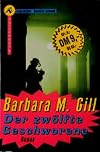
The Twelfth Juror
by B. M. Gill
On This Page
Description
Television personality Edward Carne is on trial for the death of his wife. As Carne watches the jurors take their oaths he senses a joker in the pack. He doesn't know that one juror has a mysterious reason for being there.Tags
Recommendations













Member Reviews
A TV personality, Edward Carne, is on trial for murder. Richard Quinn is one of the jurors. Through improbable coincidence, he is also secretly harbouring Carne’s missing alcoholic daughter, who may be a key witness. The book works its way through Carne’s trial and Quinn’s tsuris as he tries to reconcile his public duty and his private loyalty.
There’s plenty here that is good, and should work. Carne and Quinn are fairly well drawn characters, some of the courtroom drama is very good, and there’s a nice balancing act throughout as the evidence unfolds: we really can’t be sure whether or not Carne is guilty. All the same, this felt like a bit of a plod, even though it’s just 175 pages. Several minor reasons, I think.
First, show more while we can’t be sure on the evidence presented whether or not Carne is guilty, the logic of the structure dictates that he almost certainly can’t be, since otherwise there would be no reveal or twist at the end, and we know there must be. So the balancing act is unbalanced.
Second, writing about a jury might tempt an author to draw twelve characters. This is too many characters; the temptation should be resisted, especially if witnesses and family members will also be drawn. The temptation is not here resisted, and so we keep digressing into this juror’s worries about his reptiles, or that juror’s scheme to seduce the boyfriend of the other juror.
Third, the writing itself is pedestrian, and occasionally worse: clunky or distractingly imprecise. For instance, we’re told that a barrister paused his closing argument and “looked thoughtfully at the jury for a couple of minutes before continuing”. No he didn’t! Two minutes of silence in a speech is an absolutely excruciating interval. The judge would be intervening to ask if he’d had a stroke. And anyway, you don’t need to name the duration to convey the idea of a telling pause. Try: “he looked thoughtfully at the jury before continuing”. Much better. Strange to say of an already short-ish book, but a sharp edit would have wrought improvements.
Fourth, as intimated above, there’s a faint sense of improbability about the Quinn-driven plot strand. It’s partly the fact that he somehow ends up with Carne’s daughter under his wing, and partly the fact (which he keeps pointing out) that the manifestly bvious thing to do in his situation is to tell the court about his situation immediately and get off jury duty before the trial even starts.
Usually when I’m not mad keen on a book in this series, I can see how the very same book, the same essential plot or structure or character, could be done better but basically preserved. With this one, I can’t. There’s nothing terribly wrong with it, but it’s not quite right, and any of the obvious ways to try to improve it would destroy it. Best to just leave it alone. show less
There’s plenty here that is good, and should work. Carne and Quinn are fairly well drawn characters, some of the courtroom drama is very good, and there’s a nice balancing act throughout as the evidence unfolds: we really can’t be sure whether or not Carne is guilty. All the same, this felt like a bit of a plod, even though it’s just 175 pages. Several minor reasons, I think.
First, show more while we can’t be sure on the evidence presented whether or not Carne is guilty, the logic of the structure dictates that he almost certainly can’t be, since otherwise there would be no reveal or twist at the end, and we know there must be. So the balancing act is unbalanced.
Second, writing about a jury might tempt an author to draw twelve characters. This is too many characters; the temptation should be resisted, especially if witnesses and family members will also be drawn. The temptation is not here resisted, and so we keep digressing into this juror’s worries about his reptiles, or that juror’s scheme to seduce the boyfriend of the other juror.
Third, the writing itself is pedestrian, and occasionally worse: clunky or distractingly imprecise. For instance, we’re told that a barrister paused his closing argument and “looked thoughtfully at the jury for a couple of minutes before continuing”. No he didn’t! Two minutes of silence in a speech is an absolutely excruciating interval. The judge would be intervening to ask if he’d had a stroke. And anyway, you don’t need to name the duration to convey the idea of a telling pause. Try: “he looked thoughtfully at the jury before continuing”. Much better. Strange to say of an already short-ish book, but a sharp edit would have wrought improvements.
Fourth, as intimated above, there’s a faint sense of improbability about the Quinn-driven plot strand. It’s partly the fact that he somehow ends up with Carne’s daughter under his wing, and partly the fact (which he keeps pointing out) that the manifestly bvious thing to do in his situation is to tell the court about his situation immediately and get off jury duty before the trial even starts.
Usually when I’m not mad keen on a book in this series, I can see how the very same book, the same essential plot or structure or character, could be done better but basically preserved. With this one, I can’t. There’s nothing terribly wrong with it, but it’s not quite right, and any of the obvious ways to try to improve it would destroy it. Best to just leave it alone. show less
Ratings
Members
- Recently Added By
Lists

Crime Writers' Association Daggers
76 works; 4 members
Author Information

18+ Works 375 Members
Awards and Honors
Awards
Series
Belongs to Publisher Series
rororo thriller (3204)
Den svarte serie (267)
Common Knowledge
- Canonical title*
- Kahdestoista valamies
- Original title
- The Twelfth Juror
- Original publication date
- 1984
- First words*
- Kaksitoista tavallista kansalaista, jotka omasta tahdosta riippumatta on haastettu toimimaan valamiehistössä Old Baileyssä ("joka laiminlyö velvollisuutensa joutuu vastaamaan seurauksista"), on juuri menossa vannomaan val... (show all)amiehen valaa vaimonsa murhasta syytetyn televisiojuontaja Edward Carnen oikeudenkäynnissä.
- Last words*
- (Click to show. Warning: May contain spoilers.)Hän toivoi koko rakkautensa voimalla, että Frances olisi jäänyt syntymättä.
- Original language
- English
*Some information comes from Common Knowledge in other languages. Click "Edit" for more information.
Classifications
Statistics
- Members
- 86
- Popularity
- 371,763
- Reviews
- 1
- Rating
- (3.73)
- Languages
- 11 — Dutch, English, Finnish, French, German, Italian, Japanese, Norwegian (Bokmål), Norwegian, Spanish, Swedish
- Media
- Paper, Audiobook
- ISBNs
- 18
- ASINs
- 2