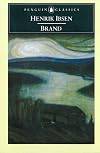
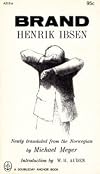
Brand
by Henrik Ibsen
On This Page
Description
Robert David MacDonald's majestic version of Ibsen's poem-drama about the triumph of will over compromise. Brand, a fiery priest-hero, urges his flock to sacrifice their lives to save their souls. Cast size: 12Tags
Recommendations























Member Reviews
Ibsen is rightly a hero amongst dramatists and actors but can sometimes be a little less impressive when it comes to the thought that underpins his work, In this case, a relatively early work (1865), Ibsen seems to pick up a very cursory initial reading of Kierkegaard and then hurl it at the stage.
It is a play of ideas expressed dramatically. Yet while the drama keeps you hooked, Ibsen is introducing his bourgeois audience to a bit of Kierkegaard's philosophical shock and awe and a concatenation of religio-philosophical ideas without actually getting to grips fully with anything.
This is at that strange point in European history when a combination of radical justification by faith alone, milk and water middle class religion, the new show more Biblical criticism and scepticism were contending for space before Darwin had truly entered into wider public consciousness.
Later, Darwin would come to be very influential on Ibsen's dramaturgy but 'Brand' is only seven years after the publication in England of 'The Origin of Species' and the latter book was not properly translated into Norwegian for quite some time.
'Brand' is thus an interesting snapshot of religious torment in a still mostly pious Lutheran culture where the Danish Kierkegaard, not Darwin, was to be a trigger for passion and doubt, for idealistic extremity in the face of a God that was still a very real presence to most people in some form.
Ibsen packs a huge amount of philosophical and 'spiritual' complexity into a couple of hours. He does this brilliantly but, in the end, it is like one of those popularisations of ideas that make you feel you have had some strange thoughts but which have taught you little that will be truly life-changing.
The dramatist does all the work, the audience loses itself in the flow of ideas and everyone goes home stimulated but much the same the next morning as they were on the afternoon before. Brand himself is not a person but a thing reflecting ideas in the world. He is not 'real'.
The nearest analogy I can find to this sort of drama is the Everyman play of the Middle Ages (we will see this again with 'Peer Gynt') where the drama is played out by symbolic types to endorse or raise questions about a given social reality rather than to change it.
For all his private anarchism and free-thinking, Ibsen always remained the bourgeois aware of the need to be careful not to over-stimulate his market and to trip carefully across boundaries and push them outwards but not cross over red lines. Challenging, yes, revolutionary, no.
It is certainly worth reading or seeing. There are twists and turns that are tests of a rather priggish and destructive personality. Ibsen once said Brand was him at his best which I take to mean that Ibsen's initial internal ideal was an absurd romanticism, existential commitment as a good in itself.
If, like me, you hold to a more cynical view of intellectual expressionism, you are likely to be less impressed. The flow of arguments look (as they must in drama) too obviously manufactured for effect rather than meaning. You get to see lots of intellectual sausages being made.
Incidentally, it is not going to be a popular play today so it may be hard to see it, but the 1959 BBC version of the adaptation with Patrick McGoohan as Brand is available on I-Player this year (2026). You might want to catch it before it disappears and make your own judgement. show less
It is a play of ideas expressed dramatically. Yet while the drama keeps you hooked, Ibsen is introducing his bourgeois audience to a bit of Kierkegaard's philosophical shock and awe and a concatenation of religio-philosophical ideas without actually getting to grips fully with anything.
This is at that strange point in European history when a combination of radical justification by faith alone, milk and water middle class religion, the new show more Biblical criticism and scepticism were contending for space before Darwin had truly entered into wider public consciousness.
Later, Darwin would come to be very influential on Ibsen's dramaturgy but 'Brand' is only seven years after the publication in England of 'The Origin of Species' and the latter book was not properly translated into Norwegian for quite some time.
'Brand' is thus an interesting snapshot of religious torment in a still mostly pious Lutheran culture where the Danish Kierkegaard, not Darwin, was to be a trigger for passion and doubt, for idealistic extremity in the face of a God that was still a very real presence to most people in some form.
Ibsen packs a huge amount of philosophical and 'spiritual' complexity into a couple of hours. He does this brilliantly but, in the end, it is like one of those popularisations of ideas that make you feel you have had some strange thoughts but which have taught you little that will be truly life-changing.
The dramatist does all the work, the audience loses itself in the flow of ideas and everyone goes home stimulated but much the same the next morning as they were on the afternoon before. Brand himself is not a person but a thing reflecting ideas in the world. He is not 'real'.
The nearest analogy I can find to this sort of drama is the Everyman play of the Middle Ages (we will see this again with 'Peer Gynt') where the drama is played out by symbolic types to endorse or raise questions about a given social reality rather than to change it.
For all his private anarchism and free-thinking, Ibsen always remained the bourgeois aware of the need to be careful not to over-stimulate his market and to trip carefully across boundaries and push them outwards but not cross over red lines. Challenging, yes, revolutionary, no.
It is certainly worth reading or seeing. There are twists and turns that are tests of a rather priggish and destructive personality. Ibsen once said Brand was him at his best which I take to mean that Ibsen's initial internal ideal was an absurd romanticism, existential commitment as a good in itself.
If, like me, you hold to a more cynical view of intellectual expressionism, you are likely to be less impressed. The flow of arguments look (as they must in drama) too obviously manufactured for effect rather than meaning. You get to see lots of intellectual sausages being made.
Incidentally, it is not going to be a popular play today so it may be hard to see it, but the 1959 BBC version of the adaptation with Patrick McGoohan as Brand is available on I-Player this year (2026). You might want to catch it before it disappears and make your own judgement. show less
I feel bad giving this only two stars. For all I know, Ibsen's play is a masterpiece; Hill's version here is certainly very Hill-like, which I appreciate (combining brutal satire, high language and a distinct aura of ambiguity). But as a reading experience... it's not all that hot. It starts out quite symbolically, then for most of the play is fairly realistic, then ends with a rush of symbolism once more. These sections, in Hill's version at least, seem a little disjointed (and fair enough, too. It'd be a tough transition to make for anyone). Brand himself seems like a perfectly human character, inasmuch as most humans are 'unrealistic;' a strange effect of this play is that the seemingly 'realistic' characters end up seeming show more unrealistically worldly, while the least realistic character seems entirely human. And this brings me to the obvious value of all this, which is that it's an excellent incentive to thinking and puzzling out why you feel x and y about these characters and their statements. Are absolute ideals something to be cherished and admired? Is a pragmatic attitude towards the world always to be scorned? And vice versa.
That said, I'd put this in the lineage of Zarathustra and Kierkegaard rather than, say, Faust or Flaubert's St Antony. The latter work well as works of literature as well as intellectual bon-bons; Hill's remarkably flexible poetry aside, this works best as a bon-bon. show less
That said, I'd put this in the lineage of Zarathustra and Kierkegaard rather than, say, Faust or Flaubert's St Antony. The latter work well as works of literature as well as intellectual bon-bons; Hill's remarkably flexible poetry aside, this works best as a bon-bon. show less
Extraordinarily good edition of Ibsen's long and difficult four-act play about a stern priest who cannot understand the true nature of love. Written in verse (Hill, a poet himself, produced this version from a literal translation of the original he was supplied with by a native speaker of Norwegian), it is a delight to read and to hear on the stage.
BRAND, by Henrik Ibsen. Translated by William Wilson. Methuen, 1899, 1st Edition thus, Cloth, 302 pages. VG-. Lovely stock and printing. Embossed boards. Nice copy. [Import notes: Purchase price: $15; My value: $50; Purchase date: 2025-06-13; Source sheet: Bibliotek; Source row: 5]
Bokklubbens anmeldelse:
Et sammensatt dramatisk diktverk om mennesker i konflikt og dyptgripende sjelestrid. Med Bjarte Hjelmeland, Trine Wiggen, Gisken Armand, Kim Haugen, Reidar Sørensen, Øyvind Gran og Trond Høvik. Musikk: Åsmund Feidje. Produsent og bearbeidelse: Carl Henrik Grøndahl.
Et sammensatt dramatisk diktverk om mennesker i konflikt og dyptgripende sjelestrid. Med Bjarte Hjelmeland, Trine Wiggen, Gisken Armand, Kim Haugen, Reidar Sørensen, Øyvind Gran og Trond Høvik. Musikk: Åsmund Feidje. Produsent og bearbeidelse: Carl Henrik Grøndahl.
Not stamped O Kvindesland, many with the same covers. Some are stamped or hand written
Recenzoj
Citaĵo
„ Norvegujo antaŭ cent jaroj. Malsata fjorda vilaĝo. Tie la heroo Brand fariĝas pastro.
La versa dramo priskribas la strebadon de Brand sur senkompromisa vojo al Dio. Brand vivigas ideojn de la dana filozofo Kierkegaard : la vojo al Dio estas sendependa de la homa komunumo. Belo, amo, ĝojo estas vantaj. Ilin senbedaŭre oferu por atingi Dion. Brand tiel detruas, oferas sian familion. Ilian infanon minacas morto, se ili ne iras al pli mildklimata loko. Sed tio signifus forlasi la pordian laboron. Kiu ne oferas "la tuton", predikas Brand, povus same bone oferi "nenion", la ofero restas vane. Brand trovas, ke por lia edzino Agnes la infano estas idolo, falsa dio. Do mortas la infano, kaj flegi ĝian memoron estus show more idoladoro. Agnes devas fordonaci ĉiujn infanvestaĵojn, ne rajtas konservi eĉ unu memoraĵon, ĉar necesas doni "nenion aŭ la tuton". Kaj eĉ pli : kiu nur oferas malvolonte, kvazaŭ pagante prezon, oferas vane. Jen denove Kierkegaard. Nevolata ofero ne havas valoron. Kaj kiam Agnes, gvidata de Brand, atingis tiun punkton, venas la lasta konsekvenco. Kiu ĝis tiu grado iris la vojon al Dio, iras la lastan paŝon volante. Agnes oferas sin mem, mortas. Tion Brand, tamen amanta, volas malhelpi, sed nur rikoltas la riproĉon, ke li por si mem ne aplikas tiun senkompromisecon, kiun li alie predikas kaj kiun li trudis al la edzino. Jen proksimiĝas la fiasko de lia memcentra direktiĝo el la vivo.
Brand konvinkis la vokton, ke pli ol malriĉulejo gravas nova preĝejo. La entuziasmigita popolo arde atendas ties baldaŭan inaŭguron, kiam Brand konstatas, ke li iris idolan vojon, kaj anstataŭe sukcesas konduki la paroĥon for de la nova preĝejo al montara loko nomata glacia preĝejo. La vojaj penoj haltigas la procesion, kaj la vokto persvadas la vilaĝanoj reiri. Tiel Brand restas senadepta. Lia nur individua vojo al Dio montriĝas nepraktikebla. Implikiĝinta en la kontraŭdirojn de centkvindekprocenta senkompromiseco Brand mortas en lavango.
La dramo ne temas unuavice pri kristanismo sed pri senkompromisa princpsekvado, kiu montriĝas neebla. Ampleksa postparolo de Kalocsay helpas kompreni la bibliajn kaj politikajn aludojn.
Traduki pli ol kvin mil versojn estas longa lukto inter formo kaj enhavo. Erling Anker Haugen elegante solvis tiun problemon. La lingvo fluas glate, neologismoj kaj poeziaj formoj aperas laŭdinde malofte. Haugen ŝpareme uzas apostrofojn. Jen kaj jen li transiras la gramatikajn limojn aŭ per la ritmo akcentas neantaŭlastan silabon, sed poetan liberecon ja certe ĝuas ankaŭ poezia tradukanto. ”
— majo 1979, Klaus Schubert, Esperanto, 881(5), paĝoj 91-92 show less
Citaĵo
„ Norvegujo antaŭ cent jaroj. Malsata fjorda vilaĝo. Tie la heroo Brand fariĝas pastro.
La versa dramo priskribas la strebadon de Brand sur senkompromisa vojo al Dio. Brand vivigas ideojn de la dana filozofo Kierkegaard : la vojo al Dio estas sendependa de la homa komunumo. Belo, amo, ĝojo estas vantaj. Ilin senbedaŭre oferu por atingi Dion. Brand tiel detruas, oferas sian familion. Ilian infanon minacas morto, se ili ne iras al pli mildklimata loko. Sed tio signifus forlasi la pordian laboron. Kiu ne oferas "la tuton", predikas Brand, povus same bone oferi "nenion", la ofero restas vane. Brand trovas, ke por lia edzino Agnes la infano estas idolo, falsa dio. Do mortas la infano, kaj flegi ĝian memoron estus show more idoladoro. Agnes devas fordonaci ĉiujn infanvestaĵojn, ne rajtas konservi eĉ unu memoraĵon, ĉar necesas doni "nenion aŭ la tuton". Kaj eĉ pli : kiu nur oferas malvolonte, kvazaŭ pagante prezon, oferas vane. Jen denove Kierkegaard. Nevolata ofero ne havas valoron. Kaj kiam Agnes, gvidata de Brand, atingis tiun punkton, venas la lasta konsekvenco. Kiu ĝis tiu grado iris la vojon al Dio, iras la lastan paŝon volante. Agnes oferas sin mem, mortas. Tion Brand, tamen amanta, volas malhelpi, sed nur rikoltas la riproĉon, ke li por si mem ne aplikas tiun senkompromisecon, kiun li alie predikas kaj kiun li trudis al la edzino. Jen proksimiĝas la fiasko de lia memcentra direktiĝo el la vivo.
Brand konvinkis la vokton, ke pli ol malriĉulejo gravas nova preĝejo. La entuziasmigita popolo arde atendas ties baldaŭan inaŭguron, kiam Brand konstatas, ke li iris idolan vojon, kaj anstataŭe sukcesas konduki la paroĥon for de la nova preĝejo al montara loko nomata glacia preĝejo. La vojaj penoj haltigas la procesion, kaj la vokto persvadas la vilaĝanoj reiri. Tiel Brand restas senadepta. Lia nur individua vojo al Dio montriĝas nepraktikebla. Implikiĝinta en la kontraŭdirojn de centkvindekprocenta senkompromiseco Brand mortas en lavango.
La dramo ne temas unuavice pri kristanismo sed pri senkompromisa princpsekvado, kiu montriĝas neebla. Ampleksa postparolo de Kalocsay helpas kompreni la bibliajn kaj politikajn aludojn.
Traduki pli ol kvin mil versojn estas longa lukto inter formo kaj enhavo. Erling Anker Haugen elegante solvis tiun problemon. La lingvo fluas glate, neologismoj kaj poeziaj formoj aperas laŭdinde malofte. Haugen ŝpareme uzas apostrofojn. Jen kaj jen li transiras la gramatikajn limojn aŭ per la ritmo akcentas neantaŭlastan silabon, sed poetan liberecon ja certe ĝuas ankaŭ poezia tradukanto. ”
— majo 1979, Klaus Schubert, Esperanto, 881(5), paĝoj 91-92 show less
Apr 26, 2023Esperanto
Members
- Recently Added By
Lists

Philip Ward's Lifetime Reading Plan
592 works; 22 members

Harold Bloom - The Western Canon: C. The Democratic Age
336 works; 15 members

Next Plays / 2025
352 works; 1 member

Books Read in 2025
4,128 works; 98 members
Author Information

712+ Works 27,496 Members
Henrik Ibsen, poet and playwright was born in Skein, Norway, in 1828. His creative work spanned 50 years, from 1849-1899, and included 25 plays and numerous poems. During his middle, romantic period (1840-1875), Ibsen wrote two important dramatic poems, Brand and Peer Gynt, while the period from 1875-1899 saw the creation of 11 realistic plays show more with contemporary settings, the most famous of which are A Doll's House, Ghosts, Hedda Gabler, and The Wild Duck. Henrik Ibsen died in Christiania (now Oslo), Norway in 1906. (Bowker Author Biography) show less
Some Editions
Awards and Honors
Notable Lists
Series
Belongs to Publisher Series
Belliteratura serio (33 [Stafeto])
Oriento-Okcidento (13)
Meulenhoff editie (32)
Lanterne (L 110)
Reclams Universal-Bibliothek (1531)
Everyman's Library (716)
Penguin Classics (L676)
Work Relationships
Is contained in
Has as a student's study guide
Common Knowledge
- Canonical title
- Brand
- Original publication date
- 1866
- Original language
- Norwegian
Classifications
- Genres
- Fiction and Literature, Poetry
- DDC/MDS
- 839.8226 — Literature & rhetoric German & related literatures Other Germanic literatures Danish and Norwegian literatures Norwegian literature Norwegian drama 1800–1899
- LCC
- PT8858 .A35 — Language and Literature German, Dutch and Scandinavian literatures Norwegian literature Individual authors or works 19th century Ibsen, Henrik
- BISAC
Statistics
- Members
- 410
- Popularity
- 75,643
- Reviews
- 8
- Rating
- (3.83)
- Languages
- 15 — Danish, Dutch, English, Esperanto, Estonian, Finnish, French, German, Greek, Italian, Norwegian (Bokmål), Norwegian, Russian, Spanish, Swedish
- Media
- Paper, Audiobook, Ebook
- ISBNs
- 45
- ASINs
- 28