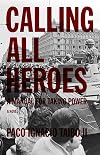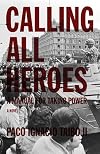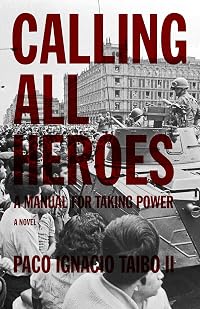
Calling All Heroes: A Manual for Taking Power: A Novel
by Paco Ignacio Taibo II
On This Page
Description
The euphoric idealism of grassroots reform and the tragic reality of revolutionary failure are at the center of this speculative novel that opens with a real historical event. On October 2, 1968, 10 days before the Summer Olympics in Mexico, the Mexican government responds to a student demonstration in Tlatelolcothe by firing into the crowd, killing more than 200 students and civilians and wounding hundreds more. The massacre does not receive much international attention and though many show more students are detained, no officials are held accountable. The story then skips ahead two years to a hospital in Mexico City and introduces Nestor, a fictional journalist who? witnessed the shootings at Tlatelolcothe. He has been admitted to the hospital for a knife wound, and as he lies in bed, his fevered imagination goes back to the day of the riot. In his delirious state, he? becomes so desperate he? calls on the heroes of his youth?Sherlock Holmes, Doc Holliday, Wyatt Earp, and D'Artagnan among them?to join him in launching a new movement of reform. show lessTags
Recommendations



















Member Reviews
In the way that the Martin Luther King assassination or Kent State has marked most Americans, the Tlatelolco Massacre remains a pivotal moment in Mexican politics—a point of anguish for those left to contemplate the ruins of their “revolution.” Paco Ignatio Taibo II was one. “At the beginning of 1969,” he writes “Gustavo Diaz Ordaz, vulture on a throne of skulls, reigned in Mexico. The student movement, massacred in the Casco de Santo Tomas, in the Plaza de la Cuidadela, in Tlatelelco, at Military Camp Number one—overthrown politically because it was unable to ally itself with the worker movement in the major cities—was in disarray. Thus began the long ebb after a struggle of 123 days in which thousands of Mexicans had show more come to life as human beings.”
Taibo II, who had been in the ’68 movement, did what a leftist intellectual, political insurgent literary critic and poet would do. He tried to put it all into a novel. The revolution, the defeat, the despair: “In defeat, we could only take refuge inside ourselves and in a bleak militancy for the hope of future fulfillment of the dreams of those 123 days. Under these deplorable conditions, this shortest of novels was created.” Taibo II then writes that he put the manuscript away in a drawer, pulling it out three more times over the next dozen years to rewrite it completely.
The result, Calling All Heroes: A Manual for Taking Power, may still be the “shortest of novels” but it lives up to each of the implications in its title. Although one can’t help but wonder if the embittered author who penned the first draft in 1969 would recognize the final product, published in Spanish in 1982, or the English translation I just read, which came out this year.
full review here show less
Taibo II, who had been in the ’68 movement, did what a leftist intellectual, political insurgent literary critic and poet would do. He tried to put it all into a novel. The revolution, the defeat, the despair: “In defeat, we could only take refuge inside ourselves and in a bleak militancy for the hope of future fulfillment of the dreams of those 123 days. Under these deplorable conditions, this shortest of novels was created.” Taibo II then writes that he put the manuscript away in a drawer, pulling it out three more times over the next dozen years to rewrite it completely.
The result, Calling All Heroes: A Manual for Taking Power, may still be the “shortest of novels” but it lives up to each of the implications in its title. Although one can’t help but wonder if the embittered author who penned the first draft in 1969 would recognize the final product, published in Spanish in 1982, or the English translation I just read, which came out this year.
full review here show less
Ratings
Members
- Recently Added By
Lists


Author Information

136+ Works 2,557 Members
Some Editions
Series
Belongs to Publisher Series
Common Knowledge
- Canonical title
- Calling All Heroes: A Manual for Taking Power: A Novel
- Original title
- Héroes convocados: manual para la toma del poder
- Original publication date
- 1982
- People/Characters
- Sherlock Holmes; Wyatt Earp; Doc Holliday; Nestor; Dick Turpin; D'Artagnan (show all 9); Athos; Porthos; Aramis
- Important places
- Mexico City, Mexico
- Important events
- Mexican Student Movement (1968); Tlatelolco massacre
- Last words
- (Click to show. Warning: May contain spoilers.)"To return someday."
- Blurbers
- Esquivel, Laura
Classifications
- Genres
- Fiction and Literature, General Fiction, Historical Fiction, Mystery
- DDC/MDS
- 863.64 — Literature & rhetoric Spanish Literature Spanish fiction 20th Century 1945-2000
- LCC
- PQ7298.3 .A58 .H413 — Language and Literature French, Italian, Spanish and Portuguese literatures Spanish literature Provincial, local, colonial, etc. Spanish America
- BISAC
Statistics
- Members
- 53
- Popularity
- 574,463
- Reviews
- 1
- Rating
- (3.20)
- Languages
- English, French, Spanish
- Media
- Paper, Ebook
- ISBNs
- 11
- ASINs
- 1