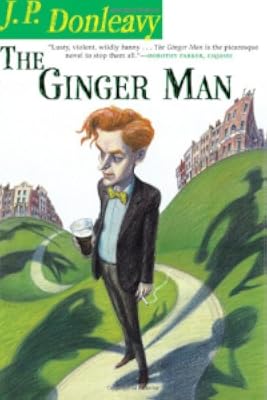
The Ginger Man
by J. P. Donleavy
On This Page
Description
First published in Paris in 1955, and originally banned in the United States, J.P. Donleavy's first novel is now recognized the world over as a masterpiece and a modern classic of the highest order. Set in Ireland just after World War II, The Ginger Man is J. P. Donleavy's wildly funny, picaresque classic novel of the misadventures of Sebastian Dangerfield, a young American ne'er-do-well studying at Trinity College in Dublin. He barely has time for his studies and avoids bill collectors, show more makes love to almost anything in a skirt, and tries to survive without having to descend into the bottomless pit of steady work. Dangerfield's appetite for women, liquor, and general roguishness is insatiable and he satisfies it with endless charm. show lessTags
Recommendations









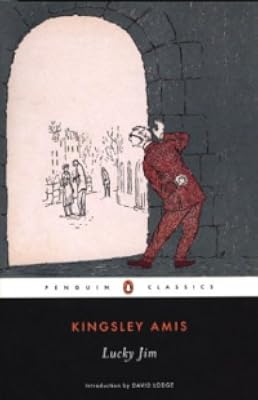
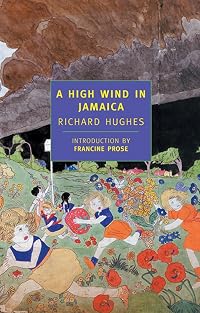
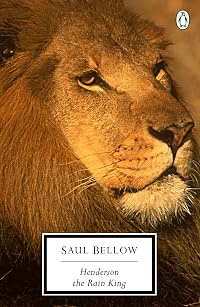
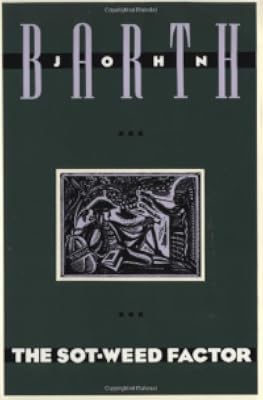


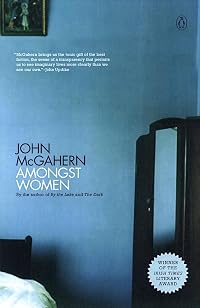

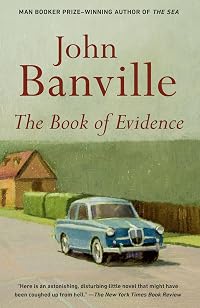
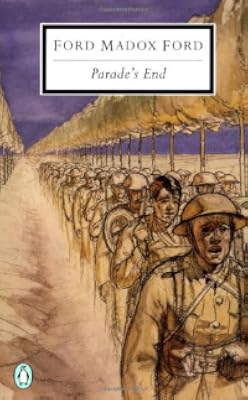
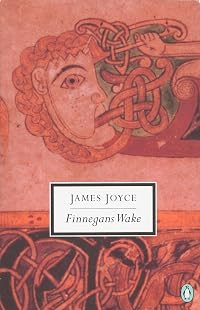






Member Recommendations

Member Reviews
An irresponsible overseas student in early 1950s Dublin and London does no work, drinks and fights his way through his student grant, mistreats his wife, child, and several girlfriends, and robs or cheats various landlords and shopkeepers. But wait a moment - he's not just being gratuitously offensive, he's rebelling against the hypocritical conformity of the society of the times. So that's all right, then, we're allowed to indulge him...
Obviously, we should have read this back in 1955, when it was a censorship-beating under-the-counter publication brought back illegally from Paris, and when Dangerfield's oafish behaviour might still have struck us as gloriously liberating. We might have recognised the book as an important link between show more the American modernism of the Henry Miller era and the up-and-coming young British writers of the Osborne/Amis/Sillitoe generation, and celebrated the unstoppable energy of its narrative and the irrepressible effrontery of the dialogue. Reading it more than sixty years later, the main feeling is regret for the sheer wastefulness of it: all that justifiable resentment against post-war bourgeois society getting pointlessly burnt off in macho bouts of drinking, fucking and fighting. To no purpose at all, as far as we can see... show less
Obviously, we should have read this back in 1955, when it was a censorship-beating under-the-counter publication brought back illegally from Paris, and when Dangerfield's oafish behaviour might still have struck us as gloriously liberating. We might have recognised the book as an important link between show more the American modernism of the Henry Miller era and the up-and-coming young British writers of the Osborne/Amis/Sillitoe generation, and celebrated the unstoppable energy of its narrative and the irrepressible effrontery of the dialogue. Reading it more than sixty years later, the main feeling is regret for the sheer wastefulness of it: all that justifiable resentment against post-war bourgeois society getting pointlessly burnt off in macho bouts of drinking, fucking and fighting. To no purpose at all, as far as we can see... show less
This book started out with this awful opener where two drunks bum around Dublin in the fifties and spout inanities at one another in a moronic self-pitying patois, something weirdly like Waiting for Godot written by James Joyce and then rubbed down thoroughly with all the worst parts of, oh, The Odd Couple, David Mamet, Animaniacs, Lester Bangs and Lou Reed … are you getting me? Like, no opening chapter in history ever deserved a good spanking to give it something to cry about more. I almost put it down right there. Luckily, O'Keefe fucks off to France and Dangerfield goes home to his deeply broken marriage and we are thrown into a masterpiece of Irish misery leavened just enough with Irish-American smarm. I'll not rush to read this show more again--it was too good at handing out hopelessness on a platter, making you care about the bad guy (who is also the good guy) but not root for him, touching the violent and sickly-snuffly and broadband malicious places in anyone who's ever, oh, ended up entangled in a worthless relationship or known they were a force for evil in the world and not given a shit or just hated their dad so much. Then on top of that, the pleasures of the really spot-on period piece, chilblains and sad rancid sex and all. Obstinately, obnoxiously ugly; I loved it. show less
“To befriend an Irishman is to invite poverty.” That’s not the exact quote, but I don’t have any more time to waste searching through J.P. Donleavy’s [The Ginger Man] to find it again. That was the one savory moment in the entire novel that remains. Much that is unsavory still remains and that’s the problem.
The story is a fairly simple one – Sebastian Dangerfield, an American of Irish blood, moves to Dublin to study law at Trinity, taking his English wife and infant child. He drinks, has sex with a bunch of women, and drinks some more.
Some say Donleavy based the hard-drinking Dangerfield on himself and the back flap of my copy lends some credit to the theory with a quote from the author: “I set out one June near the sea show more in County Wicklow, Ireland, to write a splendid book no one would ever forget. I knew then that the years would come and go and the book would live. It has taken more years than I ever could have imagined and more battles than I ever felt I’d have to fight but the fist I shook and the rage I spent has at last blossomed and before it should fade I’d like to say that I am glad.” Cogitate on that last and you’ll recognize the anger and ego and selfishness of the character Dangerfield.
Sadly, I’m afraid that Donleavy might have been right about the book being one hard to forget – but I wouldn’t brag so about it. I persevered to the last because I convinced myself that there would be some cathartic, meaningful end or, at least, some growth to Dangerfield. There’s none of that. From the first vision of the sot, engaged in hacking up a blanket to fashion a scarf that might give him an air of liquidity at the local market, to the last, Dangerfield remains the same – liquor and sex obsessed, willing to do or say anything for another drop or another toss.
Donleavy’s prose was interesting, even if it was a bit of a reduction of that other Irish author who shall not be named. So, the reading was difficult. But the story and Dangerfield were hard to abide. The only sympathetic characters were the females that Donleavy populated the story with to give Dangerfield targets. These women were strong and smart in everything except in their infatuation with a louse, the one part of their personalities that was unbelievably inconsistent.
I recently read an essay by Rosellen Brown about writing in which she defended such unlikeable characters as Dangerfield. Her argument was that she finds thorny or rakish characters interesting and tries to model those personalities in her writing. She was disgusted by the idea that readers would quit on a book or assail it after finishing because a character was unlikable. Brown’s only concern for such characters is whether their actions are plausible or represent some reality that is recognizable to the reader. I disagree with Brown – not because I want to lose myself in a fantasy where everyone is likable or where everything turns out butterflies and puppy dogs in the end but because there has to either be balance or growth. I’m not picky, one or the other will do. Without balance, likable and unlikable, or growth, however small, a story becomes stagnant. Good story-telling the conflict between opposing forces – it need not be good and evil, though that is popular – but it must be conflict. Good character building, particularly for the main characters requires movement. With apologies to Ms. Brown, Donleavy’s [Ginger Man] has neither and grows stagnant quickly.
Bottom Line: Abandon hope all ye who enter – don’t do what I did and suffer through until the last page hoping for something different.
2 bones!! show less
The story is a fairly simple one – Sebastian Dangerfield, an American of Irish blood, moves to Dublin to study law at Trinity, taking his English wife and infant child. He drinks, has sex with a bunch of women, and drinks some more.
Some say Donleavy based the hard-drinking Dangerfield on himself and the back flap of my copy lends some credit to the theory with a quote from the author: “I set out one June near the sea show more in County Wicklow, Ireland, to write a splendid book no one would ever forget. I knew then that the years would come and go and the book would live. It has taken more years than I ever could have imagined and more battles than I ever felt I’d have to fight but the fist I shook and the rage I spent has at last blossomed and before it should fade I’d like to say that I am glad.” Cogitate on that last and you’ll recognize the anger and ego and selfishness of the character Dangerfield.
Sadly, I’m afraid that Donleavy might have been right about the book being one hard to forget – but I wouldn’t brag so about it. I persevered to the last because I convinced myself that there would be some cathartic, meaningful end or, at least, some growth to Dangerfield. There’s none of that. From the first vision of the sot, engaged in hacking up a blanket to fashion a scarf that might give him an air of liquidity at the local market, to the last, Dangerfield remains the same – liquor and sex obsessed, willing to do or say anything for another drop or another toss.
Donleavy’s prose was interesting, even if it was a bit of a reduction of that other Irish author who shall not be named. So, the reading was difficult. But the story and Dangerfield were hard to abide. The only sympathetic characters were the females that Donleavy populated the story with to give Dangerfield targets. These women were strong and smart in everything except in their infatuation with a louse, the one part of their personalities that was unbelievably inconsistent.
I recently read an essay by Rosellen Brown about writing in which she defended such unlikeable characters as Dangerfield. Her argument was that she finds thorny or rakish characters interesting and tries to model those personalities in her writing. She was disgusted by the idea that readers would quit on a book or assail it after finishing because a character was unlikable. Brown’s only concern for such characters is whether their actions are plausible or represent some reality that is recognizable to the reader. I disagree with Brown – not because I want to lose myself in a fantasy where everyone is likable or where everything turns out butterflies and puppy dogs in the end but because there has to either be balance or growth. I’m not picky, one or the other will do. Without balance, likable and unlikable, or growth, however small, a story becomes stagnant. Good story-telling the conflict between opposing forces – it need not be good and evil, though that is popular – but it must be conflict. Good character building, particularly for the main characters requires movement. With apologies to Ms. Brown, Donleavy’s [Ginger Man] has neither and grows stagnant quickly.
Bottom Line: Abandon hope all ye who enter – don’t do what I did and suffer through until the last page hoping for something different.
2 bones!! show less
When I finished "The Ginger Man" my head was spinning. I was appalled. Perhaps a book that can evoke that much emotion deserves a decent rating... and after-all, the book IS number 99 on the Modern Library list of best 100 novels of all time. But clearly, I never would have continued reading past page 29 when the reprehensible, amoral Sebastian Dangerfield beat his wife and tried to smother his baby girl simply because she was crying.
Can this really be a classic masterpiece? Lets break it down into components: character development, plot, and style... and try to make for an objective assessment.
Donleavy does get 5 stars for character development. Forget all the nasty, evil, fictitious characters you’ve ever come across: "Lolita’s" show more Humbert, Alex of "A Clockwork Orange", Jeeter Rice of "Tobacco Road", and Henry Miller himself in his semi-autobiographical "Tropic of Cancer". They are all mild compared to The Ginger Man's Sebastian Dangerfield. Dangerfield is a spoiled college student from a wealthy family. He’s obnoxious, crude, physically dirty - and above it all, has a filthy mouth. He’s a bully, a sociopath, an alcoholic, and is a narcissistic self indulgent beast. The slightest thing can take him over the edge to violence, criminal acts, and uncontrollable behavior. He’s the kind of guy who could be in therapy his entire life and never make any progress. And the worst part - he was believable. There ARE people like Dangerfield out there in this world.
The plot? Well, there really isn’t one. There’s just Dangerfield’s disturbing moronic antics - one after another - over and over - until Donleavy must have become apathetic and jaded by his own thoughts and writing. Technically this does not effect my overall rating as many wonderful books with strong characters have minuscule plots. But then again, how many times does a person have to start a fight, cheat a landlord out of the rent, act like a ignorant jerk in public, maliciously destroy other peoples property, hit women, lie, cheat, and steal... before you’ve heard enough. There’s 345 pages of vulgar rubbish and I had enough by page 29.
But as much as the character of Dangerfield was believable - the story line was not. No one this despicable, financially destitute, physically dirty and foul smelling would have so many women waiting in line to hang onto him. And don’t try to convince me this guy had any real friends. My husband is always reminding me that truth is stranger than fiction - but Donleavy was delusional if he thought this was a realistic story. By creating a few relatively normal loyal friends and devoted women for Dangerfield, Donleavy was subtly trying to make Dangerfield into a somewhat sympathetic character with just a smidgen of humanity in that grubby body and degenerate soul. I’m not buying it!
The writing style is horrible. Jumping back and forth from third person to first person, rambling ineffectively, and offering the reader very little in the way of substance. Dangerfield spends a lot of time thinking about women’s anatomy, especially breasts, and whining in a vaguely coherent drunken stupor. Furthermore, Donleavy seems to deliberately depict scenes that are degrading to women.
"The Ginger Man" was written in 1955 and published in France under the genre of pornography getting banned in the United States and Ireland. Later, as literary standards relaxed, it began receiving glowing reviews internationally using adjectives like masterpiece, “wildly funny”, and black comedy. Well, the late Dorothy Parker was the one that called "The Ginger Man" - “wildly funny”. That woman must have had a really sick sense of humor.
With every effort to be objective - I have still come to the conclusion that this book is pure trash. show less
Can this really be a classic masterpiece? Lets break it down into components: character development, plot, and style... and try to make for an objective assessment.
Donleavy does get 5 stars for character development. Forget all the nasty, evil, fictitious characters you’ve ever come across: "Lolita’s" show more Humbert, Alex of "A Clockwork Orange", Jeeter Rice of "Tobacco Road", and Henry Miller himself in his semi-autobiographical "Tropic of Cancer". They are all mild compared to The Ginger Man's Sebastian Dangerfield. Dangerfield is a spoiled college student from a wealthy family. He’s obnoxious, crude, physically dirty - and above it all, has a filthy mouth. He’s a bully, a sociopath, an alcoholic, and is a narcissistic self indulgent beast. The slightest thing can take him over the edge to violence, criminal acts, and uncontrollable behavior. He’s the kind of guy who could be in therapy his entire life and never make any progress. And the worst part - he was believable. There ARE people like Dangerfield out there in this world.
The plot? Well, there really isn’t one. There’s just Dangerfield’s disturbing moronic antics - one after another - over and over - until Donleavy must have become apathetic and jaded by his own thoughts and writing. Technically this does not effect my overall rating as many wonderful books with strong characters have minuscule plots. But then again, how many times does a person have to start a fight, cheat a landlord out of the rent, act like a ignorant jerk in public, maliciously destroy other peoples property, hit women, lie, cheat, and steal... before you’ve heard enough. There’s 345 pages of vulgar rubbish and I had enough by page 29.
But as much as the character of Dangerfield was believable - the story line was not. No one this despicable, financially destitute, physically dirty and foul smelling would have so many women waiting in line to hang onto him. And don’t try to convince me this guy had any real friends. My husband is always reminding me that truth is stranger than fiction - but Donleavy was delusional if he thought this was a realistic story. By creating a few relatively normal loyal friends and devoted women for Dangerfield, Donleavy was subtly trying to make Dangerfield into a somewhat sympathetic character with just a smidgen of humanity in that grubby body and degenerate soul. I’m not buying it!
The writing style is horrible. Jumping back and forth from third person to first person, rambling ineffectively, and offering the reader very little in the way of substance. Dangerfield spends a lot of time thinking about women’s anatomy, especially breasts, and whining in a vaguely coherent drunken stupor. Furthermore, Donleavy seems to deliberately depict scenes that are degrading to women.
"The Ginger Man" was written in 1955 and published in France under the genre of pornography getting banned in the United States and Ireland. Later, as literary standards relaxed, it began receiving glowing reviews internationally using adjectives like masterpiece, “wildly funny”, and black comedy. Well, the late Dorothy Parker was the one that called "The Ginger Man" - “wildly funny”. That woman must have had a really sick sense of humor.
With every effort to be objective - I have still come to the conclusion that this book is pure trash. show less
With considerable quality and quantity, Sebastian Dangerfield violates the Third Commandment: “Thou shalt not take the name of the LORD thy God in vain; for the LORD will not hold him guiltless that taketh his name in vain.”
The essence of The Ginger Man, J.P. Donleavy’s 1955 novel, is that it is devoid of respect, utterly in vain. The hero trashes family, lovers, neighbors, country and God (he spares only a few partners in dissolution). His dealing of disrespect differs from the passive stance of another Dangerfield, the American comic Rodney, who merely muttered, “I don’t get no respect.”
Man (or Woman) Behaving Badly is an evergreen, bankable template for the arts and entertainment. As Dangerfield recounts and contemplates show more his serial transgressions, he reports that a girl in Baltimore told him, “…that is the way to do a lot of things in life—just go ahead and do them.” Donleavy’s protagonist clearly endorses a “do what thou wilt” philosophy, which got a 20th Century spin from the English occultist Aleister Crowley and the Thelemites. Truth be told, Dangerfield favors freedom over philosophy; libertinism over libertarianism.
Moreover, he wants to be free as things fall apart. “I’m a man for bedlam,” he says while recounting his disruption of a Christmas party. The sentiment is not uncommon. Dangerfield’s contemporary in fiction, Sal Paradise of Kerouac’s On the Road, was famously drawn to “the mad ones” for brotherhood and inspiration. In 1992, the comedian George Carlin kicked off a signature rant with “I enjoy chaos and disorder.” While Carlin was exposing society's presumable preference for news about others, Dangerfield is himself an agent of discord--he practices chaos and disorder.
When confronted with the responsibility of fatherhood or conjugal partnership, Dangerfield lashes out or flees like his name source, The Gingerbread Boy, who first appeared in print in the 1875 St. Nicholas magazine. In the folk tale, after the gingerbread cake is transubstantiated into a boy, he leaves his “parents” in the dust and flees from responsibility to face the perils of the road alone. By absenting fathers and mothers, countless writers of children’s fiction allow their heroes to shed comfort and security and go off and have their adventures, as Nathan Bransford noted. When Dangerfield reminisces about his childhood or envisions the delivery of trust funds, he disparages his faraway father and omits his mother.
Unforgettably, the edible gingerbread boy taunts his pursuers with bursts of verse, “And I can run away from you, I can.” Similarly, Donleavy, through Dangerfield, ends most of his chapters with a set of brief verses that James Campbell calls a "ditty." The centathlete thinks of the appendage more as a “tassel” because of its dangling appearance on the page. Perhaps one instance—"And/Fun/Too”—is meant to be further and naughtily enjoyed by reading the first letters to spell “aft.”
Donleavy was also a painter, so it’s appropriate to think about his book in visual terms, as does Dangerfield when he describes days as “oblong,” “triangular” and “rectangular.” When he regards the weather, he gets concisely, wonderfully lyrical, as in “a rare sun of spring,” “the soft million drops,” and “the gray wet over everything.”
There are other recurring devices in The Ginger Man: the first person vs. third person perspective; riffs about “ould” Irish places and heroes; and the posing and consideration of “Do you like Ireland?” Questioning is a key tactic to Dangerfield’s success as a womanizer, and he knows it. He dives in about a girl’s home life, work, what she wants to do in life, and more, eliciting touching responses before the delivery of the ends to his means.
The stylistic repetition of the book suits its episodic nature and calls out a few big changes that take place. Marion departs with Felicity, leaving the hero free again. Most notably, the action shifts from Dublin to London. The sense is of deliverance to a prosperous Calvinist paradise where dear old Clocklan, thought to have been a suicide, is resurrected as a transfigured, munificent savior—Dangerfield’s personal Jesus.
Mixing religion with sacrilege is central to Dangerfield’s identity. Before the first time he calls himself “the ginger man,” he says, “Jesus and I have been through a great deal together.” The only other instance of the name is the tassel at the novel’s end, “God’s mercy/On the wild/Ginger Man.” With self-aware mockery, Dangerfield reveals delusions of religious grandeur, one of the characteristics of sociopathology, according to HealthGuidance.
Is Dangerfield a sociopath? The real-life inspiration for his friend Kenneth O’Keefe, A.K. Donaghue, addressed the issue: “Although I firmly believe that Gainor S. Crist was a sociopath, I must say that JPD [Donleavy] never did nor does probably think so now.”
Noel Shrine in Irish America explained, “Gainor Crist was an American student at Trinity College Dublin, in the late forties, and Donleavy acknowledges him as the inspiration for Dangerfield.”
Crist’s widow, Pamela O’Malley de Crist, discussed with The Independent the font, truth and fiction of The Ginger Man: “'Gainor found it a funny book, and it is. Extraordinary things happened to Gainor, and he did extraordinary things...Most of the key exploits were based on fact. Gainor had a zest and a vitality for people.’” Later, the interviewer writes, “She added, ‘Donleavy liked to imply that it was himself. But how could he have done all that? It could only, and did, happen to Gainor. He was unique.’"
And The Ginger Man is self-consciously unique--indeed, Donleavy called his next novel A Singular Man. Distressingly, for the introduction of its offering of the novel, Grove Press opted for a Name rather than singular content. The result is a cursory, drab piece by Jay McInerny, whose writings over the decades exude a distinct waft of smugness that has been noted by others, such as Tim Dibblee in Salon.com.
What might a worthy intro have looked like? Try this on:
“JP Donleavy is a man that many women want to murder. After all, he was the creator of Sebastian Dangerfield, ‘The Ginger Man’. Every woman’s nightmare. A dashing rogue who would seduce you, shag you up the arse, slap you around the place, steal your savings and abandon you with the baby, while he made the rounds of the pubs, seducing other women.”
That crackling teaser is by Victoria Mary Clarke, who interviewed Donleavy for French Vogue in 2006. Journalist, vlogger and media coach, Clarke was previously connected to Donleavy through her partner, Shane MacGowan, the lead singer of The Pogues. MacGowan, who was born on Christmas Day, co-wrote “Fairytale of New York,” the Christmas anthem whose title is lifted from Donleavy’s 1973 novel, and “considered by many to be the greatest Christmas song ever,” according to The Guardian. Furthermore, the singer and the writer had met before, and the former was set to play Brendan Behan in a movie production of The Ginger Man, led by Johnny Depp, that was over-reported and ultimately aborted.
Like a number of other journalists, Clarke stayed at Donleavy's estate, Levington Park, and interviewed the lion in his Irish winter. She wrote:
“I put it to Donleavy that the violence against the women and child in the book, while probably considered normal at the time he wrote it, is definitely shocking now, especially when you consider that the rest of the book is extremely funny. “‘I certainly have never been violent towards any woman,’ he assures me. ‘Quite the opposite. I think I have an exaggerated regard for women, always have. Gainor [Crist] was the same.’”
That comforting response skirts the novel's dramatic actions and intent. Fighting or inciting suits the protagonist, and proximity seems to be his only criterion for selecting a target.
In considering Sebastian Dangerfield and his conflicts, the centathlete was compelled to examine two real men, both older brothers of longtime friends. We’ll call them A. and B.
Some number of years ago, A. texted, “You didn’t tell me you got married.” The note was odd because the centathlete had been married for at least five years, and because it came from out of nowhere: there was no recent history of text messages, phone calls, nor other communications. In fact, A. and the centathlete had never engaged in a one-on-one conversation. The centathlete was with his friend when in the presence of A., who had been typically buzzed and barhopping or otherwise preoccupied with his own companions.
As a young man, A. grew up in Manhattan and attended a prominent boarding school and university. He has not worked more than six months in the 30 years since. He belongs to that sizable population (we all know some) about whom one wonders, “What do they do all day?” A binge drinker, he lives comfortably with a successful, polite wife (who bought and owns their house) and their daughter. His father is wealthy and presumably supportive, in gross contrast to Dangerfield’s. In person, A. is skittish and prone to intermittent glowering and condescension. His demeanor and continued overindulgence likely stem from insecurity and mental illness, someone wise told the centathlete. A couple of years later, there came another text:
Hey bud
Long time no chat
You are still in my cell address book—ha ha… 😊
Seriously—hope you and -- and kiddos are doing well
Sorry I don’t know their names—that would be your fault for not telling me?
Probably; but easily understandable. My -- is eight plus and thriving—Greek school, huge amount of music, plus soccer of course. Kiddo is the light of our lives. Hard to believe it turned out this way but I wouldn’t trade it for anything 😊
Talk anytime my old friend.
One might welcome and respond to such lively, if presumptuous, greetings if one considered oneself a veritable "old friend" and if one didn’t know that A. had surreptitiously groped his brother’s fiancee years ago. (Again, that brother is the centathlete’s actual old friend.) Recently, while downing a can of beer with one hand, A. used the other to pinch his sister-in-law’s friend’s derriere and assert, “You know you want it.” When drinking excessively at a somber gathering of his extended family, his wife told him to take it easy and he erupted in front of everyone, including his young daughter, “You’re ruining my fucking life!” Profane, idle, offensive, chauvinistic, defensive, paranoid--Dangerfield traits. Is A. a sociopath?
The other friend’s older brother, B., is Irish American and Catholic. He was openly regarded as the smartest of five siblings, but what does that get you? His brother, the centathlete’s dear friend, has always worshiped him, even through hurtful times. Since adolescence, they both were athletic, preppy and boozy—enamored of Brooks Brothers and Bud Light. They often brought up their Irish heritage, as well as their parents’ significant financial struggle to pay for all five kids’ Catholic education.
Three decades ago, B. attended a prominent university, where alcoholism took hold and for a time was sufficiently managed, despite visits to Hazelden and elsewhere, and continual therapy. B. was kicked out of the house several times but is still married—to a long-suffering, strong-willed, Marion-esque woman from a well-heeled family—and a father of three. He has had a long, productive career on Wall Street.
When sober, B. was witty and sardonic—he easily made friends laugh with impromptu comments, twisting of names and sayings, and funny voices. When drinking, he was unrestrained, haughty and cruel—the centathlete recalls seeing him once, upon entering a bar, transmogrified with a menacing glare like Mr. Hyde.
B. was unpredictable when he fell off the wagon. After not coming home to Long Island one worknight, he was found the next afternoon asleep on the other side of Manhattan in a Hoboken cemetery. His wife suspended his driving privileges periodically, so he would steal his son’s bicycle—reminiscent of Dangerfield hurtling through Dublin. One spree took him to a craps game in the upstairs kitchen of the neighborhood Chinese restaurant with the staff, a remarkable incident that inspired lyrics still awaiting a melody.
This year the centathlete received a Facebook message from B., a bolt from the blue like A.’s text. It read:
B.
Hey ---- how are you? It's been a long time....
He was right—it had been about seven years since the centathlete had seen him at B.’s father’s memorial service. Before that, at least 20 years. And as with A., there had never been a one-on-one conversation, going back to early childhood. Such a simple inquiry from someone like B. is never that simple. With hesitation, the centathlete responded:
[Centathlete]
The unreeling of the years.
This was an obvious reference to 1972’s “Reelin’ in the Years” by Steely Dan, one of B.’s favorite artists. Four years older than the centathlete and his friend, B. had cultivated strong, predictable AOR tastes for his age. The same day, B., replied:
B.
Nice Steely Dan allusion!
And the following day, he followed up:
B.
Cmon you remember the tune from “Can't buy a Thrill”...
There he was: impulsively, aggressively looking to connect with someone he knows but has never really spoken to. The centathlete looked on B.’s sparse Facebook timeline and saw an old exchange between him and one of his college friends who is now an ER doctor with a bit of a party boy reputation—they privately call him Dr. Feelgood.
Dr. Feelgood
We'll celebrate your 55th in the Hamptons. I'm coming over to watch the big game with you and the boys. I'll bring a mini-keg of Heineken for us and a six pack of O'Douls for you. Ok guy.
Such camaraderie between the Drinker and the Tenuously Reformed could fit in The Ginger Man. Dangerfield’s dialogues with O’Keefe are so enjoyable because they both commiserate and spar while the world deprives them of joy. Whether drinking with O’Keefe or playing house with Miss Frost, Dangerfield revels in his bubble-like existence. One of countless bravura moments in the novel occurs when O’Keefe reports, “Tony Malarkey says the neighborhood is in disgrace over this affair [with Miss Frost].” So, there is no bubble; everyone knows all about Dangerfield’s business.
But Dangerfield blows off that revelation and forges or bumbles ahead—in vain. He will break all the Commandments that he can until he is caught, and he will whimsically and lyrically add a few in order to violate them as well.
Before 2017, the centathlete had never heard of The Ginger Man or its author. Just a few months after completing the novel, as this dilettante clicked around for research, JP Donleavy died. The obituaries rushed to honor the long life of the singular man and his book. If he had requested God's mercy, he didn't need it. show less
The essence of The Ginger Man, J.P. Donleavy’s 1955 novel, is that it is devoid of respect, utterly in vain. The hero trashes family, lovers, neighbors, country and God (he spares only a few partners in dissolution). His dealing of disrespect differs from the passive stance of another Dangerfield, the American comic Rodney, who merely muttered, “I don’t get no respect.”
Man (or Woman) Behaving Badly is an evergreen, bankable template for the arts and entertainment. As Dangerfield recounts and contemplates show more his serial transgressions, he reports that a girl in Baltimore told him, “…that is the way to do a lot of things in life—just go ahead and do them.” Donleavy’s protagonist clearly endorses a “do what thou wilt” philosophy, which got a 20th Century spin from the English occultist Aleister Crowley and the Thelemites. Truth be told, Dangerfield favors freedom over philosophy; libertinism over libertarianism.
Moreover, he wants to be free as things fall apart. “I’m a man for bedlam,” he says while recounting his disruption of a Christmas party. The sentiment is not uncommon. Dangerfield’s contemporary in fiction, Sal Paradise of Kerouac’s On the Road, was famously drawn to “the mad ones” for brotherhood and inspiration. In 1992, the comedian George Carlin kicked off a signature rant with “I enjoy chaos and disorder.” While Carlin was exposing society's presumable preference for news about others, Dangerfield is himself an agent of discord--he practices chaos and disorder.
When confronted with the responsibility of fatherhood or conjugal partnership, Dangerfield lashes out or flees like his name source, The Gingerbread Boy, who first appeared in print in the 1875 St. Nicholas magazine. In the folk tale, after the gingerbread cake is transubstantiated into a boy, he leaves his “parents” in the dust and flees from responsibility to face the perils of the road alone. By absenting fathers and mothers, countless writers of children’s fiction allow their heroes to shed comfort and security and go off and have their adventures, as Nathan Bransford noted. When Dangerfield reminisces about his childhood or envisions the delivery of trust funds, he disparages his faraway father and omits his mother.
Unforgettably, the edible gingerbread boy taunts his pursuers with bursts of verse, “And I can run away from you, I can.” Similarly, Donleavy, through Dangerfield, ends most of his chapters with a set of brief verses that James Campbell calls a "ditty." The centathlete thinks of the appendage more as a “tassel” because of its dangling appearance on the page. Perhaps one instance—"And/Fun/Too”—is meant to be further and naughtily enjoyed by reading the first letters to spell “aft.”
Donleavy was also a painter, so it’s appropriate to think about his book in visual terms, as does Dangerfield when he describes days as “oblong,” “triangular” and “rectangular.” When he regards the weather, he gets concisely, wonderfully lyrical, as in “a rare sun of spring,” “the soft million drops,” and “the gray wet over everything.”
There are other recurring devices in The Ginger Man: the first person vs. third person perspective; riffs about “ould” Irish places and heroes; and the posing and consideration of “Do you like Ireland?” Questioning is a key tactic to Dangerfield’s success as a womanizer, and he knows it. He dives in about a girl’s home life, work, what she wants to do in life, and more, eliciting touching responses before the delivery of the ends to his means.
The stylistic repetition of the book suits its episodic nature and calls out a few big changes that take place. Marion departs with Felicity, leaving the hero free again. Most notably, the action shifts from Dublin to London. The sense is of deliverance to a prosperous Calvinist paradise where dear old Clocklan, thought to have been a suicide, is resurrected as a transfigured, munificent savior—Dangerfield’s personal Jesus.
Mixing religion with sacrilege is central to Dangerfield’s identity. Before the first time he calls himself “the ginger man,” he says, “Jesus and I have been through a great deal together.” The only other instance of the name is the tassel at the novel’s end, “God’s mercy/On the wild/Ginger Man.” With self-aware mockery, Dangerfield reveals delusions of religious grandeur, one of the characteristics of sociopathology, according to HealthGuidance.
Is Dangerfield a sociopath? The real-life inspiration for his friend Kenneth O’Keefe, A.K. Donaghue, addressed the issue: “Although I firmly believe that Gainor S. Crist was a sociopath, I must say that JPD [Donleavy] never did nor does probably think so now.”
Noel Shrine in Irish America explained, “Gainor Crist was an American student at Trinity College Dublin, in the late forties, and Donleavy acknowledges him as the inspiration for Dangerfield.”
Crist’s widow, Pamela O’Malley de Crist, discussed with The Independent the font, truth and fiction of The Ginger Man: “'Gainor found it a funny book, and it is. Extraordinary things happened to Gainor, and he did extraordinary things...Most of the key exploits were based on fact. Gainor had a zest and a vitality for people.’” Later, the interviewer writes, “She added, ‘Donleavy liked to imply that it was himself. But how could he have done all that? It could only, and did, happen to Gainor. He was unique.’"
And The Ginger Man is self-consciously unique--indeed, Donleavy called his next novel A Singular Man. Distressingly, for the introduction of its offering of the novel, Grove Press opted for a Name rather than singular content. The result is a cursory, drab piece by Jay McInerny, whose writings over the decades exude a distinct waft of smugness that has been noted by others, such as Tim Dibblee in Salon.com.
What might a worthy intro have looked like? Try this on:
“JP Donleavy is a man that many women want to murder. After all, he was the creator of Sebastian Dangerfield, ‘The Ginger Man’. Every woman’s nightmare. A dashing rogue who would seduce you, shag you up the arse, slap you around the place, steal your savings and abandon you with the baby, while he made the rounds of the pubs, seducing other women.”
That crackling teaser is by Victoria Mary Clarke, who interviewed Donleavy for French Vogue in 2006. Journalist, vlogger and media coach, Clarke was previously connected to Donleavy through her partner, Shane MacGowan, the lead singer of The Pogues. MacGowan, who was born on Christmas Day, co-wrote “Fairytale of New York,” the Christmas anthem whose title is lifted from Donleavy’s 1973 novel, and “considered by many to be the greatest Christmas song ever,” according to The Guardian. Furthermore, the singer and the writer had met before, and the former was set to play Brendan Behan in a movie production of The Ginger Man, led by Johnny Depp, that was over-reported and ultimately aborted.
Like a number of other journalists, Clarke stayed at Donleavy's estate, Levington Park, and interviewed the lion in his Irish winter. She wrote:
“I put it to Donleavy that the violence against the women and child in the book, while probably considered normal at the time he wrote it, is definitely shocking now, especially when you consider that the rest of the book is extremely funny. “‘I certainly have never been violent towards any woman,’ he assures me. ‘Quite the opposite. I think I have an exaggerated regard for women, always have. Gainor [Crist] was the same.’”
That comforting response skirts the novel's dramatic actions and intent. Fighting or inciting suits the protagonist, and proximity seems to be his only criterion for selecting a target.
In considering Sebastian Dangerfield and his conflicts, the centathlete was compelled to examine two real men, both older brothers of longtime friends. We’ll call them A. and B.
Some number of years ago, A. texted, “You didn’t tell me you got married.” The note was odd because the centathlete had been married for at least five years, and because it came from out of nowhere: there was no recent history of text messages, phone calls, nor other communications. In fact, A. and the centathlete had never engaged in a one-on-one conversation. The centathlete was with his friend when in the presence of A., who had been typically buzzed and barhopping or otherwise preoccupied with his own companions.
As a young man, A. grew up in Manhattan and attended a prominent boarding school and university. He has not worked more than six months in the 30 years since. He belongs to that sizable population (we all know some) about whom one wonders, “What do they do all day?” A binge drinker, he lives comfortably with a successful, polite wife (who bought and owns their house) and their daughter. His father is wealthy and presumably supportive, in gross contrast to Dangerfield’s. In person, A. is skittish and prone to intermittent glowering and condescension. His demeanor and continued overindulgence likely stem from insecurity and mental illness, someone wise told the centathlete. A couple of years later, there came another text:
Hey bud
Long time no chat
You are still in my cell address book—ha ha… 😊
Seriously—hope you and -- and kiddos are doing well
Sorry I don’t know their names—that would be your fault for not telling me?
Probably; but easily understandable. My -- is eight plus and thriving—Greek school, huge amount of music, plus soccer of course. Kiddo is the light of our lives. Hard to believe it turned out this way but I wouldn’t trade it for anything 😊
Talk anytime my old friend.
One might welcome and respond to such lively, if presumptuous, greetings if one considered oneself a veritable "old friend" and if one didn’t know that A. had surreptitiously groped his brother’s fiancee years ago. (Again, that brother is the centathlete’s actual old friend.) Recently, while downing a can of beer with one hand, A. used the other to pinch his sister-in-law’s friend’s derriere and assert, “You know you want it.” When drinking excessively at a somber gathering of his extended family, his wife told him to take it easy and he erupted in front of everyone, including his young daughter, “You’re ruining my fucking life!” Profane, idle, offensive, chauvinistic, defensive, paranoid--Dangerfield traits. Is A. a sociopath?
The other friend’s older brother, B., is Irish American and Catholic. He was openly regarded as the smartest of five siblings, but what does that get you? His brother, the centathlete’s dear friend, has always worshiped him, even through hurtful times. Since adolescence, they both were athletic, preppy and boozy—enamored of Brooks Brothers and Bud Light. They often brought up their Irish heritage, as well as their parents’ significant financial struggle to pay for all five kids’ Catholic education.
Three decades ago, B. attended a prominent university, where alcoholism took hold and for a time was sufficiently managed, despite visits to Hazelden and elsewhere, and continual therapy. B. was kicked out of the house several times but is still married—to a long-suffering, strong-willed, Marion-esque woman from a well-heeled family—and a father of three. He has had a long, productive career on Wall Street.
When sober, B. was witty and sardonic—he easily made friends laugh with impromptu comments, twisting of names and sayings, and funny voices. When drinking, he was unrestrained, haughty and cruel—the centathlete recalls seeing him once, upon entering a bar, transmogrified with a menacing glare like Mr. Hyde.
B. was unpredictable when he fell off the wagon. After not coming home to Long Island one worknight, he was found the next afternoon asleep on the other side of Manhattan in a Hoboken cemetery. His wife suspended his driving privileges periodically, so he would steal his son’s bicycle—reminiscent of Dangerfield hurtling through Dublin. One spree took him to a craps game in the upstairs kitchen of the neighborhood Chinese restaurant with the staff, a remarkable incident that inspired lyrics still awaiting a melody.
This year the centathlete received a Facebook message from B., a bolt from the blue like A.’s text. It read:
B.
Hey ---- how are you? It's been a long time....
He was right—it had been about seven years since the centathlete had seen him at B.’s father’s memorial service. Before that, at least 20 years. And as with A., there had never been a one-on-one conversation, going back to early childhood. Such a simple inquiry from someone like B. is never that simple. With hesitation, the centathlete responded:
[Centathlete]
The unreeling of the years.
This was an obvious reference to 1972’s “Reelin’ in the Years” by Steely Dan, one of B.’s favorite artists. Four years older than the centathlete and his friend, B. had cultivated strong, predictable AOR tastes for his age. The same day, B., replied:
B.
Nice Steely Dan allusion!
And the following day, he followed up:
B.
Cmon you remember the tune from “Can't buy a Thrill”...
There he was: impulsively, aggressively looking to connect with someone he knows but has never really spoken to. The centathlete looked on B.’s sparse Facebook timeline and saw an old exchange between him and one of his college friends who is now an ER doctor with a bit of a party boy reputation—they privately call him Dr. Feelgood.
Dr. Feelgood
We'll celebrate your 55th in the Hamptons. I'm coming over to watch the big game with you and the boys. I'll bring a mini-keg of Heineken for us and a six pack of O'Douls for you. Ok guy.
Such camaraderie between the Drinker and the Tenuously Reformed could fit in The Ginger Man. Dangerfield’s dialogues with O’Keefe are so enjoyable because they both commiserate and spar while the world deprives them of joy. Whether drinking with O’Keefe or playing house with Miss Frost, Dangerfield revels in his bubble-like existence. One of countless bravura moments in the novel occurs when O’Keefe reports, “Tony Malarkey says the neighborhood is in disgrace over this affair [with Miss Frost].” So, there is no bubble; everyone knows all about Dangerfield’s business.
But Dangerfield blows off that revelation and forges or bumbles ahead—in vain. He will break all the Commandments that he can until he is caught, and he will whimsically and lyrically add a few in order to violate them as well.
Before 2017, the centathlete had never heard of The Ginger Man or its author. Just a few months after completing the novel, as this dilettante clicked around for research, JP Donleavy died. The obituaries rushed to honor the long life of the singular man and his book. If he had requested God's mercy, he didn't need it. show less
http://andalittlewine.blogspot.com/2012/02/book-7-of-52-ginger-man.html
The Ginger Man by J.P. Donleavy is one of the books I've had on my shelf for years that I've always meant to read. It was a gift from a friend who knew my love for rollicks.
The Ginger Man is every inch the rollick. Written in mainly as the running interior monologue of Sebastian Dangerfield, the text is littered with traces of the high modernists; Donleavy's punctuation seems haphazard until you realize that it's written in the cadence of Dangerfield's speech.
Maybe I'm getting older, but I didn't laugh through Dangerfield's drunken sexual adventures as much as I might have. In similar books (Been Down So Long It Looks Like Up to Me, Fear and Loathing in Las Vegas, show more Slaughterhouse Five) the protagonists are motivated by a love for life in all its messy disorder. But in The Ginger Man, Dangerfield is nearly completely paralyzed by his need for money. He woos women almost offhandedly, juggling multiple affairs (including one with his wife), trying to decide which woman will offer him the most golden parachute.
The novel has, I think, an ambiguous ending, in which Dangerfield has finally found his meal ticket in a woman almost as unpredictably deranged as he is, or else in which he has restored the illusion of prosperity long enough to entrap a new woman in his maze of lies and false promises. I think the second possibility is the more interesting one, so that the novel ends almost exactly where it began.
While the plot may be farcical, Dangerfield's interior monologue is tragic. He lives a charmed life; he dodges his debtors, pillages a world of eager and able young women, steals his meals with smiles and light words. But his constant worries about money and where the next meal will come from rob these scenes of their joy. Maybe Dangerfield's anxieties hit too close to home, but I can't enjoy his escapades the way I enjoy the heroes of the books I mentioned earlier. Donleavy's story is a little too much like life. show less
The Ginger Man by J.P. Donleavy is one of the books I've had on my shelf for years that I've always meant to read. It was a gift from a friend who knew my love for rollicks.
The Ginger Man is every inch the rollick. Written in mainly as the running interior monologue of Sebastian Dangerfield, the text is littered with traces of the high modernists; Donleavy's punctuation seems haphazard until you realize that it's written in the cadence of Dangerfield's speech.
Maybe I'm getting older, but I didn't laugh through Dangerfield's drunken sexual adventures as much as I might have. In similar books (Been Down So Long It Looks Like Up to Me, Fear and Loathing in Las Vegas, show more Slaughterhouse Five) the protagonists are motivated by a love for life in all its messy disorder. But in The Ginger Man, Dangerfield is nearly completely paralyzed by his need for money. He woos women almost offhandedly, juggling multiple affairs (including one with his wife), trying to decide which woman will offer him the most golden parachute.
The novel has, I think, an ambiguous ending, in which Dangerfield has finally found his meal ticket in a woman almost as unpredictably deranged as he is, or else in which he has restored the illusion of prosperity long enough to entrap a new woman in his maze of lies and false promises. I think the second possibility is the more interesting one, so that the novel ends almost exactly where it began.
While the plot may be farcical, Dangerfield's interior monologue is tragic. He lives a charmed life; he dodges his debtors, pillages a world of eager and able young women, steals his meals with smiles and light words. But his constant worries about money and where the next meal will come from rob these scenes of their joy. Maybe Dangerfield's anxieties hit too close to home, but I can't enjoy his escapades the way I enjoy the heroes of the books I mentioned earlier. Donleavy's story is a little too much like life. show less
There are a lot of quotes packed in this tome. And there are a lot of failures, but not in the writing.
During the first 20% of this book, I thought the rest of it would be pretty Hunter S. Thompson-straightforwardish, a bit of "oh, this must have influenced 'Withnail % I'", but no. I'm glad to have been wrong.
It's abuse. It's horror. The mundane existence of alcoholics (which is not mundane in the least to a non-alcoholic) embedded in thoughts spun as they're spoken, which is very comparable with an old comic-book without sound effects strewn throughout the pages. With all of the onomatopoetry lost, the reader gains much.
It all flows as stream-of-consciousness, even though it's evident and plain. An adulterer. A man of ill repute, yet show more of psychopathic tendencies. Some effective short sentences, e.g.
Then there are the near-Shakespeareian dialogue:
...and a simplified notion of why some of them drink:
Still, this is much more than clever one-liners. It's repetitiveness, and what seems not to be repetitive to people who aren't in this disposition, or who have become too old to remember what it was like.
Highly recommendable not due to Donleavy's style or the quotes, but as a whole. As the revolutions heighten, the end of the book is welcome and grand. Which the book is, entirely. show less
During the first 20% of this book, I thought the rest of it would be pretty Hunter S. Thompson-straightforwardish, a bit of "oh, this must have influenced 'Withnail % I'", but no. I'm glad to have been wrong.
It's abuse. It's horror. The mundane existence of alcoholics (which is not mundane in the least to a non-alcoholic) embedded in thoughts spun as they're spoken, which is very comparable with an old comic-book without sound effects strewn throughout the pages. With all of the onomatopoetry lost, the reader gains much.
It all flows as stream-of-consciousness, even though it's evident and plain. An adulterer. A man of ill repute, yet show more of psychopathic tendencies. Some effective short sentences, e.g.
O'Keefe filling a bowl with bread crumbs. Night outside and the boom of the sea. Angelus bells. Pause that refreshes.
Then there are the near-Shakespeareian dialogue:
On this June morning, Dangerfield came in the front gate of Trinity and went up the dusty rickety stairs of No. 3 where he stood by the dripping rust-stained sink and banged on O'Keefe's door. A minute passed and then the sound of padding feet and latches being undone and the appearance of a bearded, dreary face and one empty eye. "It's you." The door was swung open and O'Keefe plodded back to his bedroom. A smell of stale sperm and rancid butter. Mouldering on the table, a loaf of bread, a corner bitten from it with marks of teeth. The fireplace filled with newspapers, old socks, spittle stains and products of self pollution. "Christ, Kenneth, don't you think you ought to have this place cleaned up?" "What for? Does it make you sick? Vomit in the fireplace."
...and a simplified notion of why some of them drink:
But Jesus, when you don't have any money, the problem is food. When you have money, it's sex. When you have both it's health, you worry about getting rupture or something. If everything is simply jake then you're frightened of death. And look at these faces, all stuck with the first problem and will be for the rest of their days."
Still, this is much more than clever one-liners. It's repetitiveness, and what seems not to be repetitive to people who aren't in this disposition, or who have become too old to remember what it was like.
Highly recommendable not due to Donleavy's style or the quotes, but as a whole. As the revolutions heighten, the end of the book is welcome and grand. Which the book is, entirely. show less
Members
- Recently Added By
Lists

National Book Award Finalists - Fiction
377 works; 12 members

The Modern Library's 100 Best Novels: The Board's List
85 works; 6 members

Blue Pyramid 1,276 Best Books of All Time
1,248 works; 32 members

Recommended Reading : 600 Classics Reviewed, Editors of Salem Press, 2015
634 works; 6 members

Modern Library's 100 Best Novels
100 works; 2 members
Author Information

31+ Works 5,590 Members
J. P. Donleavy was born James Patrick Donleavy Jr. in Brooklyn, New York on April 23, 1926. After serving in the Navy during World War II, he studied microbiology at Trinity College in Dublin. His first novel, The Ginger Man, was published in 1955. His other novels included A Singular Man, The Beastly Beatitudes of Balthazar B., The Onion Eaters, show more A Fairy Tale of New York, The Lady Who Liked Clean Rest Rooms, Wrong Information Is Being Given Out at Princeton, and The Destinies of Darcy Dancer, Gentleman. He also wrote nonfiction books including The Unexpurgated Code: A Complete Manual of Survival and Manners and plays including The Beastly Beatitudes. He was an accomplished painter and had exhibitions on both sides of the Atlantic, including a show at the National Arts Club in Manhattan in 2007. He died from a stroke on September 11, 2017 at the age of 91. (Bowker Author Biography) show less
Some Editions
Awards and Honors
Distinctions
Series
Belongs to Publisher Series
Work Relationships
Has the adaptation
Inspired
Has as a student's study guide
Common Knowledge
- Canonical title*
- De rosse bietser
- Original title
- The Ginger Man
- Original publication date
- 1955
- People/Characters
- Sebastian Dangerfield
- Important places
- Dublin, Ireland
- First words
- Today a rare sun of spring.
- Original language*
- Engels
*Some information comes from Common Knowledge in other languages. Click "Edit" for more information.
Classifications
Statistics
- Members
- 2,035
- Popularity
- 10,336
- Reviews
- 32
- Rating
- (3.47)
- Languages
- 12 — Czech, Dutch, English, Finnish, French, German, Italian, Lithuanian, Portuguese, Spanish, Swedish, Turkish
- Media
- Paper, Audiobook, Ebook
- ISBNs
- 44
- ASINs
- 56