On This Page
Description
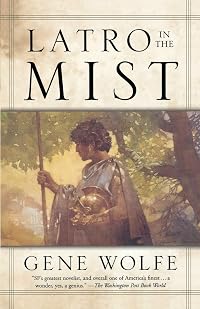
A distinguished compilation of two unforgettable fantasy novels, Soldier of the Mist and Soldier of Arete.This omnibus is the story of Latro, a Roman mercenary who was fighting in Greece when he received a head injury that deprived him of his short term memory, but gave him in return the ability to see and converse with supernatural creatures, the gods and godesses. However, Latro forgets everything when he sleeps. He writes his experiences every day in his journal, reading his journal anew show more each morning, and giving him a tenuous hold on himself. His story's hold on readers is powerful indeed. show lessTags
Recommendations






Member Recommendations

Member Reviews
I occasionally run across a book that challenges me; that makes me work for the story and enjoy the labor; that awes me with the craft of the writing. Usually these are considered “literary novels.” I also tend to find a lot of literary novels tedious, because I’m partial to the plot-driven story. But Latro in the Mist surprised me. It’s a fantasy novel because it has gods and ghosts (which may not be real, see my discussion below.) It’s a historical novel about real events set in Greece in 479 B.C., and populated with historical characters. It's also a finely crafted literary novel that makes the reader think beyond the story and characters about the nature of memory and self, friendship and loyalty, and the journey that is show more life.
Latro in the Mist is an omnibus of two books Soldier of the Mist (1986) and Soldier of Arete (1989); a chunky 623-page (with another 16 pages of glossary) doorstop of a book, but well worth plowing through. Gene Wolfe provides a compelling literary device to keep the reader engaged. The books are the “translated” scrolls of Latro (which can mean brigand, guerrilla, hired man, bodyguard, or pawn), a Roman mercenary who fights for the Persians in their war against Greece. In the first chapter we find that he has suffered a head wound and doesn’t remember things that happened the day before. A healer gives him a scroll and lead stylus to write what happens from day to day, so he can “remember.”
As with all curses, there is a blessing: Latro can now see and talk to gods, ghosts, dryads and other mythic creatures. A seer in the temple of “The Shining One” tells him that he has offended a goddess and must return to her temple and make amends. Thus Latro leads us on a fantastical journey, as he seeks a cure for his affliction, and a way to return to his dimly remembered home. He is captured by the Greeks and taken as a slave; makes friends with poets, merchants, whores and generals; loves an Amazon; travels the breadth of Greece and her Asian colonies; fights when necessary; and competes in the Olympics where he wins the urn that his scrolls are later found in.
But Latro is an unreliable narrator. One healer claims his visions of gods and ghosts are hallucinations. No one else sees them unless Latro touches them and in a time of intense superstition, people are inclined to “see” all kinds of apparitions. On top of that, the fictional translator tells us in the Foreword: "Latro had a disastrous penchant for abbreviation—indeed, it is rare to find him giving any but the shortest words in full; there is a distinct possibility that some abbreviations have been misread. The reader should keep in mind that all punctuation is mine; I have added details merely implied in the text in some instances and have given in full some conversations given in summary…In dealing with place names, I have followed the original writer who sometimes wrote them as he heard them, but more often translated them when he understood (or believed he understood) their meanings. ‘Tower Hill’ is probably Corinth; “the Long Coast” is surely Attica. In some cases, Latro was certainly mistaken. He seems to have heard some taciturn person referred to as having Laconic manners and to have concluded that Laconia meant “the Silent Country."
For those who like their historical fiction unadulterated, I still recommend this book. Latro is involved in actual historic events and interacts with several historic characters, including the poet Pindar and the Spartan general and regent Pausanias. In fact, knowing the real history considerably enhances the story, because it is by nature episodic and sometimes skips several days when Latro is unable to write anything. Occasionally someone else “writes” in the scroll and fills in some details that Latro has forgotten, but these are few and far between. Having some knowledge of the events of the time helps fill in the gaps. It’s this episodic nature coupled with the unreliable narration and translation that makes the reader work to keep everything straight.
In summary, I very much enjoyed this book. I was familiar with Gene Wolfe’s reputation in the science fiction/fantasy world, but had never read any of his work. Latro in the Mist has made me a fan. But it’s not for everyone. If you like your story straightforward, this omnibus will drive you crazy. If you like puzzles and don’t mind a little mental workout, you’ll love this one. show less
Latro in the Mist is an omnibus of two books Soldier of the Mist (1986) and Soldier of Arete (1989); a chunky 623-page (with another 16 pages of glossary) doorstop of a book, but well worth plowing through. Gene Wolfe provides a compelling literary device to keep the reader engaged. The books are the “translated” scrolls of Latro (which can mean brigand, guerrilla, hired man, bodyguard, or pawn), a Roman mercenary who fights for the Persians in their war against Greece. In the first chapter we find that he has suffered a head wound and doesn’t remember things that happened the day before. A healer gives him a scroll and lead stylus to write what happens from day to day, so he can “remember.”
As with all curses, there is a blessing: Latro can now see and talk to gods, ghosts, dryads and other mythic creatures. A seer in the temple of “The Shining One” tells him that he has offended a goddess and must return to her temple and make amends. Thus Latro leads us on a fantastical journey, as he seeks a cure for his affliction, and a way to return to his dimly remembered home. He is captured by the Greeks and taken as a slave; makes friends with poets, merchants, whores and generals; loves an Amazon; travels the breadth of Greece and her Asian colonies; fights when necessary; and competes in the Olympics where he wins the urn that his scrolls are later found in.
But Latro is an unreliable narrator. One healer claims his visions of gods and ghosts are hallucinations. No one else sees them unless Latro touches them and in a time of intense superstition, people are inclined to “see” all kinds of apparitions. On top of that, the fictional translator tells us in the Foreword: "Latro had a disastrous penchant for abbreviation—indeed, it is rare to find him giving any but the shortest words in full; there is a distinct possibility that some abbreviations have been misread. The reader should keep in mind that all punctuation is mine; I have added details merely implied in the text in some instances and have given in full some conversations given in summary…In dealing with place names, I have followed the original writer who sometimes wrote them as he heard them, but more often translated them when he understood (or believed he understood) their meanings. ‘Tower Hill’ is probably Corinth; “the Long Coast” is surely Attica. In some cases, Latro was certainly mistaken. He seems to have heard some taciturn person referred to as having Laconic manners and to have concluded that Laconia meant “the Silent Country."
For those who like their historical fiction unadulterated, I still recommend this book. Latro is involved in actual historic events and interacts with several historic characters, including the poet Pindar and the Spartan general and regent Pausanias. In fact, knowing the real history considerably enhances the story, because it is by nature episodic and sometimes skips several days when Latro is unable to write anything. Occasionally someone else “writes” in the scroll and fills in some details that Latro has forgotten, but these are few and far between. Having some knowledge of the events of the time helps fill in the gaps. It’s this episodic nature coupled with the unreliable narration and translation that makes the reader work to keep everything straight.
In summary, I very much enjoyed this book. I was familiar with Gene Wolfe’s reputation in the science fiction/fantasy world, but had never read any of his work. Latro in the Mist has made me a fan. But it’s not for everyone. If you like your story straightforward, this omnibus will drive you crazy. If you like puzzles and don’t mind a little mental workout, you’ll love this one. show less
Fair warning: to say that I am a fan of Gene Wolfe is an understatement!
Latro in the mist is the diary of Latro, a mercenary with amnesia, and some of his adventures in ancient Greece and other mediterranean countries. He can remember for no more than a day, and can clearly see the gods and other invisible beings.
As with much of Wolfe's writing, the themes, to me, seem to be identity and memory. Both of these are deeply investigated in a true literary sense (i.e. this is not simply a genre novel, expanding on typical genre themes or adding to what is already thought on the subject in the literary field (as opposed to e.g. the scientific field)).
In an interview Wolfe said that Latro is something of a metaphor for the United States, a show more genuinely decent man with great power but who cannot remember his past. To my mind this can be expanded to Western culture in general, with our enormous disdain for the past and the people of the past, stumbling into obstacles well understood because of our firm believe that what we 'see now' is right, and being open for manipulation by malicious agendas because of this naiveté.
As with all of Wolfe's work the plot is tricky and requires a VERY active reading to see through the misinformation supplied by this very unreliable narrator. It has multiple layers of understanding of the events, and is incredibly well worked and faultless. Wolfe is such an example to any other author!
Also, as with all of Wolfe's work, the characterization is superb: lively, realistic and interesting. No genre cliches, no hard-to-swallow decisions or dialogue.
The most impressive part however, for me, is the realization of the universe. He simply touches on descriptions, and I still have 'memories' of 'being there'. This amazes me! It is almost as good to me as Hemingway, and really brings the time and place to life.
Despite the depth of the themes and the trickiness of the plot, I really think that this is a fun read. It is funny, interesting and full of action. And it has depth to reward multiple readings as well. show less
Latro in the mist is the diary of Latro, a mercenary with amnesia, and some of his adventures in ancient Greece and other mediterranean countries. He can remember for no more than a day, and can clearly see the gods and other invisible beings.
As with much of Wolfe's writing, the themes, to me, seem to be identity and memory. Both of these are deeply investigated in a true literary sense (i.e. this is not simply a genre novel, expanding on typical genre themes or adding to what is already thought on the subject in the literary field (as opposed to e.g. the scientific field)).
In an interview Wolfe said that Latro is something of a metaphor for the United States, a show more genuinely decent man with great power but who cannot remember his past. To my mind this can be expanded to Western culture in general, with our enormous disdain for the past and the people of the past, stumbling into obstacles well understood because of our firm believe that what we 'see now' is right, and being open for manipulation by malicious agendas because of this naiveté.
As with all of Wolfe's work the plot is tricky and requires a VERY active reading to see through the misinformation supplied by this very unreliable narrator. It has multiple layers of understanding of the events, and is incredibly well worked and faultless. Wolfe is such an example to any other author!
Also, as with all of Wolfe's work, the characterization is superb: lively, realistic and interesting. No genre cliches, no hard-to-swallow decisions or dialogue.
The most impressive part however, for me, is the realization of the universe. He simply touches on descriptions, and I still have 'memories' of 'being there'. This amazes me! It is almost as good to me as Hemingway, and really brings the time and place to life.
Despite the depth of the themes and the trickiness of the plot, I really think that this is a fun read. It is funny, interesting and full of action. And it has depth to reward multiple readings as well. show less
Beautifully written, with an intriguing premise and an interesting "unreliable" narrator. Latro, a soldier who received a head injury in the Battle of Thermopylae, has lost his short-term memory and can't recall anything that happens the day before, but Latro has also somehow gained the ability to see and interact with the various gods, ghosts, and immortals he encounters along the way. Latro in the Mist, a two-book omnibus, purports to be his journal, which he writes each day so he can read it the next day in an attempt to gain some coherency in his life. The book underscores how ephemeral one's memories can be, and it's a fascinating exploration of the relationship and distinction between memory and knowledge.
The very ending of the show more second book was rather confusing, though -- the POV shifted to that of another character who is apparently overfond of metaphors and poetic language, and I'm still trying to sort out what actually happened. If it weren't for that, I'd probably have given this 5 stars.
This is the first Gene Wolfe book I've read -- despite his plethora of awards, somehow he wasn't on my radar until I heard [a:Neil Gaiman|1221698|Neil Gaiman|http://photo.goodreads.com/authors/1234150163p2/1221698.jpg] effusively praise his work in a talk Gaiman gave at the Chicago Public Library this past spring. Next up is Wolfe's Book of the New Sun series, the first part of which, [b:Shadow and Claw|40992|Shadow and Claw|Gene Wolfe|http://photo.goodreads.com/books/1311996801s/40992.jpg|40575], fortuitously just came in for me at the library. show less
The very ending of the show more second book was rather confusing, though -- the POV shifted to that of another character who is apparently overfond of metaphors and poetic language, and I'm still trying to sort out what actually happened. If it weren't for that, I'd probably have given this 5 stars.
This is the first Gene Wolfe book I've read -- despite his plethora of awards, somehow he wasn't on my radar until I heard [a:Neil Gaiman|1221698|Neil Gaiman|http://photo.goodreads.com/authors/1234150163p2/1221698.jpg] effusively praise his work in a talk Gaiman gave at the Chicago Public Library this past spring. Next up is Wolfe's Book of the New Sun series, the first part of which, [b:Shadow and Claw|40992|Shadow and Claw|Gene Wolfe|http://photo.goodreads.com/books/1311996801s/40992.jpg|40575], fortuitously just came in for me at the library. show less
I think this meanders a little too much for its own good in the second half, but overall Wolfe is still a master - the ancient world feels clearer and closer here than it does in even the Odyssey.
Back in 1986, I was given a copy of Soldier in the Mist, a fascinating novel of an ancient warrior with a curse that allows him to remember only what happened in a day: once he slept, all his memories disappeared. This is a wonderful work, but with a bit of a cliffhanger ending that left me wanting more. I never ran across the second volume, Soldier of Areté (these were pre-Amazon days) and soon I had moved onto other tales. Imagine my delight when Latro in the Mist turns up: a compilation with both titles in one fat volume that satisfies my craving for completion.
Latro was a Roman mercenary who hired himself out to King Xerxes of Persia. During a battle, he had the bad judgement to fight on the grounds of the shrine of the Earth show more Mother, who cursed him with the loss of his memory, not just from the time of the fight, but for all his adult life and every day after. The book is a translation of archaic Latin, written on scrolls that were Latro’s memory aid: notes to remind him every morning of who he was and what he had done. An interesting story concept and one that both presents us with the character’s history and still leaves plenty of plot growth. The foreword provides background of how the scrolls were found and also on the period of history involved. Latro means brigand or pawn and is obviously not the soldier’s real name. What is real and not real is a problem for Latro because his curse has the added feature of allowing him to see and talk to supernatural beings. He will soon learn that his discussions with the river-man, golden god or comely nymph are not something others can share. If you have a background in Greek mythology, you will quickly be able to put together the clues Wolfe gives us as to who this being are, but keeping a myth reference book nearby is not a bad idea.
This is a quest story, with the hero definitely seeking himself in the most blatant terms. To escape the curse, he must journey far and make amends to the Earth Mother, with the help of a fellow soldier and a slave girl who was gifted to him by a God. Wolfe takes us to the world of ancient Greece, from war and magic, gods and adventures. And although this is an adventure story, it is also a Gene Wolfe story, with all the complexity you would expect. Like much of this author’s writing, this is not a light work and will require some concentration, but you will be well rewarded with a fascinating tale that brings new life to old myths. The characters are well rounded and you will soon be rooting for Latro and all his companions, as their dreams and hopes are revealed. I am not disclosing a great deal of the plot because I don’t want to spoil any of the surprises in the story. Wolfe furnishes many delights in these two stories and some may require a second or third reading to reveal.
If you are like me and read Soldier in the Mist but never found the sequel, rush out and get Latro in the Mist now: you won’t be disappointed. If you have never run across these jewels before, you are in for a treat! Join Latro on his journey and you will see ancient Greece and her myths in a new way.
Originally published in The Alexiad: contact jtmajor[at]iglou.com for more information. show less
Latro was a Roman mercenary who hired himself out to King Xerxes of Persia. During a battle, he had the bad judgement to fight on the grounds of the shrine of the Earth show more Mother, who cursed him with the loss of his memory, not just from the time of the fight, but for all his adult life and every day after. The book is a translation of archaic Latin, written on scrolls that were Latro’s memory aid: notes to remind him every morning of who he was and what he had done. An interesting story concept and one that both presents us with the character’s history and still leaves plenty of plot growth. The foreword provides background of how the scrolls were found and also on the period of history involved. Latro means brigand or pawn and is obviously not the soldier’s real name. What is real and not real is a problem for Latro because his curse has the added feature of allowing him to see and talk to supernatural beings. He will soon learn that his discussions with the river-man, golden god or comely nymph are not something others can share. If you have a background in Greek mythology, you will quickly be able to put together the clues Wolfe gives us as to who this being are, but keeping a myth reference book nearby is not a bad idea.
This is a quest story, with the hero definitely seeking himself in the most blatant terms. To escape the curse, he must journey far and make amends to the Earth Mother, with the help of a fellow soldier and a slave girl who was gifted to him by a God. Wolfe takes us to the world of ancient Greece, from war and magic, gods and adventures. And although this is an adventure story, it is also a Gene Wolfe story, with all the complexity you would expect. Like much of this author’s writing, this is not a light work and will require some concentration, but you will be well rewarded with a fascinating tale that brings new life to old myths. The characters are well rounded and you will soon be rooting for Latro and all his companions, as their dreams and hopes are revealed. I am not disclosing a great deal of the plot because I don’t want to spoil any of the surprises in the story. Wolfe furnishes many delights in these two stories and some may require a second or third reading to reveal.
If you are like me and read Soldier in the Mist but never found the sequel, rush out and get Latro in the Mist now: you won’t be disappointed. If you have never run across these jewels before, you are in for a treat! Join Latro on his journey and you will see ancient Greece and her myths in a new way.
Originally published in The Alexiad: contact jtmajor[at]iglou.com for more information. show less
This is an omnibus of two novels, Solder of the Mist and Soldier of Arete. Reviews for each can be found here:
Solder of the Mist
http://speculiction.blogspot.com/2015/02/review-of-soldier-of-mist-by-gene-wolfe...
Soldier of Arete
http://speculiction.blogspot.com/2015/03/review-of-soldier-of-arete-by-gene-wolf...
Solder of the Mist
http://speculiction.blogspot.com/2015/02/review-of-soldier-of-mist-by-gene-wolfe...
Soldier of Arete
http://speculiction.blogspot.com/2015/03/review-of-soldier-of-arete-by-gene-wolf...
Latro in the Mist by Gene Wolfe (2003)
Members
- Recently Added By
Lists

Unreliable Narrators
170 works; 43 members

Time is out of joint
19 works; 3 members

LIBROS DE CIENCIA FICCIÓN Y FANTASIA
60 works; 1 member
Author Information

314+ Works 43,637 Members
Gene Wolfe was born in New York City on May 7, 1931. He dropped out of Texas A&M University during his junior year and was drafted into the Army to fight in the Korean War. After the war, he received a degree in mechanical engineering from the University of Houston. He worked as an industrial engineer for Procter and Gamble, where he developed the show more machine that cooks the dough used to make Pringles potato chips. He was an editor of the trade journal Plant Engineering from 1972 to 1984 before retiring to become a full-time writer. He wrote more than 30 books during his lifetime including The Fifth Head of Cerberus, Peace, The Book of the New Sun, and The Land Across. He received the Campbell Memorial Award, the Edward E. Smith Memorial Award, the Locus Award four times, and the Nebula Award and the World Fantasy Award two times each. In 1996, he was given the World Fantasy Award for Lifetime Achievement. He was inducted into the Science Fiction Hall of Fame in 2007 and was named a Grand Master by the Science Fiction and Fantasy Writers of America in 2012. He died after a long battle with heart disease on April 14, 2019 at the age of 87. (Bowker Author Biography) show less
Some Editions
Series

Work Relationships
Contains
Common Knowledge
- Canonical title
- Latro in the Mist
- People/Characters
- Latro; Pindaros
- Important events
- Greco-Persian Wars (499 BCE | 449 BCE)
Classifications
- Genres
- Fiction and Literature, Fantasy, General Fiction, Historical Fiction
- DDC/MDS
- 813.54 — Literature & rhetoric American literature in English American fiction in English 1900-1999 1945-1999
- LCC
- PS3573 .O52 .S65 — Language and Literature American literature American literature Individual authors 1961-
- BISAC
Statistics
- Members
- 683
- Popularity
- 41,983
- Reviews
- 8
- Rating
- (4.09)
- Languages
- English, French, Greek
- Media
- Paper
- ISBNs
- 3