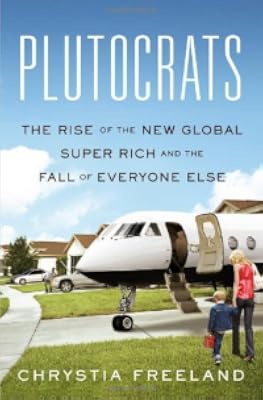
Plutocrats: The Rise of the New Global Super-Rich and the Fall of Everyone Else
by Chrystia Freeland
On This Page
Description
A journalist and industry specialist for Reuters examines the growing disparity between the rich and the poor, taking a non-partisan look into the businesspeople who are amassing colossal fortunes and preferring the company of similar people around the world.Tags
Recommendations

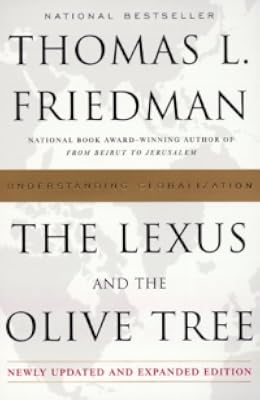
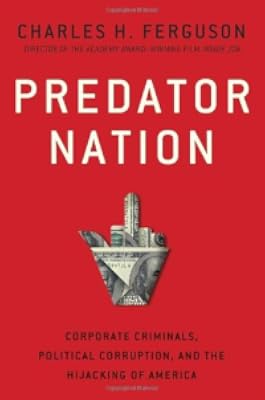
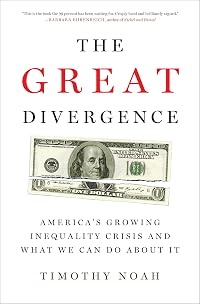
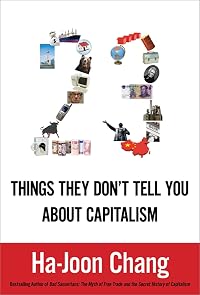
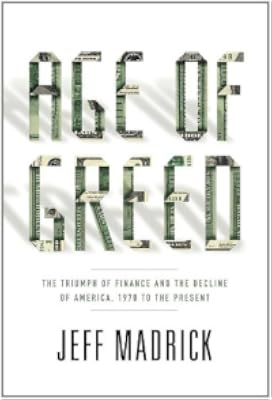
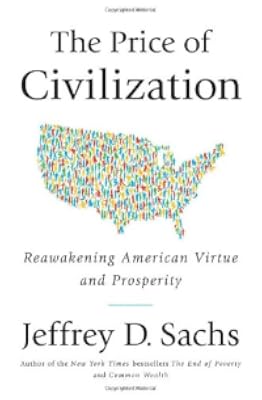
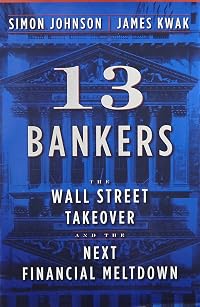
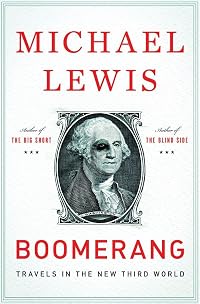
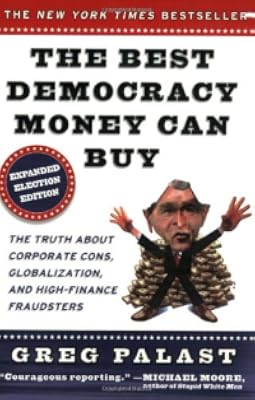
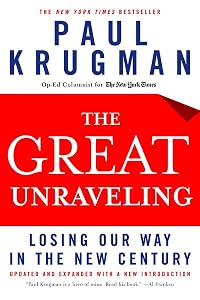
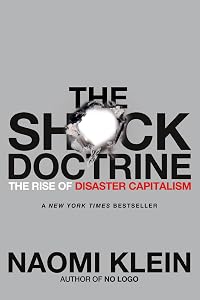
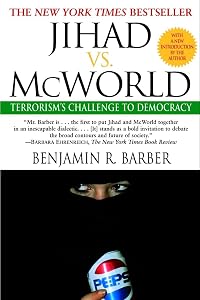
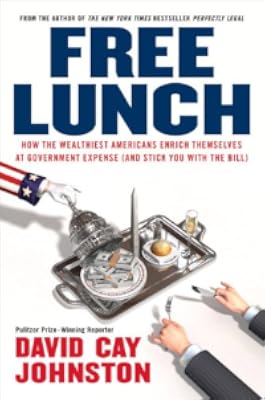
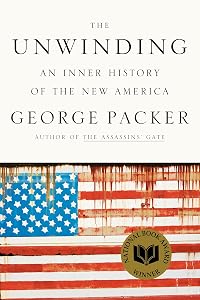
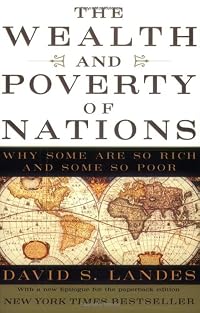
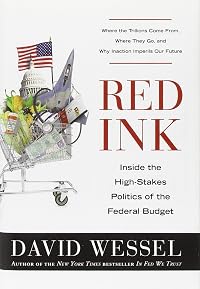

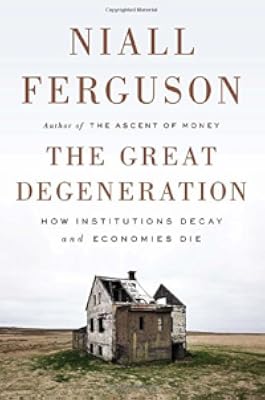
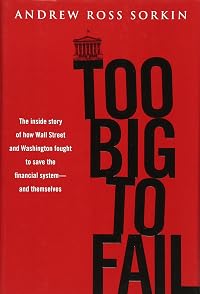
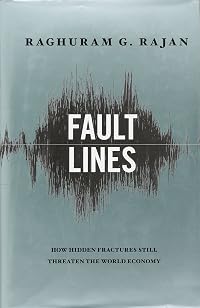
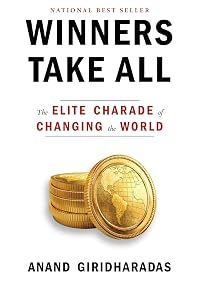
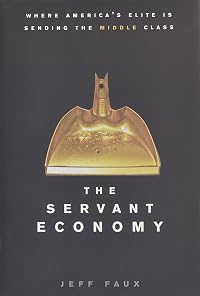
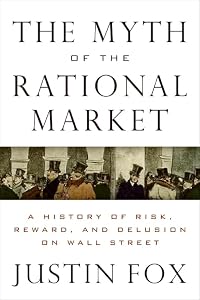
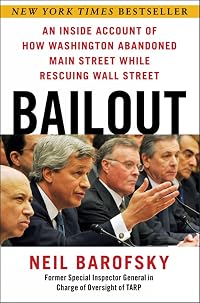
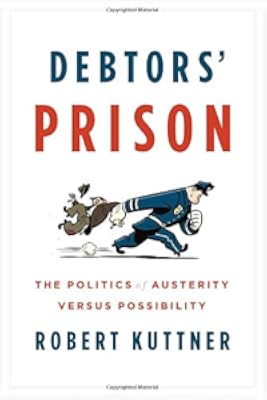
Member Recommendations
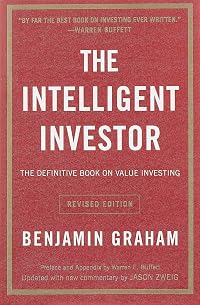
Jestak These two books offer a very effective counterpoint to each other.
Member Reviews
The book’s subtitle, The Rise of the New Global Super Rich and the Fall of Everyone Else, led me to expect a more critical approach to the topic. Instead, I found that Freeland more often than not praises the plutocrats as self-made geniuses and portrays the “fall of everyone else” as an unavoidable aspect of globalization. There’s an imbalance of agency inherent in this approach, but the book is still a valuable glimpse inside the plutocrats’ world.
Freeland, of course, is herself a member of the elite she describes. Daughter of two politically active lawyers, she attended Harvard and won a Rhodes scholarship to Oxford. Freeland worked as the Moscow bureau chief for the Financial Times, and currently represents Toronto Centre show more in the Canadian Parliament. Freeland has an incredible degree of access to politicians, global plutocrats, and even the Russian oligarchs, and Plutocrats is filled with anecdotes of her conversations with these interesting characters. This is really valuable material: many of these people opened up to Freeland in a way they certainly wouldn’t have to, let’s say, Matt Taibbi (who shares Freeland’s background as a reporter of Russia).
Freeland obliquely mentions Taibbi in the concluding pages of Plutocrats. “The vampire squid theory of the super-elite,” she says, “is entertaining and emotionally satisfying. It can be fun to imagine the super-elites who went to Wall Street and their Harvard classmates who became economics professors and those who became U.S. senators participating in a grand conspiracy (hatched ideally, at the Porcellian Club) to rip off the middle class. But the impact of these networks is much less cynical, and much more subtle, though not necessarily of less consequence” (p. 270). The interesting thing about this statement is that although it allows Freeland to continue her kid-gloves treatment of the plutocrats, she’s actually agreeing with Matt.
Freeland’s argument is that the super elite live in a bubble. The world, she says, has lost its borders for them and become simply a series of “rich places” they can visit, surrounded by poor places they can fly over. They can jet around the world to take a 90-minute meeting, and stay in a five-star hotel room that offers the same amenities on any continent. In a sense, the super-rich have turned the planet into McDonalds. Just like middle-class Americans cruising Route 1 from Maine to Florida or Route 66 across the heartland, the plutocracy is safe in a consistent uniformity that promises no surprises wherever they are. And it’s a small community. The elite and their hangers-on see each other regularly at think-fests like Davos, Aspen, and TED, where the organizers very rarely screw up and invite someone like Sarah Silverman.
The result, Freeland says, is a narrowing of perspective. ” ‘When Treasury Secretary Henry Paulson went to Congress last fall arguing that the world as we knew it would end if Congress did not approve the $ 700 billion bailout, he was serious and speaking in good faith. And to an extent he was right: His world— the world he lived and worked in— would have ended had there not been a bailout,’ ” [University of Chicago professor Luigi] Zingales argues. ‘But Henry Paulson’s world is not the world most Americans live in— or even the world in which our economy as a whole exists’ ” (p. 272). Freeland calls this cool-aid-drinking phenomenon “cognitive state capture,” quoting British economist Willem Buiter. Government regulators and Wall Street executives are often the same people. “Four of the last six secretaries of Treasury…were directly or indirectly connected to one firm: Goldman Sachs.” How could they not share a particular perspective and a particular set of priorities. And, in the absence of any credible countervailing opinions, how surprising is it they are taken (by themselves and society) as geniuses and as the only game in town?
“We wear spectacles shaded not only by our self-interest, but also by that of our friends,” Freeland says (p. 274). And if this is just human nature, then the plutocrats aren’t an evil cabal scheming to screw the rest of us. But they are also not infallible, and society needs to be built around a dialog that represents differing perspectives. Freeland concludes her book with a historical example of what happens when a society shuts out those other voices. When Venice codified its elite in the “Book of Gold” the society effectively stopped evolving, Freeland says. This was the beginning of the end.
The question is, where are the other perspectives going to come from? Freeland hopes to find them among the plutocrats, in people who although they went to Harvard, started life in a remote public school. Among her examples of this are Mark Zuckerberg “(New York State public school, Harvard), Blackstone cofounder Steve Schwarzman (Pennsylvania public school, Yale undergraduate, Harvard MBA), and Goldman Sachs CEO Lloyd Blankfein (Brooklyn public school, Harvard)” (p. 147). Personally, I think we need to throw the net a bit wider.
But I’ll admit, Freeland makes a case for trying to distinguish between plutocrats who were entrepreneurs and others who were simply rent-seekers. She quotes Franklin Roosevelt’s observation that “The financiers who pushed the railroads to the Pacific were always ruthless, often wasteful, and frequently corrupt; but they did build railroads, and we have them today. It has been estimated that the American investor paid for the American railway system more than three times over in the process; but despite this fact the net advantage was to the United States” (p. 178). However, I think she underestimates the value of being at the right place at the right time. I think this is best shown in the remarks of billionaire Aditya Mittal, of Mittal Steel, who told her “Change is fantastic. That’s how you create value because you participate in the change that you see. Now, it can be wrong, or it can be right—that is your own judgment call. But change is how you create value. If there is no change, how else do you create value?” (p. 162).
You create value by actually creating value. Not by scooping up Central and Eastern European steel mills at pennies on the dollar. That’s just arbitrage, and at some point those opportunities will come to an end. Yes, a class of plutocrats and oligarchs will be formed along the way. And yes, they’ll inevitably believe they are self-made geniuses. The question is, will there be anybody left at the table to speak for the rest of us? show less
Freeland, of course, is herself a member of the elite she describes. Daughter of two politically active lawyers, she attended Harvard and won a Rhodes scholarship to Oxford. Freeland worked as the Moscow bureau chief for the Financial Times, and currently represents Toronto Centre show more in the Canadian Parliament. Freeland has an incredible degree of access to politicians, global plutocrats, and even the Russian oligarchs, and Plutocrats is filled with anecdotes of her conversations with these interesting characters. This is really valuable material: many of these people opened up to Freeland in a way they certainly wouldn’t have to, let’s say, Matt Taibbi (who shares Freeland’s background as a reporter of Russia).
Freeland obliquely mentions Taibbi in the concluding pages of Plutocrats. “The vampire squid theory of the super-elite,” she says, “is entertaining and emotionally satisfying. It can be fun to imagine the super-elites who went to Wall Street and their Harvard classmates who became economics professors and those who became U.S. senators participating in a grand conspiracy (hatched ideally, at the Porcellian Club) to rip off the middle class. But the impact of these networks is much less cynical, and much more subtle, though not necessarily of less consequence” (p. 270). The interesting thing about this statement is that although it allows Freeland to continue her kid-gloves treatment of the plutocrats, she’s actually agreeing with Matt.
Freeland’s argument is that the super elite live in a bubble. The world, she says, has lost its borders for them and become simply a series of “rich places” they can visit, surrounded by poor places they can fly over. They can jet around the world to take a 90-minute meeting, and stay in a five-star hotel room that offers the same amenities on any continent. In a sense, the super-rich have turned the planet into McDonalds. Just like middle-class Americans cruising Route 1 from Maine to Florida or Route 66 across the heartland, the plutocracy is safe in a consistent uniformity that promises no surprises wherever they are. And it’s a small community. The elite and their hangers-on see each other regularly at think-fests like Davos, Aspen, and TED, where the organizers very rarely screw up and invite someone like Sarah Silverman.
The result, Freeland says, is a narrowing of perspective. ” ‘When Treasury Secretary Henry Paulson went to Congress last fall arguing that the world as we knew it would end if Congress did not approve the $ 700 billion bailout, he was serious and speaking in good faith. And to an extent he was right: His world— the world he lived and worked in— would have ended had there not been a bailout,’ ” [University of Chicago professor Luigi] Zingales argues. ‘But Henry Paulson’s world is not the world most Americans live in— or even the world in which our economy as a whole exists’ ” (p. 272). Freeland calls this cool-aid-drinking phenomenon “cognitive state capture,” quoting British economist Willem Buiter. Government regulators and Wall Street executives are often the same people. “Four of the last six secretaries of Treasury…were directly or indirectly connected to one firm: Goldman Sachs.” How could they not share a particular perspective and a particular set of priorities. And, in the absence of any credible countervailing opinions, how surprising is it they are taken (by themselves and society) as geniuses and as the only game in town?
“We wear spectacles shaded not only by our self-interest, but also by that of our friends,” Freeland says (p. 274). And if this is just human nature, then the plutocrats aren’t an evil cabal scheming to screw the rest of us. But they are also not infallible, and society needs to be built around a dialog that represents differing perspectives. Freeland concludes her book with a historical example of what happens when a society shuts out those other voices. When Venice codified its elite in the “Book of Gold” the society effectively stopped evolving, Freeland says. This was the beginning of the end.
The question is, where are the other perspectives going to come from? Freeland hopes to find them among the plutocrats, in people who although they went to Harvard, started life in a remote public school. Among her examples of this are Mark Zuckerberg “(New York State public school, Harvard), Blackstone cofounder Steve Schwarzman (Pennsylvania public school, Yale undergraduate, Harvard MBA), and Goldman Sachs CEO Lloyd Blankfein (Brooklyn public school, Harvard)” (p. 147). Personally, I think we need to throw the net a bit wider.
But I’ll admit, Freeland makes a case for trying to distinguish between plutocrats who were entrepreneurs and others who were simply rent-seekers. She quotes Franklin Roosevelt’s observation that “The financiers who pushed the railroads to the Pacific were always ruthless, often wasteful, and frequently corrupt; but they did build railroads, and we have them today. It has been estimated that the American investor paid for the American railway system more than three times over in the process; but despite this fact the net advantage was to the United States” (p. 178). However, I think she underestimates the value of being at the right place at the right time. I think this is best shown in the remarks of billionaire Aditya Mittal, of Mittal Steel, who told her “Change is fantastic. That’s how you create value because you participate in the change that you see. Now, it can be wrong, or it can be right—that is your own judgment call. But change is how you create value. If there is no change, how else do you create value?” (p. 162).
You create value by actually creating value. Not by scooping up Central and Eastern European steel mills at pennies on the dollar. That’s just arbitrage, and at some point those opportunities will come to an end. Yes, a class of plutocrats and oligarchs will be formed along the way. And yes, they’ll inevitably believe they are self-made geniuses. The question is, will there be anybody left at the table to speak for the rest of us? show less
3 of the 4 posted reviews made me wonder if the writers didn't read the entire book. The last two chapters "Rent-Seeking" and "Plutocrats and the Rest of Us" along with the Conclusion are fascinating and I'd say required reading to understand the global economy, the super-elite, and the implications for the rest of us.
This book, written in 2012, talks about the growing wealth and power of the top 1% of global wealth-holders. It's well written and easy to read, although if you are not at all familiar with financial markets, you may find yourself "googling" a few things. While a lot has been said and written about the super-rich since 2012, I still gained some insights from Ms. Freeland's book.
One such insight was the concept of the "working rich". In previous generations, wealth was largely inherited. More of today's millionaires have worked for their money. Not all of them have produced useful goods or provided needed services; most of them work in finance or banking and manage hedge funds -- but they do work under stressful conditions.
Second, I show more learned what a small, insulated group the top 1% are. They go to the same events and holiday spots, and speak largely to each other. The same can be said for many groups, but this is a group which includes many politicians and has influence over the lives many of us live. My biggest worry about income inequality has become that of governing both governments and industries from a narrow perspective -- something that can only exacerbate the problems.
At first, I was left wanting more analysis in the book, but upon reflection, I am happy that Ms. Freeland described the issues as well as she did, enabling readers to draw their own conclusions. show less
One such insight was the concept of the "working rich". In previous generations, wealth was largely inherited. More of today's millionaires have worked for their money. Not all of them have produced useful goods or provided needed services; most of them work in finance or banking and manage hedge funds -- but they do work under stressful conditions.
Second, I show more learned what a small, insulated group the top 1% are. They go to the same events and holiday spots, and speak largely to each other. The same can be said for many groups, but this is a group which includes many politicians and has influence over the lives many of us live. My biggest worry about income inequality has become that of governing both governments and industries from a narrow perspective -- something that can only exacerbate the problems.
At first, I was left wanting more analysis in the book, but upon reflection, I am happy that Ms. Freeland described the issues as well as she did, enabling readers to draw their own conclusions. show less
I'm afraid that I didn't understand this book. I do not mean that it uses complex terminology, or that the concepts are beyond the average reader (me!). The book is all about, "The rise of the new global super rich". After reading a few pages, I was shocked at the super affluence that the top 0.1% of society has awarded itself but, the more that one thinks about life, the more one realises that the super-greedy have always been with us. Do I think that it is right that a small percentage of people are paid vastly exorbitant salaries? No. Am I going to lose sleep over it? No.
This is a group of incredibly sad people, who work 15 plus hours every day of the year, rarely interact with their family, or any human being, unless that show more interaction will earn them more money than the average person can comprehend. The book did nothing to convince me that these people are significant, in any way and, when I reached the last page, my only thought was, "I hope these people find a way to use all their money to buy themselves another life - they seem to be wasting this one."
Ms Freeland seemed surprised that these super rich people were almost exclusively male. As a man, I am sadly not: whilst it is true that ladies have a harder time getting to the highest positions in business, etc., I also believe that, in the main, women are much more emotionally mature. This is a rather silly boys' game and not worth any more of my time........... show less
This is a group of incredibly sad people, who work 15 plus hours every day of the year, rarely interact with their family, or any human being, unless that show more interaction will earn them more money than the average person can comprehend. The book did nothing to convince me that these people are significant, in any way and, when I reached the last page, my only thought was, "I hope these people find a way to use all their money to buy themselves another life - they seem to be wasting this one."
Ms Freeland seemed surprised that these super rich people were almost exclusively male. As a man, I am sadly not: whilst it is true that ladies have a harder time getting to the highest positions in business, etc., I also believe that, in the main, women are much more emotionally mature. This is a rather silly boys' game and not worth any more of my time........... show less
Good breakdown on who is a plutocrat, how they got that way, and what they do. It does inundate you with individual stories to illustrate the points and themes. One for each topic would have been sufficient. Worth the read because it speaks to global economics, but lower rating because you often browse when reading repetitive material.
Tons of interesting information, along with a slew of interviews worth reading. My gripe is the lack of organization or overall analysis - there's no big takeaway, and very little in the means of concluding remarks. In the end, there's no real interpretation of the history and present activities of plutocrats. If this were sold only as a collection of facts, it would be a fantastic work - however, it appears to have strived for more.
I have not finished this yet, but I'm enjoying it. It is not a "Lifestyles of the Rich and Famous" that I feared, so far. Author provides a helpful overview of the forces behind the growing (national) income inequality and the growing (global) income equality. As incomes go up in the rising nations, they have to go down somewhere. That is, they have to go down for those who are not in the top tier taking advantage of globalization.
Members
- Recently Added By
Lists

TED 2013 Summer Reading List
190 works; 13 members

Books Read in 2016
4,666 works; 199 members
Author Information

4+ Works 602 Members
Awards and Honors
Awards
Common Knowledge
- Original publication date
- 2012
- Dedication
- In memory of my mother, Halyna Chomiak Freeland.
- First words
- Branko Milanovic is an economist at the World Bank. (Introduction)
If you are looking for the date when America's plutocracy had its coming-out party, you could do worst than choose June 21, 2007. (Chapter 1) - Last words
- (Click to show. Warning: May contain spoilers.)But, as even Levy's successors at mighty Goldman Sachs are learning, that can be harder than it sounds.
- Canonical DDC/MDS
- 305.5234
- Canonical LCC
- HB251.F74
Classifications
- Genres
- Economics, Nonfiction, Sociology, Business, General Nonfiction, History
- DDC/MDS
- 305.5234 — Society, government, & culture Social sciences, sociology & anthropology Social group - Age, Gender, Ethnicity People by social and economic levels Upper Class
- LCC
- HB251 .F74 — Social sciences Economic theory. Demography Economic theory. Demography Competition. Production. Wealth
- BISAC
Statistics
- Members
- 495
- Popularity
- 60,799
- Reviews
- 11
- Rating
- (3.57)
- Languages
- English, German
- Media
- Paper, Audiobook, Ebook
- ISBNs
- 16
- ASINs
- 5