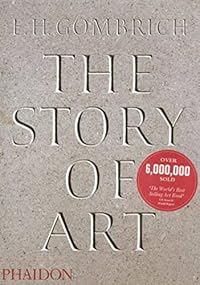
The Story of Art
by Ernst Gombrich
On This Page
Description
"The Story of Art is one of the most famous and popular books on art ever published. For 45 years it has remained unrivalled as an introduction to the whole subject, from the earliest cave paintings to the experimental art of today. Readers of all ages and backgrounds throughout the world have found in Professor Gombrich a true master, who combines knowledge and wisdom with a unique gift for communicating directly his own deep love of the works of art he describes." "The Story of Art owes show more its lasting popularity to the directness and simplicity of the writing, and also the author's skill in presenting a clear narrative. He describes his aim as 'to bring some intelligible order into the wealth of names, periods and styles which crowd the pages of more ambitious works', and using his insight into the psychology of the visual arts, he makes us see the history of art as 'a continuous weaving and changing of traditions in which each work refers to the past and points to the future', 'a living chain that still links our own time with the Pyramid age'. In its new format, the 16th edition of this classic work is set to continue its triumphant progress for future generations and to remain the first choice for all newcomers to art."--Jacket. show lessTags
Recommendations















Member Reviews
"It is the job of the historian to make intelligible what actually happens, it is the job of the critic to criticise what happens."
E H Gombrich (30-03-1909 to 03-11-2001) was both an art historian and an art critic. He was asked to write a text book on the history of art for young people, however his love of art and experience as an art critic resulted in this being much more than a mere text book. He said he wanted to "open eyes and not set tounges wagging" and so he kept technical details to a minimum. His modus operandi was to demonstrate, with reference to the many superb illustrations, what the artist was trying to achieve and what we the viewer should be looking for when we view a painting, sculpture or building.
Gombricht does not show more stray far from the western canon and guides the reader through primitive art, Egyptian art, Classical art, Medieval art, the Renaissance (where he is particularly strong), Northern European art, Neo classicism, Pre-Raphaelites, the Impressionists, Expressionism, Modern Art and Experimental Art. He is keen to point out that art has not developed through all of these phases, but that they are links in a chain. He manages to pack into his story enough historical context so that he can demonstrate why artists painted as they did, why art has changed through the ages and what the viewer of art demanded from the artists. It is a full and well rounded history.
He tackles head on issues for the beginner in art appreciation, encouraging them to go and see as much art as possible. He explains that much great art is not so concerned with an accurate depiction of its subject; it does not aim to look "like real". The artist is more concerned with showing a thought, a feeling, or an idea and in addition will have issues in separating out what he sees from what he knows. The arrangement of form and the selection of colours are of prime concern to the painter.
It has been said that Gombrich was no lover of modern art, but you would never guess this from his book. His writing about the impressionists and those that followed is extremely interesting and his thoughts on the influence of the art critics gives much food for thought. Throughout the book the thoughts and ideas expressed will be of interest to the art lover as well as the beginner and his point about the crisis for the art critic in todays art world bears repetition. He says that the critics got it horribly wrong when they denigrated the impressionists at their first few exhibitions in Paris and ever since they have been afraid of missing the boat again. He laments that today (1960's when he was writing) critics are little more than chroniclers of art, more concerned with not making a false step than indulging in serious criticism. He says in his postscript to the 1966 edition:
"I took it for granted it was the duty of the critic and of the historian to explain and to justify all artistic experiments in the face of hostile criticism. Today the problem is rather that the shock has worn off and that almost anything experimental seems acceptable to the press and the public. If anybody needs a champion today it is the artist who shuns rebellious gestures".
He goes on to say:
"We have no guarantee that our new responsiveness will not lead us to neglect a real genius among us who forges ahead regardless of fashion and publicity. Moreover the absorption in the present could easily cut us off from our heritage if we came to regard the art of the past as the mere foil against which the new conquests acquire meaning".
In this postscript Gombrich the art critic takes the reins from Gombrich the historian, but it no less fascinating for that. This is a superb story of art, full of insight and an excellent introduction for the beginner and still thought provoking for the art lover.
A final word from Gombrich
"There is really no such thing as Art. There are only artists - men and women, that is, who are favoured with the wonderful gift of balancing shapes and colours till they are "right" show less
E H Gombrich (30-03-1909 to 03-11-2001) was both an art historian and an art critic. He was asked to write a text book on the history of art for young people, however his love of art and experience as an art critic resulted in this being much more than a mere text book. He said he wanted to "open eyes and not set tounges wagging" and so he kept technical details to a minimum. His modus operandi was to demonstrate, with reference to the many superb illustrations, what the artist was trying to achieve and what we the viewer should be looking for when we view a painting, sculpture or building.
Gombricht does not show more stray far from the western canon and guides the reader through primitive art, Egyptian art, Classical art, Medieval art, the Renaissance (where he is particularly strong), Northern European art, Neo classicism, Pre-Raphaelites, the Impressionists, Expressionism, Modern Art and Experimental Art. He is keen to point out that art has not developed through all of these phases, but that they are links in a chain. He manages to pack into his story enough historical context so that he can demonstrate why artists painted as they did, why art has changed through the ages and what the viewer of art demanded from the artists. It is a full and well rounded history.
He tackles head on issues for the beginner in art appreciation, encouraging them to go and see as much art as possible. He explains that much great art is not so concerned with an accurate depiction of its subject; it does not aim to look "like real". The artist is more concerned with showing a thought, a feeling, or an idea and in addition will have issues in separating out what he sees from what he knows. The arrangement of form and the selection of colours are of prime concern to the painter.
It has been said that Gombrich was no lover of modern art, but you would never guess this from his book. His writing about the impressionists and those that followed is extremely interesting and his thoughts on the influence of the art critics gives much food for thought. Throughout the book the thoughts and ideas expressed will be of interest to the art lover as well as the beginner and his point about the crisis for the art critic in todays art world bears repetition. He says that the critics got it horribly wrong when they denigrated the impressionists at their first few exhibitions in Paris and ever since they have been afraid of missing the boat again. He laments that today (1960's when he was writing) critics are little more than chroniclers of art, more concerned with not making a false step than indulging in serious criticism. He says in his postscript to the 1966 edition:
"I took it for granted it was the duty of the critic and of the historian to explain and to justify all artistic experiments in the face of hostile criticism. Today the problem is rather that the shock has worn off and that almost anything experimental seems acceptable to the press and the public. If anybody needs a champion today it is the artist who shuns rebellious gestures".
He goes on to say:
"We have no guarantee that our new responsiveness will not lead us to neglect a real genius among us who forges ahead regardless of fashion and publicity. Moreover the absorption in the present could easily cut us off from our heritage if we came to regard the art of the past as the mere foil against which the new conquests acquire meaning".
In this postscript Gombrich the art critic takes the reins from Gombrich the historian, but it no less fascinating for that. This is a superb story of art, full of insight and an excellent introduction for the beginner and still thought provoking for the art lover.
A final word from Gombrich
"There is really no such thing as Art. There are only artists - men and women, that is, who are favoured with the wonderful gift of balancing shapes and colours till they are "right" show less
Incredibile come Gombrich riesca a far scorrere circa 25 secoli di arte con tanta semplicità e capacità narrativa. È una storia, del resto, e G. ne è grande narratore. Il testo - specialmente in questa edizione con illustrazioni grandi e a colori - è un'ottima introduzione che invoca approfondimenti di ogni genere. Gombrich procede con passi da gigante e quindi in mezzo ci si perde, come è ovvio per una disamina sintetica, molto. Ma l'essenziale c'è tutto e alcune osservazioni di G. sono a tutti gli effetti illuminanti. Solo un po' più debole la parte finale, ma come nota anche G. la storia ha bisogno di distanza per essere ben descritta.
An intelligent and jargon free tour through the history of Western art. Reading this book for the first time I am reminded of how important it is to know our common Western culture, which is in part a history of paintings, buildings and sculptures which have meaning and beauty as they come to us across the centuries. I almost feel it is a duty to have some knowledge of Western civilisation in this sense if you want to call yourself an educated citizen and heir to the Western tradition. Most people seem content to take photos of their dinner and post them on Instagram, and for those people in this way remaining forever naive of our great artistic, architectural and literary traditions, our common culture of Western civilisation, I feel show more sad. They don't know what they are missing out on. More than that with fewer people having an acquaintance with this common historical culture, society's points of reference are impoverished, our conversations are hollowed out, and civilisation in this country ebbs and gutters like a candle flickering low. You can read this book for nothing if you get it out from a public library, but it enriches you in ways different and perhaps deeper than owning a new BMW and the latest smartphone. Of course as well as reading books like this it is ideal to spend some time wandering around places like Florence, Rome, Athens and Amsterdam and their galleries and museums (and yes, that requires more money, but it still doesn't require you to be rich if you do it in the right way).
And after you have read this, watch the full series made for BBC, Civilisation, with Kenneth Clarke talking to camera like an adult and you will further flesh out the story this book narrates so limpidly. show less
And after you have read this, watch the full series made for BBC, Civilisation, with Kenneth Clarke talking to camera like an adult and you will further flesh out the story this book narrates so limpidly. show less
Just a dozen or so pages into this book, I knew that it was one I wish I would have had access to when I was first seriously exposed to art. While in many respects, it is a conservative textbook (being first published in 1950), it is fundamentally meant for someone who has little to no previous formal contact with art history. Of course, if you have some, this can make you seriously engage some of your previously held assumptions about what you like and why you like it, but I got the distinct impression while reading that it was meant to initiate a teenager – a teenager who very much reminded of me of myself – into a whole new world.
The inclusions and exclusions of certain artists are, of course, always arbitrary. However, show more Gombrich’s choices do not deviate too much from a standard art history text. What particularly drew me to the book was what I perceived to be its inordinate focus on medieval and especially Renaissance art. Of the twenty-eight chapters included in the book, about five mostly focus on Western medieval images (6 and 8-11). Another six chapters (13-18) focus on the art of the Western Renaissance. Most surveys of art history to which I had been previously exposed paid scant attention to medieval art and they sometimes did not give the Renaissance the space that I felt it deserved. There is no doubt the medieval and Renaissance art Gombrich’s pet periods here (and, admittedly, they’re mine, too.)
What makes it so special is that, instead of spending the first chapter in an abstract exercise of thinking about what “Art” is, he forces you over and over again to take the art on its own terms. While discussing the various visual perspectives painted by the artist of “The Garden of Nebamun,” he says: “To us reliefs and wall-paintings provide an extraordinarily vivid picture of life as it was lived in Egypt thousands of years ago. And yet, looking at them for the first time, one may find them rather bewildering. The reason is that the Egyptian painters had a very different way from ours of representing real life. Perhaps this is connected with the different purpose their paintings had to serve. What mattered most was not prettiness but completeness. It was the artists’ task to preserve everything as clearly and permanently as possible. So they did not set out to sketch nature as it appeared to them from any fortuitous angle” (p. 60). It is the occasional insight like this that makes the book most worthwhile for a neophyte. After all, how many of us have measured something we saw by the standards of our particular narrow time and place? He really drives home the point that thinking about art seriously means thinking about other perspectives (both literally and figuratively), other preoccupations, and other aesthetic modus operandi. This is a lesson that should be lost on none of us, about art, or about anything else. show less
The inclusions and exclusions of certain artists are, of course, always arbitrary. However, show more Gombrich’s choices do not deviate too much from a standard art history text. What particularly drew me to the book was what I perceived to be its inordinate focus on medieval and especially Renaissance art. Of the twenty-eight chapters included in the book, about five mostly focus on Western medieval images (6 and 8-11). Another six chapters (13-18) focus on the art of the Western Renaissance. Most surveys of art history to which I had been previously exposed paid scant attention to medieval art and they sometimes did not give the Renaissance the space that I felt it deserved. There is no doubt the medieval and Renaissance art Gombrich’s pet periods here (and, admittedly, they’re mine, too.)
What makes it so special is that, instead of spending the first chapter in an abstract exercise of thinking about what “Art” is, he forces you over and over again to take the art on its own terms. While discussing the various visual perspectives painted by the artist of “The Garden of Nebamun,” he says: “To us reliefs and wall-paintings provide an extraordinarily vivid picture of life as it was lived in Egypt thousands of years ago. And yet, looking at them for the first time, one may find them rather bewildering. The reason is that the Egyptian painters had a very different way from ours of representing real life. Perhaps this is connected with the different purpose their paintings had to serve. What mattered most was not prettiness but completeness. It was the artists’ task to preserve everything as clearly and permanently as possible. So they did not set out to sketch nature as it appeared to them from any fortuitous angle” (p. 60). It is the occasional insight like this that makes the book most worthwhile for a neophyte. After all, how many of us have measured something we saw by the standards of our particular narrow time and place? He really drives home the point that thinking about art seriously means thinking about other perspectives (both literally and figuratively), other preoccupations, and other aesthetic modus operandi. This is a lesson that should be lost on none of us, about art, or about anything else. show less
This has sat around for over a year looking daunting on the shelf. It's size implying weeks of effort. I needn't have worried. This is Gombrich: erudite, approachable and informative and oh so readable. He's the stereotype of the kindly and informed grandpa.
I was sad that he didn't mirror the visual arts with snippets of the aural, but that's being sad about something that the book isn't. Instead, I got a whistlestop tour of a few thousand years of architecture that I've already mostly forgot. It does feel though that, like [Little History of the World] that the chapters are short and contained enough, that I'll read a snippet for a refresher for the rest of my life.
I was sad that he didn't mirror the visual arts with snippets of the aural, but that's being sad about something that the book isn't. Instead, I got a whistlestop tour of a few thousand years of architecture that I've already mostly forgot. It does feel though that, like [Little History of the World] that the chapters are short and contained enough, that I'll read a snippet for a refresher for the rest of my life.
É de índole conservadora, publicado pela primeira vez em 1950 e basicamente destinado a quem tenha pouco contato formal anterior com a história da arte. O gosto de Gombrich não se desvia do padrão, com um enfoque maior em arte medieval e especialmente Renascença.
O que o torna especial, pois? O autor prova que levar a arte a sério significa pensar noutras perspectivas - reais e virtuais, noutros estilos, noutras preocupações e noutro eventual modus operandi estético. Eis uma mensagem a ter-se em conta.
O que o torna especial, pois? O autor prova que levar a arte a sério significa pensar noutras perspectivas - reais e virtuais, noutros estilos, noutras preocupações e noutro eventual modus operandi estético. Eis uma mensagem a ter-se em conta.
Sir Ernst Gombrich's classic narrative study of art history, first published in 1950. Among the many competing introductory texts the central monuments of which are H.W. Janson's History of Art and Helen Gardner's Art Through the Ages, Gombrich's venerable work has inhabited a unique niche, having been created specifically for newcomers to art. As his title indicates, he presents the whole of art history as a chronological narrative. Gombrich's voice is lively, opinionated, and almost conversational, yet his erudition shines through to make a book that is both accessible and informative. His premise, that the love of art, not the love of history, is the appropriate basis for its study is communicated directly with his irrepressible show more enthusiasm for certain masters and his passionate exasperation with 20th century nonobjective artists. This book belongs on every art-lover's bedside table.
Gombrich's The Story of Art has been a treasured standard in the field, selling more than 4 million copies since its first edition in 1950. This is a comprehensive look at Western art from prehistoric times on up to the present. Gombrich is more than an authority, he's an advocate, and his love and deep respect for art infuse his invigorating text. In his discussion of twentieth-century art, for instance, Gombrich explains how even the most experimental contemporary art is connected in some way to what has gone before. Gombrich tells the story of art "as the story of a continuous weaving and changing of traditions in which each work refers to the past and points to the future." Gombrich's invaluable history is a veritable celebration of this "living chain." show less
Gombrich's The Story of Art has been a treasured standard in the field, selling more than 4 million copies since its first edition in 1950. This is a comprehensive look at Western art from prehistoric times on up to the present. Gombrich is more than an authority, he's an advocate, and his love and deep respect for art infuse his invigorating text. In his discussion of twentieth-century art, for instance, Gombrich explains how even the most experimental contemporary art is connected in some way to what has gone before. Gombrich tells the story of art "as the story of a continuous weaving and changing of traditions in which each work refers to the past and points to the future." Gombrich's invaluable history is a veritable celebration of this "living chain." show less
Members
- Recently Added By
Lists

Will Durant's 100 Books: An Update
46 works; 4 members

Non-Fiction Worth Reading
1,015 works; 260 members

Recommend the 20 best books you've read in the last five years
2,167 works; 606 members

Philip Ward's Lifetime Reading Plan
592 works; 22 members

Maestros
15 works; 1 member
Big tags
15 works; 1 member

Yet another list
67 works; 1 member

Best books read in 2011
200 works; 50 members

100
15 works; 1 member

Art Books
16 works; 1 member

Art History and Appreciation
36 works; 1 member

Efemeridades e Possibilidades futuras (Personal wishlist)
24 works; 1 member

Books Read in 2018
4,360 works; 110 members

r/AskHistorians' Recommended Books
1,068 works; 17 members

1964 College Preparatory Reading List
202 works; 8 members

Books Read in 2011
684 works; 20 members

Eton's list - the books every bright 16 year-old should read
40 works; 6 members

Sonlight Books
1,487 works; 25 members

Books in the Bibliography of The Mind in the Cave by David Lewis-Williams
257 works; 1 member
Author Information

115+ Works 13,102 Members
Ernst Hans Josef Gombrich, born March 30, 1909, in Vienna, Austria, was educated at Vienna University where he earned a Ph.D. His career includes terms as Slade Professor of Fine Arts at Oxford and Cambridge universities and as Andrew D. White Professor-at-large at Cornell University. Gombrich's books on art and art history have sold as well as show more some works of fiction. One of his most popular titles is The Story of Art, which has been translated into 18 languages and sold more than two million copies. Other titles are; Looking for Answers: Conversations on Art and Science (with Didier Eribon), Shadows: The Depiction of Cast Shadows in Western Art, and Gombrich on Art and Psychology. His numerous awards include the Erasmus Prize in 1975, the Hegel Prize in 1976, and the International Balzan Prize in 1985. He holds honorary degrees from various universities, among them Oxford, Cambridge, and Harvard, and from the Royal College of Art (London), 1981. (Bowker Author Biography) show less
Some Editions
Awards and Honors
Notable Lists
Series
Belongs to Publisher Series
Work Relationships
Common Knowledge
- Canonical title
- The Story of Art
- Original title
- The Story of Art
- Original publication date
- 1950
- Epigraph
- [None]
- Dedication
- [None]
- First words
- This book is intended for all who feel in need of some first orientation in a strange and fascinating field.
Preface [first ed., 1950].
This book was planned from the outset to tell the story of art in both words and pictures by enabling readers as far as possible to have the illustration discussed in the text in front of them, without having to turn the page... (show all).
Preface to the twelfth edition, November 1971.
There are many more illustrations in colour in this than in the twelfth edition, but the text (except for the bibliography) remains unchanged.
Preface to the thirteenth edition, July 1977.
'Books have a life of their own.' The Roman poet who made this remark could not have imagined that his lines would be copied out of hand for many centuries and would be available on the shelves of our libraries some two thous... (show all)and years later.
Preface to the fourteenth edition, March 1984.
Pessimists sometimes tell us that in this age of television and videos people have lost the habit of reading and that students, in particular, tend to lack the patience to derive pleasure from reading any book from cover to c... (show all)over.
Preface to the fifteenth edition, March 1989.
As I sit down to add the preface to this latest edition I am filled with amazement and gratitude.
Preface to the sixteenth edition, December 1994.
There really is no such thing as Art. There are only artists.
Introduction : On art and artists.
We do not know how art began any more than we know how language started.
1. Strange beginnings : Prehistoric and primitive peoples ; Ancient America. - Quotations*
- No existe, realmente, el Arte. Tan sólo hay artistas.
- Last words
- (Click to show. Warning: May contain spoilers.)It is we who must see to it that the thread of tradition does not break and that there remain opportunities for the artist to add to the precious string of pearls that is our heirloom from the past.
(Click to show. Warning: May contain spoilers.)But is not this constant need for revision one of the thrills of the study of the past?
(Sixteenth ed., 1995). - Original language
- English
*Some information comes from Common Knowledge in other languages. Click "Edit" for more information.
Classifications
Statistics
- Members
- 5,475
- Popularity
- 2,426
- Reviews
- 47
- Rating
- (4.31)
- Languages
- 23 — Bulgarian, Catalan, Chinese, Czech, Danish, Dutch, English, Estonian, Finnish, French, German, Hebrew, Hungarian, Italian, Latvian, Lithuanian, Norwegian (Bokmål), Polish, Portuguese, Russian, Spanish, Swedish, Turkish
- Media
- Paper, Ebook
- ISBNs
- 131
- UPCs
- 1
- ASINs
- 67