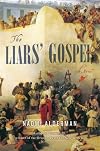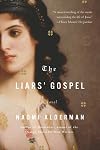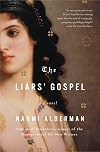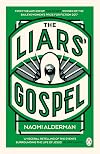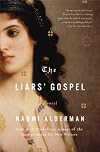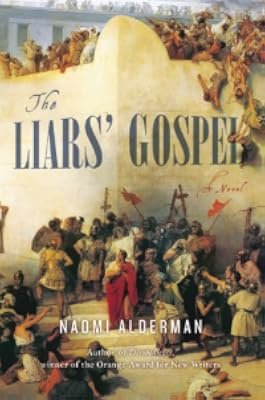
The Liars' Gospel
by Naomi Alderman
On This Page
Description
An award-winning writer reimagines the life of Jesus, from the points of view of four people closest to him before his death.This is the story of Yehoshuah, who wandered Roman-occupied Judea giving sermons and healing the sick. Now, a year after his death, four people tell their stories. His mother grieves, his friend Iehuda loses his faith, the High Priest of the Temple tries to keep the peace, and a rebel named Bar-Avo strives to bring that peace tumbling down.
It was a time of political show more power plays and brutal tyranny. Men and women took to the streets to protest. Dictators put them down with iron force. In the midst of it all, one inconsequential preacher died. And either something miraculous happened, or someone lied.
Viscerally powerful in its depictions of the period — massacres and riots, animal sacrifice and human betrayal — The Liars' Gospel makes the oldest story entirely new. show less
Tags
Recommendations
















Member Recommendations

Member Reviews
This is a book that I would not have been likely to pick up if it hadn't been offered to me by the publisher to read. And it's honestly not surprising to me that the reviews on this book are pretty much at either end of the spectrum. Some people have a very hard time thinking objectively when they feel something touches close to their belief system, especially if it asks them to consider a different possibility or perspective.
The Liar's Gospel is a work of historical fiction that looks at Jerusalem during the time of Roman occupation through the eyes of four people: Miryam (Mary), Iehuda (Judas), Caiaphas, and Bar-Avo (Barabbas). While, obviously, one common thread between these is the life of Yehoshuah (Jesus), I personally saw this as show more a text that looks much more at everyone else. It attempts to understand the political climate that existed at the time and how others may have viewed (or been forced to view) the situation and their options. It reflects the struggles of a people against an oppressive imperial regime and also points out just how often the story that ends up being told or remembered often leaves out both the struggles and accomplishments of those who aren't central to the prevailing thread. As Alderman's own epilogue states "Storytellers know that every story is at least partly a lie. Every story could be told in four different ways, or forty or four thousand. Every emphasis or omission is a kind of lie, shaping a moment to make a point. [...] Do not imagine that a storyteller is unaware of the effect of every word she chooses. Do not suppose for a moment tat an impartial observer exists." And this text illustrates that assertion splendidly.
(eGalley provided by the publisher via NetGalley in exchange for an honest review.) show less
The Liar's Gospel is a work of historical fiction that looks at Jerusalem during the time of Roman occupation through the eyes of four people: Miryam (Mary), Iehuda (Judas), Caiaphas, and Bar-Avo (Barabbas). While, obviously, one common thread between these is the life of Yehoshuah (Jesus), I personally saw this as show more a text that looks much more at everyone else. It attempts to understand the political climate that existed at the time and how others may have viewed (or been forced to view) the situation and their options. It reflects the struggles of a people against an oppressive imperial regime and also points out just how often the story that ends up being told or remembered often leaves out both the struggles and accomplishments of those who aren't central to the prevailing thread. As Alderman's own epilogue states "Storytellers know that every story is at least partly a lie. Every story could be told in four different ways, or forty or four thousand. Every emphasis or omission is a kind of lie, shaping a moment to make a point. [...] Do not imagine that a storyteller is unaware of the effect of every word she chooses. Do not suppose for a moment tat an impartial observer exists." And this text illustrates that assertion splendidly.
(eGalley provided by the publisher via NetGalley in exchange for an honest review.) show less
I thought I was going to like this - that's why you checked it out of the library Paul you dumbdumb - but I REALLY liked it! A piece of historical fiction set in the time of Roman occupied Judea, early in the first century CE. Before the first of four parts begin there is an introduction that perfectly sets the tone for much of what lies ahead: The ritual sacrifice of a lamb in the Jerusalem temple (that's THE Temple of course, Herod the Great's rebuilt version of King Solomon's earlier destroyed Temple) is accounted for in considerable detail. A twice daily performed ceremony of utmost importance in the Judean (or 'Jewish') religion, the description is at once something that made this reader feel simultaneously queasy and awe-inspired. show more The slaughter is given the context of the daily ceremonial life of the Temple, and the various sacrificial offerings large and small made by the faithful visiting pilgrims rich and poor alike.
Then the Romans arrive...General Pompey's forces occupy Jerusalem and eventually take control of the Temple. Under his command the conquering army is obviously tough, but actually is reasonably considered and fair. His orders are to not desecrate the temple. The Roman Empire permits the occupied Judeans to carry on with the worship of their God Yahweh.
With this setup complete the story begins. It is broken into four parts - each telling a story from the point of view of (in order) - Miryam (Mary), a mother in Nazareth whose eldest son Yehoshua (Jesus) was crucified in Jerusalem a year earlier; Yehuda Ish-Karyot {man of Kariot} (Judas Iscariot), a former disciple of the same Yehoshua, who was thought to be dead, but is actually living as a reinvented and Romanised gentleman in the regional port town Caesaria; Caiaphas, the Cohen HaGadol or High Priest of the Temple; and finally Bar-Avo (Barabbas), an anti-Roman rebel leader.
Alderman does a superb job at convincingly portraying 1st century life in Roman Israel as it really might have been. The sights, sounds and smells of various markets, villages, bath-houses, and homes of the rich and poor, Roman and Jew, really come across. The food and drink is lavishly accounted for - a good selection of olives, fresh figs, white cheeses and a nice glass of wine will go well with this book!
{SPOILERS AHEAD}
Gideon, a youth escaped from an anti-Roman riot in Jaffa, and one who it turns out both knew and followed the crucified teacher Yehoshua, turns up frost-bitten and nearly dead one winter up in the high hills of Galilee that surround Nazareth. Once nursed back to health he becomes a goat herd and domestic help in Miryam's household. We learn that her husband Yosef is estranged. The Romans are hot on the trail and come looking for the escaped one from Jaffa, while Miryam risks the whole village's safety by uncharacteristically lying about how long Gideon's been staying with them. At first Miryam is resentful of the fact that this boy seems to have known her son in a way that she could not in the last year or two of his life, (since when Yehoshua had stopped coming home) and doesn't really want a daily reminder that he went off the rails so to speak and was killed in punishment by the Romans. But at the same time she is glad to have someone in the home who is interested in her recollections of her departed son as a boy. Gideon's stated love for her son's teachings somehow seem to keep his memory alive for her.
Yehuda Ish-Kariot is portrayed as a very complex and sensitive man, and one who thinks quite deeply. Living as an 'enslaved guest' in the home of a wealthy Roman citizen and merchant, Yehuda's party-piece, at his host's behest, is to "tell that funny story of the one in Jerusalem who thought he was the King". As with Conrad's Marlowe, Alderman has her character tell the story as a sequence of past events. Yehuda tells how much he loved his dearly departed wife, and that he almost didn't recover from her sudden death. Once he has encountered a small group of men banded together on the road in the company of their Nazarene teacher, he throws his lot in with them and becomes an especially passionate believer in his ministry. As the group grew and attracted increasing attention, Yehuda finds himself somewhat at odds with Yehoshua's seemingly carefree attitude to those proclaiming him the 'Annointed One', the Messiah.
The episode of Lazarus' sister Mary annointing Jesus' feet with a pint of very expensive spikenard oil (John 12:1–10), just before the Passover in Bethany, is reworked by Alderman with considerable verve. (The village where she has it happen is called Beit-Ani {in Hebrew the 'house' or 'place of the poor'} and it is Yehoshua's head which is annointed. Alderman seems to loosely base her retold parables on a sort of amalgam of the different canonic gospels familiar to many.) Yehuda doesn't understand why such an expensive ointment (worth a labourer's annual wage) wasn't sold to feed the poor, and doesn't understand his teacher's vague response. He becomes increasingly disillusioned...
Caiaphas' story is interesting in that it is told in almost complete isolation from the story of Jesus. We learn of the daily comings and goings of a privileged and powerful family. The High Priest is in effect the 'spiritual leader' of the local Jewish population, and has a pseudo-political role. As such, it is fascinating to see the portrayal of the relationship between the occupied and the occupier. (I couldn't help but draw my own clumsy analogy with the ongoing situation in modern Israel regarding the 'autonomous' Palestine Authority... but that's another conversation for another day.) His concerns are primarily with the purity of his own soul (and by extension the soul of the nation as a whole) - which extends to the purity of his wife's soul - as every year on the holy Day of Atonement - Yom Kippur - he must proffer himself before God in the Temple's inner sanctuary, the Holy of Holies. This is where God lives and only the High Priest must ever step foot there, and only ever on that day. A Rope will be tied to his ankle so that he may be pulled out should the Lord smite him there and then as has happened before. Understandably he is preoccupied with his own suspicions of his wife's infidelity as it can truly be a matter of life and death.
The events surrounding the arrest and crucifixion of a strange and apparently rabble-rousing teacher from Galilee are told from Caiaphas' perspective almost as an aside in his ongoing struggle with the Roman Prefect Pilate over the supply of Temple monies for civic projects - forbidden by Jewish law. There is the disturbing episode of a mob disrupting the Temple routine one year in the days before Passover, upsetting the tables and assaulting the money-changers... Nevertheless, the simmering atmosphere of pending rebellion, disorder and faithlessness is brewing all the time.
Which leads the story of The Liars' Gospel nicely to Bar-Avo's tale. His name (not his given name) means "His Father's Son" in Hebrew, and we learn why that is so, and why his actual name is never used. Alderman tells Barabbas' story almost as though he were Mario Puzo's young Vito Corleone on his way up through the ranks of hoodlums and made men who run the black markets and smuggle the weapons around Jerusalem under the eyes of the Roman garrison. There are several episodes of {graphically} violent revolt which lead to Bar-Avo's arrest and his subsequent encounter with Yehoshua/Jesus we're familiar with. His place on the Roman cross is taken by the 'King of the Jews' who doesn't appear to have as many friends in town as the king of the wise guys... A long career in increasingly political anti-Imperialist rebellion unfolds for Bar-Avo, yet somehow he prospers, seeming to live a charmed life. He finds himself on occasion thinking back to his moments in the same cell beneath the Prefect's house when he talked with the Nazarene about God and faith, and is thankful that it was not he who died on the cross that Passover.
I'd be giving this the full five stars if it wasn't for the slightly heavy-handed way that the epilogue explains why it is that the gospel may well be the liars' gospel of the title. I thought it would've been wiser to leave the reader to decide for themselves. On the whole though, this was a very believable and enjoyable imagined story of some of the major figures in Jesus' days, and how we should always be wary of history's perspectives. Recommended. show less
Then the Romans arrive...General Pompey's forces occupy Jerusalem and eventually take control of the Temple. Under his command the conquering army is obviously tough, but actually is reasonably considered and fair. His orders are to not desecrate the temple. The Roman Empire permits the occupied Judeans to carry on with the worship of their God Yahweh.
With this setup complete the story begins. It is broken into four parts - each telling a story from the point of view of (in order) - Miryam (Mary), a mother in Nazareth whose eldest son Yehoshua (Jesus) was crucified in Jerusalem a year earlier; Yehuda Ish-Karyot {man of Kariot} (Judas Iscariot), a former disciple of the same Yehoshua, who was thought to be dead, but is actually living as a reinvented and Romanised gentleman in the regional port town Caesaria; Caiaphas, the Cohen HaGadol or High Priest of the Temple; and finally Bar-Avo (Barabbas), an anti-Roman rebel leader.
Alderman does a superb job at convincingly portraying 1st century life in Roman Israel as it really might have been. The sights, sounds and smells of various markets, villages, bath-houses, and homes of the rich and poor, Roman and Jew, really come across. The food and drink is lavishly accounted for - a good selection of olives, fresh figs, white cheeses and a nice glass of wine will go well with this book!
{SPOILERS AHEAD}
Gideon, a youth escaped from an anti-Roman riot in Jaffa, and one who it turns out both knew and followed the crucified teacher Yehoshua, turns up frost-bitten and nearly dead one winter up in the high hills of Galilee that surround Nazareth. Once nursed back to health he becomes a goat herd and domestic help in Miryam's household. We learn that her husband Yosef is estranged. The Romans are hot on the trail and come looking for the escaped one from Jaffa, while Miryam risks the whole village's safety by uncharacteristically lying about how long Gideon's been staying with them. At first Miryam is resentful of the fact that this boy seems to have known her son in a way that she could not in the last year or two of his life, (since when Yehoshua had stopped coming home) and doesn't really want a daily reminder that he went off the rails so to speak and was killed in punishment by the Romans. But at the same time she is glad to have someone in the home who is interested in her recollections of her departed son as a boy. Gideon's stated love for her son's teachings somehow seem to keep his memory alive for her.
Yehuda Ish-Kariot is portrayed as a very complex and sensitive man, and one who thinks quite deeply. Living as an 'enslaved guest' in the home of a wealthy Roman citizen and merchant, Yehuda's party-piece, at his host's behest, is to "tell that funny story of the one in Jerusalem who thought he was the King". As with Conrad's Marlowe, Alderman has her character tell the story as a sequence of past events. Yehuda tells how much he loved his dearly departed wife, and that he almost didn't recover from her sudden death. Once he has encountered a small group of men banded together on the road in the company of their Nazarene teacher, he throws his lot in with them and becomes an especially passionate believer in his ministry. As the group grew and attracted increasing attention, Yehuda finds himself somewhat at odds with Yehoshua's seemingly carefree attitude to those proclaiming him the 'Annointed One', the Messiah.
The episode of Lazarus' sister Mary annointing Jesus' feet with a pint of very expensive spikenard oil (John 12:1–10), just before the Passover in Bethany, is reworked by Alderman with considerable verve. (The village where she has it happen is called Beit-Ani {in Hebrew the 'house' or 'place of the poor'} and it is Yehoshua's head which is annointed. Alderman seems to loosely base her retold parables on a sort of amalgam of the different canonic gospels familiar to many.) Yehuda doesn't understand why such an expensive ointment (worth a labourer's annual wage) wasn't sold to feed the poor, and doesn't understand his teacher's vague response. He becomes increasingly disillusioned...
Caiaphas' story is interesting in that it is told in almost complete isolation from the story of Jesus. We learn of the daily comings and goings of a privileged and powerful family. The High Priest is in effect the 'spiritual leader' of the local Jewish population, and has a pseudo-political role. As such, it is fascinating to see the portrayal of the relationship between the occupied and the occupier. (I couldn't help but draw my own clumsy analogy with the ongoing situation in modern Israel regarding the 'autonomous' Palestine Authority... but that's another conversation for another day.) His concerns are primarily with the purity of his own soul (and by extension the soul of the nation as a whole) - which extends to the purity of his wife's soul - as every year on the holy Day of Atonement - Yom Kippur - he must proffer himself before God in the Temple's inner sanctuary, the Holy of Holies. This is where God lives and only the High Priest must ever step foot there, and only ever on that day. A Rope will be tied to his ankle so that he may be pulled out should the Lord smite him there and then as has happened before. Understandably he is preoccupied with his own suspicions of his wife's infidelity as it can truly be a matter of life and death.
The events surrounding the arrest and crucifixion of a strange and apparently rabble-rousing teacher from Galilee are told from Caiaphas' perspective almost as an aside in his ongoing struggle with the Roman Prefect Pilate over the supply of Temple monies for civic projects - forbidden by Jewish law. There is the disturbing episode of a mob disrupting the Temple routine one year in the days before Passover, upsetting the tables and assaulting the money-changers... Nevertheless, the simmering atmosphere of pending rebellion, disorder and faithlessness is brewing all the time.
Which leads the story of The Liars' Gospel nicely to Bar-Avo's tale. His name (not his given name) means "His Father's Son" in Hebrew, and we learn why that is so, and why his actual name is never used. Alderman tells Barabbas' story almost as though he were Mario Puzo's young Vito Corleone on his way up through the ranks of hoodlums and made men who run the black markets and smuggle the weapons around Jerusalem under the eyes of the Roman garrison. There are several episodes of {graphically} violent revolt which lead to Bar-Avo's arrest and his subsequent encounter with Yehoshua/Jesus we're familiar with. His place on the Roman cross is taken by the 'King of the Jews' who doesn't appear to have as many friends in town as the king of the wise guys... A long career in increasingly political anti-Imperialist rebellion unfolds for Bar-Avo, yet somehow he prospers, seeming to live a charmed life. He finds himself on occasion thinking back to his moments in the same cell beneath the Prefect's house when he talked with the Nazarene about God and faith, and is thankful that it was not he who died on the cross that Passover.
I'd be giving this the full five stars if it wasn't for the slightly heavy-handed way that the epilogue explains why it is that the gospel may well be the liars' gospel of the title. I thought it would've been wiser to leave the reader to decide for themselves. On the whole though, this was a very believable and enjoyable imagined story of some of the major figures in Jesus' days, and how we should always be wary of history's perspectives. Recommended. show less
I would like to thank Little, Brown, and Company as well as NetGalley for the opportunity to read and review this book. I was intrigued by the description of this story and also by the cover print. Being a Christian, I enjoy reading things that expand my knowledge about the time of Jesus. I found this to be an interesting and thought provoking book. That said, I do not share the views of the author that human emotions made those who witnessed or wrote the gospels vulnerable to lie or expand the truth. I do appreciate it as a work of fiction and found the history of the time described by the author to be fascinating and well researched.
The first of the narrators is Miryam, the mother of Jesus, who comes to the aid of a young fugitive show more man, Gidon. This is shortly after the crucifixion of her son. She is filled with emotions of loss, rejection, and vanished hope. This young man fills a void in her life as he tries to draw stories about the young Jesus from her memory. Gidon, clearly becomes something of a substitute for her son Jesus, and he is able to soften her feelings towards Jesus as he tells her of the reports of his possible resurrection.
The second narrator is Iehuda (Judas). Rather than following the depiction of his suicide from the gospels, the author has Judas alive and hiding, continuing to suffer conflict about his relationship with God. He retells his story beginning with his initial attraction to Jesus at his calling as one who is sent from God and brings a special connection with him. As days go by, Judas becomes more and more disillusioned with Jesus and begins to see him as just another man who is attracted to power and attention. Eventually he does betray him, but his part in that also does not follow the Bible. The author seems to want us to feel sorry for Judas and see him as someone who is a victim and is looking for a father figure in both man and God.
The last two narrators are Caiaphas and Bar-Avo (Barrabas). I found them to be interesting choices, but their narratives focus more on the Roman oppression of the Jews and on each of their contrasting reactions, either negotiation or rebellion.
I really enjoyed the first half of the book, regardless of the discrepancies with the Biblical story. I found the author to have shown me a glimpse into the life and mind of Mary that was very plausible and interesting to consider. She really does a good job of making me feel Mary's emotions, and I found her protection of young Gidon to be lovely. It was a viewpoint that I mostly appreciated seeing. I also liked reading the fictional perspective of Judas. We get so few details of any of the characters of the gospels in the Bible, and I really liked imagining some of the background and feelings that they may have experienced.
The second half started to seem a little tedious. There were many graphic and occasionally vulgar scenes that I could have done without. The focus shifted more to the conflict between the Jews and the Romans and made these narratives a little disconnected at times.
I recommend this book to anyone who is interested in an expanded view of the historic events at the time of Jesus. It has plenty of action and will keep your interest. It is not a book for those who will be offended by the fact that it does not follow the literal Biblical account, and for those readers I would recommend that they give this book a pass. show less
The first of the narrators is Miryam, the mother of Jesus, who comes to the aid of a young fugitive show more man, Gidon. This is shortly after the crucifixion of her son. She is filled with emotions of loss, rejection, and vanished hope. This young man fills a void in her life as he tries to draw stories about the young Jesus from her memory. Gidon, clearly becomes something of a substitute for her son Jesus, and he is able to soften her feelings towards Jesus as he tells her of the reports of his possible resurrection.
The second narrator is Iehuda (Judas). Rather than following the depiction of his suicide from the gospels, the author has Judas alive and hiding, continuing to suffer conflict about his relationship with God. He retells his story beginning with his initial attraction to Jesus at his calling as one who is sent from God and brings a special connection with him. As days go by, Judas becomes more and more disillusioned with Jesus and begins to see him as just another man who is attracted to power and attention. Eventually he does betray him, but his part in that also does not follow the Bible. The author seems to want us to feel sorry for Judas and see him as someone who is a victim and is looking for a father figure in both man and God.
The last two narrators are Caiaphas and Bar-Avo (Barrabas). I found them to be interesting choices, but their narratives focus more on the Roman oppression of the Jews and on each of their contrasting reactions, either negotiation or rebellion.
I really enjoyed the first half of the book, regardless of the discrepancies with the Biblical story. I found the author to have shown me a glimpse into the life and mind of Mary that was very plausible and interesting to consider. She really does a good job of making me feel Mary's emotions, and I found her protection of young Gidon to be lovely. It was a viewpoint that I mostly appreciated seeing. I also liked reading the fictional perspective of Judas. We get so few details of any of the characters of the gospels in the Bible, and I really liked imagining some of the background and feelings that they may have experienced.
The second half started to seem a little tedious. There were many graphic and occasionally vulgar scenes that I could have done without. The focus shifted more to the conflict between the Jews and the Romans and made these narratives a little disconnected at times.
I recommend this book to anyone who is interested in an expanded view of the historic events at the time of Jesus. It has plenty of action and will keep your interest. It is not a book for those who will be offended by the fact that it does not follow the literal Biblical account, and for those readers I would recommend that they give this book a pass. show less
Stories of Yehoshuah/Jesus from Miryam/Mary, Iehouda/Judas, Caiaphas, and Bar-Avo/Barrabas.
The stories are firmly rooted in the Jewish context of a land occupied by the Romans but show a figure different but recognisably extrapolated from the stories in the New Testament. Fascinating.
The stories are firmly rooted in the Jewish context of a land occupied by the Romans but show a figure different but recognisably extrapolated from the stories in the New Testament. Fascinating.
I love this book. I literally cannot express enough how much I love this book and everything about it.
This book originally caught my attention from the author’s name. I’m familiar with Naomi Alderman’s work on Zombies, Run!, a jogging app that she wrote the main story for in the first season (for sure). I read the blurb at bought the book, and have never regretted that decision since. I’ve read this book about four or five times by now, and it’s still a brilliant read!
The story takes place during the time of Roman-Judea, when the Roman Empire had a very firm hold on Israel. This time of political conflict is the backdrop for the rise (and subsequent fall) of Jesus Christ, which makes this story about religion, history and show more politics all in one.
The story is told by four different characters – Mary, the mother of Jesus; Judah, the man who betrayed him; Caiaphas, the man who decided what would happen to Jesus; and Barabas, the man who should have died instead of him. Now, here I’m giving the ‘Anglican’ names for the characters, but in the book we’re actually given their Jewish names, in spelling that is rather unfamiliar but would be the phonetic spelling for it. This is one of the reasons I love this book – the way it is so beautifully authentic and Jewish in its own way without apologizing for it.
The other thing I love about this story is that Alderman is Jewish, which means that the entire thing is very well researched. It gives you insight into customs and traditions and history that shape the Jewish people of today, and it also shows you the historical conflict that there was with the Roman Empire. It shows you that, though Jesus might not have been ‘the Son of God’, he was incredibly instrumental to the revolution against the Romans, and that historically, that is his main role.
Basically, this book is a retelling of a story all of us who grew up Catholic would know, but shown to us from a different point of view and from the other side of the Abrahamic Religion spectrum, and that makes me appreciate it a little bit more.
My final rating is 5/5 and I couldn’t be happier to give it to this book. show less
This book originally caught my attention from the author’s name. I’m familiar with Naomi Alderman’s work on Zombies, Run!, a jogging app that she wrote the main story for in the first season (for sure). I read the blurb at bought the book, and have never regretted that decision since. I’ve read this book about four or five times by now, and it’s still a brilliant read!
The story takes place during the time of Roman-Judea, when the Roman Empire had a very firm hold on Israel. This time of political conflict is the backdrop for the rise (and subsequent fall) of Jesus Christ, which makes this story about religion, history and show more politics all in one.
The story is told by four different characters – Mary, the mother of Jesus; Judah, the man who betrayed him; Caiaphas, the man who decided what would happen to Jesus; and Barabas, the man who should have died instead of him. Now, here I’m giving the ‘Anglican’ names for the characters, but in the book we’re actually given their Jewish names, in spelling that is rather unfamiliar but would be the phonetic spelling for it. This is one of the reasons I love this book – the way it is so beautifully authentic and Jewish in its own way without apologizing for it.
The other thing I love about this story is that Alderman is Jewish, which means that the entire thing is very well researched. It gives you insight into customs and traditions and history that shape the Jewish people of today, and it also shows you the historical conflict that there was with the Roman Empire. It shows you that, though Jesus might not have been ‘the Son of God’, he was incredibly instrumental to the revolution against the Romans, and that historically, that is his main role.
Basically, this book is a retelling of a story all of us who grew up Catholic would know, but shown to us from a different point of view and from the other side of the Abrahamic Religion spectrum, and that makes me appreciate it a little bit more.
My final rating is 5/5 and I couldn’t be happier to give it to this book. show less
Four and a half stars. Engrossing, exhaustively researched. So much simultaneous sympathy and rage for the characters.
As a writer, Naomi Alderman is a veritable chameleon. First I read The Lessons, a tale of a fall from grace among the dreaming spires, in the manner of a modern Brideshead. Then it was The Power, a Margaret-Atwoodesque novel that veered between dystopia and sci-fi: a feminist, egalitarian cry of rage. And now, the third of her novels that I’ve read, The Liars’ Gospel is a raw and rugged historical novel. Brave, too, because it dares to confront one of the world’s seminal figures: in life, a controversial and provocative young preacher in 1st-century AD Judea; and, in death, the begetter of a cult that would become one of the dominant religions of the world. But who exactly was this teacher?
For the rest of the review, please see my show more blog:
http://theidlewoman.net/2016/11/21/the-liars-gospel-naomi-alderman/ show less
For the rest of the review, please see my show more blog:
http://theidlewoman.net/2016/11/21/the-liars-gospel-naomi-alderman/ show less
Members
- Recently Added By
Lists

Best Historical Fiction
620 works; 261 members

Best historical fiction set in the ancient world
126 works; 40 members

Top Five Books of 2021
604 works; 181 members

Book Riot's 100 must-read works of Jewish Fiction
100 works; 8 members

Books Read in 2021
5,361 works; 114 members
Author Information

20+ Works 8,738 Members
Some Editions
Common Knowledge
Classifications
Statistics
- Members
- 291
- Popularity
- 108,642
- Reviews
- 13
- Rating
- (3.58)
- Languages
- Dutch, English, Italian
- Media
- Paper, Audiobook, Ebook
- ISBNs
- 16
- ASINs
- 6