The Cream of the Jest: A Comedy of Evasions
by James Branch Cabell
The Biography of Manuel in order of publication (10), Cabell (Brewer Order) (Biography of the Life of Manuel (No. 18, v. 18)), The Biography of the Life of Manuel (volume 17a)
On This Page
Description
The Cream of the Jest: A Comedy of Evasions[1] is a comical and philosophical novel with possible fantasy elements, by James Branch Cabell, published in 1917. Much of it consists of the historical dreams and philosophical reflections of the main character, the famous writer Felix Kennaston. The novel takes place almost entirely around Lichfield, Virginia, Cabell's fictionalization of Richmond, Virginia,[3] particularly in Kennaston's house, in the country. However, Kennaston's dreams take show more place in various parts of Europe and the Mediterranean basin at various times in the past. Also, part of The Cream of the Jest consists of the ending of the first version of Kennaston's novel, which is set in the Middle Ages around the castle of Storisende in a mythical country. show lessTags
Recommendations







Member Recommendations

Member Reviews
Cabell's prose is a wonder, I smiled and even laughed aloud at various turns, and marked worthy aphorisms almost every third page. The tale is ironic and witty, and while on the surface it prompts some good-natured eye-rolling, really it hides a satisfyingly solid account of life and myth. The metaphysics and esotericism are not spelled out, but there nevertheless.
The premise is an author, Felix Kennaston, writes an accomplished fantasy novel and ends up "dreaming" his way to that world, stepping into the role of his protagonist, Horvendile. It is literally dreaming, though: Kennaston does not step through another dimension or find himself bodily in another world. In fact, Kennaston takes pains to afford himself eight hours of sleep show more each night so as to better visit the other world, and even ends up writing a second novel based on the "stories" he dreams himself into. There is a framing device that complicates this a bit, but in general it affords Cabell an ideal forum for social commentary and metaphysical exploration. Done with whimsy & wit throughout, the plots of the two worlds intertwine until the very end.
Cabell's writing is often categorised as fantasy. It is that, I suppose, but not like Tolkien or his hordes of imitators. There's an ironic distance, and the plot reminds me of a Homer Pyle adventure. There are sprites and goblins, but relayed the way Shakespeare might, not in a deliberately realist fashion.
Cabell uses leitmotifs in the way of a film score: a melody punctuates certain situations, and often closes a chapter or scene. One is the phrase "the universe would seem to fold about him, just as a hand closes", used whenever Horvendile exits a dream. Another refers to Ettarre's "innumerable evasions", and Kennaston says "we touch mystery everywhere" at least twice, though both occur near the end of the book.
The title is a pun, and also another leitmotif: the phrase deliberately surfaces throughout the book, usually by the protagonist. The pun comes in at the end, when Kennaston's inspiration for the Sigil of Scoteia is revealed.
Though this is part of the Biography of Manuel series, it was the first I've read, and the series is not one of serialised adventure so much as a thematic meditation on myth. Definitely, I will read others. show less
The premise is an author, Felix Kennaston, writes an accomplished fantasy novel and ends up "dreaming" his way to that world, stepping into the role of his protagonist, Horvendile. It is literally dreaming, though: Kennaston does not step through another dimension or find himself bodily in another world. In fact, Kennaston takes pains to afford himself eight hours of sleep show more each night so as to better visit the other world, and even ends up writing a second novel based on the "stories" he dreams himself into. There is a framing device that complicates this a bit, but in general it affords Cabell an ideal forum for social commentary and metaphysical exploration. Done with whimsy & wit throughout, the plots of the two worlds intertwine until the very end.
Cabell's writing is often categorised as fantasy. It is that, I suppose, but not like Tolkien or his hordes of imitators. There's an ironic distance, and the plot reminds me of a Homer Pyle adventure. There are sprites and goblins, but relayed the way Shakespeare might, not in a deliberately realist fashion.
Cabell uses leitmotifs in the way of a film score: a melody punctuates certain situations, and often closes a chapter or scene. One is the phrase "the universe would seem to fold about him, just as a hand closes", used whenever Horvendile exits a dream. Another refers to Ettarre's "innumerable evasions", and Kennaston says "we touch mystery everywhere" at least twice, though both occur near the end of the book.
The title is a pun, and also another leitmotif: the phrase deliberately surfaces throughout the book, usually by the protagonist. The pun comes in at the end, when Kennaston's inspiration for the Sigil of Scoteia is revealed.
Though this is part of the Biography of Manuel series, it was the first I've read, and the series is not one of serialised adventure so much as a thematic meditation on myth. Definitely, I will read others. show less
The Cream of the Jest, James Branch Cabell's greatest work, straddles the historical fantasies of his mature "Biography of the Life of Manuel" and the early romantic comedies set in his home state of Virginia, turn of the century.
It might best be thought of as a work of metafiction, and one of the most readable of the genre. It is also one of the few book-length self-described "comedies" that also fits easily within the domain of the "novel." Others of his book-length fictions less closely resemble novels and more closely resemble romances and mythic "anatomies."
It might best be thought of as a work of metafiction, and one of the most readable of the genre. It is also one of the few book-length self-described "comedies" that also fits easily within the domain of the "novel." Others of his book-length fictions less closely resemble novels and more closely resemble romances and mythic "anatomies."
A fantasy about...love and the many layers which may be engaged in a single narrative. A story of how a person can be a driver of a situation, and its recorder. It also includes the "Lineage of Lichfield," useful for organizing the Canon.
One of my favorite books.
Ratings
Members
- Recently Added By
Lists

Survey of Fantasy Classics
111 works; 23 members

Top Five Books of 2020
982 works; 350 members

Ballantine Adult Fantasy Series
85 works; 8 members

Best Neglected Fantasy Books 1900-1955
30 works; 6 members

Trinity College Booklist (1951): Class Ten, English Literature
358 works; 5 members

Favorite Romance Fiction
247 works; 115 members

Books We'd Want on a Desert Island
203 works; 131 members

Books Read in 2024
4,623 works; 126 members
Author Information

244+ Works 5,510 Members
James Branch Cabell (1879-1956) is best known for his tales of the imaginary land of Poictesme, where chivalry and galantry live on
Some Editions
Series


Work Relationships
Common Knowledge
- Canonical title
- The Cream of the Jest: A Comedy of Evasions
- Alternate titles
- The Cream of the Jest
- Original publication date
- 1917
- Disambiguation notice
- The Cream of the Jest was published in 1917 in its own volume. It was reissued in 1922 with an introduction by Harold Ward. It was included in the Modern Library in 1927. It was always subtitled A Comedy of Evasions. T... (show all)he edition edited by Joseph Flora, and the Wildside, Kessinger and other generic reprints are of the stand-alone edition.
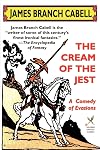
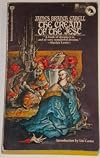
In 1930, in the collected Works of Cabell (the Storisende edition), Cream was combined in one volume with The Lineage of Lichfield and so they shared the subtitle Two Comedies of Evasion. This double edition is the one that that was reissued in the Ballantine Adult Fantasy series with an introduction by Lin Carter (and an isbn prefix beginning with 0345-).
Stand alone editions of Cream have now been separated from Cream+Lineage double editions (containing two distinct works), and should not be combined. Probably a few inadequately described copies are in the wrong group, but the double edition can be identified by "Lineage" or "Two Comedies" or "Lin Carter" or "Ballantine" or an isbn beginning with "0345".
Stand-alone editions can be identified by the Harold Ward intro, or the Modern Library imprint, or a publication date before 1930, or the lack of the above described double-edition markers.
The presence of illustrator Frank C. Pape, in the absence of other markers, is ambiguous: the early McBride and John Lane Pape-illustrated edtions were stand-aliones, but the Ballantine double-edition added the Pape illustrations to the Storisende text.
Classifications
Statistics
- Members
- 231
- Popularity
- 141,052
- Reviews
- 4
- Rating
- (3.81)
- Languages
- English, German
- Media
- Paper, Audiobook, Ebook
- ISBNs
- 12
- UPCs
- 1
- ASINs
- 19