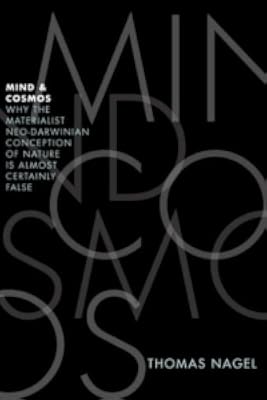
Mind & Cosmos: Why the Materialist Neo-Darwinian Conception of Nature is Almost Certainly False
by Thomas Nagel
On This Page
Description
The modern materialist approach to life has conspicuously failed to explain such central mind-related features of our world as consciousness, intentionality, meaning, and value. This failure to account for something so integral to nature as mind, argues philosopher Thomas Nagel, is a major problem, threatening to unravel the entire naturalistic world picture, extending to biology, evolutionary theory, and cosmology. Since minds are features of biological systems that have developed through show more evolution, the standard materialist version of evolutionary biology is fundamentally incomplete. And the cosmological history that led to the origin of life and the coming into existence of the conditions for evolution cannot be a merely materialist history, either. An adequate conception of nature would have to explain the appearance in the universe of materially irreducible conscious minds, as such. Nagel's skepticism is not based on religious belief or on a belief in any definite alternative. In Mind and Cosmos, he does suggest that if the materialist account is wrong, then principles of a different kind may also be at work in the history of nature, principles of the growth of order that are in their logical form teleological rather than mechanistic. In spite of the great achievements of the physical sciences, reductive materialism is a world view ripe for displacement. Nagel shows that to recognize its limits is the first step in looking for alternatives, or at least in being open to their possibility.--Publisher description. show lessTags
Recommendations










Member Reviews
This book was clearly intended by Thomas Nagel to be provocative, and it works. He has received a lot of passionate criticism for it. I think it is a daring and imaginative book. Whether it is right or not is a different question.
Here's how I understand Nagel's main argument.
I think the basic insight goes back to Nagel's "What Is It Like to be a Bat" paper. The point is that there IS something that it is like to be a bat, a subjective experience. That's not so different from saying that each one of us lives our life in the first person, that we each have a subjective experience of the world. And that subjective experience, magnified in the case of the bat because bats possess a distinctively different primary sensory mode (radar) than show more we do, is inaccessible to objective accounts of the world.
Here, Nagel reformulates that point. The objectivist account of the world, that of the physical sciences, is incomplete -- it cannot account for conscious lives (something like first person experiences of the world).
It's not incomplete in the way that physics is internally incomplete. It's not just that it is lacking further experiments, observations, or data -- it's incomplete in principle. No objectivist account of reality will ever account for conscious lives. This is a step that Nagel doesn't state explicitly, but that I believe has to be part of his argument. Otherwise, the objectivist account might only be temporarily or conditionally incomplete, not incomplete in principle.
The subjectivist, idealist, or theist account of the world is also incomplete. I'm not quite so sure why Nagel believes that this account is necessarily incomplete, other than that it lacks sufficient provision for why things happen as they do, something that objectivist accounts are quite good at, at least as they concern events in the physical world.
If we are to have a complete account of reality, then it must be neither objectivist nor subjectivist.
What's interesting though is that what is incomplete in the objectivist account might be thought to be supplied by the subjectivist account -- i.e., intention or purpose. Reasons, intentions, or purposes supply a way in which things proceed in subjective experience that is analogous to causes in the objective world. Then let's try a third account, one that promises to combine the role of intention or purpose in the subjectivist account with the role of mechanisms in the objectivist account. That gives you some sort of teleological science.
So far, this version of Nagel's argument doesn't depend on what I have to agree with some other reviewers are odd or maybe simplistic claims regarding the adequacy of neo-Darwinian accounts of evolution to explain how creatures like us got here.
But, for Nagel, part (at least) of the motivation for incorporating purpose into our account of nature is in fact that the explanatory arsenal of the physical sciences doesn't give an adequate account of how conscious creatures came to be. He believes that neo-Darwinian accounts fail to provide that account, but that purpose, in the guise of genetic variation bias, solves that problem.
The idea isn't unprecedented. There are some interpretations of Nietzsche that go that way. Or, there are the anthropic cosmological principle theorists from about 20 years ago, who argued that the fit between the physical constants and amenability to life and the evolution of creatures like us indicated that the universe is actually designed for (or somehow favors) the development of an awareness of itself.
But, if my sketch of what I take to be Nagel's stronger argument is correct, that the real problem with the theory of biological evolution is that it just isn't the kind of theory (physicalist, objectivist) that can, in principle, produce an account of the kind of thing that consciousness is (subjective, first person experiential), then I think Nagel's attempt to produce a "third" alternative faces a very difficult challenge.
Adding "natural teleology" doesn't look like it's going to help, any more than adding anything else objectivist and physicalist is going to help. In fact, Nagel's remarks on what would count as a "reductivist" account of consciousness seems to say as much, that consciousness would have to be constituted of the kinds of things, unlike physicalist atoms, that can constitute the kind of thing that consciousness is.
The gulf between the objective and subjective, or the physical and the mental, is just too wide to cross once you've opened it.
Some objectivist accounts of consciousness ignore a distinction that I think is critical here -- a distinction between the ability of an organism to have a conscious life and the content of that conscious life itself, i.e., the first person experience of life. The former seems more amenable to scientific explanation, via some sort of organic complexity, than the latter -- the latter calls into play the kinds of difficulties in reducing our mental lives to physical lives that Nagel seems to be calling upon in the "Bat" paper. Saying that the complex structures of my brain gives me the ability to dream or do the other things that mark our conscious lives is one thing; saying that the content of those dreams can either be reduced to or identified (in what used to be called "type-type" as opposed to "token-token" correlations) with happenings in those complex structures is another.
Again, though, Nagel's proposal to incorporate teleology into our account of evolutionary biology seems to help only with the account of how we might have come to have the ability to have a conscious life, not with the explanation of the content of those conscious lives. Doing so provides a kind of acceleration of the course of evolution toward creatures with conscious ability, where Nagel seems to think that there hasn't been sufficient time for such evolution to take place on the neo-Darwinian account.
All of this to the side, the part of Nagel's argument that might bother me the most is the claim that we actually need a single, complete account of reality. He calls himself a "neutral monist", so I suppose the reasoning is that if there is a single way the world is, we should have a single way of accounting for it. But why? The one doesn't seem to follow from the other, unless you suppose also that we have sure access to the single way the world is, rather than, say, repeated attempts that capture aspects of that single way, but never the whole. show less
Here's how I understand Nagel's main argument.
I think the basic insight goes back to Nagel's "What Is It Like to be a Bat" paper. The point is that there IS something that it is like to be a bat, a subjective experience. That's not so different from saying that each one of us lives our life in the first person, that we each have a subjective experience of the world. And that subjective experience, magnified in the case of the bat because bats possess a distinctively different primary sensory mode (radar) than show more we do, is inaccessible to objective accounts of the world.
Here, Nagel reformulates that point. The objectivist account of the world, that of the physical sciences, is incomplete -- it cannot account for conscious lives (something like first person experiences of the world).
It's not incomplete in the way that physics is internally incomplete. It's not just that it is lacking further experiments, observations, or data -- it's incomplete in principle. No objectivist account of reality will ever account for conscious lives. This is a step that Nagel doesn't state explicitly, but that I believe has to be part of his argument. Otherwise, the objectivist account might only be temporarily or conditionally incomplete, not incomplete in principle.
The subjectivist, idealist, or theist account of the world is also incomplete. I'm not quite so sure why Nagel believes that this account is necessarily incomplete, other than that it lacks sufficient provision for why things happen as they do, something that objectivist accounts are quite good at, at least as they concern events in the physical world.
If we are to have a complete account of reality, then it must be neither objectivist nor subjectivist.
What's interesting though is that what is incomplete in the objectivist account might be thought to be supplied by the subjectivist account -- i.e., intention or purpose. Reasons, intentions, or purposes supply a way in which things proceed in subjective experience that is analogous to causes in the objective world. Then let's try a third account, one that promises to combine the role of intention or purpose in the subjectivist account with the role of mechanisms in the objectivist account. That gives you some sort of teleological science.
So far, this version of Nagel's argument doesn't depend on what I have to agree with some other reviewers are odd or maybe simplistic claims regarding the adequacy of neo-Darwinian accounts of evolution to explain how creatures like us got here.
But, for Nagel, part (at least) of the motivation for incorporating purpose into our account of nature is in fact that the explanatory arsenal of the physical sciences doesn't give an adequate account of how conscious creatures came to be. He believes that neo-Darwinian accounts fail to provide that account, but that purpose, in the guise of genetic variation bias, solves that problem.
The idea isn't unprecedented. There are some interpretations of Nietzsche that go that way. Or, there are the anthropic cosmological principle theorists from about 20 years ago, who argued that the fit between the physical constants and amenability to life and the evolution of creatures like us indicated that the universe is actually designed for (or somehow favors) the development of an awareness of itself.
But, if my sketch of what I take to be Nagel's stronger argument is correct, that the real problem with the theory of biological evolution is that it just isn't the kind of theory (physicalist, objectivist) that can, in principle, produce an account of the kind of thing that consciousness is (subjective, first person experiential), then I think Nagel's attempt to produce a "third" alternative faces a very difficult challenge.
Adding "natural teleology" doesn't look like it's going to help, any more than adding anything else objectivist and physicalist is going to help. In fact, Nagel's remarks on what would count as a "reductivist" account of consciousness seems to say as much, that consciousness would have to be constituted of the kinds of things, unlike physicalist atoms, that can constitute the kind of thing that consciousness is.
The gulf between the objective and subjective, or the physical and the mental, is just too wide to cross once you've opened it.
Some objectivist accounts of consciousness ignore a distinction that I think is critical here -- a distinction between the ability of an organism to have a conscious life and the content of that conscious life itself, i.e., the first person experience of life. The former seems more amenable to scientific explanation, via some sort of organic complexity, than the latter -- the latter calls into play the kinds of difficulties in reducing our mental lives to physical lives that Nagel seems to be calling upon in the "Bat" paper. Saying that the complex structures of my brain gives me the ability to dream or do the other things that mark our conscious lives is one thing; saying that the content of those dreams can either be reduced to or identified (in what used to be called "type-type" as opposed to "token-token" correlations) with happenings in those complex structures is another.
Again, though, Nagel's proposal to incorporate teleology into our account of evolutionary biology seems to help only with the account of how we might have come to have the ability to have a conscious life, not with the explanation of the content of those conscious lives. Doing so provides a kind of acceleration of the course of evolution toward creatures with conscious ability, where Nagel seems to think that there hasn't been sufficient time for such evolution to take place on the neo-Darwinian account.
All of this to the side, the part of Nagel's argument that might bother me the most is the claim that we actually need a single, complete account of reality. He calls himself a "neutral monist", so I suppose the reasoning is that if there is a single way the world is, we should have a single way of accounting for it. But why? The one doesn't seem to follow from the other, unless you suppose also that we have sure access to the single way the world is, rather than, say, repeated attempts that capture aspects of that single way, but never the whole. show less
Modern science assumes the causal closure of physics or what is referred to as the completeness of physics. If the forces physics describes are the only forces in the world, then everything can be explained in terms of those forces without remainder. And so, when Neo-Darwinian informed science explains the evolution of humankind and our behavior, it assumes the causal closure of physics. This is referred to as naturalism or the naturalistic stance.
The author, a philosophy professor at New York University since 1980 does not believe in the causal closure of physics. Why doesn’t he believe in the causal closure of physics? It’s because he doesn’t believe the Neo-Darwinian theory of evolution can explain the origin of consciousness, show more meaning, value and morality. What are his reasons?
1) The probability of it happening by chance is too low.
2) There hasn’t been enough time for consciousness to evolve.
What evidence does he provide? It’s just a gut instinct based on his common sense intuitions. However, his common sense intuitions haven’t been honed by a scientific education. In a shocking admission in the beginning of the book, Mr. Nagel admits that his only scientific knowledge is from reading popular science books. When reading the book, it is clear that he is not even widely read in popular science. It is also clear that many of his ideas come from reading popular pseudo-scientific books written by creationist and intelligent design advocates.
Since he believes physics is not casually closed or complete, Mr. Nagel has to invent another force acting in the world to complete it. This force is mind. It is a position known as panpsychism:. All matter has a mental aspect, or, alternatively, all objects have a unified center of experience or point of view. How this mysterious something extra is supposed to explain consciousness or its evolution is never explained. It reminds me of Moliere. Why does opium make us sleepy? It makes us sleepy due to its dormative properties. This smacks of ad hocism.
His whole argument is the argument from incredulity: P is too incredible (or: I cannot imagine how P could possibly be true); therefore, P must be false. Since he can’t understand how science can explain consciousness, it is therefore unexplainable in terms of existing science. His limitations are the scientific community’s limitations. This is the height of narcissism and evinces contempt for the scientific communities ability to discover the nature of reality.
One of his unstated assumptions is that a justificationist perspective informs science, which if true, makes it vulnerable to Münchhausen’s trilemma. All attempts at justifying a position end in one of three states:
1) Circular reasoning,
2) Infinite regress
3) Axiomatic or fideism.
Mr. Nagel accuses naturalistic Neo-Darwinian science of falling prey to all three. Naturalist epistemology can’t justify itself without begging the question, reason couldn’t have evolved because it would involve an infinite regress, and thirdly, naturalism is an ideology. Accusing science of being an ideology is a rhetorical ploy used by creationists and ID proponents. Since they cannot refute evolutionary science, they claim it is an ideology. Once asserted to be an ideology, they employ the tu quoque argument and claim that everyone has to adopt foundational assumptions that cannot be proven.
However, since Popper, a falsificationist perspective informs science. Although this is at the cost of certainty, the benefit is explaining why science is a never-ending open-ended endeavor. Given science’s progress thus far, it is excessively premature to give up and seek other explanations for the evolution of consciousness, meaning, value and morality.
Mr. Nagel does not hold his beliefs subject to the implications of science, but instead, holds beliefs and then states that science is therefore wrong. For example, Nagel states, “Street holds that a Darwinian account is strongly supported by contemporary science, so she concludes that moral realism is false. I follow the same inference in the opposite direction: since moral realism is true, a Darwinian account of the motives underlying moral judgment must be false, in spite of the scientific consensus in its favor.”
Mr. Nagel never says why moral realism is true, he just states that it is. His beliefs are based on his innate sense of how things just have to be. He’s an atheist for the same reason. He says he just doesn’t have a sense that god exists, therefore he doesn’t.
Elsewhere he says. “However, in my case the scientific credentials of Darwinism, and these other examples, are not enough to dislodge the immediate conviction that objectivity is not an illusion with respect to basic judgments of value.”
Mr. Kant believed that the world was Euclidean and that this was a necessary truth of reason. It later turned out he was wrong. He is also believed Newtonian mechanics accurately described the world. We later found is doesn’t. Mr. Nagel believes that the law of the excluded middle is a truth of logic. However, if the Copenhagen interpretation of quantum mechanics is correct, this is not the case. Basing our beliefs on our intuitions is a poor way to proceed. All modern science is based on its rejection.
Because of his self-professed scientific illiteracy, he is completely unaware of how game theory can explain the logic of behavior or how biosemiotics is beginning to explain how meaning and value can arise in a completely mindless material universe..
The problem with Nagel’s book is that it is ultimately anthropocentric. All prior life forms were precursors to the ultimate expression of the universe: humans. He has no concept that we might be mere way stations along the road to some future that doesn’t include humans or consciousness. Whatever the future brings, it will certainly include a post-human humanity with entirely different needs, morals, and values.
Like all pre-Darwinian thinkers, he lives in a world of stasis. He believes in a platonic world that contains eternal truths. However, he provides no method for ascertaining what those truths are or when we’ve discerned them. According to Mr. Nagel, some mysterious teleological process has guided evolution that resulted in consciousness and value. He cannot accept that we are negentropic energy sinks that have effloresced out of a mindless material universe and will one day disappear without leaving a trace.
Claiming that the material world contains mind and is guided by a teleological process adds nothing to the scientific description of the world. There’s no way to test for it. The beauty of this, however, is that fideists can add all the non-testable, non-refutable beliefs they need to a theory to get back to their religion. But this is not science.
The subtitle of the book is: Why the Materialist Neo-Darwinian Conception of Nature Is Almost Certainly False. Mr. Nagel comes no where close to doing this. Instead the book is a embarrassing collection of non sequiturs. show less
The author, a philosophy professor at New York University since 1980 does not believe in the causal closure of physics. Why doesn’t he believe in the causal closure of physics? It’s because he doesn’t believe the Neo-Darwinian theory of evolution can explain the origin of consciousness, show more meaning, value and morality. What are his reasons?
1) The probability of it happening by chance is too low.
2) There hasn’t been enough time for consciousness to evolve.
What evidence does he provide? It’s just a gut instinct based on his common sense intuitions. However, his common sense intuitions haven’t been honed by a scientific education. In a shocking admission in the beginning of the book, Mr. Nagel admits that his only scientific knowledge is from reading popular science books. When reading the book, it is clear that he is not even widely read in popular science. It is also clear that many of his ideas come from reading popular pseudo-scientific books written by creationist and intelligent design advocates.
Since he believes physics is not casually closed or complete, Mr. Nagel has to invent another force acting in the world to complete it. This force is mind. It is a position known as panpsychism:. All matter has a mental aspect, or, alternatively, all objects have a unified center of experience or point of view. How this mysterious something extra is supposed to explain consciousness or its evolution is never explained. It reminds me of Moliere. Why does opium make us sleepy? It makes us sleepy due to its dormative properties. This smacks of ad hocism.
His whole argument is the argument from incredulity: P is too incredible (or: I cannot imagine how P could possibly be true); therefore, P must be false. Since he can’t understand how science can explain consciousness, it is therefore unexplainable in terms of existing science. His limitations are the scientific community’s limitations. This is the height of narcissism and evinces contempt for the scientific communities ability to discover the nature of reality.
One of his unstated assumptions is that a justificationist perspective informs science, which if true, makes it vulnerable to Münchhausen’s trilemma. All attempts at justifying a position end in one of three states:
1) Circular reasoning,
2) Infinite regress
3) Axiomatic or fideism.
Mr. Nagel accuses naturalistic Neo-Darwinian science of falling prey to all three. Naturalist epistemology can’t justify itself without begging the question, reason couldn’t have evolved because it would involve an infinite regress, and thirdly, naturalism is an ideology. Accusing science of being an ideology is a rhetorical ploy used by creationists and ID proponents. Since they cannot refute evolutionary science, they claim it is an ideology. Once asserted to be an ideology, they employ the tu quoque argument and claim that everyone has to adopt foundational assumptions that cannot be proven.
However, since Popper, a falsificationist perspective informs science. Although this is at the cost of certainty, the benefit is explaining why science is a never-ending open-ended endeavor. Given science’s progress thus far, it is excessively premature to give up and seek other explanations for the evolution of consciousness, meaning, value and morality.
Mr. Nagel does not hold his beliefs subject to the implications of science, but instead, holds beliefs and then states that science is therefore wrong. For example, Nagel states, “Street holds that a Darwinian account is strongly supported by contemporary science, so she concludes that moral realism is false. I follow the same inference in the opposite direction: since moral realism is true, a Darwinian account of the motives underlying moral judgment must be false, in spite of the scientific consensus in its favor.”
Mr. Nagel never says why moral realism is true, he just states that it is. His beliefs are based on his innate sense of how things just have to be. He’s an atheist for the same reason. He says he just doesn’t have a sense that god exists, therefore he doesn’t.
Elsewhere he says. “However, in my case the scientific credentials of Darwinism, and these other examples, are not enough to dislodge the immediate conviction that objectivity is not an illusion with respect to basic judgments of value.”
Mr. Kant believed that the world was Euclidean and that this was a necessary truth of reason. It later turned out he was wrong. He is also believed Newtonian mechanics accurately described the world. We later found is doesn’t. Mr. Nagel believes that the law of the excluded middle is a truth of logic. However, if the Copenhagen interpretation of quantum mechanics is correct, this is not the case. Basing our beliefs on our intuitions is a poor way to proceed. All modern science is based on its rejection.
Because of his self-professed scientific illiteracy, he is completely unaware of how game theory can explain the logic of behavior or how biosemiotics is beginning to explain how meaning and value can arise in a completely mindless material universe..
The problem with Nagel’s book is that it is ultimately anthropocentric. All prior life forms were precursors to the ultimate expression of the universe: humans. He has no concept that we might be mere way stations along the road to some future that doesn’t include humans or consciousness. Whatever the future brings, it will certainly include a post-human humanity with entirely different needs, morals, and values.
Like all pre-Darwinian thinkers, he lives in a world of stasis. He believes in a platonic world that contains eternal truths. However, he provides no method for ascertaining what those truths are or when we’ve discerned them. According to Mr. Nagel, some mysterious teleological process has guided evolution that resulted in consciousness and value. He cannot accept that we are negentropic energy sinks that have effloresced out of a mindless material universe and will one day disappear without leaving a trace.
Claiming that the material world contains mind and is guided by a teleological process adds nothing to the scientific description of the world. There’s no way to test for it. The beauty of this, however, is that fideists can add all the non-testable, non-refutable beliefs they need to a theory to get back to their religion. But this is not science.
The subtitle of the book is: Why the Materialist Neo-Darwinian Conception of Nature Is Almost Certainly False. Mr. Nagel comes no where close to doing this. Instead the book is a embarrassing collection of non sequiturs. show less
Disappointing. Thomas Nagel argues against reductionist materialism, which assumes the explanation for everything that exists (including consciousness and subjective experience) can be found in physical laws and chemical processes. And he does this without relying on any supernatural beings to put their thumbs on the scale (Nagel is an atheist). So far so interesting – scientists in a variety of disciplines: physics, biology, neuroscience – are themselves starting to challenge the mechanistic models of reality that have come to dominate their disciplines (Nagel cites almost none of them). But then he engages in a kind of “reductionist idealism” in which human consciousness is reduced to rational intelligence, and the world is show more still governed by timeless, eternal principles that are rationally intelligible and yet inexplicable in material terms. Back to Plato! This is just old school Western Phil, which ignores the fact that human consciousness has many other layers and tools for understanding besides rational inquiry, that social construction plays a role in establishing value, and also ignores the idea that EVERYTHING may be capable of evolving, even physical laws, that there may be no “timeless truths” in nature, just more or less durable ones. It’s more interesting to listen to scientists like Rupert Sheldrake (biologist), Gerald Edelman (neuroscientist) or Lee Smolin (physicist) attack the mechanistic problem and start to identify new ways of thinking about it, instead of just retreading an old one with its own blinders. show less
This is a very small book about some big issues; namely the "relation between mind, brain, and behavior in living animal organisms" and its relation to the cosmos. Thomas Nagel has written a provocative book aimed at both serious readers and other philosophers. Whether he succeeds in his goal of explaining the implausibility of materialist theories is in doubt, but there is no doubt that he provides some challenging ideas about the way we can philosophize about the nature of mind.
The book starts sort of in midstream discussing modern materialist theories; with a focus on the "failure of psychophysical reductionism." This is the position in the philosophy of mind that proposes that the physical sciences will be ultimately capable of show more providing a theory of everything. It is known as as reductionism. In addition to attacking this he proposes that the development of mind raises questions that the evolutionary theory of the development of life forms can explain the complexity that is evident today. He also criticizes the idea that consciousness is merely a side-effect. In this he is successful at least from this reader's perspective. It seems evident that life is more than just an accident that keeps happening.
After a discussion of anti-reductionism and the natural order the book follows with chapters on consciousness, cognition, and values. In his discussion of cognition he proposes a teleological, or goal-oriented, development of "biological possibilities". This is presented as an alternative to the alternatives: chance, creationism, or directionless physical law. He does not recognize that evolutionary theory suggests that certain developments might be inevitable, or at least predictable. His proposals are made as reasonable alternatives to theories that he suggests have reached a dead end. In presenting them he does not argue from proof, but rather suggests his alternatives provide what may be considered a new paradigm that will allow progress in areas like the relationship of consciousness and the brain and evolutionary development.
He concludes that the best alternative is a naturalistic, though non-materialist, alternative. Thus Mind is not an inexplicable accident or a divine and anomalous gift but a basic aspect of nature that we will not understand until we transcend the built-in limits of contemporary scientific orthodoxy. Some questions that were raised in our discussion of this book included whether there is life or consciousness elsewhere in the universe, if the ability to create life in the laboratory would have any bearing, and if we could create consciousness in computers would this make a difference? Unfortunately the author does not explore these and many other issues in this short book. While Nagel is an atheist, he adds that even some theists might find his proposed views acceptable; since they could maintain that God is ultimately responsible for such an expanded natural order, as they believe he is for the laws of physics. show less
The book starts sort of in midstream discussing modern materialist theories; with a focus on the "failure of psychophysical reductionism." This is the position in the philosophy of mind that proposes that the physical sciences will be ultimately capable of show more providing a theory of everything. It is known as as reductionism. In addition to attacking this he proposes that the development of mind raises questions that the evolutionary theory of the development of life forms can explain the complexity that is evident today. He also criticizes the idea that consciousness is merely a side-effect. In this he is successful at least from this reader's perspective. It seems evident that life is more than just an accident that keeps happening.
After a discussion of anti-reductionism and the natural order the book follows with chapters on consciousness, cognition, and values. In his discussion of cognition he proposes a teleological, or goal-oriented, development of "biological possibilities". This is presented as an alternative to the alternatives: chance, creationism, or directionless physical law. He does not recognize that evolutionary theory suggests that certain developments might be inevitable, or at least predictable. His proposals are made as reasonable alternatives to theories that he suggests have reached a dead end. In presenting them he does not argue from proof, but rather suggests his alternatives provide what may be considered a new paradigm that will allow progress in areas like the relationship of consciousness and the brain and evolutionary development.
He concludes that the best alternative is a naturalistic, though non-materialist, alternative. Thus Mind is not an inexplicable accident or a divine and anomalous gift but a basic aspect of nature that we will not understand until we transcend the built-in limits of contemporary scientific orthodoxy. Some questions that were raised in our discussion of this book included whether there is life or consciousness elsewhere in the universe, if the ability to create life in the laboratory would have any bearing, and if we could create consciousness in computers would this make a difference? Unfortunately the author does not explore these and many other issues in this short book. While Nagel is an atheist, he adds that even some theists might find his proposed views acceptable; since they could maintain that God is ultimately responsible for such an expanded natural order, as they believe he is for the laws of physics. show less
Nagel argues.that a Darwinian/reductive account of evolution cannot provide an acceptable explanation of consciousness, reason or moral value. He proposes an alternative which can be quickly characterised, or caricatured, as 'intelligent design without a Designer'. As Nagel sees it, the evolution of consciousness, reason and value, can only be understood in a teleological framework. This is not an implicit plea for a new theism, though it is quite likely that there will be theists who will seek to conscript Nagel to their cause. The argument is least convincing, as Nagel concedes, on the evolution of moral values. But perhaps the argument is not the thing that matters in the end. What Nagel is really on about, I believe, is that show more thinkers who are not theists still have to engage with the deepest issues, at the margins of the thInkable. Atheism can be a comfortable refuge, if one allows it to be so. This is a short book, but not a quick or easy read. Nagel worries and worries away at his central deep questions and there is much room here for disagreement with his tentative conclusions. It is, however, a welcome antidote to premature certainties. show less
Thomas Nagel is a well-respected doctor of philosophy at New York University. In this book he puts forth many interesting and compelling arguments against the idea that Darwinian evolution is the complete explanation of life on earth.
At times in the book Nagel demolishes the idea that Darwinism is true, later he will seem to undoubtedly support the basic concepts of evolution and even support natural selection. After reading the book completely he seems to rationalize these two views by disregarding certain principles and conclusions of evolution but accepting the fossil record and the view that we have ‘evolved’ from previous life, all the way back to bacteria. He even believes in a limited natural selection for the process by show more which humans have come to be. He does reject the idea that simply by understanding current physics and chemistry we could evolve to our current diversity and intelligence of life, which he feels is a major component of Darwinism. He feels that natural selection is an incomplete and insufficient way to explain the consciousness, cognition, and values that humans have
Dr. Nagel makes clear many times he is a strict atheist so this book is not based on theological arguments. If Dr. Nagel were a theist then his personal views would likely line up very closely with intelligent design and he appreciates the viewpoint and feels it adds to the conversation surrounding life on earth.
Dr. Nagel feels that a major shortcoming of Darwinism is that it fails to explain consciousness; also that evolution and natural selection would fail to predict that conscious, cognizant beings would come about. He states that a theory that could have predicted the conscious, cognizant life on earth would be more appealing. Dr. Nagel argues that if we were to observe the primitive earth we could not have predicted that life would evolve because the physical and chemical probabilities of complex molecules necessary for life evolving is just too low; he views this as a major problem of Darwinism. For example in the introduction he states, “The more details we learn about the chemical basis of life and the intricacy of the genetic code, the more unbelievable the standard historical model becomes…. But it seems to me… the current orthodoxy about the cosmic order is the product of governing assumptions that are unsupported, and that it flies in the face of common sense.”
He spends a large part of the book arguing against psychophysical reductionism (meaning that psychology and biology can be understood completely by physics and chemistry if you were to just have all the information about the chemistry/physics of the system). He feels that Darwinism is based on psychophysical reductionism and that is one reason why it does not explain the given data as well as could another theory which would fundamentally incorporate a bias towards conscious life.
Dr. Nagel does not give a full explanation for a competing hypothesis, but does express sympathy towards intelligent design, except for the inherent Creator. He feels a theory should show an internal bias towards organization and intelligent conscious life, which would explain that despite the physical and chemical probabilities life was very likely to develop on Earth.
Although this book is only 128 pages, it is not exactly a quick read. Dr. Nagel is a doctor of philosophy and he writes like one. This book is readable to a lay person, but will only be understandable if you take the time to learn such terms as realism, anti-realism, reductionism, anti-reductionism, monism, teleology, and so forth. I took two philosophy classes in undergrad that helped me understand many of the basic terms but still felt myself quite unprepared for the massive use of philosophical terms and arguments. He does use analogies that simplify the argument and overall the book is very well written and quite comprehendible, especially if you are willing to understand the basic philosophical terms he uses.
I read three reviews before I read the book; I prefer the reviews by The New Republic and National Review and found the one by The Nation to seem defensive and small minded, especially after reading the book. show less
At times in the book Nagel demolishes the idea that Darwinism is true, later he will seem to undoubtedly support the basic concepts of evolution and even support natural selection. After reading the book completely he seems to rationalize these two views by disregarding certain principles and conclusions of evolution but accepting the fossil record and the view that we have ‘evolved’ from previous life, all the way back to bacteria. He even believes in a limited natural selection for the process by show more which humans have come to be. He does reject the idea that simply by understanding current physics and chemistry we could evolve to our current diversity and intelligence of life, which he feels is a major component of Darwinism. He feels that natural selection is an incomplete and insufficient way to explain the consciousness, cognition, and values that humans have
Dr. Nagel makes clear many times he is a strict atheist so this book is not based on theological arguments. If Dr. Nagel were a theist then his personal views would likely line up very closely with intelligent design and he appreciates the viewpoint and feels it adds to the conversation surrounding life on earth.
Dr. Nagel feels that a major shortcoming of Darwinism is that it fails to explain consciousness; also that evolution and natural selection would fail to predict that conscious, cognizant beings would come about. He states that a theory that could have predicted the conscious, cognizant life on earth would be more appealing. Dr. Nagel argues that if we were to observe the primitive earth we could not have predicted that life would evolve because the physical and chemical probabilities of complex molecules necessary for life evolving is just too low; he views this as a major problem of Darwinism. For example in the introduction he states, “The more details we learn about the chemical basis of life and the intricacy of the genetic code, the more unbelievable the standard historical model becomes…. But it seems to me… the current orthodoxy about the cosmic order is the product of governing assumptions that are unsupported, and that it flies in the face of common sense.”
He spends a large part of the book arguing against psychophysical reductionism (meaning that psychology and biology can be understood completely by physics and chemistry if you were to just have all the information about the chemistry/physics of the system). He feels that Darwinism is based on psychophysical reductionism and that is one reason why it does not explain the given data as well as could another theory which would fundamentally incorporate a bias towards conscious life.
Dr. Nagel does not give a full explanation for a competing hypothesis, but does express sympathy towards intelligent design, except for the inherent Creator. He feels a theory should show an internal bias towards organization and intelligent conscious life, which would explain that despite the physical and chemical probabilities life was very likely to develop on Earth.
Although this book is only 128 pages, it is not exactly a quick read. Dr. Nagel is a doctor of philosophy and he writes like one. This book is readable to a lay person, but will only be understandable if you take the time to learn such terms as realism, anti-realism, reductionism, anti-reductionism, monism, teleology, and so forth. I took two philosophy classes in undergrad that helped me understand many of the basic terms but still felt myself quite unprepared for the massive use of philosophical terms and arguments. He does use analogies that simplify the argument and overall the book is very well written and quite comprehendible, especially if you are willing to understand the basic philosophical terms he uses.
I read three reviews before I read the book; I prefer the reviews by The New Republic and National Review and found the one by The Nation to seem defensive and small minded, especially after reading the book. show less
Scientific materialism posits that consciousness is an illusion. Creationisst suggest it is all made by God. For some of us neither of these takes work. Nagel has the formal philosophy to think it through and suggests there may well be a middle way to understand how life, consciousness, reason and value came to be. A middle way that does not dismiss what is manifestly evident (that we are conscious and subjectively self-aware) and does not invoke intelligent design. Nagel doesn't know what the middle way is but suggests a middle way, probably teleological, is a valid hypothesis to explore.
Que the ear smoke.
Que the ear smoke.
Members
- Recently Added By
Published Reviews
Here’s another problem. Nagel’s teleological biology is heavily human-centric or at least animal-centric. Organisms, it seems, are in the business of secreting sentience, reason, and values. Real biology looks little like this and, from the outset, must face the staggering facts of organismal diversity. There are millions of species of fungi and bacteria and nearly 300,000 species of show more flowering plants. None of these groups is sentient and each is spectacularly successful. Indeed mindless species outnumber we sentient ones by any sensible measure (biomass, number of individuals, or number of species; there are only about 5,500 species of mammals). More fundamentally, each of these species is every bit as much the end product of evolution as we are. The point is that, if nature has goals, it certainly seems to have many and consciousness would appear to be fairly far down on the list.
Similarly, Nagel’s teleological biology is run through with talk about the “higher forms of organization toward which nature tends” and progress toward “more complex systems.” Again, real biology looks little like this. The history of evolutionary lineages is replete with reversals, which often move from greater complexity to less. A lineage will evolve a complex feature (an eye, for example) that later gets dismantled, evolutionarily deconstructed after the species moves into a new environment (dark caves, say). Parasites often begin as “normal” complicated organisms and then lose evolutionarily many of their complex traits after taking up their new parasitic way of life. Such reversals are easily explained under Darwinism but less so under teleology. If nature is trying to get somewhere, why does it keep changing its mind about the destination? show less
Similarly, Nagel’s teleological biology is run through with talk about the “higher forms of organization toward which nature tends” and progress toward “more complex systems.” Again, real biology looks little like this. The history of evolutionary lineages is replete with reversals, which often move from greater complexity to less. A lineage will evolve a complex feature (an eye, for example) that later gets dismantled, evolutionarily deconstructed after the species moves into a new environment (dark caves, say). Parasites often begin as “normal” complicated organisms and then lose evolutionarily many of their complex traits after taking up their new parasitic way of life. Such reversals are easily explained under Darwinism but less so under teleology. If nature is trying to get somewhere, why does it keep changing its mind about the destination? show less
added by jimroberts
Current science may suffer from fundamental flaws, but Nagel has not made a convincing case that this is so. And even if there are serious explanatory defects in our world picture, I don’t see how Nagel’s causally inexplicable teleology can be a plausible remedy. In saying this, I realize that Nagel is trying to point the way to a scientific revolution and that my reactions may be mired in show more presuppositions that Nagel is trying to transcend. If Nagel is right, our descendants will look back on him as a prophet—a prophet whom naysayers such as me were unable to recognize. show less
added by jimroberts
We conclude with a comment about truth in advertising. Nagel’s arguments against reductionism are quixotic, and his arguments against naturalism are unconvincing. He aspires to develop “rival alternative conceptions” to what he calls the materialist neo-Darwinian worldview, yet he never clearly articulates this rival conception, nor does he give us any reason to think that “the present show more right-thinking consensus will come to seem laughable in a generation or two.” Mind and Cosmos is certainly an apt title for Nagel’s philosophical meditations, but his subtitle—”Why the Materialist Neo-Darwinian Conception of Nature Is Almost Certainly False”—is highly misleading. Nagel, by his own admission, relies only on popular science writing and brings to bear idiosyncratic and often outdated views about a whole host of issues, from the objectivity of moral truth to the nature of explanation. No one could possibly think he has shown that a massively successful scientific research program like the one inspired by Darwin’s theory of evolution by natural selection “is almost certainly false.” The subtitle seems intended to market the book to evolution deniers, intelligent-design acolytes, religious fanatics and others who are not really interested in the substantive scientific and philosophical issues. Even a philosopher sympathetic to Nagel’s worries about the naturalistic worldview would not claim this volume comes close to living up to that subtitle. Its only effect will be to make the book an instrument of mischief. show less
added by jimroberts
Lists

2024-2025 Ezra Klein Guest Recommendations
213 works; 6 members
Talk Discussions
Past Discussions
Nagel's Mind and Cosmos in Philosophy and Theory (May 2016)
Why the Materialist Neo-Darwinian Conception of Nature Is Almost Certainly False in Let's Talk Religion (November 2013)
Author Information

Common Knowledge
- Canonical title*
- Mieli ja kosmos : Miksi materialistis-darwinistinen luontokäsitys on lähes varmasti epätosi
- Original title
- Mind And Cosmos : Why the Materialist Neo-Darwinian Conception of Nature Is Almost Certainly False
- Original publication date
- 2012
*Some information comes from Common Knowledge in other languages. Click "Edit" for more information.
Classifications
- Genres
- Philosophy, Nonfiction, Science & Nature, General Nonfiction, Religion & Spirituality
- DDC/MDS
- 113 — Philosophy & psychology Metaphysics (existence, purpose, and the nature of reality) Cosmology (Philosophy of nature)
- LCC
- BD511 .N34 — Philosophy, Psychology and Religion Speculative philosophy Speculative philosophy Cosmology
- BISAC
Statistics
- Members
- 568
- Popularity
- 52,128
- Reviews
- 10
- Rating
- (3.63)
- Languages
- 9 — Dutch, English, Finnish, French, German, Italian, Polish, Spanish, Turkish
- Media
- Paper, Audiobook, Ebook
- ISBNs
- 15
- ASINs
- 3