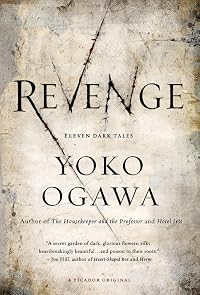
Revenge: Eleven Dark Tales
by Yoko Ogawa
On This Page
Description
An aspiring writer moves into a new apartment and discovers that her landlady has murdered her husband. Elsewhere, an accomplished surgeon is approached by a cabaret singer, whose beautiful appearance belies the grotesque condition of her heart. And while the surgeon's jealous lover vows to kill him, a violent envy also stirs in the soul of a lonely craftsman. Desire meets with impulse and erupts, attracting the attention of the surgeon's neighbor-who is drawn to a decaying residence that is show more now home to instruments of human torture. Murderers and mourners, mothers and children, lovers and innocent bystanders-their fates converge in an ominous and darkly beautiful web. Yoko Ogawa's Revenge is a master class in the macabre that will haunt you to the very end. show lessTags
Recommendations
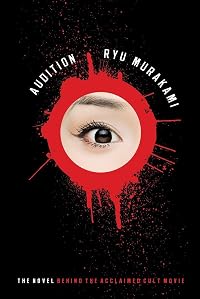
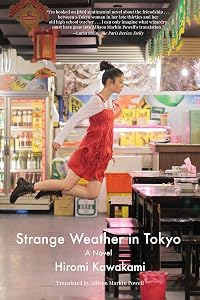

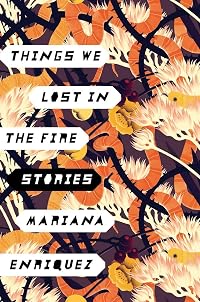
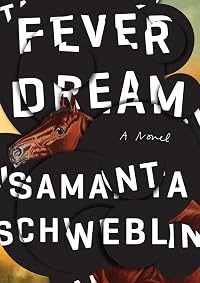



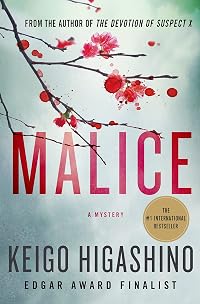
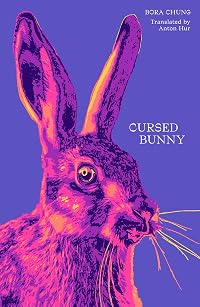
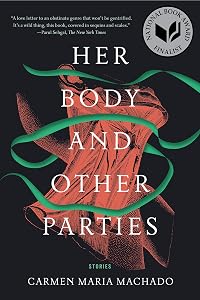
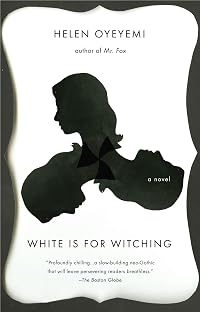
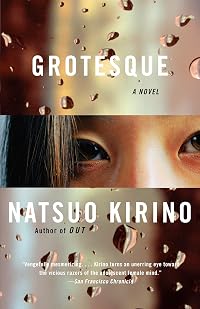
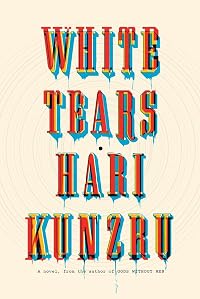
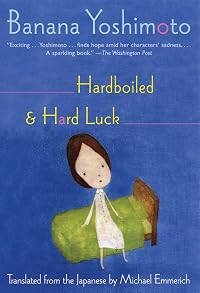
Member Recommendations
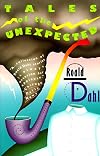
DerBuecherwurm Although more well-known for his children's stories, Roald Dahl's short stories have quite a similar timbre to them as evoked in "Revenge". Perhaps it's time to rediscover these excellent and deliciously creepy stories.
Member Reviews
‘’Why was everyone dying? They had all been so alive just yesterday.’’
Yoko Ogawa creates a dark wonder of sadness, loneliness and unsettling desires in Revenge, a collection of eleven seemingly disconnected stories. However, as is always the case with Ogawa’s work, nothing is as it seems and the tales are written in a ‘’ matryoshka’’ style. Each story is connected to the previous one via a characteristic feature. You will discover the clues as you go along the way, as pain, oblivion and death are standing by, watching you.
What makes Revenge stand out is the seamless way in which brief scenes of daily life, vivid and sharp and tender and melancholic are intertwined with the strange themes of the stories. Paragraphs like show more these invite you to Ogawa’s world.
‘’Families and tourists strolled through the square, enjoying the weekend. Squeaky sounds could be heard from a man off in the corner, who was twisting balloon animals. A circle of children watched him, entranced. Nearby, a woman sat on a bench knitting. Somewhere a horn sounded. A flock of pigeons burst into the air, and startled a baby who began to cry. The mother hurried over to gather the child in her arms.’’
‘’Where had it all come from? Outside, the world lay under a blanket of white, just as my uncle had said. The air was still, and large snowflakes drifted out of the night sky. The street was empty, and the car that had been lurking near the entrance had disappeared. I walked gingerly over the unmarked snow. When I turned to look back, the window was dark.’’
Afternoon in the Bakery: A woman buys a strawberry cake every year for her son’s birthday. But the boy died twelve years ago…
Fruit Juice: A young woman tries to reconcile with her estranged father, with the help of a classmate.
Old Mrs J: The haunting story of a writer and an old lady who is very fond of kiwis. And strangely-shaped carrots.
The Little Dustman: A man is stuck in the metro due to technical issues, as he tries to be on time for her step-mother’s funeral. A tale of family, tigers and Brahms.
Lab Coats: Two young women work in the morgue. Their job requires them to empty the pockets of the lab coats of the deceased.
Sewing for the Heart: A young woman has a strange order for a bag maker. She needs a special bag for her heart.
Welcome to the Museum of Torture: A young woman is fascinated by the Museum of Torture. Perhaps, too fascinated…
The Man Who Sold Braces: A young man reminiscences of his uncle, a strange man hiding a few dark secrets.
The Last Hour of the Bengal Tiger: The haunting tale of a dying tiger.
Tomatoes and the Full Moon: A moving story of a strange woman and bitter memories. And what is the link between the full moon and tomatoes?
Poison Plants: The saddest story in the collection. A woman who has been fighting a chronic illness befriends a young man who becomes her sole support. But will it last?
It’s Yoko Ogawa. Just read it.
‘’Everyone I know has died. My past is full of ghosts.’’
My reviews can also be found on https://theopinionatedreaderblog.wordpress.com/ show less
Yoko Ogawa creates a dark wonder of sadness, loneliness and unsettling desires in Revenge, a collection of eleven seemingly disconnected stories. However, as is always the case with Ogawa’s work, nothing is as it seems and the tales are written in a ‘’ matryoshka’’ style. Each story is connected to the previous one via a characteristic feature. You will discover the clues as you go along the way, as pain, oblivion and death are standing by, watching you.
What makes Revenge stand out is the seamless way in which brief scenes of daily life, vivid and sharp and tender and melancholic are intertwined with the strange themes of the stories. Paragraphs like show more these invite you to Ogawa’s world.
‘’Families and tourists strolled through the square, enjoying the weekend. Squeaky sounds could be heard from a man off in the corner, who was twisting balloon animals. A circle of children watched him, entranced. Nearby, a woman sat on a bench knitting. Somewhere a horn sounded. A flock of pigeons burst into the air, and startled a baby who began to cry. The mother hurried over to gather the child in her arms.’’
‘’Where had it all come from? Outside, the world lay under a blanket of white, just as my uncle had said. The air was still, and large snowflakes drifted out of the night sky. The street was empty, and the car that had been lurking near the entrance had disappeared. I walked gingerly over the unmarked snow. When I turned to look back, the window was dark.’’
Afternoon in the Bakery: A woman buys a strawberry cake every year for her son’s birthday. But the boy died twelve years ago…
Fruit Juice: A young woman tries to reconcile with her estranged father, with the help of a classmate.
Old Mrs J: The haunting story of a writer and an old lady who is very fond of kiwis. And strangely-shaped carrots.
The Little Dustman: A man is stuck in the metro due to technical issues, as he tries to be on time for her step-mother’s funeral. A tale of family, tigers and Brahms.
Lab Coats: Two young women work in the morgue. Their job requires them to empty the pockets of the lab coats of the deceased.
Sewing for the Heart: A young woman has a strange order for a bag maker. She needs a special bag for her heart.
Welcome to the Museum of Torture: A young woman is fascinated by the Museum of Torture. Perhaps, too fascinated…
The Man Who Sold Braces: A young man reminiscences of his uncle, a strange man hiding a few dark secrets.
The Last Hour of the Bengal Tiger: The haunting tale of a dying tiger.
Tomatoes and the Full Moon: A moving story of a strange woman and bitter memories. And what is the link between the full moon and tomatoes?
Poison Plants: The saddest story in the collection. A woman who has been fighting a chronic illness befriends a young man who becomes her sole support. But will it last?
It’s Yoko Ogawa. Just read it.
‘’Everyone I know has died. My past is full of ghosts.’’
My reviews can also be found on https://theopinionatedreaderblog.wordpress.com/ show less
Exquisitely unsettling. That’s the only description I can come up with for this finely understated story collection that creeps in under your skin, unobserved, and niggles at the subconscious mind until you’re afraid to let a breath out. It’s actually pretty darn scary, how good Ogawa is at frightening you in the most polite way.
The stories are all connected: with the one before it, the one after it, the one at the end with the one at the beginning until you finally have so many connections your head is swimming. Her brilliance cannot be denied. The prose is spare and evocative. And when you get to the end you realize that she crafted a unique puzzle.
The stories are peopled by seemingly normal characters: a bakery worker, a show more hospital secretary, a respiratory doctor, an author. But at some point, for varied reasons, they all come unhinged, in one way or another. In many cases, the ordinariness of life itself, grates on the individual with its loneliness, monotony, sadness and loss and finally pushes the character to the edge of insanity where it sits, waiting to go over the brink.
In one story, Sewing for the Heart, a woman whose heart is outside of her body commissions a bag maker to make a bag that will neatly hold the heart in place. When he goes to deliver it to her, she informs him that she no longer needs it, because the surgery to fix her problem has finally been perfected. I’ll spare you the gruesome details of his response. In a later story, the very bag shows up in the story entitled Welcome to the Museum of Torture. You’ve probably never been to a museum like this where various methods of torture reside. For instance, there’s a funnel that is used to drip cold water on the victim’s face:
Grim and unsettling. Brilliant and poignant. Elegantly written yet with tremendous emotional impact. show less
The stories are all connected: with the one before it, the one after it, the one at the end with the one at the beginning until you finally have so many connections your head is swimming. Her brilliance cannot be denied. The prose is spare and evocative. And when you get to the end you realize that she crafted a unique puzzle.
The stories are peopled by seemingly normal characters: a bakery worker, a show more hospital secretary, a respiratory doctor, an author. But at some point, for varied reasons, they all come unhinged, in one way or another. In many cases, the ordinariness of life itself, grates on the individual with its loneliness, monotony, sadness and loss and finally pushes the character to the edge of insanity where it sits, waiting to go over the brink.
In one story, Sewing for the Heart, a woman whose heart is outside of her body commissions a bag maker to make a bag that will neatly hold the heart in place. When he goes to deliver it to her, she informs him that she no longer needs it, because the surgery to fix her problem has finally been perfected. I’ll spare you the gruesome details of his response. In a later story, the very bag shows up in the story entitled Welcome to the Museum of Torture. You’ve probably never been to a museum like this where various methods of torture reside. For instance, there’s a funnel that is used to drip cold water on the victim’s face:
”For a torture to be effective, the pain has to be spread out; it has to come at regular intervals, with no end in sight. The water falls , drop after drop after drop, like the second hand of a watch, carving up time. The shock of each individual drop is insignificant, but the sensation is impossible to ignore. At first, one might manage to think about other things, but after five hours, after ten hours, it becomes unendurable. The repeated stimulation excites the nerves to a point where they literally explode, and every sensation in the body is absorbed into that one spot on the forehead---indeed, you come to feel that you are nothing but a forehead, into which a fine needle is being forced millimeter by millimeter. You can’t sleep or even speak, hypnotized by a suffering that is greater than any mere pain. In general, the victim goes mad before a day has passed.” (Page 94)
Grim and unsettling. Brilliant and poignant. Elegantly written yet with tremendous emotional impact. show less
Just like Joe Hill's blurb on the cover suggests, this book is a lot like a dark garden that is looked over by a person with a darker, unstable hand. The unconventional, connected-yet-unconnected structure and choking atmosphere of dread, rot, and entropy are pervasive, and will thrill most horror readers.
We get precious little science fiction, fantasy and horror in translation, which means most of our reading is Eurocentric and a lot of it, though enjoyable, is anything but challenging. That’s why, when I saw Revenge, Yoko Ogawa’s book of linked, strange stories, on my library shelf I snatched it up. And I’m glad I did, because these stories are odd, elegant and exciting.
The book begins with “Afternoon at the Bakery,” which starts prosaically enough with a description of a beautiful Sunday in a park, complete with a man twisting balloon animals for children. But a tinge of uneasiness appears when the narrator mentions that one could look at the scene all day “and perhaps never notice a single detail out of place, or show more missing.” What’s that about? We start to find out when the narrator enters a bakery and finds no one there to sell her the two strawberry shortcakes she came in for. She takes a seat to wait. Another woman arrives, and they wait together. The narrator informs the other woman that she’s buying the shortcakes for her son’s birthday. And that’s when the story turns dark and painful, and that beautiful park an impossible dream.
We begin to see Ogawa’s method in “Fruit Juice.” In this story, also told in the first person but by one who is entirely different from the narrator of “Afternoon at the Bakery,” a classmate asks the narrator to accompany her to a French restaurant on the following Sunday. The narrator can’t quite figure out if this is a date at first, but he soon realizes that she simply needs someone she can trust, because she is meeting her father for the first time. The three share an awkward meal, made even stranger when the young woman gorges on kiwis she and the narrator find in a deserted post office on the way back to school. Twenty years later, the woman has become a pastry chef who works in a bakery — a bakery we recognize.
And so the stories continue, with a piece of the last story always lodged in the next. One hates to say too much about the individual stories, because they are relatively short on incident and long on mystery, and need to be discovered by each reader afresh. The stories are never explicitly fantastical, despite such oddities as carrots shaped like human hands, a woman who lives with her heart outside her body, and a museum of torture. But they are not quite realistic, either. They make the reader feel off balance, as if gravity is suddenly grabbing one’s feet at an angle instead of straight down. One finds oneself looking for the bit from the last story, wondering how Ogawa will do it this time, watching the stories bend and stretch. It’s not gimmicky; instead, it seems to show that we are all linked, through our tragedies, one to the other.
This small book is a dark jewel, with an able translation by Stephen Snyder. Reading the stories feels like eating poisoned chocolates, delicious but deadly. If you let them, these stories will twist you up — and you’ll enjoy it.
Originally published at http://www.fantasyliterature.com/edge/edge-yoko-ogawas-revenge/ show less
The book begins with “Afternoon at the Bakery,” which starts prosaically enough with a description of a beautiful Sunday in a park, complete with a man twisting balloon animals for children. But a tinge of uneasiness appears when the narrator mentions that one could look at the scene all day “and perhaps never notice a single detail out of place, or show more missing.” What’s that about? We start to find out when the narrator enters a bakery and finds no one there to sell her the two strawberry shortcakes she came in for. She takes a seat to wait. Another woman arrives, and they wait together. The narrator informs the other woman that she’s buying the shortcakes for her son’s birthday. And that’s when the story turns dark and painful, and that beautiful park an impossible dream.
We begin to see Ogawa’s method in “Fruit Juice.” In this story, also told in the first person but by one who is entirely different from the narrator of “Afternoon at the Bakery,” a classmate asks the narrator to accompany her to a French restaurant on the following Sunday. The narrator can’t quite figure out if this is a date at first, but he soon realizes that she simply needs someone she can trust, because she is meeting her father for the first time. The three share an awkward meal, made even stranger when the young woman gorges on kiwis she and the narrator find in a deserted post office on the way back to school. Twenty years later, the woman has become a pastry chef who works in a bakery — a bakery we recognize.
And so the stories continue, with a piece of the last story always lodged in the next. One hates to say too much about the individual stories, because they are relatively short on incident and long on mystery, and need to be discovered by each reader afresh. The stories are never explicitly fantastical, despite such oddities as carrots shaped like human hands, a woman who lives with her heart outside her body, and a museum of torture. But they are not quite realistic, either. They make the reader feel off balance, as if gravity is suddenly grabbing one’s feet at an angle instead of straight down. One finds oneself looking for the bit from the last story, wondering how Ogawa will do it this time, watching the stories bend and stretch. It’s not gimmicky; instead, it seems to show that we are all linked, through our tragedies, one to the other.
This small book is a dark jewel, with an able translation by Stephen Snyder. Reading the stories feels like eating poisoned chocolates, delicious but deadly. If you let them, these stories will twist you up — and you’ll enjoy it.
Originally published at http://www.fantasyliterature.com/edge/edge-yoko-ogawas-revenge/ show less
With weird unique and believable characters, sparkling clean prose, and dark and seductive undercurrents that connect these 11 tales both on the plot and meta-fiction level, this book was a sheer pleasure.
Imbued with a dark underlying current of horror and eerieness, the novel complements this with its realistic setting and connected characters. Recurring characters and motifs in each subsequent story add an extra layer of intrigue and game - after a while, you begin to look for them before they show up, similar to the cold opens of How Will They Die of Six Feet Under. The simplicity of its construction belies - or perhaps accentuates - its disturbing nature which contributes to overall quiet reserve the book possesses: how is it that usually-mundane details such as sorting laundry or waiting on a broken-down train can be heightened to exude a sense of the profound? The novel could have continued thus for a long while before I would have show more considered it ad nauseam, but its succinctness is probably intended for the terse, unsettling atmosphere. show less
These elegantly and intricately connected tales are less about revenge than they are about loss, longing, and jealousy. Vaguely macabre, more than one of the stories actually made me chuckle with appreciation for Ogawa's ability to twist ever so slightly the reader's grasp of reality. After reading the first two tales, I wasn't sure this collection was for me but after the fourth I went back and read those first two again and Ogawa's genius became apparent. The unfolding web of connections between characters, settings, events, and emotions is simply delightful. And Ogawa masterfully exposes the layers upon layers of her scheme. In "The Man Who Sold Braces" the narrator finds himself in a house full of antiques, most of them instruments show more of torture. He comments, "As I studied the mass more closely, I began to feel that it was not the product of random accumulation but that it actually had a coherent form all its own; and while the individual items were dirty and deteriorating, taken together they were like a strange piece of art." Indeed. show less
Members
- Recently Added By
Published Reviews
ThingScore 100
Ogawa makes each of the stories seem like odd, if convincing, standalone works of short fiction and at the same time like metafictional products created by the characters in several of the stories. Are you reading about a trip to the zoo in a novel by one of the characters, or a trip to the zoo in a story by Ogawa? By the time you begin to recognize this paradox as the guiding principle of the show more stories, you're in too far to stop. show less
added by ozzer
Lists

75 Books Challenge Halloween Read "Official" Selections
71 works; 7 members

75 Books Challenge 2015 Halloween Read long list
45 works; 4 members

Books Read in 2020
4,379 works; 124 members

Books Read in 2015
3,299 works; 129 members
Recommended Horror and Dark Fiction by Women
81 works; 13 members

Connected Stories
6 works; 3 members

Global Reads: Books Set in East Asia
139 works; 12 members

Top Five Books of 2023
767 works; 317 members

Reading Glasses Podcast
410 works; 3 members
Author Information

60+ Works 11,531 Members
Some Editions
Awards and Honors
Awards
Distinctions
Common Knowledge
- Canonical title
- Revenge: Eleven Dark Tales
- Original title
- 寡黙な死骸 みだらな弔い
- Alternate titles
- Revenge: Eleven Dark Tales; Revenge
- Original publication date
- 1998 (original Japanese) (original Japanese); 2013 (English: Snyder) (English: Snyder)
- People/Characters
- The Mother (Afternoon at the Bakery); The Baker (Fruit Juice); The Writer / Mama (Old Mrs. J | Little Dustman | Tomatoes and the Full Moon); Old Mrs. J. (Old Mrs. J.); The Son (Little Dustman); The Secretary (Lab Coats) (show all 14); The Bag Maker (Sewing for the Heart); The Cabaret Singer (Sewing for the Heart); The Hairdresser (Welcome to the Museum of Torture); The Curator / Uncle (Welcome to the Museum of Torture | Man Who Sold Braces | Last Hour of the Bengal Tiger); The Jealous Wife (Last Hour of the Bengal Tiger); The Photographer (Tomatoes and the Full Moon); The Widow (Poison Plants); The Young Musician (Poison Plants)
- Important places
- Japan
- First words
- It was a beautiful Sunday. The sky was a cloudless dome of sunlight.
- Last words
- (Click to show. Warning: May contain spoilers.)Crouching down at the door, I wept. For my dead self.
- Blurbers
- Hill, Joe; Straub, Peter
- Original language
- Japanese
- Canonical DDC/MDS
- 895.635
- Canonical LCC
- PL858.G37
Classifications
- Genres
- Fiction and Literature, General Fiction, Horror
- DDC/MDS
- 895.635 — Literature & rhetoric Literatures of other languages Literatures of East and Southeast Asia Japanese Japanese fiction 1945–2000
- LCC
- PL858 .G37 — Language and Literature Languages and literatures of Eastern Asia, Africa, Oceania Languages of Eastern Asia, Africa, Oceania Japanese language and literature Japanese literature Individual authors and works
- BISAC
Statistics
- Members
- 1,102
- Popularity
- 23,078
- Reviews
- 56
- Rating
- (3.85)
- Languages
- 7 — English, French, German, Italian, Japanese, Polish, Spanish
- Media
- Paper, Audiobook, Ebook
- ISBNs
- 23
- ASINs
- 8