On This Page
Description
In a world dedicated to pleasure, one young rebel sets out on a forbidden quest. Published for the first time in a single volume, Tanith Lee's duet of novels set in a hedonistic Utopia are as riveting and revolutionary as they were when they first appeared two decades ago. It's a perfect existence, a world in which no pleasure is off-limits, no risk is too dangerous, and no responsibilities can cramp your style. Not if you're Jang: a caste of libertine teenagers in the city of Four BEE. But show more when you're expected to make trouble--when you can kill yourself on a whim and return in another body, when you're encouraged to change genders at will and experience whatever you desire--you've got no reason to rebel . . . until making love and raising hell, daring death and running wild just leave you cold and empty. Ravenous for true adventures of the mind and body, desperate to find some meaning, one restless spirit finally bucks the system--and by shattering the rules, strikes at the very heart of a soulless society. . . . show lessTags
Recommendations














Member Recommendations

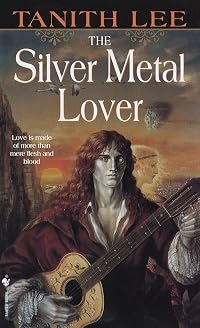
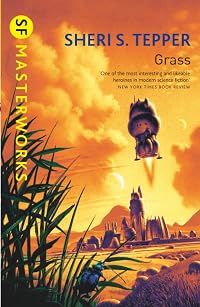
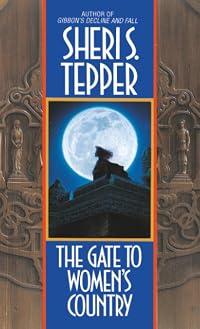
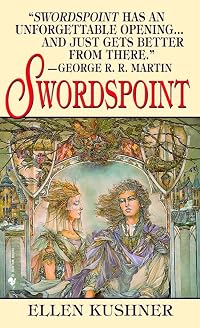
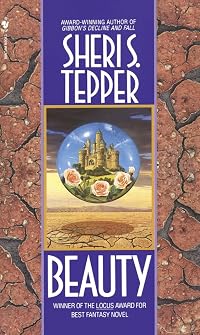
sandstone78 Biting the Sun and the Unicorn trilogy share a desert setting, a young female (or predominantly female, at least) protagonist, and Lee's lush, gorgeous prose.
Member Reviews
I read Tanith Lee’s Biting the Sun in three days. I read a little bit one evening and again the next, intending to carry on like that, but I really got into it and spent the larger part of the next day finishing it. I couldn't help myself - it's a really absorbing read.
I believe that I read in some article online that Tanith Lee is not a great believer in genres, but if I had to pigeonhole this I suppose I’d call it science fiction.
I suppose the idea of an ‘utopian’ city where everyone lives in pampered idleness is not at all original, but I doubt if many paint it as vividly or imaginatively as Lee. One of her great strengths is her ability to paint vivid and colourful images in the reader's mind.
The story concerns a heroine show more (basically a heroine – as so often with Lee, gender boundaries are fluid) who doesn’t fit in this utopia, and how she continually causes problems and eventually gets banished to the outside desert, and her life out there. I suppose it can be read as an allegory for the journey from dependent adolescence to self-reliant adulthood.
Obviously, from the above, I think this a very good novel, but the thing that is really astonishing me is that Lee can be so extraordinarily prolific an author and yet, as far as I’ve read so far, maintain her standards of quality and inventiveness. Good stuff. show less
I believe that I read in some article online that Tanith Lee is not a great believer in genres, but if I had to pigeonhole this I suppose I’d call it science fiction.
I suppose the idea of an ‘utopian’ city where everyone lives in pampered idleness is not at all original, but I doubt if many paint it as vividly or imaginatively as Lee. One of her great strengths is her ability to paint vivid and colourful images in the reader's mind.
The story concerns a heroine show more (basically a heroine – as so often with Lee, gender boundaries are fluid) who doesn’t fit in this utopia, and how she continually causes problems and eventually gets banished to the outside desert, and her life out there. I suppose it can be read as an allegory for the journey from dependent adolescence to self-reliant adulthood.
Obviously, from the above, I think this a very good novel, but the thing that is really astonishing me is that Lee can be so extraordinarily prolific an author and yet, as far as I’ve read so far, maintain her standards of quality and inventiveness. Good stuff. show less
The Basics
In a world where the least desire is met, our heroine/hero is getting bored. They want something intangibly more that vast technological advances can’t meet. The questions becomes not whether they will find the answer they seek but whether society will let them.
My Thoughts
This is one of Tanith Lee’s most popular works, and having finally read it, I see why. Not just for it’s entertainment value, of which is has a lot, but for the chances it takes and the messages it sends. By today’s standards, what Lee does with the idea of gender swapping might seem tame, but for it’s day, I can imagine it was different, illuminating, and maybe even shocking to some. Characters in this world change appearance and gender on a whim. show more They get married and divorced within a week. There is a lot said here about sexual orientation, sex in general, gender identification, and so on. In many cases, the truthfulness of what’s said is debatable, like how our nameless narrator makes a very different man than she does a woman and what the implications of that are. But it can still be said that this book takes a lot of worthy chances by involving the idea of gender being transitory.
The story also echoes the classic Brave New World, though from a slightly different angle. Where Huxley had an outsider appalled by what he witnessed in this supposed utopia, we have an insider who starts to see the sheen and glitter of their utopia tarnish. And in the most interesting way. Death is nothing in this world. Suicide is the norm, something people do so they can come back with a new body. Yet our narrator suffers loses. The path she takes (and most of her loses are suffered when she is in a female body) makes it so she witnesses death in a very personal way. So that by the time we reach part two of the story, she is now a he and pursuing an entirely different way of life than those around him. The heroine/hero’s narrative is so well-done that this transition feels entirely natural, and the character development is thorough and fascinating.
As you can see, this book is hard to sum up. It’s about a dystopia in sheep’s clothing. It’s about acceptance of the imperfect. It’s about facing death. It’s about gender identity. It’s also just an amazingly fun romp for all that. A future-world adventure with a narrator who starts out a shallow nuisance and becomes something their world has never seen before. It has a rich plot and a great main character. It’s worth the hype it receives.
Final Rating
5/5 show less
In a world where the least desire is met, our heroine/hero is getting bored. They want something intangibly more that vast technological advances can’t meet. The questions becomes not whether they will find the answer they seek but whether society will let them.
My Thoughts
This is one of Tanith Lee’s most popular works, and having finally read it, I see why. Not just for it’s entertainment value, of which is has a lot, but for the chances it takes and the messages it sends. By today’s standards, what Lee does with the idea of gender swapping might seem tame, but for it’s day, I can imagine it was different, illuminating, and maybe even shocking to some. Characters in this world change appearance and gender on a whim. show more They get married and divorced within a week. There is a lot said here about sexual orientation, sex in general, gender identification, and so on. In many cases, the truthfulness of what’s said is debatable, like how our nameless narrator makes a very different man than she does a woman and what the implications of that are. But it can still be said that this book takes a lot of worthy chances by involving the idea of gender being transitory.
The story also echoes the classic Brave New World, though from a slightly different angle. Where Huxley had an outsider appalled by what he witnessed in this supposed utopia, we have an insider who starts to see the sheen and glitter of their utopia tarnish. And in the most interesting way. Death is nothing in this world. Suicide is the norm, something people do so they can come back with a new body. Yet our narrator suffers loses. The path she takes (and most of her loses are suffered when she is in a female body) makes it so she witnesses death in a very personal way. So that by the time we reach part two of the story, she is now a he and pursuing an entirely different way of life than those around him. The heroine/hero’s narrative is so well-done that this transition feels entirely natural, and the character development is thorough and fascinating.
As you can see, this book is hard to sum up. It’s about a dystopia in sheep’s clothing. It’s about acceptance of the imperfect. It’s about facing death. It’s about gender identity. It’s also just an amazingly fun romp for all that. A future-world adventure with a narrator who starts out a shallow nuisance and becomes something their world has never seen before. It has a rich plot and a great main character. It’s worth the hype it receives.
Final Rating
5/5 show less
Biting the Sun consists of two short SF novels from the 1970s: Don't Bite the Sun and its sequel Drinking Sapphire Wine. Collecting the two of them together was a good idea, as this is basically one complete story, and I don't think either half stands particularly well on its own. It's set sometime in the distant future on an alien world where humans live in domed cities, serious crime is non-existent, punishment is equally non-existent, all needs are provided for, death has been abolished, and the young are expected to live decadent, frivolous, carefree lives... within the bounds of certain social conventions. It's also a world without much in the way of meaning, creativity, or depth. Our main character, of course, chafes against this show more and, almost without realizing that's what she's doing, sets about looking for something more fulfilling in life.
This is a pretty familiar storyline now, and it was already a familiar storyline in the 70s. What Lee does with it isn't bad at all, though, and while there are definitely elements one can point to that are clearly a product of the 70s, it feels much less dated than a lot of SF from that era. I particularly liked her approach to world-building: it's very much of the kind that shows you a world from an inhabitant's perspective and expects you to figure it out without hand-holding. There are some interesting and surprising touches to the society she creates, too.
In fact, I think the fun of being immersed in that world and figuring it out as I went along was the best part of the book for me. Which, unfortunately, meant that once I had a good handle on it -- certainly by the time I got to book two -- I wasn't feeling quite as engaged as I was at the start. Which also meant that the things that didn't quite work for me started to bother me a bit more: a small but significant streak of religious mysticism, some ideas about gender that didn't sit quite right, one or two things that really could have done with a bit more description, and an important element towards the end that I found biologically improbable.
In the end, I can't say I found it completely satisfying, but it was worth the read, anyway. show less
This is a pretty familiar storyline now, and it was already a familiar storyline in the 70s. What Lee does with it isn't bad at all, though, and while there are definitely elements one can point to that are clearly a product of the 70s, it feels much less dated than a lot of SF from that era. I particularly liked her approach to world-building: it's very much of the kind that shows you a world from an inhabitant's perspective and expects you to figure it out without hand-holding. There are some interesting and surprising touches to the society she creates, too.
In fact, I think the fun of being immersed in that world and figuring it out as I went along was the best part of the book for me. Which, unfortunately, meant that once I had a good handle on it -- certainly by the time I got to book two -- I wasn't feeling quite as engaged as I was at the start. Which also meant that the things that didn't quite work for me started to bother me a bit more: a small but significant streak of religious mysticism, some ideas about gender that didn't sit quite right, one or two things that really could have done with a bit more description, and an important element towards the end that I found biologically improbable.
In the end, I can't say I found it completely satisfying, but it was worth the read, anyway. show less
What can I say other than groshing ooma, absolutely groshing
okay, maybe I can add just a bit more....
This book came very close to ending up on my "did not finish" list.
If it hadn't come with such high recommendations and fervent insistence that I read it, I would have given up early.
But I'm glad I didn't.
I've come off of reading space operas with sweeping epic story lines. Or at least sci fi books where the fate of worlds of even universes rests on the leading character.
This book is different. It's almost more of a slice of life book. There's a little more going on than just that, but large parts of it are just the protagonist (who isn't named) doing their day to day thing. There isn't some big evil world ending enemy. And the show more people in this book live sheltered lives where suicide can be either a hobby and a way to get a new body. So their lives aren't generally in mortal danger. So in the first page sof this book I found myself thinking "blah blah blah, you're spoiled, immortal, and bored... I get it.. and I don't care".
And then a little deeper in and i was thinking "okay, I care a little".
That's when I just kinda relaxed, and stopped expecting anything momentous to happen and just enjoyed.
If you can relax and just enjoy the story as it unfolds at a leisurely pace, this story will pull you in over time. And it has what I thought was a nice satisfying conclusion.
Oh, and the slang is jarring at first and feels forced in the beginning. But by the end it feels natural, and it actually plays a part in the story. And as a bit of evidence on how well it works, I'm writing this review a bit over a week after finishing the book and i'm still finding myself using the slang terms from the book in my inner thoughts, how zaradann is that oomas? show less
okay, maybe I can add just a bit more....
This book came very close to ending up on my "did not finish" list.
If it hadn't come with such high recommendations and fervent insistence that I read it, I would have given up early.
But I'm glad I didn't.
I've come off of reading space operas with sweeping epic story lines. Or at least sci fi books where the fate of worlds of even universes rests on the leading character.
This book is different. It's almost more of a slice of life book. There's a little more going on than just that, but large parts of it are just the protagonist (who isn't named) doing their day to day thing. There isn't some big evil world ending enemy. And the show more people in this book live sheltered lives where suicide can be either a hobby and a way to get a new body. So their lives aren't generally in mortal danger. So in the first page sof this book I found myself thinking "blah blah blah, you're spoiled, immortal, and bored... I get it.. and I don't care".
And then a little deeper in and i was thinking "okay, I care a little".
That's when I just kinda relaxed, and stopped expecting anything momentous to happen and just enjoyed.
If you can relax and just enjoy the story as it unfolds at a leisurely pace, this story will pull you in over time. And it has what I thought was a nice satisfying conclusion.
Oh, and the slang is jarring at first and feels forced in the beginning. But by the end it feels natural, and it actually plays a part in the story. And as a bit of evidence on how well it works, I'm writing this review a bit over a week after finishing the book and i'm still finding myself using the slang terms from the book in my inner thoughts, how zaradann is that oomas? show less
This was an awful slog for most of the first half. The protagonist has been shaped by the oppressively hedonistic world she lives in so in *theory* I have sympathy for her but in practice it's very difficult to actually care very much. This does eventually improve as she tries to find more constructive ways to rebel but still.
Really interesting to read just a week or so after [b:Brave New World|18477795|Brave New World|Aldous Huxley|https://images.gr-assets.com/books/1381311602s/18477795.jpg|3204877] as they both explore enforced utopias. In both sex is very casual, individuals are not only not very individual but they don't interact with other castes/ age groups, careers are meaningless, procreation is controlled and is not done in the womb, drug use in encouraged to increase happiness, etc. In neither do we learn much about how this society developed, how it really works. Both are, of course, focused on one misfit.
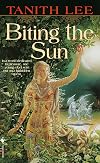
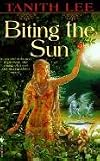
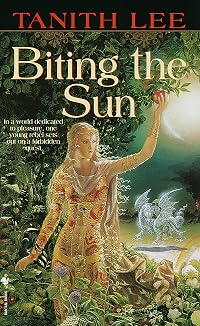
This is a much longer book with more interesting characters and is often entertaining. The cover is kinda sorta... don't worry about it, about show more what it means or what scene it's illustrating. It's not fantasy, and it's not really a 'girlie' book. Def. provocative SF. Maybe better for younger folks though who can more likely empathize with the Jang and their prolonged adolescence.
If you're interested, you really do want the omnibus. It's not too long or long-feeling, at least once you get past the first, ah, 60 pp or so.
And so, if you're interested, I do recommend the pair. If not, they're skippable.
'"You ought to take this seriously" [I was scolded.]
"How will that help?"'
'Like most loners, you carry the seeds of violent authority. Loners need to be bossy. They quickly learn it's the only method they have of shoving people off their backs.' show less
This is a much longer book with more interesting characters and is often entertaining. The cover is kinda sorta... don't worry about it, about show more what it means or what scene it's illustrating. It's not fantasy, and it's not really a 'girlie' book. Def. provocative SF. Maybe better for younger folks though who can more likely empathize with the Jang and their prolonged adolescence.
If you're interested, you really do want the omnibus. It's not too long or long-feeling, at least once you get past the first, ah, 60 pp or so.
And so, if you're interested, I do recommend the pair. If not, they're skippable.
'"You ought to take this seriously" [I was scolded.]
"How will that help?"'
'Like most loners, you carry the seeds of violent authority. Loners need to be bossy. They quickly learn it's the only method they have of shoving people off their backs.' show less
just re-read this book today, i'd forgotten how much i liked it. (though the tag on the cover was so annoying and so jarring with the actual content of the book, i took a sharpie and blocked it out years ago.) this dystopian world lee creates seems at first totally alien but quickly you see the similarities to today's world and attitudes. the evolution of the main character over the years is sweet and sincere, both terms that would probably make the character wince. ah well. a very good book.
Members
- Recently Added By
Lists

Favorite Science Fiction by Women Authors
737 works; 197 members

Science fiction novels with a female protagonist
105 works; 30 members

Bookriot's 100 Must-Read Sci-Fi Fantasy Novels By Female Authors
100 works; 9 members

Future Green Dragon Group Read Books
80 works; 6 members

What Makes This Book So Great
102 works; 16 members

Read These Too
458 works; 9 members

KayStJ's to-read list
1,616 works; 11 members

Books With Our Favorite First Lines
168 works; 104 members

Books With the Most Memorable Titles
478 works; 158 members

The Five Books That Represent Us
391 works; 149 members

Favorite Science Fiction
456 works; 218 members
Author Information

321+ Works 30,101 Members
Tanith Lee, September 19, 1947 - May 24, 2015 Tanith Lee was born on September 19, 1947 in London, England, the daughter of ballroom dancers. She attended various primary schools and had a variety of jobs, from file clerk and assistant librarian to shop assistant and waitress. Lee attended an art college for one year, but felt she would be better show more writing her ideas than painting them. Her first professional sale was "Eustace," a 90 page vignette which appeared in The Ninth Pan Book of Horror Stories in 1968. While Lee was working as an assistant librarian, she wrote a children's story that was accepted for publication. Others of her stories were also bought but never published. In 1971, Macmillan published "The Dragon Hoard," another children's book, which was followed by "Animal Castle" and "Princess Hynchatti and Other Stories" in 1972. Lee was looking for a British publisher for her book "The Birthgrave," but was denied at every House she went. She then wrote to American publisher DAW, known for it's fantasy and horror selections, who immediately accepted her manuscript and published the book in 1975. Thus began a partnership between the two that lasted till 1989 and resulted in 28 books. After the publication of her third book by DAW, Lee quit her job and became a full-time freelance writer. Lee has been nominated for the World Fantasy Award, the August Derleth Award and the Nebula. She has had more than 40 novels published, along with over 200 short stories. Lee died peacefully in her sleep after a long illness on May 24, 2015. (Bowker Author Biography) show less
Some Editions
Series

Work Relationships
Contains
Common Knowledge
- Canonical title
- Biting the Sun
- Original title
- Drinking Sapphire Wine [omnibus]
- Original publication date
- 1979 (omnibus) (omnibus)
- First words
- My friend Hergal had killed himself again.
- Last words
- (Click to show. Warning: May contain spoilers.)However nasty a drink it turns out, it's going to be better than their lousy sapphire wine.
- Original language
- English
- Disambiguation notice
- Drinking Sapphire Wine is a title in Tanith Lee's Series, "four-BEE" (the Series also known in French as "Le bain des limbes"). It can be EITHER the second volume of that Series alone, or combined with the first volum... (show all)e (Don't Bite the Sun) in an omnibus of the same title, later reprinted as Biting the Sun.
Please distinguish between editions of Drinking Sapphire Wine alone, and those including Don't Bite the Sun. Thank you.
Classifications
Statistics
- Members
- 735
- Popularity
- 38,573
- Reviews
- 14
- Rating
- (4.17)
- Languages
- Dutch, English
- Media
- Paper, Ebook
- ISBNs
- 6
- ASINs
- 3