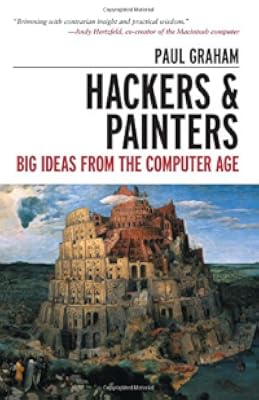
Hackers and Painters: Big Ideas from the Computer Age
by Paul Graham
On This Page
Description
"The computer world is like an intellectual Wild West, in which you can shoot anyone you wish with your ideas, if you're willing to risk the consequences."--Hackers & Painters: Big Ideas from the Computer Age, by Paul Graham We are living in the computer age, in a world increasingly designed and engineered by computer programmers and software designers, by people who call themselves hackers. Who are these people, what motivates them, and why should you care? Consider these facts: Everything show more around us is turning into computers. Your typewriter is gone, replaced by a computer. Your phone has turned into a computer. So has your camera. Soon your TV will. Your car was not only designed on computers, but has more processing power in it than a room-sized mainframe did in 1970. Letters, encyclopedias, newspapers, and even your local store are being replaced by the Internet. Hackers & Painters: Big Ideas from the Computer Age, by Paul Graham, explains this world and the motivations of the people who occupy it. In clear, thoughtful prose that draws on illuminating historical examples, Graham takes readers on an unflinching exploration into what he calls "an intellectual Wild West." The ideas discussed in this book will have a powerful and lasting impact on how we think, how we work, how we develop technology, and how we live. Topics include the importance of beauty in software design, how to make wealth, heresy and free speech, the programming language renaissance, the open-source movement, digital design, internet startups, and more show lessTags
Recommendations
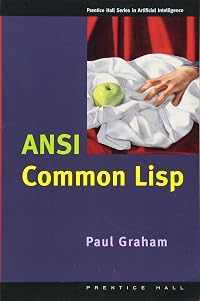
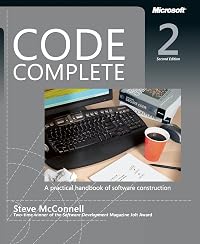
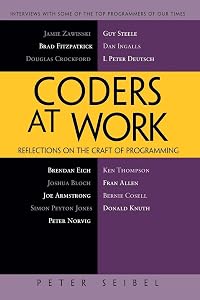
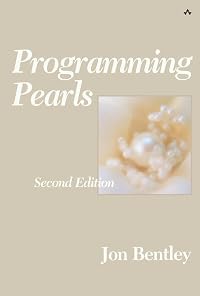

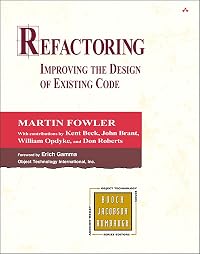
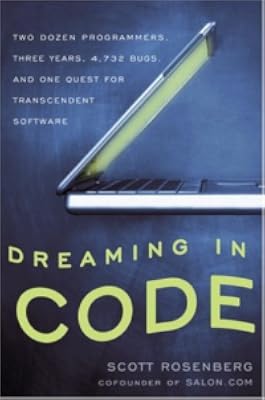
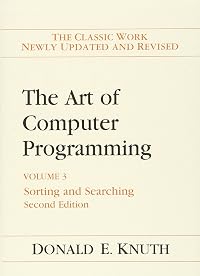
Member Recommendations
timspalding Livingston is a founding partner, with Paul Graham, at Y Combinator.

Member Reviews
It's just a bunch of Paul Graham's superb essays collected into one book. Unfortunately the selection of technical posts is showing its age. I'd give the first half of the book five stars and the latter half three, so decided to settle on four. You probably aren't going to have your toes tickled by the second half if you aren't ROBUSTLY INTO LISP.
Hackers & Painters is a celebration of computer engineering and the people that make it possible, developers. Graham is passionate about the things he writes, and he is passionate about a lot of things - the needs of the modern developer, the wants of future ones, tech entrepreneurship, the design programming languages and the superlative position Lisp holds among them. There is also a Steve Ballmer-like undertone of "developers developers developers" running throughout the text, which is a bit too strong at times but inspiring nonetheless. Where the essays fall short are when they attempt to draw analogies between art history and the practice of computer science. There exist beautiful connections there, to which Godel Escher Bach is show more testament, but none of appear in Hackers & Painters. The connections that do appear seem either forced or too simplistic.
The main takeaways of this book are an ego-boost and some decent rule-of-thumbs for designing computer systems, especially programming languages. This book seems written with developers and entrepreneurs in mind, and those are the two demographics that will enjoy it most.
Favourite essays: What You Can't Say, Mind The Gap, A Plan For Spam show less
The main takeaways of this book are an ego-boost and some decent rule-of-thumbs for designing computer systems, especially programming languages. This book seems written with developers and entrepreneurs in mind, and those are the two demographics that will enjoy it most.
Favourite essays: What You Can't Say, Mind The Gap, A Plan For Spam show less
I really enjoyed this book, it ended with a lot of technical parts of Lisp but, especially the beginning, it dealt with a lot of arguments/ideas that were treated in a pretty new way. His ideas about startups and wealth in particular I found very interesting. There was also a few funny moments when he was talking about his ideas for spam filtering or server-based websites and I thought, "Huh, isn't that what was always done". I didn't realize he(/his company) were the ones who pioneered bayesian spam filtering or server-based websites. It made we want to look at lisp again
Enjoyed reading Paul Graham's essays. It is quite dated, for e.g, lots of reference to Web in the 1990s, 2000s time when Yahoo was a prominent .com company. Some of his opinions on wealth creation are still applicable in 2020. But we have to read his essays with plenty of skepticism. He sings praise for lisp and instills some desire in the reader to study lisp and start a startup.
This book is collection of essays (I think all of them are online). Hackers and Painters was a quick and amusing read. The essays cover many topics; my favorites were those on the social habits of hackers and on language design. The language design essays were interesting even though I disagreed with them in many places. For one thing, types are good! Types are a burden when writing code, certainly, but they are vital for reading code. I find it much easier to read code with type annotations because then I know what each variable is supposed to do. Since code is read much more often than it is written (or so says conventional wisdom), types are important. That said, I am a big fan of both languages with type inference and languages show more where types do not need to be added while programming but can be added to provide additional guarantees to the programmer. show less
People come to programming with many different, sometimes overlapping motivations. Some like the mathematical dimension, the beauty of elegant algorithms. Many like the satisfaction of solving a problem. Others think it good money with career prospects. In Hackers & Painters, Graham frames a view on those who like the hands-on art of programming, the same ones drawn to writing, painting and other arts. Programming may seem a pale cousin of the arts, compared to writing or painting, but there is an art to it. Graham calls these sorts hackers, for their need to bend, break or invent patterns in pursuit of their art.
In the popular press, hacking is associated with breaking into computers or creating viruses that damage them. “To the show more programmer, ‘hacker’ connotes mastery in the most literal sense: someone who can make a computer do what he wants — whether the computer wants to or not” (50). Novice programmers perceive languages to be quite different, while those with a little more experience claim they are all the same. But the hackers, the masters, are sensitive to the variations in their tools, and how they shape the work. Graham favours Lisp as his sketching language. I dabbled in Lisp years ago; I am persuaded to take another look.
I have psychology and library science degrees, not computer science. What I know about programming and computers I picked up on the fly. Turns out that many people come to programming accidentally. Good programming is not really science, says Graham. Hacking is doing, like art. Those who can do it often find themselves making some sort of living at it simply because of economics; it is much harder to make a living at painting. These people often do not fit comfortably in the corporate mold, but rather in small startups, where the lean environment and rewards for hard work are better suited to innovation.
Graham paints an invigorating portrait of hackers, though some of his notions completely missed my boat. Like many books on computers, some ideas already seem quaint, such as his discussions of ASPs and langauge issues around typing and garbage collection. Other ideas border on facile, such as his view that generating wealth in the modern world is all good because it is a function of hard work. No corruption in the modern world? He also believes that information technology decreases the gap between the rich and the poor. By its very nature, technology tends toward to centralized control by a small group. In any case, the book does have many good ideas, and I suppose hackers are likely to make as many mistakes as worthy breakthroughs.
http://johnmiedema.ca/2009/07/17/hackers-painters-by-paul-graham-book-review/ show less
In the popular press, hacking is associated with breaking into computers or creating viruses that damage them. “To the show more programmer, ‘hacker’ connotes mastery in the most literal sense: someone who can make a computer do what he wants — whether the computer wants to or not” (50). Novice programmers perceive languages to be quite different, while those with a little more experience claim they are all the same. But the hackers, the masters, are sensitive to the variations in their tools, and how they shape the work. Graham favours Lisp as his sketching language. I dabbled in Lisp years ago; I am persuaded to take another look.
I have psychology and library science degrees, not computer science. What I know about programming and computers I picked up on the fly. Turns out that many people come to programming accidentally. Good programming is not really science, says Graham. Hacking is doing, like art. Those who can do it often find themselves making some sort of living at it simply because of economics; it is much harder to make a living at painting. These people often do not fit comfortably in the corporate mold, but rather in small startups, where the lean environment and rewards for hard work are better suited to innovation.
Graham paints an invigorating portrait of hackers, though some of his notions completely missed my boat. Like many books on computers, some ideas already seem quaint, such as his discussions of ASPs and langauge issues around typing and garbage collection. Other ideas border on facile, such as his view that generating wealth in the modern world is all good because it is a function of hard work. No corruption in the modern world? He also believes that information technology decreases the gap between the rich and the poor. By its very nature, technology tends toward to centralized control by a small group. In any case, the book does have many good ideas, and I suppose hackers are likely to make as many mistakes as worthy breakthroughs.
http://johnmiedema.ca/2009/07/17/hackers-painters-by-paul-graham-book-review/ show less
A little boring, far from a page turner, but otherwise entertaining book that let you rethink that nerds are a creative species but that creative people aren't necessarily nerds. Programming goes beyond a profession, it is a devotion.
Members
- Recently Added By
Lists

Best Essay Collections
61 works; 24 members

Mind Expanding Books by hackerkid
581 works; 8 members

Ryan Holiday's Books To Base Your Life On
97 works; 2 members

Books That Changed Our Perspective
423 works; 168 members

The Five Books That Represent Us
391 works; 148 members
Author Information

3+ Works 2,107 Members
Paul Graham, designer of the new Arc language, was the creator of Yahoo! Store
Awards and Honors
Common Knowledge
- Original publication date
- 2004-05
- Dedication
- For Mom
- First words
- When we were in junior high school, my friend Rich and I made a map of the school lunch tables according to popularity. (Chapter 1)
This book is an attempt to explain to the world at large what goes on in the world of computers. So it's not just for programmers. For example, Chapter 6 is about how to get rich. I believe this is a topic of general interest... (show all). (Preface) - Quotations
- Startups are not just something that happened in Silicon Valley in the last couple decades. Since it became possible to get rich by creating wealth, everyone who has done it has used essentially the same recipe: measurement a... (show all)nd leverage, where measurement comes from working with a small group, and leverage from developing new techniques. The recipe was the same in Florence in 1200 as it is in Santa Clara today. ("How to Make Wealth")
If a fairly good hacker is worth $80,000 a year at a big company, then a smart hacker working very hard without any corporate bullshit to slow him down should be able to do work worth about $3 million a year.
Like all ... (show all)back-of-the-envelope calculations, this one has a lot of wiggle room. I wouldn't try to defend the actual numbers. But I stand by the structure of the calculation. I'm not claiming the multiplier is precisely 36, but it is certainly more than 10, and probably rarely as high as 100. ("How to Make Wealth")
[T]he Cold War teaches the same lesson as World War II and, for that matter, most wars in recent history. Don't let a ruling class of warriors and politicians squash the entrepreneurs. The same recipe that makes individuals r... (show all)ich makes countries powerful. Let the nerds keep their lunch money, and you rule the world. ("How to Make Wealth")
As far as I can tell, the concept of the hormone-crazed teenager is coeval with suburbia. I don't think this is a coincidence. I think teenagers are driven crazy by the life they're made to lead. Teenage apprentices in the Re... (show all)naissance were working dogs. Teenagers now are neurotic lapdogs. Their craziness is the craziness of the idle everywhere. - Last words
- (Click to show. Warning: May contain spoilers.)Design means making things for humans. But it's not just the user who's human. The designer is human too.
- Publisher's editor
- Noren, Allen
Classifications
- Genres
- Technology, Nonfiction, Business, General Nonfiction
- DDC/MDS
- 005.1092 — Computer science, information & general works Computer science, knowledge & systems Artificial Intelligence/Virtual Reality Software development modified standard subdivisions History, geographic treatment, biography Biography
- LCC
- HD8039 .D37 .G73 — Social sciences Industries. Land use. Labor Industries. Land use. Labor Labor. Work. Working class By industry or trade
- BISAC
Statistics
- Members
- 1,312
- Popularity
- 18,415
- Reviews
- 26
- Rating
- (4.01)
- Languages
- 5 — Chinese, English, German, Japanese, Korean
- Media
- Paper, Ebook
- ISBNs
- 10
- UPCs
- 2
- ASINs
- 3